Plot Explained Spoilers guaranteed!
Plot Explained

Browse by genre

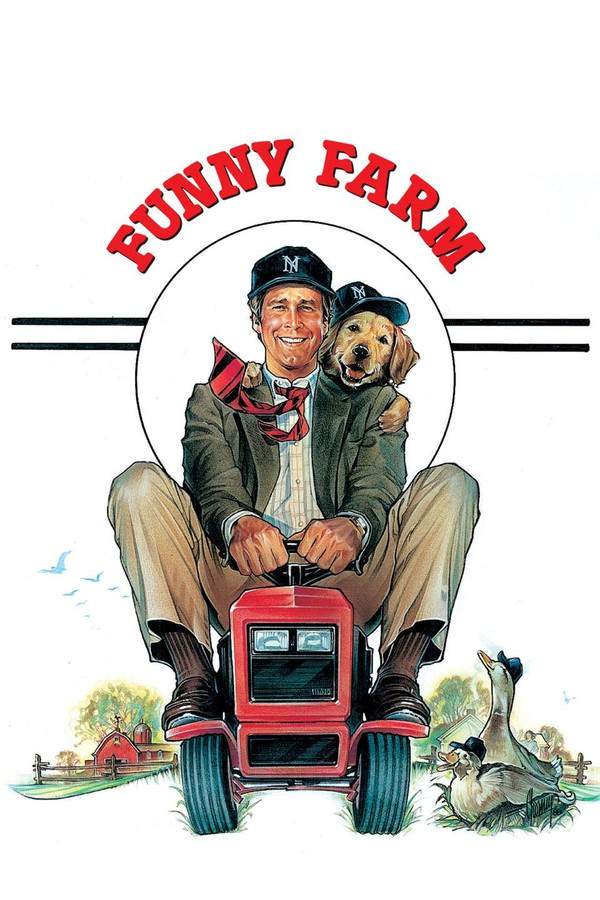
Funny Farm (1988) movie poster

Plot Summary

Funny Farm (1988) Plot Summary Explained

Release, runtime and language
1988 · 101 min · English
Loading streaming availability…
Directed by
George Roy Hill
Starring
Chevy Chase, Mike Starr, Glenn Plummer, Madolyn Smith Osborne, Caris Corfman, Jack Gilpin

A sportswriter seeking inspiration and a quieter life leaves the city with his wife to run a Vermont farm. They quickly discover that rural living isn't the idyllic escape they envisioned, as eccentric neighbors and the demands of farm life create constant chaos. As his writing career stalls and his marriage faces challenges, the writer resorts to increasingly desperate attempts to recapture his creative spark and save his relationship.

On this page (7)
  1. 1 Where to watch
  2. 2 What happens: full plot
  3. 3 Plot questions answered
  4. 4 Movie threads
  5. 5 Movies like Funny Farm
  6. 6 Categories
  7. 7 Every angle
Loading streaming availability…

Full plot summary · contains spoilers

What Happens in Funny Farm: Full Plot Summary

The whole story of Funny Farm (1988) explained, from the opening scene to the final frame: every key event, every twist and what it all adds up to. Read it as a quick recap before the sequel, to check a scene you missed, or to finally understand what really happened.

In this story set in the quiet charm of Redbud, Vermont, Andy Farmer is a New York City sports writer who leaves the bustle of the city to live with his wife, Elizabeth, so he can focus on writing a novel. The couple’s move quickly reveals more about the town than they bargained for: they struggle to gel with the locals, and a string of oddities gnaws at their already-fragile relationship, including the startling fate of Claude Musselman, a man long dead who still appears to burden the couple with exorbitant funeral bills for land that they did not own when he was buried.

As they settle in, marital tensions rise against a backdrop of Redbud’s quirks. Elizabeth writes her own children's books, while Andy remains unsure about his manuscript and how the town will react to it. The trouble intensifies when their publisher, Michael Sinclair, arrives in person after letters about a looming deadline go unanswered. To avoid returning the advance, Andy makes a risky choice: he takes one of Elizabeth’s manuscripts and presents it as his own work. The ruse backfires in a painful way when Elizabeth receives a call from Sinclair praising “his” children’s book, and she confronts Andy with anger and betrayal.

The dispute pushes the couple toward divorce, and they decide to sell their home. In a bid to move the process along, the Farmers offer Redbud a substantial incentive: a $15,000 donation to the town and $50 cash to each resident who helps create a favorable impression for prospective buyers. The residents rally to transform Redbud into a perfect Norman Rockwell-esque town, sparkling with an idealized warmth and neighborly charm. This bold gesture catches the attention of Bud and Betsy Culbertson, two potential buyers who tour the town and seem ready to make an offer. Yet Andy has a change of heart, realizing that he genuinely enjoys the small-town way of life and decides not to sell the house.

With the decision to stay in Redbud, the couple’s optics shift—and the locals’ mood darkens. They are furious that the promised money was tied to a sale that never happened, and Mayor Barclay remarks that the Farmers should not be held responsible for the missing payout. In a conciliatory move that helps defuse the growing tension, Andy chooses to personally reimburse every resident the $50, reasserting his standing in the community and signaling a new, cooperative path forward.

As the film draws to a close, Andy embraces a new role in the town’s life: he becomes the sportswriter for the Redbud newspaper, embedding himself more deeply in local stories and affairs. Elizabeth, meanwhile, is pregnant with their first child and has channeled her talent into writing still more children’s stories. The final note suggests a renewed partnership between the couple and a deeper sense of belonging to Redbud, where appearances may be crafted, but friendship, family, and a shared life feel more real than any facade.

- This tale blends humor with small-town eccentricities, exploring how people react when they try to shape a community to fit their dreams, and how a couple can rediscover what truly matters when they decide to stay and invest in the life they’ve chosen together.
Last updated: October 09, 2025 at 15:40

Was this helpful?

Plot questions answered

Funny Farm Plot Explained: Your Questions Answered

The questions people ask most about Funny Farm (1988): what happens in the confusing scenes, why the characters do what they do, the twists, hidden details and what the ending means. Each answer contains spoilers.

Q1

Why did Andy steal Elizabeth's manuscript and pass it off as his own?

Andy stole Elizabeth's manuscript to avoid returning the advance money to his publisher, Michael Sinclair. After weeks of ignored deadline letters, Sinclair visited Redbud in person to check on Andy's progress. Facing pressure to deliver a finished work and fearing he had nothing to show, Andy took one of Elizabeth's children's books and presented it as his own. He hoped the publication success would quiet the critics and satisfy the publisher, but the deception ultimately backfired when Elizabeth learned of the praise for her work.

Foreshadowing: Earlier scenes show Andy's manuscript remains unfinished while Elizabeth secretly works on her own children's books, hinting at the opportunity for theft.

  • manuscript theft
  • plagiarism
  • andy farmer
  • elizabeth
  • publisher
  • advance
Q2

What was the Musselman funeral bill that the couple received?

The Musselman funeral bill was an outrageous bill sent to Andy and Elizabeth for the burial of Claude Musselman, a man who had been buried on their land years before they purchased the property. Since the burial occurred before they owned the land, they were not legally responsible for the costs, but the town of Redbud insisted they pay the excessive funeral expenses. This odd bill represented the town's strange obsession with tradition and its tendency to burden newcomers with the eccentric customs of the community.

Foreshadowing: The couple's move to Redbud quickly reveals small-town quirks that test their patience, setting up this early conflict.

  • musselman
  • funeral bill
  • land
  • redbud
  • property
Q3

Why did Andy decide not to sell the house after the buyers made an offer?

Andy decided not to sell the house because he genuinely fell in love with the small-town way of life in Redbud. After the town transformed into a perfect Norman Rockwell-style community to impress potential buyers Bud and Betsy Culbertson, Andy realized that he enjoyed the rural lifestyle and didn't want to leave. The experience of seeing the town come together, despite the artificial circumstances, helped him recognize that his dreams of city life or a bestselling novel mattered less than the community he had become part of.

Foreshadowing: Throughout the film, Andy struggles with his manuscript and creative ambitions, suggesting his priorities were already shifting.

  • selling house
  • redbud
  • decision
  • buyers
  • culbertson
Q4

Why did the townspeople get angry when Andy decided not to sell?

The townspeople became angry because Andy and Elizabeth had promised them a $15,000 donation to the town and $50 cash to each resident, but only if the house sale went through. The residents had participated in transforming Redbud into a picturesque Norman Rockwell town specifically to secure the sale and receive their promised money. When Andy changed his mind and decided to stay, the townspeople felt betrayed because they had done their part but would not receive the financial payoff they had expected.

Foreshadowing: The donation plan was explicitly tied to the sale going through, making the anger inevitable once Andy chose to stay.

  • townspeople anger
  • money
  • donation
  • sale
  • redbud
Q5

How did Andy and Elizabeth reconcile after the divorce and betrayal?

Andy and Elizabeth reconciled after he chose not to sell the house and decided to stay in Redbud. When Andy realized he genuinely enjoyed small-town life, he also recognized what truly mattered to him, his relationship with Elizabeth and building a life together. Their decision to stay, rather than proceed with the divorce and sale, demonstrated his commitment to both her and their future. The shared experience of the entire ordeal, combined with Andy's willingness to repay the residents personally and invest in the community, helped rebuild trust between them.

Foreshadowing: The couple's earlier tensions stemmed from creative struggles and miscommunication, setting the stage for reconciliation once Andy proved his sincerity.

  • reconciliation
  • divorce
  • relationship
  • andy
  • elizabeth
  • stay
Q6

Why did Andy pay each resident $50 out of his own pocket?

Andy paid each resident $50 from his own money to personally reimburse the townspeople after the failed sale. Although Mayor Barclay stated the Farmers shouldn't be held responsible for the missing payout since the sale never occurred, Andy felt obligated to fulfill his promise. The gesture was intended to restore trust, ease resentment, and signal that he wanted to be a genuine part of the Redbud community rather than a transient outsider who reneged on commitments.

Foreshadowing: The tension between the Farmers and townspeople peaks after the sale falls through, making repayment necessary for any hope of reconciliation.

  • payment
  • residents
  • reimbursement
  • money
  • community
Q7

What happened to Andy's novel that he moved to Vermont to write?

Andy's novel never gets finished or published during the film. After moving to Redbud, Andy struggles with his manuscript and faces increasing pressure from his publisher. Rather than completing his own work, he resorts to stealing Elizabeth's children's book manuscript to satisfy the deadline. The film ends with Andy taking a job as a sportswriter for the Redbud newspaper, indicating he has shifted his creative focus from pursuing a novel to embracing local storytelling.

Foreshadowing: Early scenes show Elizabeth critiquing Andy's manuscript and his defensiveness about his lack of progress.

  • novel
  • manuscript
  • writing
  • career
  • sportswriter
Q8

Why did publisher Michael Sinclair visit Redbud in person?

Publisher Michael Sinclair visited Redbud because Andy had ignored multiple letters about a looming deadline for his manuscript. After weeks of unanswered communications, Sinclair traveled to the farm personally to assess Andy's progress and determine whether to continue their publishing relationship. The visit put enormous pressure on Andy, who had nothing substantial to show for his time in Vermont.

Foreshadowing: The timeline shows weeks of unanswered letters building tension before the publisher's arrival.

  • publisher
  • sinclair
  • visit
  • deadline
  • manuscript
Q9

Is Elizabeth pregnant at the end of the movie?

Yes, Elizabeth is pregnant with the couple's first child by the end of the movie. The pregnancy is revealed as part of the hopeful final note, symbolizing a fresh start for both Andy and Elizabeth in Redbud. Together with Andy's new job as a sportswriter and their decision to stay in town, the pregnancy represents their renewed commitment to each other and their shared future in the community.

Foreshadowing: The couple's reconciliation and choice to stay in Redbud sets the stage for building a family together.

  • pregnancy
  • elizabeth
  • baby
  • family
  • ending
Q10

What was the $15,000 donation and $50 per resident offer about?

The $15,000 donation and $50 cash offer to each resident was a scheme Andy and Elizabeth created to speed up their home sale. To make the town more appealing to prospective buyers, they promised Redbud a $15,000 donation and would pay $50 to every resident who helped create a favorable, idealized Norman Rockwell-style impression. The strategy worked initially, the town transformed beautifully and attracted buyers, but backfired when Andy decided not to sell, leaving the residents expecting money that wouldn't come.

Foreshadowing: The couple's desperation to sell and move on separately drives them to this elaborate bribery scheme.

  • donation
  • residents
  • money
  • scheme
  • sale
Q11

Why did the residents of Redbud agree to transform the town?

The residents of Redbud agreed to transform their town because Andy and Elizabeth promised them money in exchange, the $15,000 donation to the town and $50 cash to each resident, but only if the house sale went through. Seeing an opportunity for a financial windfall, the locals enthusiastically participated in creating a perfect, idealized Norman Rockwell-style community to impress potential buyers Bud and Betsy Culbertson, who subsequently made an offer on the property.

Foreshadowing: The timeline reveals the donation was explicitly conditional on the sale completing, making residents motivated but vulnerable.

  • town transformation
  • norman rockwell
  • residents
  • buyers
  • makeover

Movie threads

More Movies Like Funny Farm, by Mood & Story

Curated lists built around what makes Funny Farm tick: the same mood, the same kind of story or the same emotional payoff. Each list explains why these movies belong together.

Quirky Relocation Comedies like Funny Farm

Fish-out-of-water stories about urbanites finding chaos and charm in a new rural life. If you enjoyed Funny Farm, you'll love these movies about couples and families trading city life for rural chaos. Discover films with a similar lighthearted tone, steady pacing, and stories of comedic adaptation, marital bonding, and finding home in unexpected places.

  • quirky
  • lighthearted
  • hopeful
  • fish-out-of-water
  • reconciliatory
  • idyllic
  • Tone: lighthearted, quirky, hopeful
  • Pacing: steady, character-driven
Why these movies?

The story pattern: The narrative follows protagonists who idealize a life change, often a move to a quieter setting, and are quickly confronted with a reality far different from their fantasy. The central conflict arises from their clumsy adaptation and the eccentric characters they meet, leading to a crisis that ultimately strengthens their relationships and leads to a happy integration into their new world.

Why they belong together: These movies are grouped by their shared vibe of lighthearted, optimistic comedy grounded in a relatable 'what were we thinking?' premise. They feature a steady, character-driven pace, a mix of slapstick and situational humor, and a core emotional journey about reconciliation and finding community.

Movies about Creative Block and Marriage like Funny Farm

Stories of artists and writers whose professional struggles test and ultimately strengthen their relationships. Fans of Funny Farm's story about a writer's slump and marital strife will appreciate these films. Explore similar dramas and comedies where a character's professional crisis intertwines with their relationship, leading to a heartfelt journey of reconnection and rediscovery.

  • creative block
  • marital strife
  • frustrated
  • hopeful
  • reconciliatory
  • starting over
  • Tone: light, hopeful, frustrated
  • Pacing: steady
Why these movies?

The story pattern: The plot revolves around a character whose identity is tied to their creative or professional success. When they hit a wall, their frustration and desperation strain their closest relationship, often a marriage. The story arc involves misguided attempts to fix the problem alone, culminating in a realization that honesty and partnership are the true path to resolution and renewed inspiration.

Why they belong together: These films share a focus on the symbiotic relationship between creative fulfillment and personal connection. They are united by a medium emotional intensity driven by relational conflict, a straightforward narrative structure, and a ultimately hopeful message that love and support can conquer professional despair.

If you liked this

Movies Like Funny Farm

Similar movies to Funny Farm: the same genre, themes or kind of story. Each one comes with its own plot summary, timeline and ending explained.

Browse all movie summaries

Every angle

Funny Farm (1988) Explained: Plot, Timeline & Characters

Everything about Funny Farm in one place: what happens in the plot summary, the timeline in chronological order, the characters and meaning and a spoiler-free summary. What's After the Movie adds the cast, box office and post-credit scenes.

Coming soon on iOS and Android

The Plot Explained Movie Summary App

Plot summaries, endings explained and timelines on your phone. Catch up on any movie in minutes, save your favorites and never miss a twist again.

Be the first to know when we launch. Your email stays private, always.

Learn more about the app