Plot Explained Spoilers guaranteed!
Plot Explained

Browse by genre

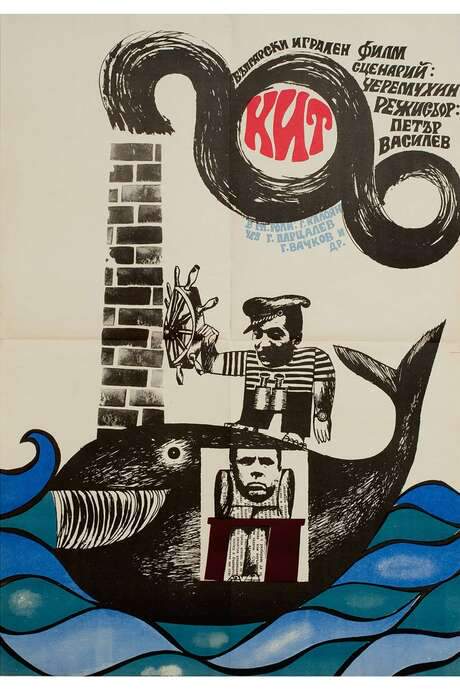
Whale (1970) movie poster

Plot Summary

Whale (1970) Plot Summary Explained

Release, runtime and language
1970 · 80 mins · Bulgarian
Directed by
Petar B. Vasilev
Starring
Georgi Popov, Bogdana Vulpe, Georgi Kaloyanchev, Georgi Georgiev-Gocheto, Katya Chukova, Georgi Partsalev

The crew of a fishing boat returns, having caught only a tiny fish. To avoid embarrassment they claim 300 kg mackerel. The port authority, craving a success story, inflates the catch into tons of bonito, then a dolphin, finally a whale. The false report sparks celebrations, honors and awards, yet no whale ever exists—exposing the officials’ folly.

On this page (5)
  1. 1 What happens: full plot
  2. 2 Plot questions answered
  3. 3 Movie threads
  4. 4 Movies like Whale
  5. 5 Every angle

Full plot summary · contains spoilers

What Happens in Whale: Full Plot Summary

The whole story of Whale (1970) explained, from the opening scene to the final frame: every key event, every twist and what it all adds up to. Read it as a quick recap before the sequel, to check a scene you missed, or to finally understand what really happened.

A small fishing vessel returns from an almost fruitless quest with not much to show for its efforts—merely a single fish, the tiniest of them all, a sprat. The captain Grigor Vachkov reports the meager result over the ship’s transmitter and hints at a bigger species, though he does not give precise quantities.

Months slip by with no production from the enterprise, and the base supervisor’s update climbs the chain to Kalcho Kalchev, the local boss, portrayed by Dimitar Panov. The tale grows with each retelling, as the supposed species are exaggerated and the mere possibility of a sizable shoal is woven into the narrative.

Around the table, the two men share a few cognacs to celebrate the supposed breakthrough, and they decide to label the catch as a “draught of dolphins,” a more impressive, massy creature that sounds substantial enough to warrant notice.

Later, Kalcho Kalchev engages in a private, colorful monologue with the wall portrait of minister Parushev, a figure of authority in their field Georgi Kaloyanchev.

Finally, Kalcho Kalchev’s right-hand man—the lead engineer Georgi Partsalev—insinuates that the dolphin, in truth, may be a kind of whale.

Last updated: February 24, 2026 at 13:50

Was this helpful?

Plot questions answered

Whale Plot Explained: Your Questions Answered

The questions people ask most about Whale (1970): what happens in the confusing scenes, why the characters do what they do, the twists, hidden details and what the ending means. Each answer contains spoilers.

Q1

Why did the crew lie about catching a large fish?

The crew lied to avoid embarrassment after returning with almost nothing but a single sprat, months of hard work yielded only the tiniest fish. Captain Vachkov hinted at a bigger species without specifying quantities, leaving room for his superiors to exaggerate the story. The lie served to mask their failure and maintain morale at the fishing base.

  • embarrassment
  • crew
  • motivation
  • failure
  • lie
Q2

How did the small sprat get turned into a whale?

The escalation happened gradually through retelling. First, the base supervisor enlarged the catch to mackerel when reporting up the chain. Then Kalcho Kalchev and his colleagues inflated it further to dolphin, calling it a 'draught of dolphins.' Finally, the lead engineer suggested the dolphin might actually be a whale, completing the absurd transformation from one tiny sprat to a massive cetacean.

Foreshadowing: Captain Vachkov hinted at a bigger species existing, giving the first opening for exaggeration.

  • sprat
  • dolphin
  • whale
  • escalation
  • exaggeration
Q3

Who started the false claim about the catch?

Captain Vachkov initiated the deception by reporting the miserable catch over the ship's transmitter while hinting at a bigger species without giving exact quantities. He left the interpretation open, allowing his superiors to read between the lines and begin building the false narrative.

  • captain
  • vachkov
  • initial lie
  • transmitter
Q4

Why did the officials keep inflating the story?

Kalcho Kalchev and his colleagues had strong incentives to inflate the story, they needed to show production after months of nothing. The false success story would boost morale, attract investment, and make them look competent to their superiors. Each retelling served their political and corporate interests.

Foreshadowing: The timeline explicitly mentions months of no production prompting escalation to Kalchev.

  • kalchev
  • officials
  • inflation
  • motivation
  • production
Q5

What was Kalcho Kalchev's role in the lie?

Kalcho Kalchev was the local boss who drove the deception forward. He received the exaggerated report and, alongside his leaders, further enlarged the catch's significance. He celebrated with cognac, decided to label it a draught of dolphins, and maintained the false narrative. His right-hand engineer then pushed it further toward whale territory.

  • kalchev
  • local boss
  • management
  • leadership
Q6

What was the purpose of Kalchev's monologue with the minister's portrait?

The scene reveals Kalchev's political motivations, he speaks privately to a portrait of Minister Parushev, demonstrating how authority and personal power shape decisions. This moment underscores that the lie is not just about pride but about political maneuvering and maintaining influence within the system.

  • minister
  • portrait
  • politics
  • parushev
  • authority
Q7

What did the engineer mean by suggesting the dolphin might be a whale?

The lead engineer Georgi Partsalev insinuates that the dolphin could actually be a whale, dropping a hint of deliberate deception behind the rebranding. This remark exposes that the leadership knows the truth is fabricated and suggests they are pushing the lie even further for their own purposes.

  • engineer
  • partsalev
  • whale
  • hint
  • deception
Q8

How did the lie travel from the ship to higher authorities?

The chain of deception followed the communication hierarchy: Captain Vachkov reported to the base via transmitter, the base supervisor escalated to Kalcho Kalchev after months of no production, and then Kalchev and his colleagues inflated and celebrated the story. Each level added exaggeration, turning a sprat into a whale through institutional layers.

  • communication
  • hierarchy
  • escalation
  • authorities
Q9

What does the ending mean, the lie is exposed as folly?

The ending leaves the lie unresolved, exposing it as absurd folly rather than punishing the characters. The tension between propaganda and truth remains unresolved, creating an ambiguous finish that highlights the ridiculousness of the deception without providing clear consequences. This reflects the film's satirical tone, critiquing institutional foolishness through humor rather than condemnation.

  • ending
  • resolution
  • folly
  • satire
  • exposure
Q10

Why didn't anyone question the obviously exaggerated catch?

No one questioned the lie because it served everyone's interests, the crew avoided embarrassment, base supervisors looked competent, and Kalchev's team gained political favor. The desire for a success story and the lack of verification allowed the falsehood to flourish unchecked through the institutional chain.

  • questioning
  • belief
  • institution
  • success story

Movie threads

More Movies Like Whale, by Mood & Story

Curated lists built around what makes Whale tick: the same mood, the same kind of story or the same emotional payoff. Each list explains why these movies belong together.

Movies with escalating absurdity like Whale

Stories where a small untruth spirals into a comically large deception. If you enjoyed Whale's tale of a fabricated whale, you'll like these movies where a small lie snowballs into a huge farce. These comedies feature similar themes of social folly, bureaucratic gullibility, and lighthearted consequences.

  • absurd
  • satirical
  • lighthearted
  • comical
  • bureaucratic folly
  • escalating chaos
  • Tone: whimsical, satirical
  • Pacing: steady, logical progression
Why these movies?

The story pattern: The narrative pattern begins with a minor, often trivial, deception intended to avoid embarrassment or gain a small advantage. Through a series of misinterpretations, exaggerations, and characters who have a vested interest in believing the lie, the falsehood grows to absurd proportions, creating a domino effect of comical situations.

Why they belong together: These movies are grouped together because they share a core comedic engine: the exponential growth of a falsehood. They feature a 'whimsical' tone, 'low' intensity, and focus on the folly of human nature and social systems, making the journey more entertaining than the final outcome.

Gentle bureaucratic satires like Whale

Comedies that playfully expose the absurdities of official systems and social conformity. Fans of Whale's take on official foolishness will enjoy these similar movies. These comedies explore themes of truth vs. convenience within systems, using a light touch and absurd humor rather than heavy-handed criticism.

  • satirical
  • bureaucratic
  • absurd
  • lighthearted
  • comical
  • social conformity
  • Tone: whimsical, comical
  • Pacing: steady, deliberate
Why these movies?

The story pattern: The story typically unfolds within a structured system—a government office, a corporation, a small town—where a logical flaw or a convenient fiction is embraced by those in charge. The plot follows the ripple effects of this collective self-deception, highlighting the gap between official reality and the obvious truth, all played for laughs.

Why they belong together: These films are united by their specific brand of satire: they target the folly of bureaucracy and groupthink with a 'whimsical' and 'lighthearted' approach. The conflict arises from characters prioritizing reputation and comfort over truth, resulting in a 'steady', 'straightforward' narrative that feels both amusing and recognizably human.

If you liked this

Movies Like Whale

Similar movies to Whale: the same genre, themes or kind of story. Each one comes with its own plot summary, timeline and ending explained.

Browse all movie summaries

Every angle

Whale (1970) Explained: Plot, Timeline & Characters

Everything about Whale in one place: what happens in the plot summary, the timeline in chronological order, the characters and meaning and a spoiler-free summary. What's After the Movie adds the cast, box office and post-credit scenes.

Coming soon on iOS and Android

The Plot Explained Movie Summary App

Plot summaries, endings explained and timelines on your phone. Catch up on any movie in minutes, save your favorites and never miss a twist again.

Be the first to know when we launch. Your email stays private, always.

Learn more about the app