Plot Explained Spoilers guaranteed!
Plot Explained

Browse by genre

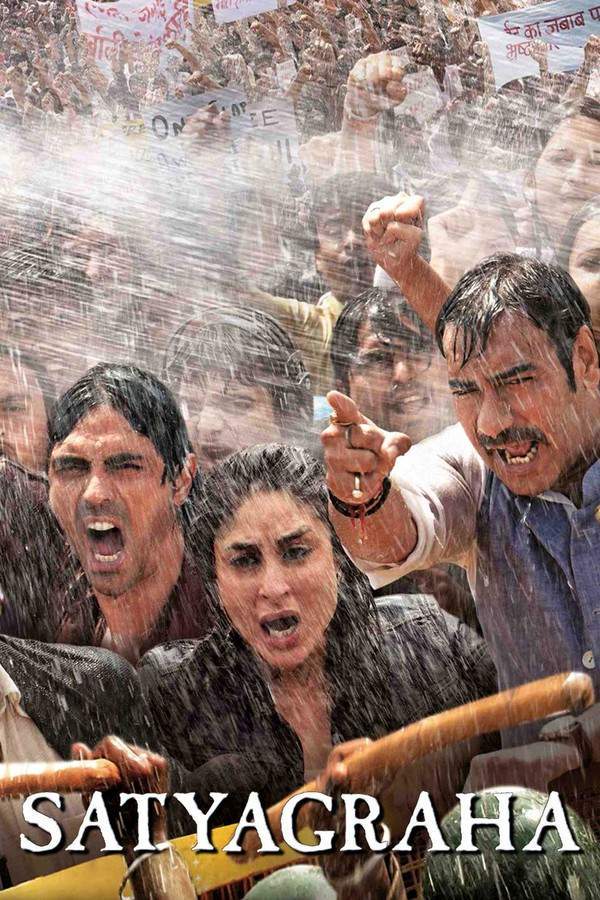
Satyagraha (2013) movie poster

Characters & Themes

Satyagraha (2013) Characters, Setting & Themes Explained

Release, runtime and language
2013 · 152 min · Hindi
Loading streaming availability…
Directed by
Prakash Jha

A son's yearning for his father initiates a wave of emotional challenges. A grieving father's suffering intensifies his desperation, while a passionate young woman rediscovers her ability to love. Simultaneously, a leader's determination to enact change clashes with the ruthless goals of a powerful ruler, igniting widespread resistance and rebellion. The resulting conflict explores themes of loss, love, and the fight for justice.

On this page (7)
  1. 1 Where to watch
  2. 2 Characters explained (7)
  3. 3 Where & when it takes place
  4. 4 Themes & meaning (3)
  5. 5 Character & meaning questions
  6. 6 Movie threads
  7. 7 Every angle
Loading streaming availability…

7 main characters · contains spoilers

Satyagraha Characters Explained: Who Is Who

The main characters of Satyagraha (2013), heroes and villains: what drives them, how they change over the course of the story and what each of them reveals about the film's bigger ideas.

  • Dwarka Anand (Amitabh Bachchan)

    A retired teacher and ex-principal with a steadfast belief in justice. He embodies moral courage, challenging bureaucratic power and sparking a wide-reaching movement. His willingness to risk personal freedom for public welfare highlights the film’s core ideal of principled leadership. His actions catalyze the chain of events that drive the activism forward.

    • 🧭 Idealist
    • 🎓 Educator
    • ⚖️ Justice-seeker
  • Akhilesh (Indraneil Sengupta)

    Dwarka’s engineer son, initially supportive of his father’s ideals. His unexpected death in a staged road accident becomes a catalyst for public outrage and mobilization. The tragedy personalizes the fight against corruption and accelerates the movement's urgency. He embodies the costs borne by ordinary families in the struggle for justice.

    • 💼 Engineer
    • 🛠️ Tech-savvy
    • 👪 Son of Dwarka
  • Sumitra (Amrita Rao)

    Akhilesh’s wife who faces systemic denial of compensation despite persistent appeals. She joins the broader protest, representing the middle-class grievances demanding accountability. Her role highlights how personal hardship fuels collective action. She becomes a symbol of resilience within the community’s fight for justice.

    • 👩 Wife
    • 💬 Public petitioner
    • 💪 Determined
  • Manav (Ajay Devgn)

    A friend of Akhilesh and an ambitious capitalist who initiates a social media-driven campaign to free Dwarka. He harnesses modern communication tools to mobilize citizens and galvanize public opinion. His involvement demonstrates how private interests can intersect with public activism for systemic change. He helps catalyze the formation of a reformist political agenda.

    • 💼 Capitalist
    • 📣 Campaigner
    • 🌐 Social media advocate
  • Balram Singh (Manoj Bajpayee)

    A powerful minister and the mastermind behind Akhilesh’s murder. He uses political influence to suppress claims and manipulate outcomes. His actions trigger riots and a brutal crackdown, underscoring the corrupt machinery at the heart of the conflict. His eventual downfall exposes the vulnerabilities of entrenched power.

    • 🏛️ Minister
    • 🔗 Power broker
    • 🕳️ Manipulator
  • Arjun Singh (Arjun Rampal)

    A journalist and ally who collaborates with Manav to channel the movement into a broader political platform. He leverages media influence to shape public perception and pressure authorities. His strategic involvement showcases the power of information in democratic reform. He represents the integration of journalism and activism within the campaign.

    • 📰 Journalist
    • 🗺️ Strategist
    • 🗣️ Amplifier
  • Yasmin (Kareena Kapoor Khan)

    A journalist who documents the agitation and amplifies the voices of the oppressed. She provides critical coverage that sustains momentum and informs national discourse. Her reporting frames the ethical questions surrounding state violence and civil rights. She embodies the role of the press as a public watchdog during a political crisis.

    • 🗞️ Journalist
    • 🎯 Activist journalist
    • 🧭 Observer

Last updated: October 03, 2025 at 19:58

Was this helpful?

Setting

Where and When Does Satyagraha Take Place?

The setting of Satyagraha (2013): the year and time period, the places and locations, and how they shape the characters, the mood and the tension of the story.

Time period

Early 2010s

The events unfold in a contemporary India, where social media campaigns and mass mobilizations increasingly influence public policy. The period emphasizes a modern democratic landscape with citizen-led pressure on authorities. The storyline reflects a time when traditional politics meets new-age activism, reshaping how justice is sought.

Location

Ambikapur, Chhattisgarh, India

Ambikapur serves as the central setting for the political drama, depicted as a typical Indian district town where citizens confront injustice and demand accountability. The city frames the movement from local grievances to national attention, illustrating the ripple effect of activism. Its streets become the stage for protests, rallies, and governmental responses that shape the narrative's momentum.

  • 🏙️ Ambikapur city
  • 🗳️ Political backdrop
  • 🇮🇳 India

Last updated: October 03, 2025 at 19:58

Was this helpful?

3 major themes

Satyagraha Meaning: Themes & Message Explained

What is Satyagraha (2013) really about? The emotional, social and philosophical themes the film keeps returning to, its symbolism and the message beneath the surface.

  • Nonviolent Resistance

    The film centers on peaceful means to challenge power, prioritizing moral authority over force. Dwarka Anand guides others toward nonviolent action, even as tensions rise. The movement demonstrates how civic discourse, public morale, and organized protests can pressure authorities. Tragedy underscores the cost of principled nonviolence, while leaving a legacy of activism.

  • Corruption

    Corruption is depicted as a pervasive force that distorts justice and protects elite interests. The mastermind Balram Singh wields political influence to suppress complaints and manipulate outcomes. The narrative shows how bureaucracy and power can entrench inequality, fueling public anger. The struggle centers on unveiling wrongdoing and demanding accountability.

  • Democratic Reform

    The plot arcs toward political renewal through citizen-driven change and regional political action. Dwarka’s movement catalyzes the formation of a party aimed at eradicating graft and reforming governance. The story explores how democratic processes and new coalitions can recalibrate a flawed system. It emphasizes that lasting reform arises from collective action and legal avenues.

Last updated: October 03, 2025 at 19:58

Was this helpful?

Character & theme questions

Satyagraha Characters & Meaning: Your Questions Answered

The questions people ask about Satyagraha (2013): who the characters really are, their relationships, what the symbols mean, where it takes place and what the movie is really about. Each answer contains spoilers.

Q1

Where is the film primarily set?

The film takes place in Ambikapur, a district town in Chhattisgarh, India. The city serves as the central setting where citizens confront injustice and organize protests. Ambikapur acts as the microcosm from which the movement grows from local grievances to national attention, with its streets becoming the stage for rallies and governmental responses.

  • ambikapur
  • chhattisgarh
  • setting
  • location
  • india
Q2

What time period does the movie depict?

The movie is set in the early 2010s, reflecting contemporary India where social media campaigns and mass mobilizations increasingly influence public policy. The period emphasizes a modern democratic landscape where traditional politics meets new-age activism, reshaping how citizens seek justice and accountability.

  • time period
  • 2010s
  • contemporary india
  • modern era
Q3

What does the film say about nonviolent resistance?

The film centers on peaceful means to challenge power, prioritizing moral authority over force. Dwarka Anand guides others toward nonviolent action even as tensions rise, demonstrating how civic discourse and organized protests can pressure authorities. The narrative shows tragedy underscores the cost of principled nonviolence while leaving a legacy of activism.

  • nonviolent resistance
  • peaceful protest
  • satyagraha
  • moral authority
  • activism
Q4

How is corruption depicted in the film?

Corruption is portrayed as a pervasive force that distorts justice and protects elite interests. Minister Balram Singh wields political influence to suppress complaints and manipulate outcomes. The narrative illustrates how bureaucracy and power can entrench inequality, fueling public anger as the struggle centers on unveiling wrongdoing and demanding accountability.

  • corruption
  • political power
  • bureaucracy
  • injustice
  • balram singh
Q5

What message does the film convey about democratic reform?

The film arcs toward political renewal through citizen-driven change. Dwarka's movement catalyzes the formation of a party aimed at eradicating graft and reforming governance. The story explores how democratic processes and new coalitions can recalibrate a flawed system, emphasizing that lasting reform arises from collective action and legal avenues.

  • democratic reform
  • political change
  • citizen activism
  • governance
  • party formation
Q6

Who is Dwarka Anand and what does he represent?

Dwarka Anand is a retired teacher and former principal portrayed by Amitabh Bachchan who embodies moral courage and a steadfast belief in justice. He challenges bureaucratic power and sparks a wide-reaching movement, risking personal freedom for public welfare. He represents the film's core ideal of principled leadership and catalyzes the chain of events that drive the activism forward.

  • dwarka anand
  • amitabh bachchan
  • leader
  • moral courage
  • retired teacher
Q7

Who is Balram Singh and what is his role in the story?

Balram Singh is a powerful minister portrayed by Manoj Bajpayee who serves as the film's antagonist. He is the mastermind behind Akhilesh's murder, using political influence to suppress claims and manipulate outcomes. His actions trigger riots and a brutal crackdown, representing the corrupt machinery at the heart of the conflict until his eventual downfall exposes the vulnerabilities of entrenched power.

  • balram singh
  • manoj bajpayee
  • minister
  • antagonist
  • villain
  • corruption
Q8

What roles do journalists play in the film?

The film features two journalists, Arjun Singh and Yasmin, who play crucial roles in amplifying the movement. Arjun collaborates with Manav to channel the protest into a broader political platform, leveraging media influence to shape public perception. Yasmin documents the agitation and provides critical coverage that sustains momentum and informs national discourse, embodying the press as a public watchdog during political crisis.

  • journalists
  • media
  • arjun singh
  • yasmin
  • press
  • watchdog
Q9

Who is Sumitra and what does she represent?

Sumitra is Akhilesh's wife portrayed by Amrita Rao who faces systemic denial of compensation despite persistent appeals. She joins the broader protest, representing middle-class grievances demanding accountability. Her role highlights how personal hardship fuels collective action, making her a symbol of resilience within the community's fight for justice.

  • sumitra
  • amrita raao
  • wife
  • compensation
  • middle class
  • grievance
Q10

How does the film portray social media's role in modern activism?

The film reflects the early 2010s era when social media campaigns and mass mobilizations began influencing public policy. Manav, Akhilesh's friend and an ambitious capitalist, initiates a social media-driven campaign to free Dwarka, harnessing modern communication tools to mobilize citizens and galvanize public opinion. This demonstrates how private interests can intersect with public activism for systemic change.

  • social media
  • digital activism
  • campaign
  • manav
  • modern communication

Movie threads

More Movies Like Satyagraha, by Mood & Story

Curated lists built around what makes Satyagraha tick: the same mood, the same kind of story or the same emotional payoff. Each list explains why these movies belong together.

Movies about civic anger sparked by personal grief like Satyagraha

A personal tragedy ignites a crusade against systemic corruption and injustice. If you were moved by how Satyagraha connects a father's grief to a national protest, you'll find similar powerful dramas here. These movies feature protagonists whose personal tragedies compel them to challenge corrupt institutions, blending heavy emotional journeys with urgent political stakes.

  • grieving
  • angry
  • political
  • determined
  • urgent
  • moral conflict
  • Tone: tense, angry, determined
  • Pacing: steady, building escalation
Why these movies?

The story pattern: Stories typically begin with a profound personal loss that exposes a wider societal flaw. The protagonist's journey of grief transforms into a determined quest for accountability, often pitting them against a seemingly unbeatable establishment. The plot follows the escalation from private sorrow to public confrontation, exploring the heavy costs of activism.

Why they belong together: They are grouped by their powerful fusion of intimate emotional weight—specifically grief and loss—with high-stakes political conflict. The shared experience is one of righteous anger, where a character's personal vendetta evolves into a principled stand for justice, creating a tense, morally charged atmosphere.

Bittersweet protest movement dramas with costly victories like Satyagraha

Stories where the fight for justice is noble, but the final victory comes at a great personal cost. For viewers who appreciated the complex, bittersweet ending of Satyagraha, this list features similar movies about social justice. These films focus on nonviolent resistance and political change, but emphasize the heavy personal toll and tragic sacrifices that make the victory feel poignant and incomplete.

  • hopeful
  • tragic
  • determined
  • political
  • moral conflict
  • somber
  • Tone: bittersweet, hopeful, tragic
  • Pacing: steady, methodical
Why these movies?

The story pattern: The narrative follows the rise of a mass movement challenging an oppressive power. The focus is on the strategic and moral dimensions of the struggle, often highlighting nonviolent resistance. The climax typically involves a major sacrifice—such as the death of a key figure—that galvanizes the movement but renders the ultimate success deeply sorrowful.

Why they belong together: They share a specific emotional arc: a determined, hopeful fight for a righteous cause that concludes not with pure triumph, but with a somber, bittersweet resolution. The central theme is the price of change, creating a unified vibe of solemn hope and the weight of sacrifice.

Every angle

Satyagraha (2013) Explained: Plot, Timeline & Characters

Everything about Satyagraha in one place: what happens in the plot summary, the timeline in chronological order, the characters and meaning and a spoiler-free summary. What's After the Movie adds the cast, box office and post-credit scenes.

Coming soon on iOS and Android

The Plot Explained Movie Summary App

Plot summaries, endings explained and timelines on your phone. Catch up on any movie in minutes, save your favorites and never miss a twist again.

Be the first to know when we launch. Your email stays private, always.

Learn more about the app