Plot Explained Spoilers guaranteed!
Plot Explained

Browse by genre

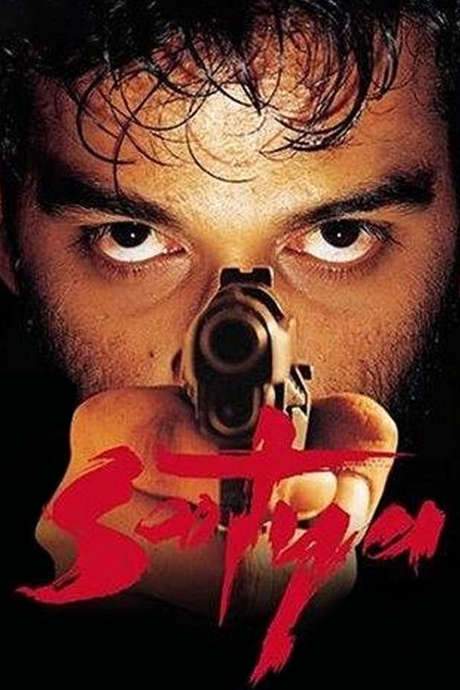
Satya (1998) movie poster

Plot Summary

Satya (1998) Plot Summary Explained

Release, runtime and language
1998 · 170 mins · Hindi
Directed by
Ram Gopal Varma
Starring
Aditya Srivastava, Sushant Singh, Paresh Rawal, Saurabh Shukla, Manoj Pahwa, Makrand Deshpande

A hopeful young man named Satya arrives in Mumbai from South India seeking employment. Wrongfully jailed, he meets underworld boss Bhiku Mhatre while in prison and joins his gang. The once‑honest youth is drawn into the violent underbelly of the city as he becomes entangled in organized crime.

On this page (4)
  1. 1 What happens: full plot
  2. 2 Plot questions answered
  3. 3 Movie threads
  4. 4 Every angle

Full plot summary · contains spoilers

What Happens in Satya: Full Plot Summary

The whole story of Satya (1998) explained, from the opening scene to the final frame: every key event, every twist and what it all adds up to. Read it as a quick recap before the sequel, to check a scene you missed, or to finally understand what really happened.

Satya, J. D. Chakravarthi arrives in Mumbai in search of work and quickly finds a job at a dance bar. Jagga, Jeeva, a ruthless criminal, throws the glass of whiskey Satya had prepared for him in his face simply because he dislikes the taste. Later, another small-time enforcer, Pakya, Sushant Singh, who works for Jagga, demands money from Satya. Satya refuses to pay and, in a moment of defiance, slashes Pakya’s face with a razor. Pakya runs back to Jagga and informs him of the attack, and Jagga’s goons beat Satya mercilessly.

Bapu and Vitthal Manjrekar murder a film producer on Bhiku Mhatre’s orders, setting off a chain of crime and consequence. Manjrekar is captured by the police during the getaway and, under questioning, admits Mhatre’s involvement to Inspector Khandilkar, resulting in Mhatre’s arrest. Jagga mocks Satya when he serves drinks, the two clash, and Jagga later frames Satya for procuring. In prison, Satya and Mhatre clash, and Mhatre, impressed by Satya’s courage, arranges his release through Chandrakant Mule, a shrewd lawyer. Satya is given a flat by Kallu Mama and meets Vidya, his neighbor and an aspiring singer who will become central to his world.

Manjrekar denies any link to Mhatre in court, and Mhatre is released. With Mhatre’s help, Satya shoots Jagga in the dance bar and joins Mhatre’s growing operation. Malhotra, a builder extorted by Kallu Mama, asks them to meet him for the money, and Satya, Mhatre, and the gang are ambushed. Under interrogation, they admit to working for Guru Narayan, a rival gang leader. Vidya is initially rejected by music director Renusagar, who later signs her for a project after Satya threatens him. Vidya and Satya’s relationship deepens as they navigate a brutal world built on loyalty and fear.

Guru Narayan arrives in Mumbai, and Mhatre’s gang plans to kill him but backs off under Bhau Thakurdas Jhawle’s political pressure to avoid a gang war. Bhau warns both him and Guru Narayan to stay out of trouble. Guru Narayan mutters on a call that he wants to kill Satya to avenge Jagga’s murder, a plan not heard by Mhatre, who, under Bhau’s pressure, agrees to keep the peace. Yet Satya privately tells Mhatre that if they don’t strike first, Guru Narayan will strike them down. The Mhatre gang kills Guru Narayan, drawing Satya and Bhau into a direct confrontation.

A new police commissioner, Amod Shukla, is appointed as crime rises, and Bhau negotiates a shaky truce by forgiving Mhatre and his crew for past deeds. The police corner a group of criminals, including a member of Mhatre’s gang, Chander Khote, in a raid. Following Satya’s lead, Shukla is targeted by Bhau’s men to send a message to the force. Bhau wins the election by a landslide, aided by Mhatre’s support, cementing the political-criminal alliance at the heart of the city.

Satya and Vidya go to the cinema, but during the intermission, Pakya spots Satya and alerts the police. Inspector Khandilkar arrives, ordering every door sealed except one, planning to trap Satya as he exits. Satya fires a blank cartridge at the ground to incite a stampede and escapes with Vidya. Afraid of losing her, Satya contemplates moving to Dubai with Vidya, while Mhatre suggests the plan to relocate them. That night, Mhatre visits Bhau’s home with Kallu Mama and Mule to celebrate the victory, only to be killed by Bhau for defying orders and killing Narayan. Satya tells Vidya he has a Dubai job offer when the police close in, but he is forced to flee as the truth about his criminal life becomes clearer to those around him.

Satya reaches Kallu Mama’s residence, where Mule orders Mama to kill Satya. Mama refuses and instead kills Mule, prompting a violent response from Satya and Mama as they seek vengeance for Mhatre’s murder. During Ganesh Chaturthi on a beach, Satya fatally wounds Bhau and leaves with Mama. He intends to escort Vidya to safety, but first he goes to her house. Mama waits in the car, while Satya pleads with Vidya at the door. Khandilkar arrives, shoots Mama, and Satya is left mortally wounded, collapsing just inches from Vidya as he dies.
Last updated: October 09, 2025 at 11:05

Was this helpful?

Plot questions answered

Satya Plot Explained: Your Questions Answered

The questions people ask most about Satya (1998): what happens in the confusing scenes, why the characters do what they do, the twists, hidden details and what the ending means. Each answer contains spoilers.

Q1

Why does Satya slash Pakya's face with a razor?

Satya refuses to pay the protection money that Pakya demands, which is a direct act of defiance against Jagga's gang. When Pakya threatens him, Satya retaliates by slashing his face with a razor, marking his first violent act in Mumbai and establishing his willingness to fight back rather than submit to the underworld's demands.

Foreshadowing: This early act of defiance signals Satya's stubborn integrity, a trait that will later cost him greatly when he refuses to bend to Bhau's political power.

  • pakya
  • razor
  • defiance
  • jagga gang
  • mumbai underworld
Q2

Why does Bhiku Mhatre help Satya get released from prison?

While in prison, Satya and Mhatre initially clash, but Mhatre becomes impressed by Satya's courage and refusal to be intimidated. Recognizing Satya's potential as a valuable ally in his operations, Mhatre arranges his release through lawyer Chandrakant Mule, seeing in Satya a fearless operative he can trust.

Foreshadowing: Mhatre's decision to free Satya sets the foundation for their partnership, which will ultimately lead to both their downfalls when Satya's loyalty becomes a liability.

  • bhiku mhatre
  • prison release
  • chandra kant mule
  • alliance
Q3

Why does Satya agree to join Mhatre's gang?

After being framed by Jagga and experiencing the brutal realities of the underworld firsthand, Satya has no legitimate options left. With Mhatre's backing and protection, Satya gains the power to avenge himself against Jagga. He shoots Jagga in the dance bar with Mhatre's support, officially entering the criminal world as Mhatre's trusted associate.

Foreshadowing: Satya's entry into the gang marks the beginning of his moral descent, as he transitions from victim to perpetrator of the very violence that victimized him.

  • satya joins gang
  • jagga murder
  • underworld entry
Q4

Why does Mhatre order the killing of Guru Narayan despite Bhau's warning?

Bhau Thakurdas Jhawle intervenes to prevent a gang war, warning both Mhatre and Guru Narayan to stay out of trouble. However, Satya privately convinces Mhatre that if they don't strike first, Narayan will strike them down to avenge Jagga's death. Mhatre agrees, and his gang kills Narayan, directly challenging Bhau's authority and triggering the chain of events that leads to his own murder.

Foreshadowing: Satya's pressure on Mhatre to kill Narayan is the critical decision that dooms both men, as it violates Bhau's political-criminal balance and makes them targets.

  • guru narayan
  • bhau thakurdas jhawle
  • gang war
  • killing order
Q5

Why does Bhau Thakurdas Jhawle kill Mhatre?

Bhau maintains a delicate political-criminal alliance in Mumbai, and Mhatre's decision to kill Guru Narayan directly violates the peace Bhau brokered. After helping Bhau win his election, Mhatre is summoned to Bhau's home to celebrate, but is killed there as punishment for defying orders and creating the risk of a gang war that could destabilize Bhau's political power.

Foreshadowing: Mhatre's murder demonstrates Bhau's ruthless enforcement of his authority, showing that even loyal allies will be eliminated if they step out of line.

  • bhau murder
  • mhatre death
  • political-criminal alliance
  • defiance
Q6

Why does Kallu Mama kill Mule instead of killing Satya?

After Mhatre's murder, lawyer Chandrakant Mule orders Kallu Mama to kill Satya to tie up loose ends. However, Mama refuses because Satya was Mhatre's trusted man, and killing him would be a betrayal of Mhatre's memory. Instead, Mama kills Mule, aligning himself with Satya in a bid to avenge Mhatre's death.

Foreshadowing: Mama's loyalty to Mhatre over Mule marks a pivotal shift in the gang's internal dynamics, as the surviving members turn against each other.

  • kallu mama
  • mule betrayal
  • vendetta
  • loyalty
Q7

Why does Satya go to Vidya's house instead of fleeing directly to Dubai?

After wounding Bhau during the Ganesh Chaturthi confrontation, Satya intends to take Vidya to safety. However, he stops at her house first to say goodbye and ensure she's protected. This fatal hesitation allows Inspector Khandilkar to arrive and shoot him just inches from Vidya's doorstep, as Satya reaches for the door one final time.

Foreshadowing: Satya's inability to abandon Vidya, even when escape is within reach, underscores the tragic impossibility of leaving the criminal world behind.

  • vidya
  • final meeting
  • death scene
  • escape plan
Q8

Why does Inspector Khandilkar pursue Satya so relentlessly?

From the beginning, Khandilkar connects Satya to Mhatre's gang through Manjrekar's confession. As Satya rises in Mhatre's operation, becomes involved in murders, and orchestrates attacks on police, he becomes a primary target. The inspector seals off the cinema to capture him and later tracks him to Vidya's house, where he delivers the fatal shot.

Foreshadowing: Khandilkar's persistent pursuit demonstrates how Satya's criminal activities eventually make him a marked man, impossible to escape even with help from within the system.

  • inspector khandilkar
  • police pursuit
  • criminal charges
Q9

Why is Satya and Vidya's relationship ultimately doomed?

Vidya represents Satya's hope for a normal life, and he helps her achieve her singing career while she gives him a reason to consider leaving the underworld. However, his criminal entanglements make a clean escape impossible. Even when Mhatre arranges for them to move to Dubai, Satya is forced to return and ultimately dies at Vidya's doorstep, unable to escape the violent world he joined.

Foreshadowing: The romance serves as a tragic counterpoint, showing how Satya's descent into crime destroys the very possibility of redemption through love.

  • vidya romance
  • doomed love
  • escape impossible
Q10

Why does Bhau Thakurdas Jhawle allow the violence to escalate despite wanting peace?

Bhau maintains power through a balance between criminal gangs and political authority. While he publiclypreaches peace after Guru Narayan's death, he privately allows Mhatre to be killed as punishment for crossing him. Bhau then uses his police connections to target Mhatre's remaining gang, including Satya, while simultaneously winning his election through Mhatre's support. His strategy is to eliminate rivals while maintaining plausible deniability.

Foreshadowing: Bhau's manipulation of both the criminal underworld and the political system shows that true power lies in controlling chaos rather than preventing it.

  • bhau political power
  • gang manipulation
  • mumbai politics
Q11

How does Satya escape the police ambush at the cinema?

During the film intermission, Pakya spots Satya and alerts the police, who seal all exits except one to trap him. Satya fires a blank cartridge at the ground, creating a loud bang that incites a panic and stampede among the audience. Using the chaos, he escapes with Vidya through the unlocked exit, demonstrating his quick thinking under pressure.

Foreshadowing: This escape showcases Satya's survival instincts, which will ultimately fail him in the film's climax when he cannot escape Khandilkar's final approach.

  • cinema escape
  • police ambush
  • stampede pakya
Q12

Why does an honest man like Satya fall into crime in Mumbai?

Satya arrives in Mumbai as a hopeful migrant seeking legitimate employment, but the city's underworld forces him into confrontation immediately. After being attacked by Jagga's men, framed for a crime, and left with no legal recourse, Satya realizes that survival in Mumbai requires power that only the criminal world can provide. Mhatre's alliance offers him protection and vengeance, making the descent seem like the only viable path.

Foreshadowing: Satya's transformation from honest migrant to hardened criminal reflects the harsh reality of Mumbai's power structures, where the state fails to protect its vulnerable citizens.

  • crime descent
  • mumbai underworld
  • migrant vulnerability

Movie threads

More Movies Like Satya, by Mood & Story

Curated lists built around what makes Satya tick: the same mood, the same kind of story or the same emotional payoff. Each list explains why these movies belong together.

Gangster Descent Stories like Satya

Stories of a hopeful individual's brutal downward spiral into organized crime. If you were captivated by Satya's raw portrayal of a man's tragic fall into Mumbai's gang wars, you'll find more movies like it here. This section features similar gritty crime epics about doomed protagonists dragged into the violent world of organized crime, exploring themes of loyalty, betrayal, and the impossibility of escape.

  • gritty
  • brutal
  • tragic
  • fatalistic
  • oppressive
  • tense
  • Tone: dark, tragic, fatalistic
  • Pacing: fast, driven by consequential events
Why these movies?

The story pattern: These stories typically follow a linear but potent trajectory: an ordinary person enters a criminal ecosystem, initially finds power or belonging, but is gradually consumed by its inherent violence and corruption. The plot is often driven by escalating conflicts with rival factions and law enforcement, leading to a climactic, tragic end for the protagonist.

Why they belong together: Movies in this thread share a core narrative arc of moral collapse, set against a backdrop of high-stakes criminal activity. They are united by a dark tone, high intensity, heavy emotional weight, and a fatalistic view of the criminal lifestyle, creating a cohesive experience of tragic downfall.

Gritty Urban Crime Movies like Satya

Hard-hitting stories set in the oppressive and corrupt underbellies of major cities. For viewers who appreciated the immersive and oppressive atmosphere of Mumbai in Satya, this section collects films with a similar vibe. Explore more movies like Satya that use a gritty urban landscape as a backdrop for stories of crime, corruption, and tragic character arcs, where the city's energy is integral to the narrative.

  • gritty
  • tense
  • oppressive
  • brutal
  • melancholic
  • urban decay
  • Tone: dark, tense, oppressive
  • Pacing: fast, chaotic, steady
Why these movies?

The story pattern: The narrative pattern often involves interconnected stories of criminals, cops, and politicians within a single city. The plot is less about a single hero's journey and more about depicting the ecosystem of crime, highlighting how individuals are crushed by larger, corrupt forces. The focus is on creating an authentic, visceral sense of a dangerous world.

Why they belong together: These films are grouped by their shared setting and mood. They create a cohesive experience through a consistently dark and tense tone, a fast or steady pacing that mirrors urban chaos, and a heavy emotional weight derived from the brutal realities of life in a corrupt city.

Every angle

Satya (1998) Explained: Plot, Timeline & Characters

Everything about Satya in one place: what happens in the plot summary, the timeline in chronological order, the characters and meaning and a spoiler-free summary. What's After the Movie adds the cast, box office and post-credit scenes.

Coming soon on iOS and Android

The Plot Explained Movie Summary App

Plot summaries, endings explained and timelines on your phone. Catch up on any movie in minutes, save your favorites and never miss a twist again.

Be the first to know when we launch. Your email stays private, always.

Learn more about the app