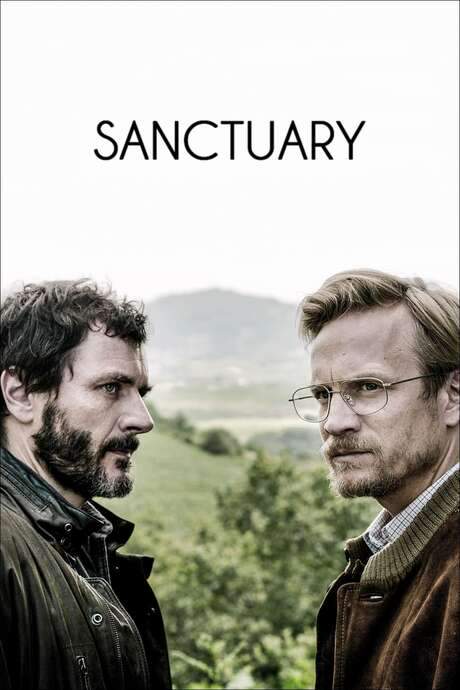
Sanctuary
Year: 2015
Runtime: 88 mins
Language: French
Director: Olivier Masset-Depasse
During the mid-1980s, a Spanish paramilitary group known as GAL hunts and eliminates members of the ETA terrorist organization who have sought refuge in southern France. As violence escalates, Grégoire Fortin, an advisor to the French Minister of Justice, and Domingo ‘Txomin’ Iturbe, the leader of ETA, find themselves compelled to negotiate a resolution to the escalating conflict and search for a path towards peace in the volatile region.
Warning: spoilers below!
Haven’t seen Sanctuary yet? This summary contains major spoilers. Bookmark the page, watch the movie, and come back for the full breakdown. If you're ready, scroll on and relive the story!
Sanctuary (2015) – Full Plot Summary & Ending Explained
Read the complete plot breakdown of Sanctuary (2015), including all key story events, major twists, and the ending explained in detail. Discover what really happened—and what it all means.
In the summer of 1968, a 14-year-old named Wolfgang from Osnabrück, who loves tinkering with mopeds, pushes against his stepfather’s authority and finds himself caught between a parental home that doesn’t understand him and a system eager to discipline misbehavior. After a confrontation with his stepfather, Wolfgang is handed over to a Youth Office staff member and sent to Freistatt, a Christian educational center, with his mother promising to bring him back at Christmas. He even takes a photo of his mother along as a keepsake to Freistatt, a place that will soon reveal itself to be a harsh, tightly controlled world.
Upon arrival, Wolfgang is met in the garden by the housefather Brockmann, whose stern presence dominates the routine. The staff records his behavior as aggressive, defiant, and disobedient, and Wolfgang recalls his prior departure from Heidequell school near Bielefeld after only three months. He defends himself, insisting that he has always stood up for himself and that violence never defined him, but the system’s rules and rituals are swift and unyielding. The housefather’s authority is reinforced by a long tradition, and he speaks of running the home for decades, presenting a front of paternal care that masks a punitive, quasi-military order.
Inside the home, life resembles a barracks. The staff refer to themselves as “brothers” within a framework designed to shape the boys through discipline and collective identity. The housefather, who has presided over the place for 25 years, governs with a stern, sometimes ruthless, sense of fairness as he interprets the needs of the group. Wolfgang soon finds himself in the company of peers who share the pressure of this environment, and he encounters Mattis, the weaker pupil who is singled out for punishment by Bernd. The dynamic among the boys becomes a test of endurance, where solidarity among the group can be a shield against the harsh judgments of those in charge.
To make Wolfgang conform, he is assigned hard labor in the peat mire alongside the others. When he complains that he won’t have proper boots for two months, he is beaten with a spade by Brother Wilde, one of the two guardians charged with enforcing the rules. An early escape attempt through the murky, maze-like moor fails, and the punitive system grows harsher. The householder allows the group to mete out punishment to each other as a way of maintaining “order,” rationing food and imposing smoking bans while forcing the pupils to police themselves. The dynamic emphasizes both power and vulnerability, as Wolfgang resists, yet the group’s pressure builds around him.
A letter Wolfgang tries to send to his mother—asking her to take him home because he cannot endure Freistatt—finds its way to Angelika, the housefather’s daughter. She claims to have been approached by Wolfgang but ultimately delivers the message to her father, who then institutes punitive measures against the group, including a harsh food deprivation regime. Wolfgang faces further humiliation when the housefather keeps a portion of food for himself, and Bernd confronts him with the painful reminder of his longing to return home by burning the photograph of Wolfgang’s mother.
During a recreation period, the boys stage a rebellion when Brother Wilde attempts to confiscate the trunk radio. Anton, one of the older youths, leads a defiant moment by singing from the Gospel, a moment that resonates with the group and becomes a symbol of their longing for freedom. The moment is marked by a shared sense of resistance, and the air fills with the feeling of an emerging collective identity. The scene culminates in a Christmas Eve scandal when Brother Krapp—an overseer who had shown some understanding of the boys’ needs—leaves the home after it becomes clear he has exploited his position to abuse Mattis. The revelation shakes the group, and the incident marks a turning point in the story.
At the heart of the darkness lies a deeply troubling image: in the basement, Wolfgang is chained and brought to a near-comatose state, his body and mind battered by the trauma of the home. The opening credits hint at a painful past, showing his mother on a sunlit beach, a memory that contrasts starkly with his current reality and hints at an incestuous longing that shadows the family history. The trauma intensifies as Wolfgang’s rage finds an outlet in a fight with Brother Wilde during a moor conflict; he strikes, injuring Wilde’s eye with a spade, and he seizes the chance to flee with Anton.
The journey away from Freistatt takes the two boys to Osnabrück by horse transport, a return that appears both hopeful and hollow. Anton—whose stepfather or family ties are unclear—does not have a true home to return to, and Wolfgang chooses not to bring him with him, even as his own family life remains complicated. During this escape, Wolfgang’s mother reveals that she has started a new family with his stepfather, a detail that adds another layer of heartbreak to his longing for a stable home. When they finally return to Freistatt, Wolfgang’s stepfather refuses to acknowledge him, locking the car and driving away at a moment of vulnerability that retreating into silence cannot repair.
The cycle of punishment and reprisal continues, as Brother Wilde seeks vengeance for the escape and the act of rebellion. Brockmann appears unexpectedly to pull Wolfgang out of the “grave” he’d been placed in during the perilous moment, saving him from a horrifying fate. Angelika, who had bid her own goodbye to Wolfgang as she prepares to study in Hamburg, returns to the surface of the story with a tenderness that is interrupted by violence: Wolfgang’s attempt to rape her punctures any softness between them and reveals the dangerous underside of his trauma and desire.
Tragedy continues to unfold as Anton’s despair drives him to hang himself. In the wake of Anton’s death, the other pupils lash out at Wilde and attempt to resist the oppressive regime that has controlled their lives. In the night, many of the pupils flee in their nightshirts, leaving Wolfgang who stays by Anton’s side. His resolve appears broken, yet there is a flicker of resilience as he begins to adapt to the routine of the home—roll calls, routines, and a hollow sense of “normalcy.” Eventually, Wolfgang is released not because the system believes him cured, but because his stepfather has been fatally injured, altering the balance of power back at home.
Returning to the world he left behind, Wolfgang encounters his mother’s life from another vantage point, still haunted by what happened at Freistatt. He sees his stepfather’s child on the terrace and chooses not to engage with his mother, stepping back into the street with a hedgehog slice from the reception table in hand. He borrows money from an old friend and even slaps him when the friend tries to touch his cake—a moment that underscores the lingering fragility of his sense of safety and belonging. The final image moves with ambiguity: on a train headed toward an uncertain destination, Wolfgang looks back at Freistatt and the pupils’ sketch of life on their draisine as they ride the mire—a quiet, unsettling closing that lingers in the mind, suggesting a boy forever marked by the scars of a system designed to break him, even as he seeks his own path forward.
- Antxón is referenced in the early sections to reflect his connection to the story through the cast. In this version, the focus remains on Wolfgang’s struggle, the brutal routines of Freistatt, the failed escapes, and the long shadow of trauma that follows him home and into adulthood.
Sometimes I Feel Like a Motherless Child
Note: This summary preserves the core events and tone of the film, emphasizing the harsh realities of the reform school, the cycles of control and resistance, and the enduring impact on Wolfgang and those around him.
Last Updated: October 09, 2025 at 16:04

Explore Movie Threads
Discover curated groups of movies connected by mood, themes, and story style. Browse collections built around emotion, atmosphere, and narrative focus to easily find films that match what you feel like watching right now.
Political Thrillers with Moral Ambiguity like Sanctuary
Gripping stories where negotiation and violence collide in the shadows of power.Explore more movies like Sanctuary that dive into tense, high-stakes political dramas. These films feature complex negotiations, shadowy operations, and morally gray characters caught between conflicting ideologies, perfect for viewers who enjoy heavy, steady-paced historical thrillers.

The Constant Gardener
2005
Richard III
1956
Cairo Conspiracy
2023
Backstabbing for Beginners
2018

True Story
2015

All the King's Men
2006

Winter Kills
1979

Left Right Left
2013

The Truth Beneath
2016

Blood Oath
1990
Confrontation
1000

Dangerous to Know
2020

The Challenge
1970

The Big Knife
1955

Black Widow
1954
Narrative Summary
Stories typically revolve around a central mediator or operative forced to navigate a dangerous conflict between two opposing, often extremist, factions. The narrative builds tension through dialogue, strategy, and the constant threat of violence, focusing on the psychological burden of seeking peace in a world dominated by war.
Why These Movies?
Movies are grouped here for their shared focus on morally complex political landscapes, their high emotional weight and tension, and their exploration of the grim realities of conflict resolution. They share a dark tone, steady pacing, and an intense, heavy viewing experience.
Bleak Dramas of Systemic Trauma like Sanctuary
Harrowing tales of individuals crushed by, yet resisting, oppressive systems.Find films similar to Sanctuary that explore the harsh reality of life under authoritarian control. If you were gripped by the depiction of systemic abuse, psychological damage, and desperate resilience, these movies offer similarly oppressive, traumatic, and heavy viewing experiences.












Narrative Summary
The narrative follows a protagonist or group enduring relentless pressure from an unjust system. It's a cycle of punishment, failed escapes, and psychological disintegration, leading to an ambiguous ending that underscores lasting scars rather than clear victory.
Why These Movies?
These films are united by their oppressive mood, high intensity, and exploration of trauma inflicted by powerful systems. They share a dark tone, heavy emotional weight, and a focus on the harsh, often hopeless, reality of resistance.
Unlock the Full Story of Sanctuary
Don't stop at just watching — explore Sanctuary in full detail. From the complete plot summary and scene-by-scene timeline to character breakdowns, thematic analysis, and a deep dive into the ending — every page helps you truly understand what Sanctuary is all about. Plus, discover what's next after the movie.
Sanctuary Timeline
Track the full timeline of Sanctuary with every major event arranged chronologically. Perfect for decoding non-linear storytelling, flashbacks, or parallel narratives with a clear scene-by-scene breakdown.

Characters, Settings & Themes in Sanctuary
Discover the characters, locations, and core themes that shape Sanctuary. Get insights into symbolic elements, setting significance, and deeper narrative meaning — ideal for thematic analysis and movie breakdowns.