Year: 2015
Runtime: 88 mins
Language: French
Director: Olivier Masset-Depasse
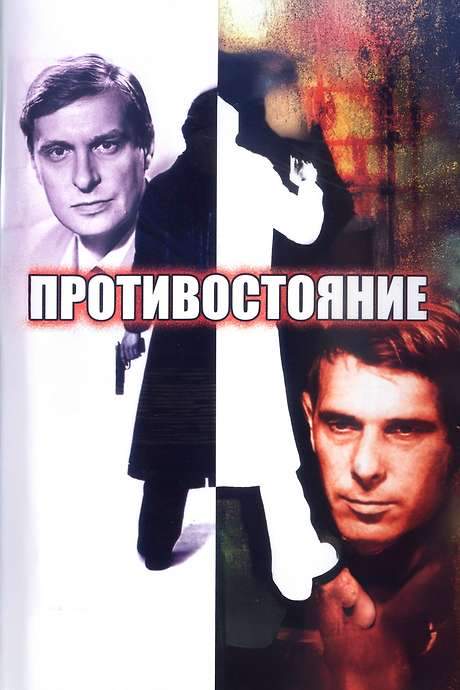
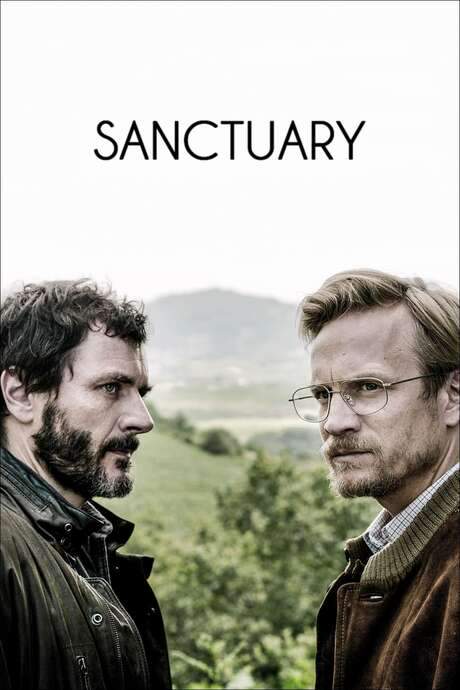
During the mid-1980s, a Spanish paramilitary group known as GAL hunts and eliminates members of the ETA terrorist organization who have sought refuge in southern France. As violence escalates, Grégoire Fortin, an advisor to the French Minister of Justice, and Domingo ‘Txomin’ Iturbe, the leader of ETA, find themselves compelled to negotiate a resolution to the escalating conflict and search for a path towards peace in the volatile region.
Find where to stream, rent, or buy Sanctuary (2015) in the US with current JustWatch availability, up-to-date pricing, and platform listings for subscription, rental, and digital purchase options.
Warning: spoilers below!
Haven’t seen Sanctuary yet? This summary contains major spoilers. Bookmark the page, watch the movie, and come back for the full breakdown. If you're ready, scroll on and relive the story!
Trace every key event in Sanctuary (2015) with our detailed, chronological timeline. Perfect for unpacking nonlinear stories, spotting hidden connections, and understanding how each scene builds toward the film’s climax. Whether you're revisiting or decoding for the first time, this timeline gives you the full picture.
Last updated: October 09, 2025 at 16:04
Find frequently asked questions about the Sanctuary (2015) timeline, including chronological order, nonlinear jumps, cause-and-effect links, and scene sequence clarifications. This timeline FAQ helps explain when key events happen, how moments connect, and why the story unfolds in that specific order.
Wolfgang was sent to Freistatt after the Youth Office intervened following an incident where he showed his stepfather's pornography to his friends. At 14 years old, he was labeled 'aggressive, renitent, and disobedient' in his juvenile file, which justified his removal from his home in Osnabrück. His mother promised to bring him back at Christmas, but the promise proved hollow as the system kept him trapped.
Earlier in the timeline, Wolfgang's defiance toward his stepfather sets the stage for his removal from home.
Wolfgang is chained from the ceiling in the basement and left in a near-comatose state, experiencing visions and flashbacks. Among these is a memory of his mother on a sunlit beach, which hints at an incestuous dynamic in their relationship. The scene represents the psychological and physical breaking point of Wolfgang's time at the institution.
The opening credits show his mother on a beach, foreshadowing this traumatic memory.
Anton's suicide occurs after he and Wolfgang are returned to Freistatt following their failed escape attempt. Anton reveals he has no real family in Osnabrück and was not actually from there, his entire identity was fabricated. Having nowhere to go and having experienced the brutal system's full force, Anton becomes despairing and takes his own life.
During the escape, Anton admits he has no home to return to, foreshadowing his hopelessness.
When Wolfgang and Anton reach Osnabrück after escaping Freistatt, Anton admits he lied about having a family there, he is Afro-German and has no real home or relatives. Wolfgang, whose own family situation is already complicated, chooses not to bring Anton with him to his mother's house. This decision reflects Wolfgang's growing emotional isolation and inability to help others even when he wants to.
Anton's claim of being from Osnabrück earlier proves false when he admits to Wolfgang that he made it up.
After returning to Freistatt following the escape, Wolfgang's psychological state has been shattered by trauma and abuse. When Angelika, the housefather's daughter, comes to say goodbye before leaving to study in Hamburg, Wolfgang attempts to rape her. This act demonstrates how the systematic abuse has twisted his ability to form connections, turning his trauma and desire into violence against the one person who showed him tenderness.
Angelika had previously betrayed Wolfgang by showing his letter to her father, breaking his trust.
On Christmas Eve, Brother Krapp, one of the staff members who had shown some understanding toward the boys, abruptly leaves Freistatt. It is then revealed that Krapp had been sexually abusing Mattis, the weakest pupil who was frequently targeted for punishment. This revelation shocks the boys and shatters whatever trust remained in the institution's staff.
Mattis was consistently singled out for punishment, hinting at his vulnerability being exploited.
When Wolfgang briefly returns to his family during the escape, his stepfather refuses to acknowledge him. The stepfather had handed Wolfgang over to the Youth Office in the first place and clearly views him as a problem. When Wolfgang returns, the stepfather locks the car and drives away, leaving Wolfgang standing alone, this moment symbolizes the complete rejection Wolfgang experiences from his family.
The stepfather's initial decision to send Wolfgang away establishes his hostile attitude.
In the final scene, Wolfgang rides a train passing Freistatt while in the distance he sees the other boys riding a draisine (rail bike) across the mire. This ambiguous ending suggests Wolfgang is moving toward an uncertain future, still haunted by his experiences but no longer trapped in the institution. The draisine image represents both the continued captivity of the remaining boys and the small freedoms they carve out within the oppressive system, something Wolfgang can now only observe from outside.
The boys had used the draisine for transport across the mire during their time at Freistatt.
Wolfgang receives a hedgehog slice (a cake) from his mother for his birthday at Freistatt, a small connection to home. However, the housefather Brockmann keeps the cake for himself and eats it, while Bernd burns Wolfgang's photograph of his mother. These acts of deprivation sever Wolfgang's remaining ties to his family and represent how the institution systematically destroys any comfort or hope the boys possess.
Wolfgang brought a photo of his mother to Freistatt as a keepsake, making the burning of it particularly cruel.
The film hints at an unhealthy, almost incestuous dynamic between Wolfgang and his mother. In the basement scene, Wolfgang experiences a memory of his mother on a sunlit beach that feels charged with inappropriate longing. She promised to bring him home at Christmas but never did, instead starting a new family with his stepfather. Her failure to protect him from the system and her eventual abandonment suggest a deeply complicated, possibly codependent relationship that contributed to Wolfgang's psychological damage.
The opening credits show his mother on a beach, establishing this troubling memory early.
During recreation, when Brother Wilde attempts to confiscate the trunk radio, Anton leads the boys in singing 'Sometimes I Feel Like a Motherless Child,' a Gospel song about feeling abandoned and alone. The song becomes a symbol of the boys' collective longing for freedom and their sense of abandonment by both their families and the system meant to care for them. The chant of 'Freedom' that follows marks a rare moment of unified resistance.
The song anticipates the later revelations about family abandonment and institutional abuse.
Discover curated groups of movies connected by mood, themes, and story style. Browse collections built around emotion, atmosphere, and narrative focus to easily find films that match what you feel like watching right now.
Gripping stories where negotiation and violence collide in the shadows of power.Explore more movies like Sanctuary that dive into tense, high-stakes political dramas. These films feature complex negotiations, shadowy operations, and morally gray characters caught between conflicting ideologies, perfect for viewers who enjoy heavy, steady-paced historical thrillers.

Stories typically revolve around a central mediator or operative forced to navigate a dangerous conflict between two opposing, often extremist, factions. The narrative builds tension through dialogue, strategy, and the constant threat of violence, focusing on the psychological burden of seeking peace in a world dominated by war.
Movies are grouped here for their shared focus on morally complex political landscapes, their high emotional weight and tension, and their exploration of the grim realities of conflict resolution. They share a dark tone, steady pacing, and an intense, heavy viewing experience.
Harrowing tales of individuals crushed by, yet resisting, oppressive systems.Find films similar to Sanctuary that explore the harsh reality of life under authoritarian control. If you were gripped by the depiction of systemic abuse, psychological damage, and desperate resilience, these movies offer similarly oppressive, traumatic, and heavy viewing experiences.

The narrative follows a protagonist or group enduring relentless pressure from an unjust system. It's a cycle of punishment, failed escapes, and psychological disintegration, leading to an ambiguous ending that underscores lasting scars rather than clear victory.
These films are united by their oppressive mood, high intensity, and exploration of trauma inflicted by powerful systems. They share a dark tone, heavy emotional weight, and a focus on the harsh, often hopeless, reality of resistance.
Don't stop at just watching - explore Sanctuary in full detail. From the complete plot summary and scene-by-scene timeline to character breakdowns, thematic analysis, and a deep dive into the ending - every page helps you truly understand what Sanctuary is all about. Plus, discover what's next after the movie.
Read a complete plot summary of Sanctuary, including all key story points, character arcs, and turning points. This in-depth recap is ideal for understanding the narrative structure or reviewing what happened in the movie.

Discover the characters, locations, and core themes that shape Sanctuary. Get insights into symbolic elements, setting significance, and deeper narrative meaning - ideal for thematic analysis and movie breakdowns.