
Plot Explained Spoilers guaranteed!
Plot Explained

Browse by genre

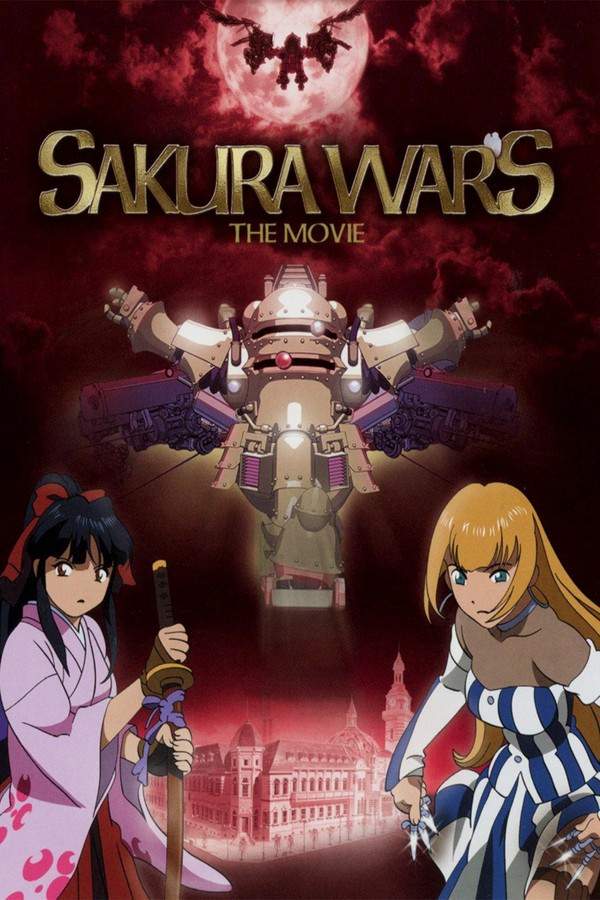
Sakura Wars: The Movie (2001) movie poster

Characters & Themes

Sakura Wars: The Movie (2001) Characters, Setting & Themes Explained

Release, runtime and language
2001 · 85 mins · Japanese
Directed by
Mitsuru Hongo
Starring
Akemi Okamura, Takehito Koyasu, Chisa Yokoyama, Keiji Fujiwara, Yuriko Fuchizaki, Mayumi Tanaka

In turn‑of‑the‑century Japan, after a devastating Demon‑Human war, the government builds a squadron of giant mecha that can only be piloted by those with strong spirit. Discovering that young women possess the needed spirit, they recruit an international group of youths. To keep the project secret, the pilots are presented to the public as a theater troupe, forcing them to study Shakespeare as rigorously as they train for combat.

On this page (8)
  1. 1 Where to watch
  2. 2 Characters explained (12)
  3. 3 Where & when it takes place
  4. 4 Themes & meaning (3)
  5. 5 Character & meaning questions
  6. 6 Movie threads
  7. 7 Movies like Sakura Wars: The Movie
  8. 8 Every angle

Where to watch

Where to Watch Sakura Wars: The Movie (2001)

Where can you watch Sakura Wars: The Movie? Stream, rent or buy it in the US, including on Crunchyroll: current JustWatch availability with up-to-date prices.

Streaming availability powered by JustWatch

12 main characters · contains spoilers

Sakura Wars: The Movie Characters Explained: Who Is Who

The main characters of Sakura Wars: The Movie (2001), heroes and villains: what drives them, how they change over the course of the story and what each of them reveals about the film's bigger ideas.

  • Sakura Shinguji (Chisa Yokoyama)

    A disciplined swordswoman and the Flower Division's steady leader, Sakura carries the weight of guiding both combat missions and the troupe's public performances. She remains calm under pressure, coordinating teamwork and keeping morale high as demons threaten Tokyo. Her resolve to protect her friends drives critical operations, even when the theater's façade is at stake.

    • 🗡️ Swordmaster
    • 👑 Leader
    • 🛡️ Loyal
  • Sumire Kanzaki (Michie Tomizawa)

    The Imperial Revue's lead actress, Sumire combines stage charisma with tactical instincts, coordinating the troupe's dual life as performers and fighters. She supports Sakura's leadership and helps devise strategies during chaotic battles. Her resilience under pressure keeps the team focused on their mission.

    • 🎭 Performer
    • 🧭 Strategist
    • 🎗️ Resilient
  • Maria Tachibana (Urara Takano)

    A Russian ex-soldier with a hardened demeanor, Maria brings frontline experience and spiritual energy to the Flower Division. She demonstrates resourcefulness, as shown when she uses a spirit-energy bullet to defeat Hamilton. Her loyalty and rough wisdom anchor the team during deep treachery.

    • 🪖 Ex-soldier
    • 🧿 Mentor
    • 🧭 Resilient
  • Iris Chateaubriand (Kumiko Nishihara)

    A refined French telekinetic whose powers provide critical support in combat, Iris exudes calm confidence and strategic thinking. She manipulates objects with her mind to shield teammates and exploit battlefield opportunities. Her cool demeanor helps stabilize the group during the theater's chaos.

    • 🔮 Telekinetic
    • 👑 Aristocrat
    • 🧭 Strategist
  • Kanna Kirishima (Mayumi Tanaka)

    A Ryukyu karate expert who brings blunt force and practical fighting skill to the team. Kanna's no-nonsense demeanor complements the more cerebral members, and she tackles demons with decisive physical power. Her discipline embodies the division's martial spirit.

    • 🥋 Martial Artist
    • ⚡ Fighter
    • 🛡️ Loyal
  • Orihime Soletta (Maya Okamoto)

    A Japanese-Italian aristocrat whose intellect and charm aid the Flower Division both on and off the battlefield. She contributes to tactical planning and helps navigate the political pressures surrounding the theater and the city. Her bonds with teammates deepen as they confront manipulation and danger together.

    • 🎎 Aristocrat
    • 💼 Social Circle
    • 🧭 Loyal
  • Leni Milchstraße (Kazue Ikura)

    A German dancer whose artistry and quick wits bring flexibility to the team in crisis. Leni's performances and street-smarts help the group navigate both public scrutiny and private threats. Her presence deepens the ensemble's dynamics and adds an international flavor to their fight.

    • 💃 Dancer
    • 🧠 Strategist
    • 🌟 Member
  • Ratchet Altair (Akiko Kuno)

    The ambitious former leader of Star Division who joins the Flower Division to forge a new European-style unit in New York City. Her blunt, violent approach creates friction with Sakura and challenges the team's cohesion. Her arc pivots around trust, forgiveness, and the cost of leadership.

    • ⚔️ Commander
    • 🌀 Ambitious
    • 🤝 Redeemed
  • Yuichi Kayama (Takehito Koyasu)

    Moon Division captain who orchestrates liberating Yoneda and coordinating forces to defeat the Japhkiels. He upholds the law and represents a stabilizing force amid chaos, aiming to arrest Furlong and restore balance to Tokyo. His actions bridge the military, naval, and magical elements of the conflict.

    • 🛰️ Officer
    • 🗡️ Loyal
    • 🧭 Strategist
  • Brent Furlong (Koichi Yamadera)

    An American corporate leader using Douglas-Stewart to manipulate Tokyo's defense and push a dangerous agenda. He seeks to replace the Flower Division with Japhkiels, revealing the dark side of industrial power. His schemes drive much of the conflict and escalate the crisis for the city.

    • 💼 Corporate Power
    • 🗡️ Villain
    • 🧪 Manipulator
  • Patrick Hamilton (Keiichi Nanba)

    A near-immortal henchman whose manipulative maneuvers subvert Orihime and complicate the Flower Division's efforts. His motives are opaque, and he thrives on sowing chaos and exploiting others' trust. His downfall comes as the truth about his nature is revealed and opposed by the heroes.

    • 🪄 Villain
    • 🧪 Supernatural
    • 🗝️ Manipulator
  • Ikki Yoneda (Masaru Ikeda)

    Imperial commander who is rescued and restored to authority as the Flower Division fights to retake the theater. He upholds discipline and order, maintaining a sense of duty throughout the crisis. Yoneda's presence anchors the military response and legitimizes actions against Furlong and Hamilton.

    • 🎖️ Commander
    • 🛡️ Authority
    • 🤝 Protector

Last updated: October 03, 2025 at 14:35

Was this helpful?

Setting

Where and When Does Sakura Wars: The Movie Take Place?

The setting of Sakura Wars: The Movie (2001): the year and time period, the places and locations, and how they shape the characters, the mood and the tension of the story.

Time period

1926

Set in 1926 Tokyo, a year of rapid modernization and shifting power dynamics. Steam power dominates as the city leans into industrial progress while secret demon threats collide with the Imperial Revue's glamorous facade. The Christmas season provides a backdrop of festive spectacle amid escalating battles and corporate intrigue.

Location

Tokyo, New York City, Grand Imperial Theater (Ginza)

The story unfolds in Tokyo during a Christmas season, centered on the Grand Imperial Theater in Ginza which doubles as the Imperial Combat Revue's base and front for their theater performances. The city is a modern metropolis powered by steam, where colossal Koubu-Kais mechs defend against demonic attacks born from negative human emotion. New York City looms as a future frontier for Ratchet Altair's ambitions, hinting at cross-continental expansion and the Flower Division's evolving reach.

  • 🏙️ Tokyo
  • 🗼 Ginza
  • 🎭 Imperial Revue
  • ⚙️ Steam-powered tech
  • 🛡️ Mecha battles

Last updated: October 03, 2025 at 14:35

Was this helpful?

3 major themes

Sakura Wars: The Movie Meaning: Themes & Message Explained

What is Sakura Wars: The Movie (2001) really about? The emotional, social and philosophical themes the film keeps returning to, its symbolism and the message beneath the surface.

  • Duty

    The Flower Division balances their sacred duty to defend Tokyo with the pressure to maintain their public facade as a theater troupe. Each battle tests resolve and loyalty, forcing characters to choose between personal safety and the greater good. Unity under pressure becomes the group's defining strength as they fight demons and political machinations alike.

  • Power

    Douglas-Stewart's pursuit of dominance reveals how corporations can weaponize technology and even symbolic demons to reshape defense priorities. Furlong's influence manipulates theater leadership, arrests, and military authority, illustrating a ruthless hunger for control. The Japhkiels embody a dangerous fusion of secret power with malevolent forms, showing the cost of unchecked ambition.

  • Identity

    The line between performer and fighter blurs as the Flower Division fights under cover and for public display. Ratchet's arrival from New York and the internal tensions among the divisions test loyalty and forgiveness, especially when past betrayals resurface. The climactic battle culminates in a unity-of-purpose that undercuts rival plans and reframes each character's role.

Last updated: October 03, 2025 at 14:35

Was this helpful?

Character & theme questions

Sakura Wars: The Movie Characters & Meaning: Your Questions Answered

The questions people ask about Sakura Wars: The Movie (2001): who the characters really are, their relationships, what the symbols mean, where it takes place and what the movie is really about. Each answer contains spoilers.

Q1

Where is the Grand Imperial Theater located and what role does it play?

The Grand Imperial Theater is located in Ginza, Tokyo. It serves a dual purpose: as the front for the Imperial Combat Revue's operations and as the Flower Division's public theater venue. This allows the covert mecha pilots to train and fight in secret while maintaining a legitimate public presence as performers.

  • grand imperial theater
  • ginza
  • tokyo
  • imperial combat revue
  • flower division
Q2

What kind of world does Sakura Wars depict?

The movie portrays aalternate 1926 Tokyo as a modern metropolis powered by steam technology. The city faces demonic attacks born from negative human emotions, defended by colossal Koubu-Kais mechs. This creates a unique blend of historical aesthetics with science fiction elements.

  • steam-powered
  • tokyo
  • 1926
  • koubu-kais
  • mecha
  • demons
Q3

When is the movie set?

Sakura Wars is set in 1926 Tokyo during the Christmas season. This was a period of rapid modernization in Japan, and the story uses this historical context to explore themes of tradition versus progress while the city deals with both industrial advancement and supernatural threats.

  • 1926
  • christmas
  • tokyo
  • historical setting
  • modernization
Q4

What is the Flower Division?

The Flower Division is an elite unit of the Imperial Combat Revue, comprised of young women who possess the strong spirit required to pilot giant Koubu-Kais mechs. To keep their combat mission secret, they present themselves to the public as a theater troupe, rigorously studying Shakespeare while training for demon battles.

  • flower division
  • imperial combat revue
  • mecha pilots
  • secret unit
Q5

Who is Sakura Shinguji and what is her role in the story?

Sakura Shinguji is the disciplined leader of the Flower Division, serving as both their combat commander and the steady presence guiding the troupe's public performances. Known for remaining calm under pressure, she coordinates teamwork and maintains morale while defending Tokyo from demonic threats.

  • sakura shinguji
  • leader
  • flower division
  • commander
  • swordswoman
Q6

Who is Ratchet Altair and what are her ambitions?

Ratchet Altair is the former leader of Star Division who joins the Flower Division with ambitions to establish a new European-style unit in New York City. Her blunt and violent approach creates friction with Sakura, and her arc centers on trust, forgiveness, and the challenges of leadership.

  • ratchet altair
  • star division
  • new york
  • leader
  • ambitions
Q7

What does the Duty theme represent in Sakura Wars?

The Duty theme explores how the Flower Division balances their sacred responsibility to defend Tokyo with maintaining their public theater facade. Each battle tests their resolve and loyalty, forcing characters to choose between personal safety and the greater good. Unity under pressure becomes their defining strength.

  • duty
  • responsibility
  • loyalty
  • teamwork
  • sacrifice
Q8

What does the Power theme explore in the movie?

The Power theme examines how corporations can weaponize technology and manipulate symbolic demons for control. Characters like Brent Furlong use Douglas-Stewart to influence defense priorities, arrest military leaders, and push dangerous agendas, illustrating the corruptive nature of unchecked ambition.

  • power
  • corporations
  • control
  • ambition
  • corruption
  • furlong
Q9

What is the Identity theme about in Sakura Wars?

The Identity theme centers on the blurring line between performer and fighter, as the Flower Division fights both under cover and for public display. Ratchet's arrival and internal tensions test loyalty and forgiveness, especially when past betrayals resurface. The climactic battle unites the group and redefines each character's role.

  • identity
  • performer
  • fighter
  • loyalty
  • forgiveness
  • unity
Q10

What are Koubu-Kais and who can pilot them?

Koubu-Kais are giant mechs that defend Tokyo against demonic attacks spawned from negative human emotions. They can only be piloted by individuals with strong spirit, which is why the government discovered that young women possess the necessary spiritual energy to operate these powerful machines.

  • koubu-kais
  • mecha
  • spirits
  • pilots
  • demons
  • giant robots
Q11

Why do the pilots also study theater and Shakespeare?

The pilots must study Shakespeare and perform theater to maintain their cover as a legitimate troupe. This dual life requires them to balance rigorous combat training with artistic discipline, creating a unique narrative where theatrical skills and combat prowess coexist within the same team.

  • theater
  • shakespeare
  • troupe
  • cover
  • dual life
  • performance
Q12

Where do the demonic threats in the movie come from?

The demons attacking Tokyo arise from negative human emotions, a supernatural consequence of people's darkest feelings. This creates an ongoing threat that the Flower Division must constantly combat, linking the emotional state of the city's inhabitants directly to the frequency and intensity of demon incursions.

  • demons
  • negative emotion
  • threat
  • tokyo
  • supernatural

Movie threads

More Movies Like Sakura Wars: The Movie, by Mood & Story

Curated lists built around what makes Sakura Wars: The Movie tick: the same mood, the same kind of story or the same emotional payoff. Each list explains why these movies belong together.

Movies with secret hero teams like Sakura Wars: The Movie

Groups of heroes hiding their identities while battling monumental threats. If you enjoyed the dual-life premise of Sakura Wars: The Movie, you'll like these stories about covert teams hiding in plain sight. This list includes similar action and sci-fi movies where heroes balance a public facade with a dangerous secret mission.

  • heroic
  • tense
  • action-packed
  • unifying
  • dramatic
  • covert
  • Tone: heroic, hopeful, tense
  • Pacing: fast, action-driven
Why these movies?

The story pattern: These narratives often follow a found family of specialists who must maintain a public cover while facing escalating dangers. The plot revolves around the challenge of keeping their mission secret, the bonds formed under pressure, and thrilling confrontations that test their resolve.

Why they belong together: Movies are grouped here for their shared premise of a clandestine team operating behind a mundane front. They blend high-stakes action with the drama of secret identities, creating a specific vibe of heroic duty mixed with everyday camouflage.

Steampunk mecha action movies similar to Sakura Wars: The Movie

Hopeful stories of giant robots defending alternative-historical worlds. For fans of the unique aesthetic in Sakura Wars: The Movie, this list features similar sci-fi and anime films with steampunk settings and giant robot action. Discover movies that share this blend of alternative history, hopeful tone, and mechanical warfare.

  • hopeful
  • heroic
  • action-packed
  • uplifting
  • steampunk
  • mecha
  • Tone: hopeful, heroic, uplifting
  • Pacing: fast-paced, spectacle-driven
Why these movies?

The story pattern: The narrative typically involves a defense force using anachronistic advanced technology to protect their city or world from otherworldly threats. The journey focuses on mastering the machines, uniting as a team, and triumphing against overwhelming odds through courage and ingenuity.

Why they belong together: These films are grouped by their distinctive steampunk visual style and the central role of piloted mecha in the action. They share a specific mood blending hopeful heroism with the gritty, brass-and-gear aesthetic of an imagined past.

If you liked this

Movies Like Sakura Wars: The Movie

Similar movies to Sakura Wars: The Movie: the same genre, themes or kind of story. Each one comes with its own plot summary, timeline and ending explained.

Browse all movie summaries

Every angle

Sakura Wars: The Movie (2001) Explained: Plot, Timeline & Characters

Everything about Sakura Wars: The Movie in one place: what happens in the plot summary, the timeline in chronological order, the characters and meaning and a spoiler-free summary. What's After the Movie adds the cast, box office and post-credit scenes.

Coming soon on iOS and Android

The Plot Explained Movie Summary App

Plot summaries, endings explained and timelines on your phone. Catch up on any movie in minutes, save your favorites and never miss a twist again.

Be the first to know when we launch. Your email stays private, always.

Learn more about the app