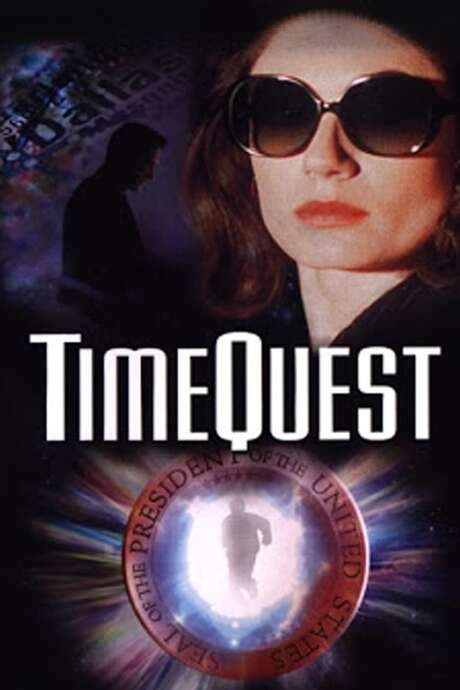
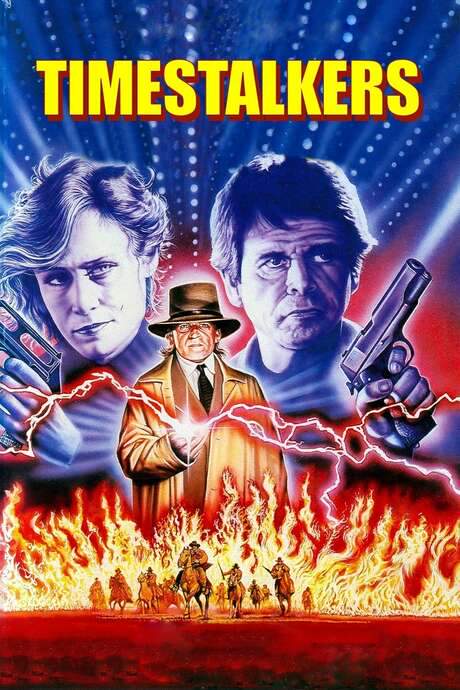
David Rhodes is a college history professor who becomes obsessed with the death of his older brother Chris Rhodes during the Vietnam War in 1966. When his girlfriend, Laura Whittaker, arranges an interview with the brilliant yet quirky physicist Dr. Koopman, David learns that Koopman’s time-travel theories are no longer theoretical dreams but a practical method to move through time. The possibility of rewriting a painful past ignites a desperate resolve in him: could he save his brother by preventing the Kennedy assassination in 1963, with the hope that Kennedy would pull troops out of Vietnam?
David materializes on the rooftop of the Texas School Book Depository on the day of the fateful shooting, intent on stopping the events that lead to his brother’s fate. Yet fate proves stubborn. He cannot prevent Lee Harvey Oswald from killing Kennedy, and his presence in the past raises suspicions and alarms that quickly turn him into a target. As the authorities piece together his inexplicable knowledge of Oswald’s life, David finds himself framed for murder, his future memories both a bridge and a trap. The tension crescendos when Jack Ruby, the man who shrouds the era in further tragedy, kills David, sealing his first experiment in time travel with a tragic, public end.
Back in the present, Laura discovers the grim newspaper reports of David’s fate and slices through time to the day before the assassination. Her mission is precarious and perilous: she survives a brutal car accident on the way back to the moment she left, spending a day at Parkland Memorial Hospital as she regroups. After she recovers and escapes the hospital, she likewise fails to alter history in a way that saves Kennedy, yet she succeeds in saving David from capture, a small but meaningful victory that plants the seed for a more hopeful outcome.
Meanwhile, David confronts the astonishing consequence of his leap through time: his younger self has slipped into a coma, a medical manifestation of his mind occupying two places at once. The pair—rooted in a shared purpose and driven by fragile hope—reaches out to 1963’s Koopman, convincing him that they are from a timeline yet to be written. The exchange of information becomes a turning point, and Koopman delivers a warning to the newly elected President about the consequences of the war in Vietnam, a warning that ironically pushes Johnson toward a harsher, more aggressive course.
In a twist that tests the limits of causality, present-day Koopman returns to intervene again, urging David and Laura to abandon their efforts to modify history. The moral and practical hazards of meddling with time loom large as they are pulled back toward the reality they inhabit. A subsequent visit to his brother reinforces a fragile sense of loyalty and care; Chris promises to look after his younger sibling, offering a quiet, human counterpoint to the sprawling, dangerous experiments of time travel.
When the dust settles and the trio reappears in the present, David makes a heartfelt proposal to Laura, embracing the possibility of a shared future. Yet the final revelation arrives with a quiet, almost understated certainty: the conversation with his brother—an unresolved moment from the past—seems to have persuaded Chris not to enlist, and, crucially, it reveals that he is alive. In a story where every action echoes through time, the outcome is not simply a rescue mission thwarted or a paradox avoided—it is a redefined family fate, reshaped by love, memory, and the stubborn hope that some lives can endure beyond the rupture of history.