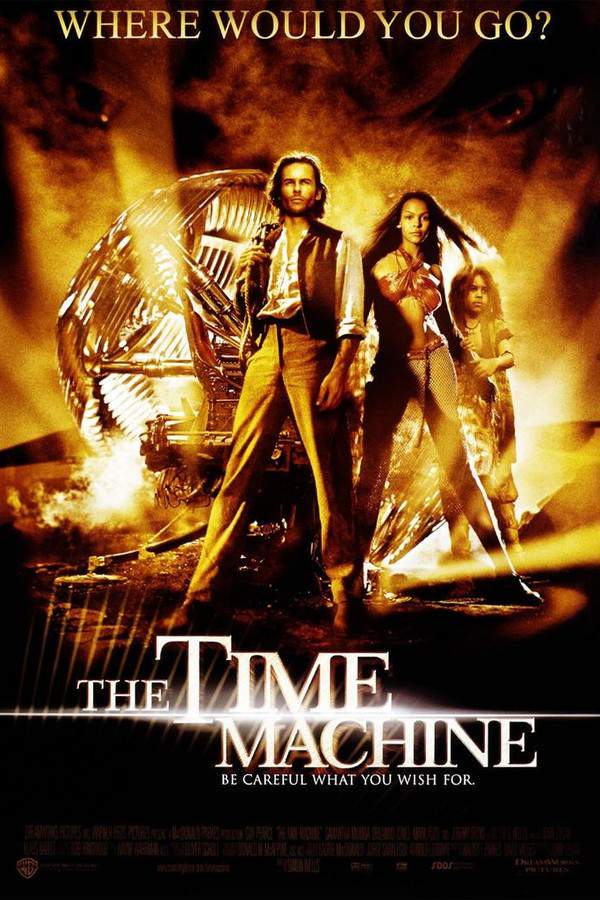
The grieving widower Ben Wilson is busy renovating an old guest house on the edge of his hometown, trying to juggle memories of his late wife with the daily care of his young daughter, Hillary Wilson. The quiet project is disrupted when a bus driver named Oscar arrives with a peculiar group of tourists who insist on staying at the remote property instead of the town’s larger hotel. As Ben lends a hand to one of the travelers, Quish, he discovers a bizarre clue: Quish’s passport bears stamps from disasters that happened decades apart, including the 1906 San Francisco earthquake, the Hindenburg disaster, and the 1980 Mount St. Helens eruption. The unsettling discovery is met with a chilling warning to leave town from Quish, but the tension escalates when Caldwell, Ben’s harsh father-in-law and the town’s stern judge, seizes custody of Hillary, blaming Ben for his daughter’s death.
One of the tourists, Reeve, confirms Ben’s fears: the visitors are time-travelers who return to witness catastrophic events from the past. She drugs and seduces Ben, leaving him unconscious, while Oscar comes to his aid and revives him. The group’s eerie presence becomes even more menacing as a meteorite strike devastates the town, and in the chaos, Ben discovers Hillary alive at Caldwell’s house. They spend the night among the survivors, while the travelers observe the destruction with a detached curiosity that feels almost clinical. By the next day, the outsiders remain in town, and Ben pieces together a plan: they are awaiting a second disaster, this time aimed at a local school serving as a relief center.
The following catastrophe arrives in the form of a gas explosion that obliterates the building, killing Hillary and many of the other survivors, along with Quish who had tried to keep pace with Ben. The time-traveling tourists seize Ben, hoping to involve an official from their era—the Undersecretary—to examine and potentially repair his “timescape.” When Ben confronts Reeve about the moral cost of their missions, she coldly retaliates, slipping him Quish’s passport which secretly contains a hidden time device. Armed with the passport’s secret, Ben tunnels back to the previous evening.
In that pivotal moment, Ben attempts to evacuate Hillary from Caldwell’s house but is captured and jailed. He uses his single, precious phone call to reach his earlier self, and the two Bens orchestrate a daring escape from the jail. They rally the town’s people to safety at a church on the far side of the town, guiding them by playing the famous tune Für Elise on the church bells—an emotional cue tied to his late wife’s memory. With Hillary placed in the care of Ben’s earlier self, the two versions of the father work in concert to outrun the time-watchers and reunite with the Undersecretary, who agrees to return them to their original timeline.
The completion of the mission brings a quiet, almost domestic aftermath: Hillary helps manage the guest house’s bookings while Ben pores over old love letters from his late wife, a reminder of what was at stake. Then, in a final, poignant reversal, Ben vanishes from Hillary’s sight—leaving behind only the lingering echo of Für Elise on the piano. The film closes on a bittersweet note, balancing sorrow and resilience as the community rebuilds, and Hillary remains tethered to the memory of the man who fought to protect her, even across the folds of time.