Plot Explained Spoilers guaranteed!
Plot Explained

Browse by genre

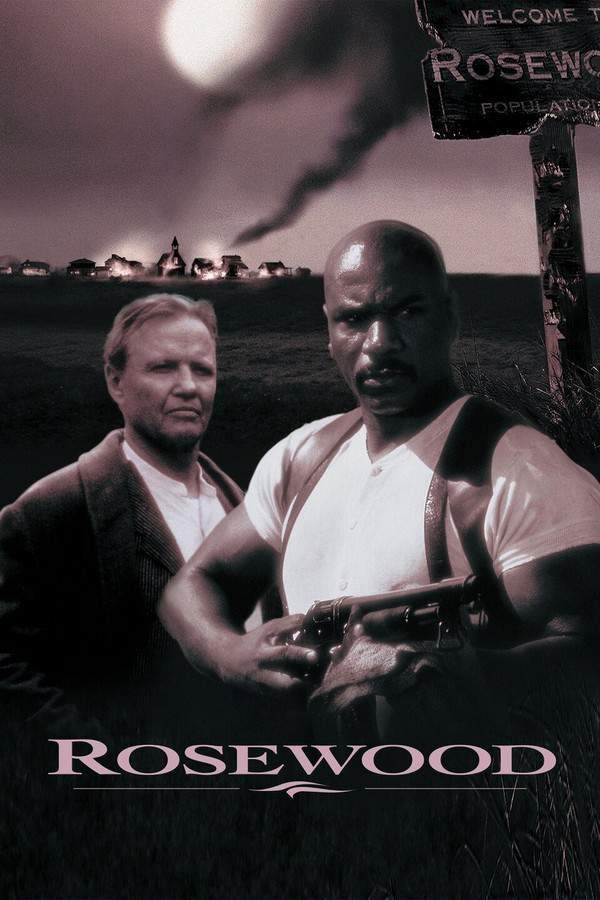
Rosewood (1997) movie poster

Plot Summary

Rosewood (1997) Plot Summary Explained

Release, runtime and language
1997 · 140 min · English
JustWatch #1,919 30
Directed by
John Singleton
Starring
Don Cheadle, Jon Voight, Ving Rhames

The quiet town of Rosewood, Florida, is violently attacked by a white mob in this intense drama inspired by a true story. As chaos erupts, music teacher Sylvester and a mysterious newcomer, Mann, find the courage to fight back. A local white grocer, John, puts his own safety at risk to safeguard the town's women and children from the invading mob. The film explores the devastating impact of racial violence and highlights the strength and resilience of the human spirit in the face of adversity.

On this page (6)
  1. 1 Where to watch
  2. 2 What happens: full plot
  3. 3 Plot questions answered
  4. 4 Movie threads
  5. 5 Movies like Rosewood
  6. 6 Every angle

Where to watch

Where to Watch Rosewood (1997)

Where can you watch Rosewood? Stream, rent or buy it in the US, including on Philo, Kanopy and YouTube Free: current JustWatch availability with up-to-date prices.

Streaming availability powered by JustWatch

Full plot summary · contains spoilers

What Happens in Rosewood: Full Plot Summary

The whole story of Rosewood (1997) explained, from the opening scene to the final frame: every key event, every twist and what it all adds up to. Read it as a quick recap before the sequel, to check a scene you missed, or to finally understand what really happened.

Mann is a quiet, enigmatic World War I veteran who arrives in Rosewood, a small Florida town with a strong Black community soul, to scout land that might become his new home. The town is defined by the Carrier family, an upwardly mobile Black clan led by the steadfast matriarch Aunt Sarah and her proud, headstrong son, Sylvester Carrier. The Carriers embody a sense of ambition and dignity that contrasts with the tensions simmering on the town’s edges, and Mann finds himself drawn into their world even as he guards his own concealed past and purpose.

As the days unfold, Mann meets Beulah "Scrappie" Carrier, Sylvester’s cousin, and the two form a tentative, quickly blossoming bond. The romance unfolds under the gaze of a community trying to protect itself while navigating a harsh social landscape where visibility equals vulnerability. Aunt Sarah works as a housekeeper for a white couple, James Taylor and his wife Fanny, who live in the white town of Sumner. Fanny’s restless, complicated life becomes a catalyst for the escalating crisis: she has a long history of infidelity, she hides her injuries behind a fragile veneer of resilience, and she confides in few people. When a violent confrontation with her lover turns deadly, she leaves her home in distress and seeks help, muttering a story that she hopes will shield her from further harm.

The moment the white townspeople hear Fanny’s claim that she was beaten by a Black man, the spark of fear, rumor, and prejudice is fanned into action. An escaped Black convict, Jesse Hunter, becomes a focal point for the mob’s suspicions, and a posse from Sumner and neighboring towns rides toward Rosewood to ferret out the supposed threat. The Black residents brace for danger, and Mann, a stranger in a tense place, fears being accused of assault and lynched. He contemplates leaving, even as local residents gather in a church to discuss defense strategies and the possibility of protecting their community from a wider attack.

Outside the church, a friction-filled encounter with John Wright—a Navy veteran and owner of a general store, one of the few white residents who seems to grasp the stakes—underscores the fragility of trust across racial lines. Wright is entangled in a torrid extramarital affair with Jewel, Sylvester’s cousin, adding another layer of personal peril to the already volatile situation. Mann exits the scene, wary of where loyalties may lie as rumors swirl and the mob’s hunger for retribution grows louder.

The situation erupts when the mob arrives at the Carrier home. Aunt Sarah, attempting to calm the crowd, reveals that Fanny’s attackers were white men, but a shot rings out and she is killed as she pleads for calm. The violence explodes: Sylvester shoots and kills two members of the posse, and the mob retaliates with brutal force. The settlement comes under assault, and Rosewood becomes a battlefield. Mann, initially planning an exit, experiences a turning point as he witnesses the lynching of a Black blacksmith, Sam Carter, and realizes that his own fate may be sealed by the crowd’s rage if he stays silent.

With danger closing in, the situation spirals into a broader crisis that spills into nearby towns. The posse’s reach grows as more white men descend with guns and authority, turning roads into chokepoints and forcing many to seek safety elsewhere. Wright, who had once opposed the mob in part, chafes under the escalating violence and tensions between the communities. In a tense turn, he helps arrange a train escape for surviving members of the Carrier family, a moment that crystallizes the thin thread of humanity still operating within a scene of collective fear. Scrappie and Mann share a heartfelt kiss before he leaves with Sylvester, a quiet moment of tenderness amid the chaos, hinting at a future where memory and longing persist beyond immediate danger.

In the aftermath, James Taylor confronts Fanny and confronts the truth she has long avoided: her injuries were the result of her own deception and her extramarital life, not the act of a Black attacker. The sheriff, the town’s officials, and the mob all reckon with the consequences of their actions, even as the landscape of Rosewood and its surrounding communities remains scarred by the violence. The body count is officially recorded as eight—six Black residents and two white—but survivor accounts and Black newspapers offer far higher figures, suggesting a massacre with a reach beyond the town’s borders and a violence that reverberates through the region.

What unfolds in Rosewood is a paradox of fear and courage, of a community’s determination to defend itself against a threat amplified by rumor and racial hatred, and of individuals who must decide whether to stand and fight or to flee. Mann’s presence in this story acts as a quiet counterweight to the mob’s fury, a reminder that the human impulse toward protection and solidarity can endure even in the face of overwhelming hostility. The Carrier family’s resilience—Aunt Sarah’s leadership, Sylvester’s defiant stance, and Beulah Scrappie’s loyalty—remains at the heart of the narrative, even as the town is reduced to ashes and echoes of names that once defined a vibrant community.

In the end, the tragedy portends a truth about the era: the official tally may be humble, but the legacy of Rosewood looms large, with memories and newspaper reports offering divergent accounts of what happened. The story holds up a mirror to a country wrestling with its own contradictions, a reminder that history is written in the voices of survivors and witnesses who must carry forward the memory of those who were harmed, even as the last train carries away those who dared to hope for safety, dignity, and a place to call home.
Last updated: October 10, 2025 at 16:04

Was this helpful?

Plot questions answered

Rosewood Plot Explained: Your Questions Answered

The questions people ask most about Rosewood (1997): what happens in the confusing scenes, why the characters do what they do, the twists, hidden details and what the ending means. Each answer contains spoilers.

Q1

Why did Fanny falsely accuse a Black man of attacking her?

Fanny Taylor was having an affair with a white lover. When a violent confrontation with her lover left her injured, she feared the truth would expose her infidelity and ruin her life. Instead of revealing that white men hurt her, she claimed a Black man attacked her, a lie that the white townspeople readily believed and used as justification for the violence that followed.

Foreshadowing: The film establishes Fanny's history of infidelity early, showing her hidden injuries and fragile state before she makes her false accusation.

  • fanny taylor
  • false accusation
  • racial violence
  • rosewood massacre
  • mob mentality
Q2

What triggered the mob to attack Rosewood?

The attack was sparked when Fanny Taylor falsely claimed she was beaten by a Black man after her affair with a white lover turned violent. This accusation, combined with the recent escape of Black convict Jesse Hunter, gave white residents of neighboring Sumner a supposed justification to form a posse and ride toward Rosewood to hunt for the alleged Black attacker.

Foreshadowing: Fanny's injuries and the rumor about Jesse Hunter's escape create the perfect conditions for the mob to form.

  • rosewood massacre
  • 1923
  • mob attack
  • false accusation
  • jesse hunter
Q3

Why was Aunt Sarah killed during the mob confrontation?

Aunt Sarah Carrier, the matriarch of the Carrier family, attempted to calm the mob by revealing that Fanny's attackers were actually white men, not Black men. Despite her peaceful intent and plea for reason, a member of the posse shot her. Her death marked a turning point that escalated the violence into a full-scale massacre.

Foreshadowing: Earlier in the film, Aunt Sarah is established as the steady, wise leader of the community, making her tragic death a powerful narrative moment.

  • aunt sarah carrier
  • killed
  • mob violence
  • rosewood
  • shot
Q4

Why did Mann decide to stay and fight instead of leaving Rosewood?

Mann, a World War I veteran, initially planned to leave town to avoid being falsely accused of assault and potentially lynched. However, after witnessing the brutal lynching of Black blacksmith Sam Carter by the mob, he realized that staying silent meant becoming complicit in the violence. He returned to Rosewood to join the community's defense, marking his transformation from a cautious outsider to an active participant.

Foreshadowing: Mann's early hesitation and his clash with John Wright outside the church establish his conflicted loyalties before he witnesses Sam Carter's lynching.

  • mann
  • stay and fight
  • lynching sam carter
  • rosewood defense
  • transformation
Q5

How did John Wright help the Carrier family escape?

John Wright, a white store owner and Navy veteran who had been having an affair with Jewel Carrier, initially struggled with where his loyalties lay. As the violence escalated, he arranged for a train to carry surviving members of the Carrier family to safety beyond Florida. His act represented a thin thread of humanity amid the widespread racial violence, though he could not prevent the destruction of the town.

Foreshadowing: Wright's tense encounter with Mann outside the church hints at his internal conflict between the white mob and his personal relationships with Black residents.

  • john wright
  • carrier family escape
  • train
  • rosewood massacre
  • help
Q6

Why did Sylvester Carrier shoot two members of the posse?

Sylvester Carrier, Aunt Sarah's son, fired at the mob after they shot and killed his mother while she tried to reason with them. Driven by grief and the need to protect his family from the escalating violence, Sylvester killed two posse members in defense. His actions triggered a broader shootout and marked the point of no return in the conflict.

Foreshadowing: Sylvester's pride and headstrong nature are established early in the film, showing he would not passively accept violence against his family.

  • sylvester carrier
  • shootout
  • posse
  • mob violence
  • defense
Q7

What happened to Scrappie and Mann after the escape?

Before the Carrier family fled Rosewood on the train arranged by John Wright, Scrappie and Mann shared a heartfelt kiss, promising to reunite later. Mann departed with Sylvester to join the fight, while Scrappie escaped aboard the train with other survivors. Their brief romance represents a moment of tenderness and hope for the future amid the surrounding tragedy.

Foreshadowing: The film establishes the blossoming romance between Mann and Scrappie from his first day in town, building toward their tender goodbye.

  • scrappie carrier
  • mann
  • kiss
  • reunion
  • escape
  • rosewood
Q8

What was the actual death toll of the Rosewood massacre?

Official records reported eight deaths, six Black residents and two white men. However, survivor accounts and Black newspapers suggested the death toll was significantly higher, with many more victims unaccounted for or buried in unmarked graves. The true number remains disputed, with the film suggesting the massacre reached beyond Rosewood's borders.

Foreshadowing: The discrepancy between official accounts and survivor testimony is introduced early, hinting at the scale of the violence.

  • death toll
  • casualties
  • rosewood massacre
  • eight deaths
  • historical
Q9

Why did the white mob specifically target Rosewood?

Rosewood was a prosperous, predominantly Black town with a strong sense of community and ambition, represented by the Carrier family. This made it a target for the racial hatred and economic jealousy that fueled many such attacks during the Jim Crow era. Combined with the false accusation against a Black man and the escaped convict Jesse Hunter, Rosewood became a convenient target for white supremacist violence.

Foreshadowing: The film establishes Rosewood as a symbol of Black achievement and dignity, which stands in direct contrast to the mob's motivation for destruction.

  • rosewood target
  • mob attack
  • black town
  • jim crow
  • economic jealousy
Q10

What was Jesse Hunter's role in the Rosewood events?

Jesse Hunter was an escaped Black convict whose flight from authorities coincidentally occurred around the time of Fanny Taylor's false accusation. The white mob used his escape as additional justification for their pursuit of so-called Black criminals in Rosewood. However, Jesse Hunter himself never actually appears in the film, he became a convenient symbol for the mob's fears and a tool to escalate their violence against the town.

Foreshadowing: The news of Jesse Hunter's escape is introduced as a separate event that synchronizes with Fanny's accusation, amplifying the mob's perceived justification.

  • jesse hunter
  • escaped convict
  • justification
  • mob
  • fear

Movie threads

More Movies Like Rosewood, by Mood & Story

Curated lists built around what makes Rosewood tick: the same mood, the same kind of story or the same emotional payoff. Each list explains why these movies belong together.

Movies about communities under siege like Rosewood

Films where a group must defend itself against an overwhelming external threat. If you were gripped by the collective struggle in Rosewood, explore more movies like it. These films feature communities facing existential threats, highlighting themes of resilience, defense, and the human spirit tested by overwhelming violence.

  • urgent
  • oppressive
  • devastating
  • resilient
  • anxious
  • somber
  • Tone: tense, devastating, resilient
  • Pacing: variable, from steady build to chaotic intensity
Why these movies?

The story pattern: These narratives typically begin by establishing a peaceful community, which is then shattered by an attack or invasion. The story follows the group's desperate fight for survival, often weaving together multiple perspectives to show the collective emotional and physical toll of the siege.

Why they belong together: Movies in this thread are grouped by their shared structure of a community-focused crisis, high emotional stakes, and a tone that balances devastating loss with moments of profound human resilience and solidarity in the face of annihilation.

Historical injustice dramas similar to Rosewood

Sobering dramas based on true stories of systemic violence and resilience. For viewers seeking movies like Rosewood that confront difficult historical truths. These similar films are sobering dramas based on true events, focusing on themes of racial violence, survival, and the search for justice amidst overwhelming adversity.

  • somber
  • devastating
  • tense
  • oppressive
  • historical
  • resilient
  • Tone: tense, somber, devastating
  • Pacing: variable, often with a deliberate build
Why these movies?

The story pattern: Stories in this thread are grounded in real-world events, often following a linear chronology towards a known tragic outcome. The narrative journey is less about surprise and more about immersion, exploring the human experiences within a larger, horrifying historical context.

Why they belong together: These films are united by their commitment to depicting real historical tragedies, their heavy emotional weight, a somber and tense tone, and a focus on the psychological impact of systemic injustice on individuals and communities.

If you liked this

Movies Like Rosewood

Similar movies to Rosewood: the same genre, themes or kind of story. Each one comes with its own plot summary, timeline and ending explained.

Browse all movie summaries

Every angle

Rosewood (1997) Explained: Plot, Timeline & Characters

Everything about Rosewood in one place: what happens in the plot summary, the timeline in chronological order, the characters and meaning and a spoiler-free summary. What's After the Movie adds the cast, box office and post-credit scenes.

Coming soon on iOS and Android

The Plot Explained Movie Summary App

Plot summaries, endings explained and timelines on your phone. Catch up on any movie in minutes, save your favorites and never miss a twist again.
Be the first to know when we launch. Your email stays private, always.

Learn more about the app