Plot Explained Spoilers guaranteed!
Plot Explained

Browse by genre

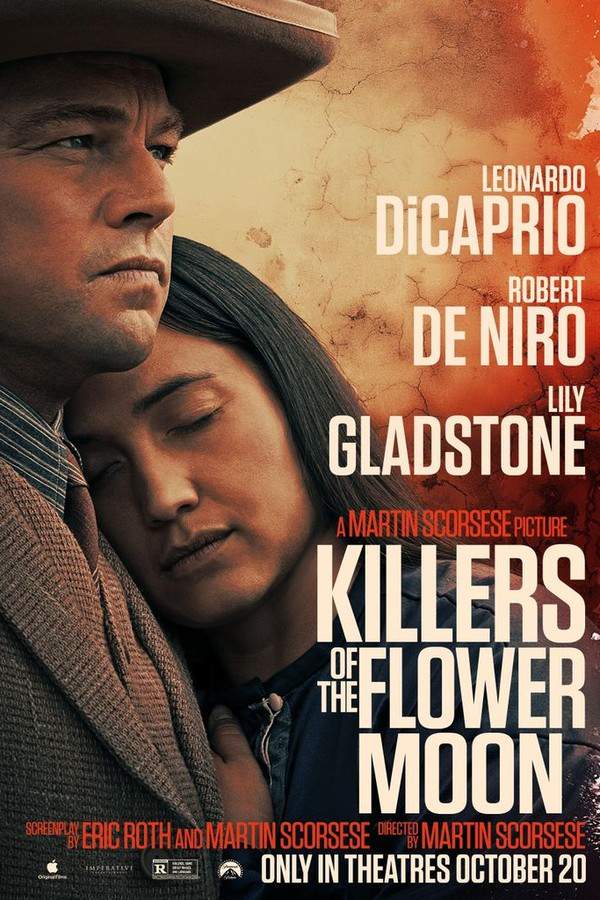
Killers of the Flower Moon (2023) movie poster

Plot Summary

Killers of the Flower Moon (2023) Plot Summary & Ending Explained

Release, runtime and language
2023 · 3 h 26 m · English
Echo score 74
JustWatch #1,205 45
Directed by
Martin Scorsese
Starring
Robert De Niro, John Lithgow, Leonardo DiCaprio, Brendan Fraser, Jesse Plemons, Lily Gladstone
Budget
$200M

In 1920s Oklahoma, the discovery of oil brought unexpected wealth and status to the Osage Nation. This prosperity attracted outsiders seeking to exploit the Osage through manipulation, intimidation, and violence. As the Osage people experience a series of mysterious deaths, an investigation uncovers a dark and sinister plot driven by greed and a lust for power, revealing the devastating human cost of unchecked ambition.

On this page (7)
  1. 1 Where to watch
  2. 2 What happens: full plot
  3. 3 Plot questions answered
  4. 4 How it ends
  5. 5 Movie threads
  6. 6 Movies like Killers of the Flower Moon
  7. 7 Every angle

Where to watch

Where to Watch Killers of the Flower Moon (2023)

Where can you watch Killers of the Flower Moon? Stream, rent or buy it in the US, including on Apple TV, Amazon Video and Apple TV Store: current JustWatch availability with up-to-date prices.

Streaming availability powered by JustWatch

Full plot summary · contains spoilers

What Happens in Killers of the Flower Moon: Full Plot Summary

The whole story of Killers of the Flower Moon (2023) explained, from the opening scene to the final frame: every key event, every twist and what it all adds up to. Read it as a quick recap before the sequel, to check a scene you missed, or to finally understand what really happened.

The elders of the Osage Nation hold a solemn ceremony to bury a sacred pipe, reflecting on the painful assimilation of their descendants into White American culture. As they wander through their vibrant Oklahoma reservation during the stunning "flower moon" season, several members of the Osage tribe stumble upon an extraordinary discovery of oil erupting from the ground. This lucky find catapults the tribe into immense wealth, as they retain ownership of mineral rights, allowing them to share in prosperous oil-lease revenues. Yet, due to legal requirements, white court-appointed guardians are assigned to manage the finances of full and half-blood members, branding them as "incompetent."

Remarkably, the Osage County Native Americans achieve the highest per capita GDP globally.

In 1919, returning from the harrowing experience of World War I, Ernest Burkhart (played by Leonardo DiCaprio) moves in with his brother Byron (portrayed by Scott Shepherd) and their uncle, William King Hale (enacted by Robert De Niro), on Hale's sprawling ranch near Fairfax. Hale, often referred to as "King," serves dual roles as a cattle rancher and reserve deputy sheriff, presenting himself as a benevolent supporter of the Osage, using their language and showering them with gifts. However, he privately views the Native Americans as weak and sickly.

During Hale's time, numerous Osage people have met mysterious, untimely deaths, with investigations into these incidents never occurring. These deaths predominantly affect individuals who possess valuable head-rights. In an alarming turn, Ernest and Byron participate in an armed robbery targeting the Osage community. In pursuit of employment, Ernest encounters Mollie Kyle (played by Lily Gladstone), who holds oil head-rights through her family. Mollie struggles against Accountant Pitts Beatty (depicted by Gene Jones) to access her funds as her mother suffers from illness and she lacks a legal guardian.

Ernest becomes invested in understanding Osage culture and history, forging a romantic relationship with Mollie. The couple ultimately marries in a ceremony that beautifully blends Roman Catholic and Osage traditions, raising three children together as their love grows.

However, Hale sinisterly orchestrates contract killings targeting affluent Osage individuals, believing that if Mollie's family faces tragedy, Ernest will inherit additional head rights. Mollie's health is precarious; she is diabetic, and her mother's condition worsens. Tragedy strikes when Mollie's sister Minnie (portrayed by Jillian Dion) succumbs to an inexplicable illness, leading to the transfer of her head-rights to her husband, Bill Smith (played by Jason Isbell). Following Minna's death, Hale advises Ernest that the death of Bill would promote further inheritance for Mollie, thus for Ernest.

The dire circumstances continue when Hale instructs Byron to eliminate Mollie's other sibling, the rebellious Anna (played by Cara Jade Myers). Byron collaborates with Kelsie Morrison (enacted by Louis Cancelmi) to carry out Anna's murder, pulling off this heinous act beyond the watchful eyes of the Osage.

Growing increasingly alarmed, Lizzie and the Osage council levy blame against the local white residents, urging the tribe for retaliation. They pick Barney McBride (also portrayed by Scott Shepherd), a white oilman, to head to Washington, D.C., and petition for federal intervention in the increasing violence. Tragically, Barney becomes a victim himself, facing unknown attackers in the capital.

As feelings of unrest escalate, a newsreel covering the 1921 Tulsa race massacre, where white residents decimated a Native American community, instills even more dread among the Osage. In her final moments, Lizzie finds solace in the sight of her ancestors welcoming her into the afterlife.

Hale, determined to further his plans, instructs Ernest to eliminate Mollie's last sister and her husband. However, when the assassination attempt fails, Ernest unwittingly sets off a disastrous chain of events. In a desperate move, he negotiates with Blackie Thompson (depicted by Tommy Schultz), offering his red Buick as a bargaining chip for the killings of Reta and Bill. Unfortunately for Ernest, this plot unravels when Blackie is caught and spills the secret to the authorities.

Surrounded by a web of deceit, Hale manipulates Ernest into a punishment ritual in a Masonic temple, reflecting upon their increasingly murky morality. With Hale wielding significant political sway, he manages to silence potential investigations into the murders. However, the dynamic shifts when Mollie discreetly hires private detective William J. Burns (portrayed by Gary Basaraba). Yet, Ernest and Byron fend him off the reservation, ensuring that their twisted storyline remains obscured.

Hale continues his manipulation and even orders the murder of Mollie’s friend to ensure his twisted plan comes to fruition. As the horror unfolds, the situation worsens, leading to the death of Henry, which is disguised as a suicide.

Mollie's determination shines as she rallies her community and, despite her ailing health, journeys to Washington to implore President Calvin Coolidge for assistance. Hale, sensing the escalating attention on their crimes, devises a cruel plan to slow her progress by poisoning her insulin. The illness cripples Mollie, yet ironically, it also affects Ernest, who suffers from his own failed actions.

In a twist, the Bureau of Investigation dispatches agent Thomas Bruce White Sr. (played by Jesse Plemons) alongside his team to delve into the series of suspicious deaths. Encouraged by eyewitness testimonies linking Kelsie to Anna's death, law enforcement finally begins to connect the dots leading to Hale and Ernest.

In an attempt to safeguard their empire, Hale takes drastic measures to liquidate his holdings and orchestrates additional crimes, but lifelines continue to tighten around him. The threats and repercussions rise when Blackie bears witness to Hale’s evil plot and is incarcerated instead of killed, further implicating Ernest.

As the investigation closes in, twelfth-hour confessions spill secrets of an insidious legacy. Hale's efforts to eradicate anyone who knew about his malevolent activities ultimately fail when agents rescue Mollie from a fatal fate and uncover the extensive poisoning she endured.

Eventually, Ernest, in a moment of clarity, agrees to testify against his uncle, driven by the desire to protect his children, especially after tremendous family losses. Despite W.S. Hamilton (played by Brendan Fraser), Hale’s attorney, attempting to manipulate him into recanting, Ernest's testimony becomes pivotal.

The aftermath sees Hale and Ernest brought to justice, both sentenced to life, with public outcries demanding accountability from Osage. Mollie, forever affected by the ordeal, eventually relocates, wed to another man, passing away from diabetes at the tender age of 50 in 1937 without a mention of her family's tragedy in her obituary.

The film draws to a close, an aerial view panning over a contemporary Osage powwow dancing circle, a vivid testament to the enduring spirit of the Osage Nation, hanging on through the shadows of their storied past.
Last updated: October 24, 2024 at 09:17

Was this helpful?

Plot questions answered

Killers of the Flower Moon Plot Explained: Your Questions Answered

The questions people ask most about Killers of the Flower Moon (2023): what happens in the confusing scenes, why the characters do what they do, the twists, hidden details and what the ending means. Each answer contains spoilers.

Q1

Why did William King Hale want Mollie's family killed?

Hale orchestrated the murders of wealthy Osage tribe members, including Mollie's family, to inherit their oil head-rights. He believed that if Mollie's relatives died, her husband Ernest would inherit additional head-rights through her, allowing Hale to control the wealth through his nephew.

Foreshadowing: Early in the film, Hale presents himself as a benevolent supporter of the Osage while privately viewing them as weak and sickly, establishing his predatory intentions.

  • william king hale
  • mollie kyle
  • head-rights
  • murder plot
  • inheritance
Q2

What were Osage head-rights and why did they matter?

Head-rights were ownership shares in Osage oil revenues that each tribal member possessed. Because the Osage retained mineral rights when oil was discovered, these head-rights provided immense wealth. When an Osage person died, their head-rights could be inherited by their spouse, making marriage to a full-blood Osage a way to access this wealth.

Foreshadowing: The discovery of oil during the 'flower moon' season immediately transforms the Osage into the highest per capita GDP in the world, showing how valuable these rights became.

  • head-rights
  • osage nation
  • oil wealth
  • mineral rights
  • inheritance
Q3

Why did Ernest Burkhart marry Mollie Kyle?

Ernest initially pursued Mollie partly because of her valuable oil head-rights, but their relationship developed into genuine love. They married in a ceremony blending Catholic and Osage traditions and raised three children together.

Foreshadowing: Ernest becomes increasingly invested in Osage culture and history while dating Mollie, showing his genuine connection developing alongside his ulterior motives.

  • ernest burkhart
  • mollie kyle
  • marriage
  • romance
  • osage
Q4

How did Hale poison Mollie?

Hale poisoned Mollie's insulin supply. Since Mollie was diabetic and depended on insulin, Hale contaminated it to kill her slowly while making her death appear natural. The poisoning severely weakened her but also unintentionally affected Ernest when he consumed food prepared by her.

Foreshadowing: Earlier, Hale instructs Ernest to kill Mollie's remaining sister and husband, showing his escalating desperation to eliminate the family.

  • poisoning
  • insulin
  • mollie kyle
  • diabetes
  • hale
Q5

Why did Ernest finally agree to testify against Hale?

After witnessing the devastating loss of his family and wanting to protect his remaining children, Ernest chose to cooperate with authorities. Despite pressure from Hale's attorney to recant, he provided testimony that convicted both his uncle and himself.

Foreshadowing: The film shows Ernest becoming increasingly trapped and desperate as the investigation closes in, particularly after Blackie Thompson is caught and implicates him.

  • ernest burkhart
  • testify
  • hale
  • confession
  • justice
Q6

What happened to Barney McBride?

Barney McBride, a white oilman chosen by the Osage council to travel to Washington D.C. and petition for federal intervention against the murders, was killed by unknown attackers in the capital city.

Foreshadowing: The Osage council's decision to send a white oilman instead of one of their own reflects their attempt to work within the white power structure.

  • barney mcbride
  • washington
  • petition
  • federal intervention
  • murder
Q7

Why did it take so long for the FBI to investigate the murders?

Local authorities were complicit or intimidated, Hale was a reserve deputy sheriff with significant political influence. The Osage were forced to have white guardians manage their finances, and many investigations never occurred. The case only gained federal attention after outside pressure and the persistence of Osage leaders like Mollie.

Foreshadowing: During Hale's influence, numerous Osage deaths are described as 'mysterious' with investigations never occurring, establishing the local corruption.

  • fbi investigation
  • thomas white
  • corruption
  • local authorities
  • delay
Q8

Why does the film show the Tulsa race massacre?

The newsreel showing the 1921 Tulsa race massacre, where white residents destroyed a Black Greenwood community, intensifies the Osage fear and dread. It demonstrates the broader climate of racial violence in America and underscores why the Osage had reason to fear for their lives.

Foreshadowing: This scene occurs as tensions rise within the Osage community following increasing mysterious deaths, heightening their sense of vulnerability.

  • tulsa race massacre
  • newsreel
  • fear
  • racial violence
  • 1921
Q9

Why did Ernest and Byron rob the Osage?

Before targeting the murders, Ernest and Byron participated in an armed robbery targeting the Osage community as a way to steal money. This establishes their criminal nature and shows how white outsiders exploited and preyed upon the Osage.

Foreshadowing: This early criminal act demonstrates that Ernest was already willing to harm Osage people for personal gain before the murders began.

  • ernest burkhart
  • byron
  • robbery
  • osage
  • crime
Q10

What happened to Mollie after the trial?

After Hale and Ernest were sentenced to life in prison, Mollie eventually relocated and married another man. She died from diabetes at age 50 in 1937, and notably, her obituary made no mention of her family's tragic history.

Foreshadowing: The film shows Mollie's health never fully recovered from the poisoning, setting up her early death.

  • mollie kyle
  • death
  • 1937
  • aftermath
  • diabetes
Q11

How was Anna Kyle killed?

Hale ordered Byron Burkhart to kill Mollie's sister Anna, who was described as rebellious. Byron collaborated with Kelsie Morrison to carry out the murder, making it appear as if the Osage community was responsible.

Foreshadowing: This follows the pattern of Minnie's death, as Hale systematically eliminates Mollie's family members to increase Ernest's inheritance.

  • anna kyle
  • murder
  • byron
  • kelsie
  • morrison
Q12

Why did Hale use Ernest instead of killing Osage directly?

Hale needed a willing participant within the Osage community to carry out the murders without immediate suspicion. By using his nephew Ernest, who had married into the tribe, Hale could orchestrate the killings while maintaining his public image as a benevolent supporter of the Osage.

Foreshadowing: Hale's public persona as a friend to the Osage who speaks their language and gives gifts contrasts sharply with his private contempt for them.

  • ernest burkhart
  • hale manipulation
  • conspiracy
  • murder plot

Ending explained

What Happens at the End of Killers of the Flower Moon?

How Killers of the Flower Moon (2023) ends, in short: the final scene, the last twist and what it means for the characters. The full ending explained, with every spoiler, lives on its own page.

Read the full ending explained

Now, as the story concludes, the true horror of the Osage murders becomes painfully clear. Ernest Burkhart, initially motivated by greed, is driven to testify against his uncle, William Hale, after realizing the consequences of their actions and fearing prison for his involvement. His confession reveals that Hale orchestrated the murders of Mollie’s family and others to take control of their wealth, embodying greed and cruelty at its worst. Ernest's admission is a turning point—though he claims to love Mollie, his participation in the killings was ultimately for selfish reasons, and he only betrayed Hale when his own life was threatened. Throughout the film, Hale’s manipulative cunning is on full display, as he wielded power over law enforcement and the community, escaping justice for most of his life. Despite his heinous crimes, Hale was released early from prison in 1947, demonstrating how deeply entrenched corruption and racial injustice were at the time. The film ends with Mollie leaving Ernest after discovering his betrayal, asserting her strength and dignity in the face of betrayal. Her decision to divorce Ernest marks her reclaiming her agency, as she refuses to be a pawn in a system that dehumanized her community. Mollie’s life after the ordeal, marked by widowhood and hardship, underscores the lasting scars of the violence inflicted upon her people. The story concludes on a somber note, illustrating how greed, racism, and indifference allowed such atrocities to happen, and leaving viewers with a haunting reflection on the persistent injustice faced by Indigenous communities in America. Ultimately, the film shows that true justice remains elusive for the Osage, as those who committed horrific crimes often escaped full accountability, leaving behind a legacy of pain and unresolved grief.

Killers of the Flower Moon ending explained in full

Movie threads

More Movies Like Killers of the Flower Moon, by Mood & Story

Curated lists built around what makes Killers of the Flower Moon tick: the same mood, the same kind of story or the same emotional payoff. Each list explains why these movies belong together.

Historical crime stories exposing systemic injustice like Killers of the Flower Moon

Stories where investigation reveals a dark conspiracy rooted in societal corruption. If you were gripped by the methodical unraveling of a conspiracy in Killers of the Flower Moon, this collection is for you. Find movies like it—gripping historical dramas and true crime stories that expose deep corruption and systemic oppression, offering a sobering look at justice and its human cost.
  • gripping
  • sobering
  • tense
  • heavy
  • unsettling
  • historical
  • Tone: dark, grim, sobering
  • Pacing: steady, methodical
Why these movies?

The story pattern: These narratives typically follow a procedural or character-driven path into a conspiracy, moving from isolated incidents to a shocking revelation of widespread corruption or institutional failure. The focus is less on a simple whodunit and more on understanding the 'why' and 'how' of a systemic evil.

Why they belong together: Movies in this thread are united by their use of a crime or investigation as a lens to examine broader societal ills. They share a dark, heavy tone, a steady, methodical pacing that builds tension, and a focus on the devastating human impact of greed and power.

Slow burn movies with a grim melancholic mood like Killers of the Flower Moon

A steady, oppressive build of tension and sorrow in a bleak setting. For viewers who appreciated the oppressive, slowly-built tension and melancholic atmosphere of Killers of the Flower Moon. Discover similar movies characterized by a steady pacing, a dark and heavy tone, and a narrative that immerses you in a world of grim reality and bittersweet resilience.

  • oppressive
  • melancholic
  • grim
  • heavy
  • sinister
  • unsettling
  • Tone: melancholic, dark, oppressive
  • Pacing: steady, slow burn
Why these movies?

The story pattern: The narrative journey in these films is often a gradual descent or a persistent struggle against an oppressive force. The focus is on atmosphere and emotional resonance over plot twists, building a profound sense of loss, betrayal, or the weight of history in a way that feels immersive and inevitable.

Why they belong together: These films are grouped by their shared mood and pacing. They prioritize creating a cohesive, oppressive atmosphere through a steady, deliberate narrative build, resulting in a viewing experience that is intensely gripping, emotionally heavy, and deeply melancholic.

If you liked this

Movies Like Killers of the Flower Moon

Similar movies to Killers of the Flower Moon: the same genre, themes or kind of story. Each one comes with its own plot summary, timeline and ending explained.

Browse all movie summaries

Every angle

Killers of the Flower Moon (2023) Explained: Plot, Ending, Timeline & Characters

Everything about Killers of the Flower Moon in one place: what happens in the plot summary, the timeline in chronological order, the characters and meaning, the ending explained and a spoiler-free summary. What's After the Movie adds the cast, box office and post-credit scenes.

Coming soon on iOS and Android

The Plot Explained Movie Summary App

Plot summaries, endings explained and timelines on your phone. Catch up on any movie in minutes, save your favorites and never miss a twist again.

Be the first to know when we launch. Your email stays private, always.

Learn more about the app