Plot Explained Spoilers guaranteed!
Plot Explained

Browse by genre

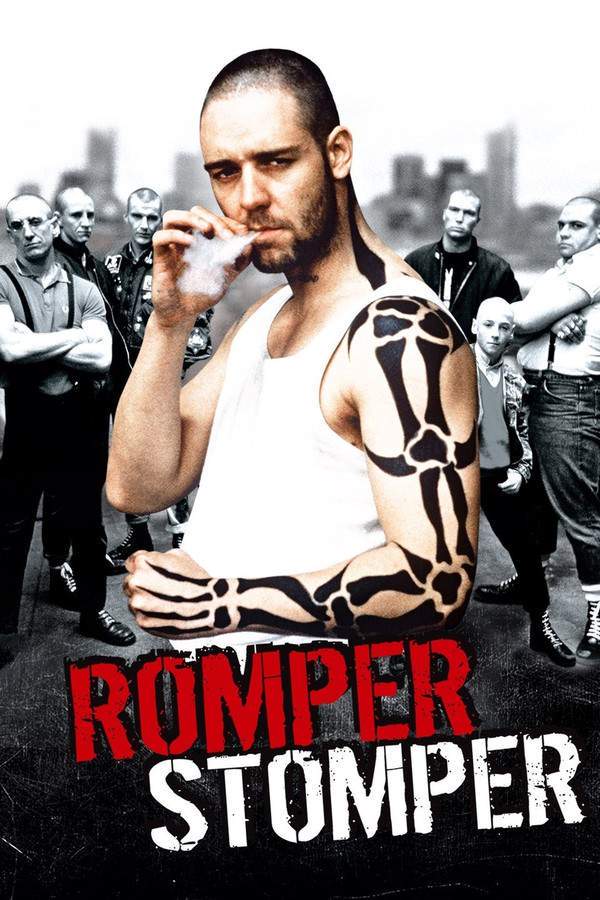
Romper Stomper (1992) movie poster

Plot Summary

Romper Stomper (1992) Plot Summary Explained

Release, runtime and language
1992 · 94 min · English
Loading streaming availability…
Directed by
Geoffrey Wright
Starring
Russell Crowe, Alex Scott, Chris McLean, Dan Wyllie, Daniel Pollock, Eric Mueck

In Melbourne's criminal underworld, racist skinheads Hando and Davey terrorize Asian immigrants. Following a public defeat, they join forces with a heroin addict, Gabe, who suggests robbing the mansion of a wealthy woman. As their plans unfold and the woman's presence complicates matters, the close friendship between Hando and Davey is tested, leading to a brutal and devastating clash that changes their lives forever.

On this page (6)
  1. 1 Where to watch
  2. 2 What happens: full plot
  3. 3 Plot questions answered
  4. 4 Movie threads
  5. 5 Movies like Romper Stomper
  6. 6 Every angle
Loading streaming availability…

Full plot summary · contains spoilers

What Happens in Romper Stomper: Full Plot Summary

The whole story of Romper Stomper (1992) explained, from the opening scene to the final frame: every key event, every twist and what it all adds up to. Read it as a quick recap before the sequel, to check a scene you missed, or to finally understand what really happened.

A violent gang of neo-Nazi skinheads in Footscray, Victoria, Australia, engages in a brutal assault on two Vietnamese-Australian teenagers in a subway tunnel at Footscray Station (filmed at Richmond Station). Leading the gang is Hando, portrayed by Russell Crowe, alongside his loyal friend and second-in-command Davey played by Daniel Pollock. The following day, they cross paths with Gabrielle, a drug addict depicted by Jacqueline McKenzie, who has just experienced a traumatic incident involving her affluent father Martin, enacted by Alex Scott. Gabrielle quickly develops a romantic connection with Hando.

As the gang's skinhead acquaintances visit from Canberra, one of them, who is home on leave from the Royal Australian Navy, joins in their revelries filled with drinking, fighting, and casual encounters. One fateful night, when two members head to their local pub, they are caught off guard to discover the owner has sold the establishment to a Vietnamese Australian businessman. Unappreciative of the new ownership, they quickly report it to Hando. What follows is a savage attack, where Hando and his crew beat the new owner's sons mercilessly. In response, a third Vietnamese youth calls for help, leading several armed Vietnamese men to confront the skinheads. Outnumbered and overwhelmed, the skinheads are forced to retreat to their rented warehouse, only to have it ransacked and set ablaze by their assailants.

Desperate for a new hideout, the skinheads claim a nearby warehouse after evicting squatters and soon plot their revenge against the Vietnamese community. Gabrielle proposes a burglary of her father's mansion as a way to retaliate, and they proceed to ransack the place, physically assaulting Martin and vandalizing his property as a form of revenge for his past abuses. However, when Martin manages to free himself, he frightens the gang away with a handgun. Meanwhile, Davey begins to experience doubts regarding the violent lifestyle he has adopted.

As tensions rise within the gang, Gabrielle criticizes Hando's approach during the burglary, prompting him to abruptly end their relationship. At the same time, Davey decides to leave, offering Gabrielle the address of his German grandmother’s home as a refuge. Later that night, she informs the police about the gang's whereabouts and spends the night with Davey, who confesses his concerns about his upbringing, having removed racist patches from his flight jacket.

During a police raid on the warehouse while Hando is absent, the youngest skinhead is tragically shot dead after brandishing a non-functional firearm. Arrests follow, but Hando escapes unharmed. Upon discovering Davey and Gabrielle together, Hando wrongfully accuses her of betraying the gang. Nevertheless, Davey reassures him that they hadn’t left each other's side since departing from the squat. Hando persuades Davey to stay loyal, and together, they embark on a crime spree, robbing a service station where Hando kills an Asian attendant during the heist.

After a night of driving, they stop on a beach, where Gabrielle overhears Hando attempting to convince Davey to abandon her. Heartbroken and betrayed, Gabrielle sets their car on fire, revealing that she had indeed contacted the police. Enraged, Hando tries to drown her in the ocean, only for Davey to intervene violently, fatally stabbing Hando with his Hitler Youth knife. In a haunting scene, Davey holds the terrified Gabrielle on the beach, while a busload of unsuspecting Japanese tourists looks on, and Hando's lifeless body lies in the surf, staring at the vast ocean as darkness descends.
Last updated: November 03, 2024 at 13:07

Was this helpful?

Plot questions answered

Romper Stomper Plot Explained: Your Questions Answered

The questions people ask most about Romper Stomper (1992): what happens in the confusing scenes, why the characters do what they do, the twists, hidden details and what the ending means. Each answer contains spoilers.

Q1

Why does Davey kill Hando at the end?

Davey kills Hando after witnessing him attempt to drown Gabrielle in the ocean. When Gabrielle sets their car on fire and reveals she contacted the police, Hando becomes violent and tries to kill her. Davey intervenes by stabbing Hando with his Hitler Youth knife, finally breaking from the toxic loyalty that defined their friendship. This act represents Davey's complete rejection of Hando's violence and marks his transformation from follower to someone who protects the person Hando is attacking.

Foreshadowing: Earlier, Davey removes the racist patches from his flight jacket and confesses his doubts about his upbringing to Gabrielle, signaling his growing moral conflict.

  • davey kills hando
  • beach scene ending
  • betrayal
  • davey transformation
Q2

Why does Gabrielle go to the police?

Gabrielle decides to inform the police about the gang's whereabouts after being rejected by Hando during an argument about her criticism of his approach during the burglary. She also spends the night with Davey, who confesses his struggles with racism and offers her the address of his German grandmother's home as refuge. Her betrayal stems from her traumatic history with her abusive father Martin and her growing realization that the gang's violence is inescapable.

Foreshadowing: Gabrielle's initial attraction to Hando masks her deeper trauma involving her father, which she later uses as motivation to turn against the gang.

  • gabrielle police
  • betrayal
  • skinheads arrested
  • gabrielle motivation
Q3

Why is Hando so violent and racist?

The film establishes Hando as the dominant leader of the neo-Nazi gang, but does not explicitly explain his deep-seated racism. His violence stems from a combination of entitlement, gang loyalty, and the need for dominance over vulnerable targets. He leads attacks on Vietnamese-Australian communities and demonstrates no remorse, even after his actions lead to the deaths of others and himself.

Foreshadowing: From the opening scene, Hando leads the brutal subway tunnel assault, establishing his role as the primary aggressor and leader.

  • hando racism
  • skinhead leader
  • neo-nazi motivation
  • violence
Q4

Why does Hando kill the Asian gas station attendant?

During a desperate robbery at a service station, Hando kills an Asian attendant while committing the heist. This murder is not justified by any immediate threat - it represents the culmination of his racist ideology turned into action. The killing deepens the violent rift between the skinheads and the Asian community, demonstrating how far Hando will go to assert dominance and obtain money.

Foreshadowing: Earlier attacks on Vietnamese business owners and the escalation of violence establish Hando's willingness to kill based on racial hatred.

  • service station murder
  • hando kills
  • asian attendant
  • heist
Q5

When does Davey start questioning the gang lifestyle?

Davey begins having doubts after the burglary of Martin's mansion, when he witnesses the extent of the violence and vandalism against an elderly man. His conscience grows as the gang's attacks become increasingly reckless. He removes the racist patches from his flight jacket and eventually leaves with Gabrielle, seeking a way out of the violent cycle.

Foreshadowing: After the burglary, Davey offers Gabrielle his grandmother's address as a safe haven, showing his desire to disconnect from the gang.

  • davey doubts
  • leaves gang
  • moral conflict
  • gabrielle escape
Q6

Why is the youngest skinhead shot during the police raid?

During a police raid on the warehouse while Hando is absent, the youngest skinhead is shot dead after brandishing a non-functional firearm. The police perceive the weapon as a real threat and fire, resulting in a tragic misunderstanding. This event shakes the gang and leads to arrests, though Hando escapes unharmed.

Foreshadowing: The gang's escalating criminal activities and stockpiling of weapons set the stage for the fatal confrontation with police.

  • police raid
  • youngest skinhead killed
  • warehouse shooting
  • misunderstanding
Q7

Why does Gabrielle set the car on fire?

Gabrielle sets the car on fire after overhearing Hando trying to convince Davey to abandon her. Feeling betrayed by both men - especially Davey, who she just slept with - she retaliates by revealing she had contacted the police. Her act of burning the car is a final act of revenge against the gang that used her and rejected her.

Foreshadowing: Earlier tension between Gabrielle and Hando, combined with her feeling excluded from the male bond, builds toward her destructive act.

  • car fire
  • gabrielle revenge
  • beach confrontation
  • police informant
Q8

Why do the Vietnamese men attack and burn the skinheads' warehouse?

After Hando's gang savagely beats the new Vietnamese pub owner's sons, a third Vietnamese youth calls for help. Armed Vietnamese men confront the skinheads, who are outnumbered and overwhelmed. The Vietnamese attackers then ransack and set ablaze the skinheads' rented warehouse as retaliation for the unprovoked assault.

Foreshadowing: The savage attack on the pub owner's sons directly triggers the Vietnamese community's organized response.

  • warehouse burning
  • vietnamese revenge
  • gang war
  • footscray
Q9

Why does Hando accuse Gabrielle of betraying the gang?

Upon discovering Davey and Gabrielle together after the police raid, Hando wrongly assumes Gabrielle has betrayed them by revealing their location to police. However, at this point in the story, Gabrielle has not yet contacted law enforcement - that happens later. Hando's accusation stems from his paranoia and the strain the recent losses have placed on the group.

Foreshadowing: The tension between Hando and Gabrielle escalates after she criticizes his leadership during the burglary.

  • hando accusation
  • gabrielle
  • betrayal suspicion
  • group tension
Q10

Why does Davey spend the night with Gabrielle?

After Gabrielle is kicked out by Hando following their argument about the burglary, Davey offers her shelter at his German grandmother's address. During the night together, Davey confesses his concerns about his upbringing and reveals he has removed the racist patches from his flight jacket. Their connection represents Davey's growing distance from the gang's ideology.

Foreshadowing: Davey's earlier doubts about the lifestyle and his gesture of removing the patches foreshadow his willingness to connect with Gabrielle over shared humanity.

  • davey gabrielle
  • night together
  • confession
  • leaving gang
Q11

Why does the gang attack the new Vietnamese pub owner?

When the skinheads visit their local pub, they discover it has been sold to a Vietnamese Australian businessman. Seeing this as an invasion of their territory and viewing the new owner as inferior, they report it to Hando. This triggers a savage attack where Hando and his crew beat the new owner's sons mercilessly, viewing the Vietnamese ownership as unacceptable.

Foreshadowing: The gang's earlier assault on Vietnamese teenagers establishes their pattern of targeting Vietnamese community members.

  • pub attack
  • vietnamese business
  • skinhead violence
  • footscray
Q12

Why does Gabrielle suggest robbing her father's mansion?

Gabrielle proposes the burglary of her father's mansion as a way to get revenge on Martin, who recently traumatized her. The robbery serves both as financial gain for the gang and as personal retribution for her past abuse. The gang vandalizes Martin's property and assaults him, though Martin ultimately scares them off with a handgun.

Foreshadowing: Gabrielle's traumatic incident involving her father is mentioned when she first meets Hando and Davey, establishing her motivation for revenge.

  • gabrielle father
  • mansion robbery
  • martin
  • revenge
Q13

What is the significance of Davey using the Hitler Youth knife?

Davey uses his Hitler Youth knife to kill Hando, symbolically turning the weapon of their shared ideology against its source. The knife, which represented their bond and racist beliefs, becomes the instrument of Hando's death at the hands of his most loyal follower. This final act completes Davey's transformation from complicit follower to active resistor.

Foreshadowing: The Hitler Youth knife is introduced as a symbol of their neo-Nazi identity, making its use in Hando's killing deeply symbolic.

  • hitler youth knife
  • symbolic killing
  • davey transformation
  • weapon meaning
Q14

Why are Japanese tourists on the bus at the end?

The busload of Japanese tourists witnessing the chaos on the beach serves as a haunting parallel to the film's racial themes. While the skinheads victimized Vietnamese-Australians throughout the film, the ending shows Japanese tourists as neutral observers to the violence's aftermath. This creates an ironic commentary on how violence affects innocent communities and adds to the bleak atmosphere.

Foreshadowing: Throughout the film, the skinheads target various Asian communities, making the presence of Asian tourists at the climactic moment thematically relevant.

  • japanese tourists
  • beach ending
  • irony
  • thematic meaning

Movie threads

More Movies Like Romper Stomper, by Mood & Story

Curated lists built around what makes Romper Stomper tick: the same mood, the same kind of story or the same emotional payoff. Each list explains why these movies belong together.

Movies about violent underworlds like Romper Stomper

Stories of characters spiraling into brutal criminal subcultures. If you liked the brutal immersion into Melbourne's skinhead scene in Romper Stomper, explore more movies like it. These films follow characters spiraling into violent criminal subcultures, featuring high tension, dark themes, and devastating conclusions.

  • brutal
  • aggressive
  • tense
  • oppressive
  • desperate
  • angry
  • Tone: dark, bleak, tense
  • Pacing: fast, escalating
Why these movies?

The story pattern: These narratives typically follow a linear, escalating path into chaos. Characters, often driven by ideology, hate, or desperation, become entrenched in a violent group. The story charts their increasing involvement, the testing of loyalties, and an inevitable, bloody collapse from within or without.

Why they belong together: Movies are grouped here for their shared immersive quality into brutal subcultures, their high-intensity pacing, and their dark, pessimistic tone. They feature a straightforward narrative of a rise and fall within a criminal world, marked by heavy emotional weight and bleak outcomes.

Movies about toxic friendships like in Romper Stomper

Intense bonds between flawed men shattered by betrayal and disillusionment. For viewers who appreciate the complex dynamic between Hando and Davey in Romper Stomper, this collection features similar movies about intense male friendships. These stories explore bonds built on a dark foundation, tested by violence and betrayal, leading to tragic outcomes.

  • tense
  • desperate
  • tragic
  • angry
  • betrayal
  • oppressive
  • Tone: dark, tragic, tense
  • Pacing: fast, character-driven
Why these movies?

The story pattern: The narrative follows a close-knit duo or group whose relationship is built on a dangerous or extremist foundation. A catalyst—often a new person or a failed endeavor—exposes the fractures in their bond. The story culminates in a devastating clash, where loyalty is sacrificed and the relationship implodes, often violently.

Why they belong together: These films are united by their focus on the arc of a powerful, destructive friendship. They share a heavy emotional weight derived from personal betrayal, a fast or steady pacing that builds towards a climax, and a consistently dark or bleak tone that offers no redemption.

If you liked this

Movies Like Romper Stomper

Similar movies to Romper Stomper: the same genre, themes or kind of story. Each one comes with its own plot summary, timeline and ending explained.

Browse all movie summaries

Every angle

Romper Stomper (1992) Explained: Plot, Timeline & Characters

Everything about Romper Stomper in one place: what happens in the plot summary, the timeline in chronological order, the characters and meaning and a spoiler-free summary. What's After the Movie adds the cast, box office and post-credit scenes.

Coming soon on iOS and Android

The Plot Explained Movie Summary App

Plot summaries, endings explained and timelines on your phone. Catch up on any movie in minutes, save your favorites and never miss a twist again.

Be the first to know when we launch. Your email stays private, always.

Learn more about the app