









Plot Explained Spoilers guaranteed!
Plot Explained

Browse by genre

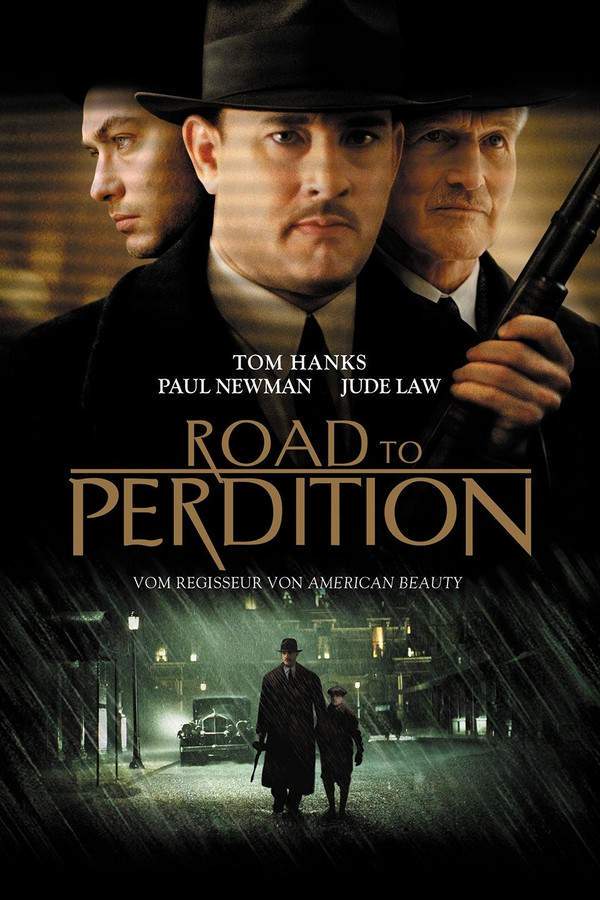
Road to Perdition (2002) movie poster

Timeline

Road to Perdition (2002) Timeline Explained – Every Event in Order

Release, runtime and language
2002 · 117 min · English
Directed by
Sam Mendes
Starring
Tom Hanks, Tyler Hoechlin
Budget
$80M

During the 1930s in the American Midwest, mob enforcer Mike Sullivan struggles with his loyalty to crime boss John Rooney. After a devastating betrayal by Connor Rooney, Mike’s family is targeted, leaving him with a burning need for vengeance. With his son killed and his wife seemingly lost, Mike embarks on a dangerous quest for retribution, accompanied by his teenage son Michael. As they journey, they uncover unsettling truths and confront the dark underbelly of their world.

On this page (6)
  1. 1 Where to watch
  2. 2 Events in order (16)
  3. 3 Timeline questions answered
  4. 4 Movie threads
  5. 5 Movies like Road to Perdition
  6. 6 Every angle

Where to watch

Where to Watch Road to Perdition (2002)

Where can you watch Road to Perdition? Stream, rent or buy it in the US, including on Hoopla, Kanopy and Amazon Video: current JustWatch availability with up-to-date prices.

Streaming availability powered by JustWatch

16 events in order · contains spoilers

Road to Perdition Timeline: Events in Chronological Order

Every key event of Road to Perdition (2002) in order, scene by scene, with when and where it takes place. Use it to untangle flashbacks, time jumps and parallel storylines, to refresh your memory before the sequel or to find the exact scene you are thinking of.

  1. Sullivan's Early Days with Rooney

    Michael Sullivan, Sr. serves as an enforcer for John Rooney, the Irish mob boss who raised him after he lost his parents. Their relationship is strong, often more so than that between Rooney and his own son, Connor, establishing a complex family dynamic.

  2. Finn McGovern's Murder

    Tensions rise when Connor, driven by paranoia, confronts and kills disgruntled associate Finn McGovern. This violent act is witnessed by Sullivan, creating an atmosphere of danger and betrayal within the mob.

  3. Michael Jr.'s Witnessing of Violence

    During the chaos of Finn's murder, Sullivan's twelve-year-old son, Michael Jr., unintentionally witnesses the violent events from their car. This incident sets off a tragic chain reaction that alters the course of Sullivan's life and his family's safety.

  4. The Murder of Annie and Peter

    In a cruel twist of fate, Connor retaliates against Sullivan by murdering his wife, Annie, and their younger son, Peter. He believes he is targeting Michael Jr., unleashing a wave of grief and vengeance that drives Sullivan's actions.

  5. Sullivan’s Quest for Vengeance

    Devastated by the loss of his family, Sullivan flees to Chicago to confront Al Capone and hunt down Connor. His journey is fueled by a relentless need for revenge against those who have wronged him.

    Where
    Chicago
  6. Meeting with Frank Nitti

    Sullivan's first meeting with Capone's associate, Frank Nitti, proves fruitless as he seeks help in finding Connor. Nitti, following instructions, sends the deadly Harlen Maguire after Sullivan, leading to increased danger.

    Where
    Chicago
  7. Confrontation with Harlen Maguire

    At a roadside diner, Sullivan encounters Maguire, who fails to kill him. Sullivan cleverly disables Maguire’s car during their encounter, showcasing his resourcefulness amidst life-threatening situations.

  8. Robbing Banks for Funds

    In order to gather money to exchange for Connor, Sullivan begins robbing banks that are linked to both Capone and Rooney. During this perilous undertaking, he takes the opportunity to teach his son, Michael Jr., to drive.

  9. Betrayal by Alexander Rance

    Sullivan seeks assistance from Rooney's accountant, Alexander Rance, but finds himself ambushed by Maguire. Thanks to a timely warning from Michael Jr., Sullivan narrowly escapes, albeit injured.

  10. Life on the Farm

    Finding refuge with an elderly couple on a farm, Sullivan begins to recover and unearths the truth about Connor's embezzlement of his father’s money. The family expresses their gratitude by sharing a portion of their acquired wealth with the couple.

  11. Confronting Rooney at Mass

    Sullivan confronts Rooney at Mass, revealing the truth about Connor’s betrayal. Despite knowing the implications, Rooney refuses to abandon his son, showcasing the deep bond of loyalty in their criminal world.

  12. Elimination of Rooney’s Henchmen

    Under the cloak of night, Sullivan methodically takes out Rooney's henchmen as part of his quest for revenge. This leads to a final encounter with Rooney himself, steeped in emotional complexity.

  13. The Tragic End of Rooney

    In a heartbreaking moment, Rooney expresses his relief that it is Sullivan who has come to confront him. Sullivan ultimately makes the devastating choice to end Rooney’s life, acknowledging the depth of their former bond.

  14. Final Confrontation with Connor

    Sullivan tracks Connor down to a hotel for a final confrontation. After eliminating Connor, he believes he has avenged his family, only to face further peril.

  15. Maguire's Ambush and Sullivan’s Death

    After ensuring Michael's safety at his Aunt Sara's beach house, Sullivan is ambushed by Maguire. In a gripping moment, Michael confronts Maguire but is unable to pull the trigger, leading to Sullivan's heroic but tragic demise in his son's arms.

    Where
    Aunt Sara's beach house
  16. Michael’s Reflection

    In the aftermath of his father's death, a devastated Michael seeks solace with the elderly couple on the farm. He reflects on his father's life, vowing to honor him and affirming that he was his father, despite the darkness of his actions.

Last updated: November 02, 2024 at 12:19

Was this helpful?

Timeline questions answered

Road to Perdition Timeline Explained: Your Questions Answered

When does it happen, and why in that order? The questions people ask about the chronology of Road to Perdition (2002): time jumps, flashbacks, cause and effect between scenes and the correct order of events, each answered with spoilers.

Q1

Why does Connor kill Finn McGovern?

Connor kills Finn McGovern out of paranoia. Finn was a disgruntled associate who had become a liability, and Connor viewed him as a threat to the operation. This impulsive act sets off the chain of events that destroys Sullivan's family, as Connor fears Sullivan will expose his reckless behavior to his father John Rooney.

Foreshadowing: Earlier scenes establish Connor as volatile and jealous of the bond between his father and Sullivan, hinting at his willingness to eliminate perceived threats.

  • connor rooney
  • finn mcgovern
  • murder
  • paranoia
  • mob
Q2

Why does Connor kill Sullivan's wife and younger son?

Connor believes he is targeting Michael Sullivan Jr., who witnessed the Finn McGovern murder. However, in a tragic mix-up, Sullivan had already sent his wife Annie and younger son Peter to safety at her sister's house. Connor finds the wrong people at the wrong location and murders Annie and Peter instead of Michael Jr., believing he had eliminated the witness.

Foreshadowing: Sullivan's attempt to protect his family by sending them away shows his awareness of the danger, but Connor's unpredictability makes that protection insufficient.

  • annie sullivan
  • peter sullivan
  • connor rooney
  • revenge
  • family murder
Q3

Why does Rooney refuse to abandon Connor after learning the truth?

Despite learning that Connor embezzled money from him and caused the deaths of Sullivan's family, John Rooney refuses to betray his own son. Rooney tells Sullivan that a father cannot abandon his child, even when that child has committed terrible acts. This reveals the complex moral code of the mob world, loyalty to family supersedes even logic or justice.

Foreshadowing: Rooney's earlier preference for Sullivan over his own son hints at a complicated paternal relationship, but his refusal to forsake Connor shows blood ties ultimately win.

  • john rooney
  • connor rooney
  • loyalty
  • father son
  • betrayal
Q4

Why does Sullivan kill Rooney despite their close bond?

Sullivan kills Rooney because he is the only person who can stop him from reaching Connor. After Sullivan confronts Rooney at Mass and reveals Connor's betrayals, Rooney still refuses to hand over his son. With no other path to vengeance, Sullivan systematically eliminates Rooney's henchmen before facing Rooney himself. The kill is portrayed as a tragic necessity rather than a joyful act.

Foreshadowing: Sullivan's earlier vow to kill everyone responsible for his family's death establishes his unwavering commitment, even if it means killing the man who raised him.

  • john sullivan
  • kill
  • revenge
  • loyalty
  • mob boss
Q5

Why does Rooney say he's glad Sullivan is the one who came for him?

When Sullivan arrives to kill him, Rooney says he's glad because it means Sullivan was strong enough to overcome all his men. More deeply, Rooney views this as a fitting end, he would rather die at the hands of someone he respects and loves than be killed by a stranger or betray his own son by handing him over. It represents a final acknowledgment of their bond and a kind of twisted honor among killers.

Foreshadowing: Their earlier relationship, where Rooney treated Sullivan more like a son than Connor, sets up this moment of mutual respect even in violence.

  • john rooney
  • death
  • honor
  • respect
  • final moment
Q6

What does Sullivan discover in the accounting ledgers?

Sullivan discovers that Connor had been embezzling money from his father John Rooney. This betrayal explains why Connor was so paranoid and violent, he was stealing from the man who trusted him most. The ledgers provide Sullivan with the truth he needs to confront Rooney and justify his quest for vengeance.

Foreshadowing: Sullivan's visit to accountant Alexander Rance was meant to find Connor, but the ledgers reveal an even deeper layer of Connor's treachery.

  • ledgers
  • embezzlement
  • connor rooney
  • accounting
  • betrayal
Q7

Why doesn't Michael Jr. shoot Maguire at the end?

Michael Jr. cannot bring himself to shoot the dying Maguire because he has just witnessed his father's death and is overwhelmed by grief and shock. More importantly, this moment represents his refusal to become like his father, a killer. By choosing not to pull the trigger, Michael Jr. asserts his identity as different from Sullivan, even as he honors his father's memory.

Foreshadowing: Sullivan's repeated lessons about survival and his fear that Michael Jr. might become like him foreshadow this critical moment of choice.

  • michael jr
  • harlen maguie
  • shooting
  • moral choice
  • redemption
Q8

Why does Sullivan teach Michael Jr. to drive during the bank robberies?

Sullivan teaches Michael Jr. to drive because he knows their survival depends on being able to escape quickly during dangerous situations. It's a practical decision driven by the harsh reality of their life on the run. The driving lessons also represent Sullivan's attempt to prepare his son for a dangerous world and create meaningful moments together during their final days.

Foreshadowing: Sullivan's earlier protectiveness of his son and his practical approach to survival foreshadow this practical bonding activity.

  • driving
  • teaching
  • father son
  • survival
  • bank robbery
Q9

Why does Sullivan give money to the elderly farm couple?

Sullivan and Michael Jr. gift a significant portion of their stolen wealth to the elderly couple who shelter them because they are kind, childless people who showed them hospitality without asking questions. This act represents a moment of humanity and gratitude in Sullivan's dark journey, showing that even a man consumed by revenge can still perform selfless acts.

Foreshadowing: The couple's welcoming nature and lack of judgment establish them as morally pure characters who bring out the best in Sullivan.

  • elderly couple
  • farm
  • money
  • gratitude
  • kindness
Q10

Why does Frank Nitti give up Connor's location to Sullivan?

Frank Nitti provides Sullivan's location because he wants both rival mob factions weakened. Connor has become a liability, and eliminating him removes a problem for the Rooney organization while also removing Sullivan, who has been causing chaos. Nitti sees this as an opportunity to kill two birds with one stone through Sullivan's hands.

Foreshadowing: Nitti's earlier refusal to help Sullivan and his sending of Maguire establish him as a calculating, self-serving figure in the mob world.

  • frank nitti
  • connor rooney
  • location
  • betrayal
  • mob politics
Q11

What does Michael Jr.'s final vow about his father mean?

When Michael vows to say his father was a good man if anyone asks, he is not condoning Sullivan's violence. Instead, he is affirming that his father was fundamentally defined by being his father, the man who protected him, taught him, and loved him despite his criminal life. This represents Michael's acceptance of his father's complex legacy and his own identity separate from the violence that surrounded them.

Foreshadowing: Sullivan's fear throughout the film that his son would become like him, and Michael's refusal to shoot Maguire, culminate in this statement of individual identity.

  • michael jr
  • vow
  • good man
  • legacy
  • father son relationship
Q12

Why is the title Road to Perdition significant?

The title refers to the journey toward damnation, both spiritual and literal. Perdition is the beach town where Michael Jr. is left with his Aunt Sara, but it also represents the moral downfall Sullivan travels throughout the film. Each act of violence brings Sullivan closer to his own destruction, and the road metaphor captures the inevitable, downward spiral of revenge that defines the narrative.

Foreshadowing: The film's constant movement, chasing, fleeing, traveling, establishes the journey motif that the title encapsulates.

  • title
  • perdition
  • meaning
  • road
  • damnation

Movie threads

More Movies Like Road to Perdition, by Mood & Story

Curated lists built around what makes Road to Perdition tick: the same mood, the same kind of story or the same emotional payoff. Each list explains why these movies belong together.

Father-son crime odysseys like Road to Perdition

A parent and child navigate a dangerous landscape, testing their bond. Explore movies like Road to Perdition where a father and son are forced on a journey through a dangerous world. These similar crime dramas and thrillers focus on the heavy themes of protection, legacy, and the bond tested by violence and moral compromise.

  • father son bond
  • protective
  • journey
  • legacy
  • somber
  • tense
  • Tone: somber, melancholic, tense
  • Pacing: steady, character-driven
Why these movies?

The story pattern: This thread follows narratives where a protective parent, often with a morally ambiguous or violent profession, must guide their child through a crisis. The plot is driven by survival and redemption, with key moments revealing the child's perspective on the parent's world, leading to a poignant, often bittersweet resolution about the legacy being passed on.

Why they belong together: Movies are grouped here for their central focus on the parent-child dynamic within a high-stakes narrative. They share a somber, emotionally heavy tone, a steady pacing that allows for character reflection, and a thematic exploration of what it means to be a guardian in a corrupt world.


Somber revenge thrillers like Road to Perdition

Grief-stricken protagonists seek methodical revenge within organized crime. Discover more movies like Road to Perdition that feature a somber and methodical quest for revenge within the world of organized crime. These similar thrillers and dramas focus on the heavy emotional cost of vengeance, driven by betrayal and profound loss, rather than action-packed spectacle.

  • revenge
  • grief
  • betrayal
  • organized crime
  • somber
  • brooding
  • Tone: dark, melancholic, tragic
  • Pacing: steady, methodical
Why these movies?

The story pattern: The narrative pattern begins with a devastating betrayal or loss that shatters the protagonist's world. Instead of a fast-paced action romp, the revenge is pursued with steady, deliberate pacing, allowing the weight of each action to sink in. The journey is as much about mourning and internal conflict as it is about external retribution, culminating in a resolution that is bittersweet or tragic, acknowledging the emptiness of vengeance.

Why they belong together: This thread groups films that share a specific mood: a dark, brooding atmosphere where revenge is a source of grief, not gratification. They are unified by a high emotional weight, a steady pacing that builds tension, a dominant dark tone, and a focus on the psychological toll of violence within a criminal framework.

If you liked this

Movies Like Road to Perdition

Similar movies to Road to Perdition: the same genre, themes or kind of story. Each one comes with its own plot summary, timeline and ending explained.

Browse all movie summaries

Every angle

Road to Perdition (2002) Explained: Plot, Timeline & Characters

Everything about Road to Perdition in one place: what happens in the plot summary, the timeline in chronological order, the characters and meaning and a spoiler-free summary. What's After the Movie adds the cast, box office and post-credit scenes.

Coming soon on iOS and Android

The Plot Explained Movie Summary App

Plot summaries, endings explained and timelines on your phone. Catch up on any movie in minutes, save your favorites and never miss a twist again.

Be the first to know when we launch. Your email stays private, always.

Learn more about the app