Plot Explained Spoilers guaranteed!
Plot Explained

Browse by genre

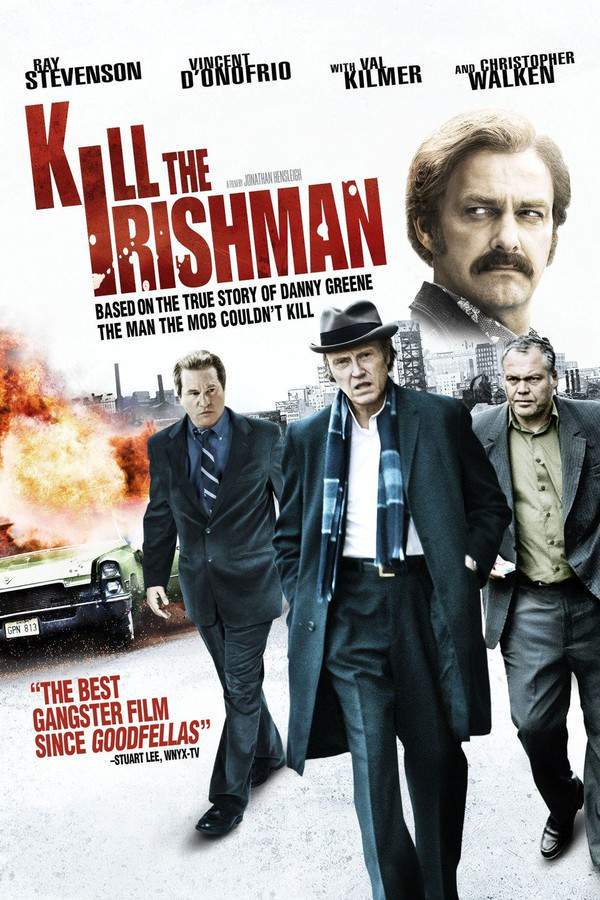
Kill the Irishman (2011) movie poster

Plot Summary

Kill the Irishman (2011) Plot Summary Explained

Release, runtime and language
2011 · 106 min · English
Directed by
Jonathan Hensleigh
Starring
Ray Stevenson, Christopher Walken, Vincent D'Onofrio

In the summer of 1976, tensions rise in Cleveland's Irish-American neighborhood as Danny Greene’s ascent from the streets to a powerful figure ignites a violent turf war with the Italian mafia. Known for his fearlessness and reputation for invincibility, Greene takes control, disrupting established syndicates and leaving a trail of destruction. His defiance and notoriety eventually earn him the chilling nickname: the man the mob couldn’t kill.

On this page (6)
  1. 1 Where to watch
  2. 2 What happens: full plot
  3. 3 Plot questions answered
  4. 4 Movie threads
  5. 5 Movies like Kill the Irishman
  6. 6 Every angle

Where to watch

Where to Watch Kill the Irishman (2011)

Where can you watch Kill the Irishman? Stream, rent or buy it in the US, including on Fawesome, Kanopy and Fandango at Home Free: current JustWatch availability with up-to-date prices.

Streaming availability powered by JustWatch

Full plot summary · contains spoilers

What Happens in Kill the Irishman: Full Plot Summary

The whole story of Kill the Irishman (2011) explained, from the opening scene to the final frame: every key event, every twist and what it all adds up to. Read it as a quick recap before the sequel, to check a scene you missed, or to finally understand what really happened.

In the scorching summer of 1960, the bustling docks of Cleveland came alive as Danny Greene and his childhood friends, Billy McComber and Art Sneperger, dedicated themselves to laboring alongside the city’s longshoremen. However, beneath the surface, a web of deceit began to unfold. Sneperger's gambling addiction had landed him in a precarious position, owing a significant debt to John Nardi, an influential player in Cleveland's organized crime scene. In a bid to free Sneperger from his financial woes, Danny made a fateful decision to provide Nardi with stolen merchandise from the docks—an act that would irrevocably alter his destiny.

As corruption deepened its roots, Jerry Merke, the ruthless boss of a labor union, caught wind of Danny's covert dealings and insisted on a slice of Danny's earnings. Refusing to comply, Merke unleashed his enforcer, Joe Buka, aiming to eradicate the problem. But Danny, undeterred by the threat, culminated in a brutal fistfight with Buka, emerging triumphantly—a display of resilience that would resonate across the criminal underworld.

This pivotal encounter catapulted Danny into the role of local union president. Although he endeavored to uplift the conditions of dockworkers, he couldn't shake the shadow of corruption looming over his ascent to power. It wasn't long before Danny's transgressions caught up with him, leading to a revelatory exposé in a local newspaper. The fallout was immediate: Detective Joe Manditski, a friend from their youth, arrested Danny on corruption charges, ultimately forcing him to negotiate with the FBI as an informant to avoid serving prison time.

Relocating to Collinwood, Danny faced a personal upheaval, reconciling with his discontented wife and daughters. Meanwhile, Nardi appointed him as an enforcer for the infamous Shondor Birns, a Jewish loan shark, embroiling Danny in a world of danger and greed. The new role quickly attracted the ire of Jack Licavoli, a Mafia captain with a tight grip on the city's garbage industry.

Danny's crew found themselves charged with intimidating the city’s waste collectors to join Licavoli's union, using forceful tactics that fractured alliances. The escalating tension reached a boiling point when Licavoli commanded Danny to take out his longtime friend Mike Frato, who had steadfastly resisted Licavoli’s demands. The killing of Frato set off a tragic chain of events, revealing that Sneperger had reverted to his old habits, this time as a police informant. He was compelled to plant a remote-controlled bomb under Frato's vehicle, but Danny, realizing the peril, triggered it himself, leading to a consequential confrontation with Frato's driver, who ultimately disclosed Danny's self-defense claim.

Though he escaped physically unharmed, the emotional toll on Danny’s marriage was insurmountable, prompting his wife to leave with their children. As Danny aspired to open an upscale restaurant and lounge, he sought Birns’ guidance. However, their partnership soured when a $70,000 loan from the Gambino family spiraled into chaos due to Birns' reckless lifestyle, igniting disputes over repayment responsibilities. In a shocking twist, Birns placed a $25,000 bounty on Danny's head, setting off a violent conflict destined to leave one survivor.

The death of John T. Scalish created a power void that both Nardi and Licavoli were eager to exploit in the competitive terrain of Cleveland’s Mafia. Licavoli emerged dominant, ruthlessly imposing a 30% "street tax" on Danny’s operations. Defiantly, Danny declared, > “The Irishman’s in business for himself now.” This resistance only fueled Licavoli's wrath, leading to a catastrophic bomb attack that obliterated Danny's home. Miraculously, both Danny and his girlfriend survived, but they found themselves entrenched in an escalating war that would engulf Cleveland in chaos, marked by 36 bombings that drew national media scrutiny.

As the pressure mounted, Licavoli sought outside aid from Genovese boss Anthony Salerno, an alliance that would end tragically for Danny. Attempting to forge a future in Texas with his new fiancée, Danny struck a deal with Salerno for a cooperative cessation of conflict in exchange for investments in a ranch. This arrangement backfired dramatically when Salerno's emissary, Ray Ferritto, arrived in Cleveland, employing brutal strategies that led to the demise of many of Danny’s friends, including Nardi.

Despite Detective Manditski's offer of protection, Danny opted to confront his adversities directly. Ferritto's betrayal culminated in a devastating explosion as he planted a bomb in a vehicle adjacent to Danny’s. In a tragic twist of fate, the bomb obliterated Danny, resulting in his untimely death. Detective Manditski later noted that Danny’s assassination sent shockwaves throughout the Mafia structure, not only devastating the Cleveland syndicate but also crippling the broader network of organized crime across the nation.

Last updated: November 19, 2024 at 16:33

Was this helpful?

Plot questions answered

Kill the Irishman Plot Explained: Your Questions Answered

The questions people ask most about Kill the Irishman (2011): what happens in the confusing scenes, why the characters do what they do, the twists, hidden details and what the ending means. Each answer contains spoilers.

Q1

Why did Danny Greene help Art Sneperger with his debt to John Nardi?

Danny helped Sneperger because Sneperger was his childhood friend. When Sneperger's gambling addiction left him owing a significant debt to John Nardi, Danny made the fateful decision to provide Nardi with stolen merchandise from the docks to free his friend from the debt. This act of loyalty set Danny on the path toward organized crime.

  • danny greene
  • art sneperger
  • john nardi
  • stolen goods
  • gambling debt
Q2

Why did Danny Greene become an FBI informant?

Danny became an FBI informant after he was arrested on corruption charges by Detective Joe Manditski, an old friend. A local newspaper exposed Danny's corrupt dealings, and to avoid serving prison time, Danny negotiated with the FBI to work as an informant. This decision allowed him to escape criminal charges but also put him deeper into the criminal underworld.

Foreshadowing: Earlier in the story, Danny's rise to union president was already tainted by the corruption he couldn't shake.

  • danny greene
  • fbi informant
  • joe manditski
  • arrest
  • corruption
Q3

Why did Danny Greene agree to kill Mike Frato for Jack Licavoli?

Danny was ordered to kill Mike Frato by Jack Licavoli, a Mafia captain who controlled Cleveland's garbage industry. Licavoli had been pressuring Danny's crew to intimidate waste collectors into joining Licavoli's union, and Frato had steadfastly resisted these demands. When Licavoli commanded Danny to take out Frato, it set off the tragic chain of events that would devastatingly impact Danny's life.

Foreshadowing: The escalating tension between Danny and Licavoli had been building as Danny worked as an enforcer for Shondor Birns.

  • mike frato
  • jack licavoli
  • murder order
  • mafia
  • cleveland
Q4

Why did Art Sneperger become a police informant?

Art Sneperger reverted to his old gambling habits and eventually became a police informant. He was compelled to plant a remote-controlled bomb under Mike Frato's vehicle as part of Licavoli's plan. However, when Danny realized the danger, he triggered the bomb himself, leading to a confrontation with Frato's driver who revealed Danny's self-defense claim.

Foreshadowing: Sneperger's gambling addiction had previously caused Danny to intervene, foreshadowing his inability to break the habit.

  • art sneperger
  • police informant
  • bomb
  • mike frato
  • betrayal
Q5

Why did Danny Greene's wife leave him?

Danny's wife left him after the emotional toll of his violent criminal lifestyle became unbearable. The incident with Mike Frato's bombing, the constant danger, and the overall chaos of Danny's criminal enterprise created an insurmountable rift. His wife ultimately took their children and left, leaving Danny increasingly isolated.

Foreshadowing: Danny's relocation to Collinwood already showed signs of marital discontent before the situation deteriorated further.

  • danny greene
  • wife
  • marriage
  • divorce
  • family
Q6

Why did Shondor Birns put a bounty on Danny Greene?

Shondor Birns placed a $25,000 bounty on Danny after their business partnership went sour. Danny had sought Birns' guidance to open an upscale restaurant and lounge, but a $70,000 loan from the Gambino family spiraled into chaos due to Birns' reckless lifestyle. Disputes over repayment responsibilities led Birns to order Danny's death, setting off the violent conflict between them.

Foreshadowing: Danny's aspiration for a legitimate business venture represented his attempt to leave criminal life, but the association with Birns made it impossible.

  • shondor birns
  • bounty
  • murder contract
  • loan
  • gambino family
Q7

Why did Jack Licavoli target Danny Greene with bombings?

Jack Licavoli declared war on Danny after Danny refused to pay the 30% "street tax" Licavoli imposed on his operations. Following the death of John T. Scalish, Licavoli emerged dominant in Cleveland's Mafia and demanded the tax. Danny defiantly declared "The Irishman's in business for himself now," provoking Licavoli's wrath. This led to a catastrophic bomb attack that obliterated Danny's home, marking the beginning of a violent war featuring 36 bombings.

Foreshadowing: The power vacuum created by Scalish's death had both Nardi and Licavoli competing for control, with Danny caught in the middle.

  • jack licavoli
  • bombings
  • street tax
  • cleveland mafia
  • 36 bombings
Q8

Why did Anthony Salerno's deal backfire for Danny Greene?

Anthony Salerno's deal backfired because Danny trusted the Genovese boss for peace. Danny struck a deal with Salerno in exchange for investments in a Texas ranch, believing it would end the conflict. However, Salerno's emissary Ray Ferritto arrived in Cleveland and employed brutal strategies that led to the demise of many of Danny's friends, including John Nardi. The peace agreement became a trap that devastated Danny's remaining allies.

Foreshadowing: Danny's attempt to leave Cleveland for Texas showed his desire for a new life, but Salerno's involvement suggested the mob wouldn't allow an independent operator to simply walk away.

  • anthony salerno
  • ray ferritto
  • betrayal
  • texas
  • genovese family
Q9

How did Danny Greene actually die?

Danny Greene was killed by a bomb planted by Ray Ferritto, who had been sent by Anthony Salerno. Despite Detective Manditski offering protection, Danny chose to confront his adversities directly. Ferritto planted a bomb in a vehicle adjacent to Danny's, and the explosion ultimately killed Danny. His assassination sent shockwaves throughout the Mafia, devastating the Cleveland syndicate and impacting organized crime networks nationwide.

Foreshadowing: Throughout the movie, Danny's defiance and reputation for invincibility made him a target, and his refusal to accept protection sealed his fate.

  • danny greene
  • death
  • ray ferritto
  • bomb
  • assassination
Q10

Why did Danny Greene become a union president?

Danny became local union president after defeating Joe Buka in a brutal fistfight. Buka was the enforcer for Jerry Merke, a ruthless labor union boss who demanded a cut of Danny's earnings from his covert dealings. When Danny refused, Merke sent Buka to eliminate him, but Danny triumphantly defeated Buka. This victory earned him recognition in the criminal community and propelled him into the union presidency.

Foreshadowing: Danny's willingness to fight and his resilience against threats established his reputation early in the story.

  • danny greene
  • union president
  • joe buka
  • labor union
  • jerry merke
Q11

What caused the 36 bombings in Cleveland?

The 36 bombings were the result of the escalating war between Danny Greene and Jack Licavoli. After Danny refused to pay Licavoli's street tax and declared independence, Licavoli responded by bombing Danny's home. This violent conflict between the two sides, involving Irish and Italian mob factions, drew national media scrutiny and became one of the most notorious periods of mob violence in Cleveland history.

Foreshadowing: Danny's defiance of Licavoli's authority directly triggered the retaliation that spiraled into widespread bombings.

  • 36 bombings
  • cleveland
  • mob war
  • jack licavoli
  • organized crime

Movie threads

More Movies Like Kill the Irishman, by Mood & Story

Curated lists built around what makes Kill the Irishman tick: the same mood, the same kind of story or the same emotional payoff. Each list explains why these movies belong together.

Movies about the rise and fall of gangsters like Kill the Irishman

True crime stories of reckless ambition leading to a tragic, violent end. Explore movies like 'Kill the Irishman' that delve into the true stories of ambitious gangsters. These films follow the violent ascent and inevitable, often tragic, downfall of powerful underworld figures, focusing on themes of reckless ambition, betrayal, and fatalistic consequences within organized crime.

  • fatalistic
  • tense
  • brutal
  • tragic
  • relentless
  • gritty
  • Tone: tense, fatalistic
  • Pacing: fast, relentless
Why these movies?

The story pattern: These narratives often follow a linear but escalating path: a charismatic figure rises from the streets through sheer force of will, challenges established powers, but their hubris and violent methods create an unstoppable wave of retaliation that leads to their demise. The journey is less about redemption and more about the tragic mechanics of a self-fulfilling prophecy.

Why they belong together: Movies are grouped here based on their shared focus on a specific character arc—the fatalistic rise and fall—within the crime genre. They share high intensity, heavy emotional weight, and a bleak or sad ending feel, creating a cohesive experience for viewers interested in tragic true-crime stories.

Movies about chaotic gang wars like Kill the Irishman

High-stakes stories of escalating violence and betrayal between rival factions. Find movies similar to 'Kill the Irishman' that depict intense turf wars and mob conflicts. These fast-paced, gritty films capture the chaos of escalating violence, bombings, and assassinations between rival crime factions, delivering a tense and brutal viewing experience centered on organized crime warfare.

  • violent
  • chaotic
  • tense
  • relentless
  • brutal
  • gritty
  • Tone: tense, brutal
  • Pacing: fast, chaotic
Why these movies?

The story pattern: Stories in this thread are structured around a central, escalating conflict—often a turf war—that fractures alliances and pits numerous factions against each other. The plot is propelled by a series of violent acts and betrayals, with little narrative downtime, immersing the viewer in the chaotic and unpredictable nature of the conflict.

Why they belong together: These movies are united by their core focus on a sprawling, multi-faction conflict within a criminal underworld. They share a fast pacing, high intensity, and a tense tone, prioritizing the chaotic spectacle and brutal reality of gang warfare over deep character introspection.
If you liked this

Movies Like Kill the Irishman

Similar movies to Kill the Irishman: the same genre, themes or kind of story. Each one comes with its own plot summary, timeline and ending explained.

Browse all movie summaries

Every angle

Kill the Irishman (2011) Explained: Plot, Timeline & Characters

Everything about Kill the Irishman in one place: what happens in the plot summary, the timeline in chronological order, the characters and meaning and a spoiler-free summary. What's After the Movie adds the cast, box office and post-credit scenes.

Coming soon on iOS and Android

The Plot Explained Movie Summary App

Plot summaries, endings explained and timelines on your phone. Catch up on any movie in minutes, save your favorites and never miss a twist again.

Be the first to know when we launch. Your email stays private, always.
Learn more about the app