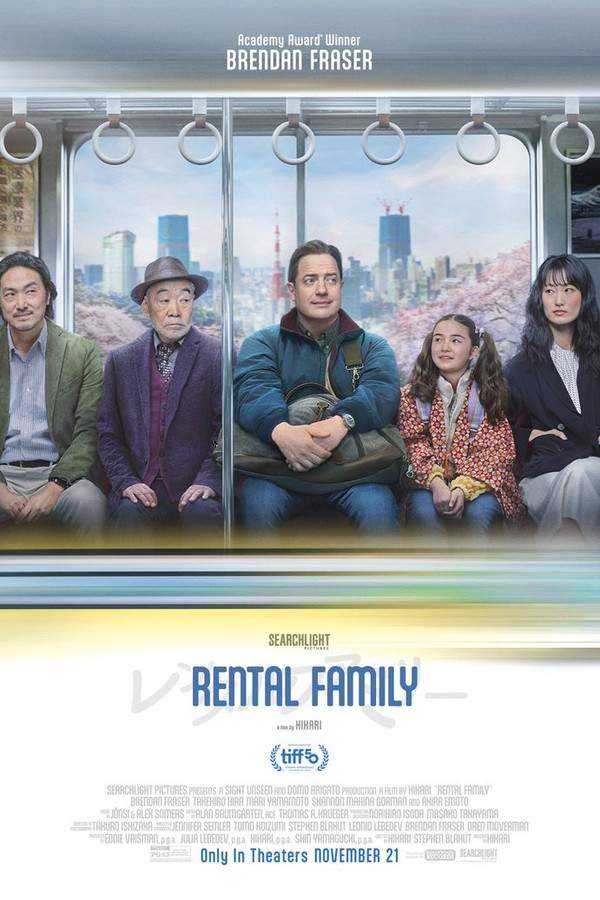
In contemporary Tokyo, a disillusioned American actor (Brendan Fraser) takes a job with a Japanese “rental family” agency, where he is hired to pose as family members for strangers. While inhabiting these temporary roles, he slowly forms real connections with his clients, causing the boundaries between his performance and his own life to dissolve. He must confront the emotional fallout and question what truly defines family.
Find where to stream, rent, or buy Rental Family (2025) in the US with current JustWatch availability, up-to-date pricing, and platform listings for subscription, rental, and digital purchase options.
Warning: spoilers below!
Haven’t seen Rental Family yet? This summary contains major spoilers. Bookmark the page, watch the movie, and come back for the full breakdown. If you're ready, scroll on and relive the story!
Still thinking about how Rental Family (2025) ended? Here’s a full breakdown of the ending, key final moments, major twists, and the deeper meaning behind the film’s conclusion.
In the film’s closing moments Phillip finally steps out of the role‑play that has defined his work with the Rental Family agency. After Kikuo’s deteriorating health leads to a police complaint that threatens the business, Phillip explodes, telling his boss Shinji that the service exploits people’s loneliness rather than helping them. Shinji, shaken by the accusation and the legal trouble, decides to shut down the more deceitful “apology” schemes and steer the company toward a gentler, more honest purpose, keeping the agency alive but without the morally‑questionable contracts.
Meanwhile, the pretend bond between Phillip and young Mia transforms into something real. When the girl discovers an old TV clip of Phillip’s acting gigs, she confronts the illusion of his “American father” and, with her mother Hitomi’s reluctant blessing, chooses to keep him in her life—not as a paid substitute, but as a genuine friend who can fill the parental gap she has felt. Their relationship settles into an authentic, if unconventional, family‑like connection.
The very last scene finds Phillip alone in the quiet temple where he once accompanied Kuo Kikuo. He bows, folds his hands, and looks into the shrine’s mirror, a symbol that, as Kikuo once said, the divine lives inside each person. The gesture signals Phillip’s full circle: from an isolated outsider to a man who has forged true ties in a place that once felt foreign, carrying forward the love and responsibility he discovered through the rented roles.
Last updated: January 27, 2026 at 08:24
Read frequently asked questions about the ending of Rental Family (2025), including final-scene interpretation, twist explanations, character outcomes, and the deeper meaning behind the conclusion. This ending explained FAQ is designed for viewers searching for clear spoiler-heavy answers and ending breakdown insights.
Phillip explodes at Shinji after Kikuo's deteriorating health leads to a police complaint that threatens the business. He tells his boss that the service exploits people's loneliness rather than helping them. This confrontation marks Phillip's first time stepping out of his role-play identity to speak as himself, finally acknowledging the moral conflict he's felt throughout the job.
Earlier in the film, Phillip's discomfort with deceptive contracts builds as he grows closer to clients like Kikuo and Mia.
Shinji, shaken by Phillip's accusation and the legal trouble from Kikuo's case, decides to shut down the more deceitful "apology" schemes. He steers the company toward a gentler, more honest purpose, keeping the agency alive but without the morally-questionable contracts.
Yes, the pretend bond between Phillip and young Mia transforms into something genuine. When Mia discovers an old TV clip of Phillip's acting gigs, she confronts the illusion of his "American father" persona. With her mother Hitomi's reluctant blessing, Mia chooses to keep Phillip in her life not as a paid substitute, but as a genuine friend who can fill the parental gap she has felt.
Their relationship deepens throughout the film as Phillip spends more time with Mia and Hitomi, moving beyond the transactional nature of his work.
The final scene finds Phillip alone in the quiet temple where he once accompanied Kuo Kikuo. He bows, folds his hands, and looks into the shrine's mirror, a symbol that, as Kikuo once said, the divine lives inside each person. This moment shows Phillip has completed his emotional journey from isolated outsider to someone who has forged true ties in a place that once felt foreign.
Kikuo previously told Phillip about the shrine's meaning, planting the symbolic seed for this final moment of reflection.
Kikuo's health deteriorates due to dementia, which leads to a police complaint that threatens the Rental Family business. While the exact timing of his death isn't explicitly stated in the ending text, his declining condition is the catalyst for Phillip's moral confrontation with Shinji. The ending implies Kikuo has passed, as Phillip visits the temple alone where he once accompanied his friend.
Kikuo's memory problems and confusion appear throughout the film, gradually worsening.
When Phillip looks into the shrine's mirror in the final scene, it represents the idea that Kikuo once told him: the divine lives inside each person. The mirror reflection suggests Phillip now sees himself clearly, having moved from an isolated outsider to someone capable of genuine connection. It symbolizes his internal transformation and acceptance of authentic relationships over performed ones.
Kikuo shares this philosophical insight about the divine living within people earlier in the film.
Phillip finds a form of community and purpose through his connections with Mia, Hitomi, and even Shinji. Their relationship settles into an authentic, if unconventional, family-like connection. However, this comes with a melancholic cost, it follows the death of his friend Kikuo and requires him to accept a life built on temporary performances, now transformed into something more genuine.
Throughout the film, Phillip struggles with distinguishing between his performed roles and his real self.
Phillip remains in Japan because he has developed genuine relationships that anchor him there, particularly his evolving connection with Mia and Hitomi. Rather than returning to his disconnected life in America, he chooses to stay and maintain these real bonds. The temple scene demonstrates he has found a sense of belonging and purpose in a place that once felt foreign.
Phillip's growing emotional investment in his clients throughout the film makes Japan a place of genuine connection rather than just a job location.
Discover curated groups of movies connected by mood, themes, and story style. Browse collections built around emotion, atmosphere, and narrative focus to easily find films that match what you feel like watching right now.
Unlikely connections bring warmth and healing in the face of loneliness.Discover movies like Rental Family that explore the poignant theme of found family. If you liked the heartfelt connections and emotional healing in this film, you'll appreciate these similar stories about characters building families from unexpected bonds against a backdrop of loneliness.
The narrative pattern involves isolated characters, often due to circumstance or personal history, gradually forming deep bonds with a group of outsiders. The central conflict revolves around accepting this new, non-traditional support system, leading to a resolution that is emotionally fulfilling yet often tinged with the bittersweet recognition of what was lost or gained.
These films are grouped together because they share a core emotional arc: moving from loneliness to connection through a 'found family.' They consistently blend a melancholic tone with hopeful warmth, featuring steady, character-driven pacing that allows relationships to develop authentically, resulting in a deeply resonant viewing experience.
When playing a role becomes a journey of self-discovery.Explore films similar to Rental Family that delve into the themes of identity and performance. If you were fascinated by the main character's struggle with his professional role blurring into his real life, these movies about actors, spies, and imposters questioning their authenticity are for you.
The narrative follows a character who is paid or compelled to act a certain way, often for an audience or a specific person. As they inhabit the role, the performance begins to influence their genuine emotions and sense of self, creating internal conflict. The story unfolds as the character grapples with the authenticity of their feelings and must reconcile their two identities.
These movies are linked by a central thematic conflict between performance and authenticity. They share a mood of thoughtful melancholy and a steady pacing that allows for deep character exploration. The emotional core revolves around the tension between a constructed identity and the search for a real one, making the viewing experience intellectually and emotionally engaging.
Stories where performance blurs into genuine human connection.If you enjoyed the themes of performance and connection in Rental Family, you'll find similar stories here. Discover other movies where characters use acting or deception to find their place, exploring the bittersweet line between fiction and genuine feeling in films about found family and identity.
Narratives in this thread often follow an outsider or lonely individual who assumes a false identity or role. As they immerse themselves in this performance, the relationships they form begin to feel real, forcing them to confront the difference between the part they are playing and their true self, leading to a crisis of identity and emotional resolution.
These films are grouped by their shared exploration of performance as a pathway to human connection. They balance a bittersweet tone with a steady, character-driven pace, focusing on the emotional weight of discovering authenticity through pretend roles.
Character studies of connection and alienation in the city.For viewers who liked the portrayal of searching for connection in Tokyo in Rental Family, this section highlights similar movies. Find other thoughtful and bittersweet stories about alienation, human connection, and finding your place in a big city, featuring steady pacing and medium emotional intensity.
The narrative pattern involves a protagonist feeling adrift or isolated in a major city. Through chance encounters or deliberate choices, they slowly build connections with other lost souls, leading to a gradual sense of belonging. The story unfolds at a measured pace, focusing on small, meaningful interactions rather than high-stakes plot twists.
These movies share a specific mood: a melancholic yet heartwarming vibe born from exploring loneliness in a crowded place. They have a steady pacing that allows for reflection, a medium emotional intensity, and a bittersweet tone that acknowledges the fragility of the connections formed.
Don't stop at just watching - explore Rental Family in full detail. From the complete plot summary and scene-by-scene timeline to character breakdowns, thematic analysis, and a deep dive into the ending - every page helps you truly understand what Rental Family is all about. Plus, discover what's next after the movie.
Read a complete plot summary of Rental Family, including all key story points, character arcs, and turning points. This in-depth recap is ideal for understanding the narrative structure or reviewing what happened in the movie.
Track the full timeline of Rental Family with every major event arranged chronologically. Perfect for decoding non-linear storytelling, flashbacks, or parallel narratives with a clear scene-by-scene breakdown.
Discover the characters, locations, and core themes that shape Rental Family. Get insights into symbolic elements, setting significance, and deeper narrative meaning - ideal for thematic analysis and movie breakdowns.
Discover movies like Rental Family that share similar genres, themes, and storytelling elements. Whether you’re drawn to the atmosphere, character arcs, or plot structure, these curated recommendations will help you explore more films you’ll love.
Rental Family (2025) Plot Summary & Movie Recap
Rental Family (2025) Scene-by-Scene Movie Timeline
Rental Family (2025) Movie Characters, Themes & Settings
Rental Family (2025) Spoiler-Free Summary & Key Flow
Movies Like Rental Family – Similar Titles You’ll Enjoy
Family Romance, LLC (2020) Story Summary & Characters
Summer Rental (1985) Full Movie Breakdown
Rent a Friend (2018) Ending Explained & Film Insights
Family Romance, LLC (2019) Full Movie Breakdown
The Family Game (1983) Full Movie Breakdown
The Yen Family (1988) Movie Recap & Themes
Tomorrow’s Family (2020) Full Movie Breakdown
Return to Toyama (2020) Ending Explained & Film Insights
Living on Tokyo Time (1987) Spoiler-Packed Plot Recap
Mom, Is That You?! (2023) Full Summary & Key Details
Living on Tokyo Time (1987) Story Summary & Characters
Family Happiness (1970) Detailed Story Recap
#bemyfamily (1000) Story Summary & Characters
An Inn in Tokyo (1935) Detailed Story Recap
We Are Family (2022) Plot Summary & Ending Explained