Plot Explained Spoilers guaranteed!
Plot Explained

Browse by genre

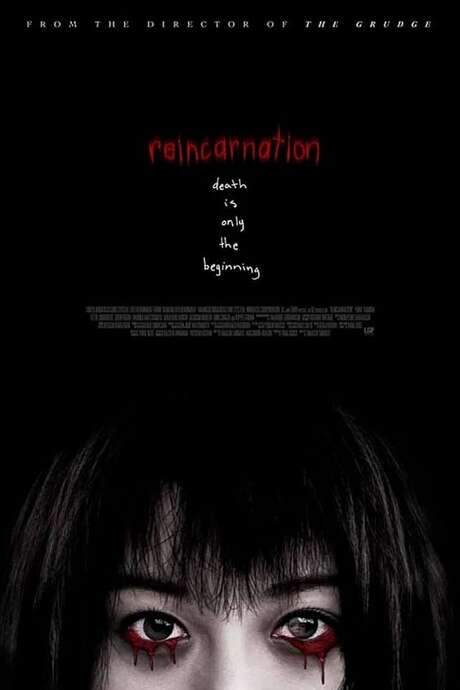
Reincarnation (2005) movie poster

Timeline

Reincarnation (2005) Timeline Explained – Every Event in Order

Release, runtime and language
2005 · 96 mins · Japanese
Loading streaming availability…
Directed by
Takashi Shimizu
Starring
Kiyoshi Kurosawa, Shun Oguri, Kippei Shiina, Tarô Suwa, Tetta Sugimoto, Mantaro Koichi

After being cast in a horror movie that dramatizes a real murder spree from more than four decades ago, a Japanese actress begins to suffer vivid, unsettling visions and inexplicable experiences that echo the atrocities. As the line between film and reality blurs, she discovers that death may be only the beginning.

On this page (6)
  1. 1 Where to watch
  2. 2 Events in order (12)
  3. 3 Timeline questions answered
  4. 4 Movie threads
  5. 5 Movies like Reincarnation
  6. 6 Every angle
Loading streaming availability…

12 events in order · contains spoilers

Reincarnation Timeline: Events in Chronological Order

Every key event of Reincarnation (2005) in order, scene by scene, with when and where it takes place. Use it to untangle flashbacks, time jumps and parallel storylines, to refresh your memory before the sequel or to find the exact scene you are thinking of.

  1. 1970 Hotel Slaughter

    In 1970, Omori records himself committing a brutal slaughter of eleven people at a local hotel, including guests, staff, and his own children. He then dies by his own hand, leaving behind a chilling piece of footage. The act is meticulous and ceremonial, intended to probe what lies beyond death. The footage dissolves into ether and vanishes from memory, sparking a quiet puzzle for future generations.

    When
    1970
    Where
    Local hotel
  2. Footage Vanishes from Memory

    Immediately after the act, the recorded footage dissolves and vanishes from memory, leaving no enduring record of what happened. The mystery surrounding Omori’s crime deepens as the past seems to erase itself. Witnesses are left with only rumors and fear of what truly occurred that night.

    When
    1970
    Where
    Local hotel
  3. Ikuo Begins the Film Project

    Thirty-five years later, horror filmmaker Ikuo Matsumura resolves to make a film about the massacre. He assembles a crew and begins planning shoots, driven by a desire to illuminate the forgotten event. The project starts to echo the past, hinting that cinema may awaken shadows better left buried.

    When
    2005
    Where
    Film production site
  4. Nagisa’s Premonitions Intensify

    As production approaches, Nagisa Sugiura, cast to portray Omori’s daughter Chisato, begins to suffer nightmare-haunted nights and unsettling hallucinations. The visions blur lines between fiction and the massacre, deepening a creeping sense of dread. The boundary between the on-set world and the past grows dangerously thin.

    When
    2005
    Where
    Film production set
  5. Yayoi Meets Yuka; Past Life Signs

    Yayoi Kinoshita, drawn into the project, encounters Yuka Morita, another actress who claims memories from a past life and shows a birthmark echoing signs of strangulation. The two women sense a living echo of the victims and feel the film’s reach extending beyond fiction. Their meeting amplifies the sense that something older and more malevolent watches from behind the camera.

    When
    2005
    Where
    Audition room
  6. Ayumi’s Survivor Testimony

    Ayumi Omori, the massacre’s lone survivor and Omori’s wife, explains that the body is a vessel that can be emptied and reused after death. Her testimony adds a chilling layer to the myth surrounding the killings and hints at why the film’s cast might be drawn to forces they don’t fully understand. The past thus begins to breathe through living memory.

    When
    2005
    Where
    Ayumi’s home
  7. The Camera Reveals a Real-Time Loop

    As filming progresses, Nagisa’s agent reviews Omori’s camera and discovers a looping reel that reenacts events in real time. When the film begins to play, the performers seem to step into the roles they portray, and the people she sees begin transforming into those roles before her eyes. The perspective grows increasingly unreliable and claustrophobic as the past infiltrates the present.

    When
    2005
    Where
    On-set / camera room
  8. Actors Enter Their Roles; Reality Shifts

    With the loop active, the cast drifts into their on-screen personas, and the victims drift toward Nagisa in the real world. The town and set become a dark stage where past horrors intrude on present lives. The line between cinema and the supernatural seems dangerously thin.

    When
    2005
    Where
    Town / on-location set
  9. Nagisa’s Desperate Escape

    Cornered in a climactic sequence, Nagisa seizes a shard of glass and flees through the town, glimpsing Omori’s face reflected in a shop window rather than his own. The agent watches, increasingly unsettled, as events unfold from Omori’s perspective. The pursuit marks a turning point where killer and victim threaten to swap places.

    When
    2005
    Where
    Shop window / town
  10. The Doll’s Ominous Message

    Inside the shop, a malevolent doll utters a chilling claim: they will be together forever. The haunting intensifies as objects around Nagisa seem to carry the past into the present. The boundary between film prop and living spirit blurs in a palpable, unnerving way.

    When
    2005
    Where
    Shop
  11. Executives Review Nagisa’s Take

    Behind the scenes, executives review Nagisa’s performance as the production races toward completion. Ayumi, the survivor, sits among them, her presence a grim reminder of the history being reanimated. Tension rises as the footage and past crimes exert their influence on the crew.

    When
    2005
    Where
    Production office
  12. Nagisa’s Collapse and the Ward

    Nagisa collapses in fear, and crew members restrain her in a full-body wrap inside a mental ward. Ayumi appears at the door, offering the red ball and a doll—the same objects tied to the children’s memories. The scream echoes as ghosts close in, leaving a haunting image of possession and memory.

    When
    2005
    Where
    Mental ward

Last updated: October 09, 2025 at 16:46

Was this helpful?

Timeline questions answered

Reincarnation Timeline Explained: Your Questions Answered

When does it happen, and why in that order? The questions people ask about the chronology of Reincarnation (2005): time jumps, flashbacks, cause and effect between scenes and the correct order of events, each answered with spoilers.

Q1

Why did Professor Omori kill his own children during the 1970 massacre?

Professor Omori was obsessed with the idea that the body is merely a vessel that can be emptied and reused by another presence after death. He believed committing the massacre, including killing his own children, was a ritual to probe what lies beyond death and test his theory of reincarnation. The murders were not acts of passion but calculated steps in a metaphysical experiment.

Foreshadowing: Earlier in the film, Ayumi explains Omori's belief that the body is a vessel, establishing the philosophical motivation behind the killings.

  • professor omori
  • children
  • killing
  • motivation
  • reincarnation
  • belief
  • vessel
Q2

What happened to the footage Omori recorded of the massacre?

Immediately after Omori records himself committing the slaughter, the footage dissolves into ether and vanishes from memory entirely. No physical record remains, this disappearance is what allows rumors and fear to fill the gap, creating the mystery that Ikuo Matsumura's film will later attempt to uncover.

  • footage
  • vanishes
  • memory
  • disappears
  • recording
  • mystery
Q3

How does the camera create a real-time loop during filming?

The camera Omori used contains a supernatural loop that reenacts events in real time. When Nagisa's agent reviews the footage expecting a historical artifact, they discover it plays continuously, projecting the past into the present. The camera becomes a conduit that pulls performers into the roles they portray, blurring fiction and reality.

Foreshadowing: The old film camera Nagisa finds resembles the one Omori used, hinting at its supernatural properties.

  • camera
  • loop
  • real time
  • filming
  • supernatural
  • reenactment
Q4

Why does Nagisa see Omori's face instead of her own reflection in the shop window?

When Nagisa looks into the shop window while clutching glass, she sees Omori's face staring back rather than her own, this signals that she is being possessed or is stepping into Omori's role. The boundary between killer and victim is collapsing, and she is becoming the vessel for Omori's spirit as the mirror reflects him instead of her.

Foreshadowing: Earlier, Nagisa sees the people around her transforming into their on-screen roles, indicating the possession is already underway.

  • nagisa
  • reflection
  • omori
  • face
  • mirror
  • possession
  • glass
Q5

What does the doll mean when it says they will be together forever?

The doll, appearing as a malevolent force, claims Nagisa and Omori will be together forever, signifying that the possession is complete. Nagisa has become the new vessel for Omori's spirit, just as he believed bodies could be reused after death. The eternal binding represents the fulfillment of his reincarnation theory through Nagisa's willing or unwilling acceptance.

  • doll
  • together forever
  • possession
  • omori
  • nagisa
  • eternal
  • binding
Q6

Why does Ayumi give Nagisa the red ball and doll at the end?

Ayumi gives Nagisa the red ball and doll, the same toys beloved by Omori's children, as a final connection between the living and the dead. This gesture signifies that Nagisa is now the vessel for the children's spirits as well as Omori's. It represents the eerie continuity of the tragedy and suggests the children have claimed Nagisa alongside their father.

Foreshadowing: The children's toys are mentioned early as objects tied to their memory, and their ghosts specifically haunt Nagisa in the mental ward.

  • ayumi
  • red ball
  • doll
  • children
  • toys
  • mental ward
  • possession
Q7

Why is Nagisa restrained in a mental ward at the end of the film?

Nagisa collapses from the psychological toll of her experiences as the boundary between film and reality shatters completely. The crew restrains her in a full-body wrap in a mental ward because she has descended into madness, haunted by the spirits of Omori's children. Her screaming and the sinister smile that spreads across her face indicate possession rather than typical mental illness.

Foreshadowing: Her hallucinations intensify progressively throughout filming, with victims drifting toward her in the real world.

  • nagisa
  • mental ward
  • restrained
  • collapse
  • possessed
  • madness
Q8

What does Ayumi mean when she says the body is a vessel?

Ayumi explains that Omori believed the human body is merely a vessel that can be emptied and reused by another presence after death. This philosophical belief motivated his entire massacre, he wanted to prove that consciousness or spirit could transfer to a new body through death, making murder a form of spiritual experiment rather than simple violence.

  • body
  • vessel
  • ayumi
  • omori
  • reincarnation
  • belief
  • spirit
Q9

What is the significance of Yuka's birthmark and her claims about past life memories?

Yuka Morita claims to remember things from a past life and shows Yayoi a birthmark that echoes signs of strangulation. This establishes that some characters have direct connections to the massacre's victims, Yuka may be a reincarnated victim. This reinforces the film's exploration of reincarnation and suggests the victims' spirits are drawn to the film production.

Foreshadowing: Yuka is dragged away by ghostly forces shortly after revealing her birthmark, indicating her claim has supernatural validity.

  • yuka
  • birthmark
  • past life
  • strangulation
  • victim
  • reincarnation
Q10

Why does making the horror film awaken the spirits from 1970?

The film production serves as a conduit that bridges the past and present. By casting actors to portray the victims and using the same camera Omori used, the production inadvertently opens a door between worlds. The act of reenacting the massacre summons the spirits, and the camera's supernatural properties allow the past to reenact itself in real time.

Foreshadowing: The old film camera Nagisa finds resembles Omori's, acting as the key mechanism that unlocks the supernatural events.

  • film production
  • spirits
  • awaken
  • camera
  • reenactment
  • supernatural
  • conduit
Q11

Why does Nagisa seize a shard of glass and attempt to kill herself?

In the climactic scene, Nagisa is cornered and overwhelmed by the invading spirits. She seizes glass in what appears to be a desperate attempt to replicate Omori's suicide, the very act that completed his ritual. However, she is halted by the doll, suggesting the spirits want her alive as a vessel rather than allowing her to die and potentially escape their control.

Foreshadowing: The film mirrors Omori's original suicide, with Nagisa beginning to reenact the same fatal movement before being stopped.

  • nagisa
  • glass
  • suicide
  • omori
  • ritual
  • attempt
  • cornered
Q12

What happens when the performers begin stepping into their on-screen roles?

As the camera loop activates, the cast drifts into their on-screen personas, and the boundaries between actor and character collapse. The people Nagisa sees begin transforming into the roles they portray, she witnesses victims and killers shifting before her eyes. This marks the point where fiction becomes reality and the past takes over the present.

Foreshadowing: The camera reveals its real-time loop properties just before this transformation becomes visible to Nagisa.

  • performers
  • roles
  • transform
  • actors
  • characters
  • possession
  • reality

Movie threads

More Movies Like Reincarnation, by Mood & Story

Curated lists built around what makes Reincarnation tick: the same mood, the same kind of story or the same emotional payoff. Each list explains why these movies belong together.

Supernatural investigation movies like Reincarnation

Characters unravel a supernatural mystery that begins to unravel their own sanity. If you liked Reincarnation, explore these other movies where characters investigate a supernatural past only to find it investigating them in return. These films combine eerie mystery with psychological horror, often featuring blurred realities and a descent into madness.

  • ominous
  • paranoid
  • investigative
  • supernatural
  • unsettling
  • claustrophobic
  • Tone: dark, paranoid
  • Pacing: variable, investigative
Why these movies?

The story pattern: The narrative follows a protagonist, often a skeptic or a professional, who is drawn into investigating a mysterious past event. As they gather clues, the supernatural nature of the case becomes undeniable, and the boundary between their reality and the haunting begins to dissolve. The story's climax typically involves the investigator being consumed or permanently altered by the very forces they sought to understand.

Why they belong together: Movies are grouped here because they share a core structure of a supernatural investigation that directly impacts the investigator's psyche. They blend mystery with psychological horror, creating a specific kind of dread where the search for answers leads to the loss of self.


Atmospheric supernatural horror movies like Reincarnation

Films where the environment itself becomes a source of inescapable, creeping horror. Find more movies with a suffocating atmosphere like Reincarnation. These films prioritize building a palpable sense of dread through haunting settings, supernatural Presence, and a focus on psychological torment over cheap thrills.

  • haunting
  • ominous
  • claustrophobic
  • dreamlike
  • melancholic
  • suffocating
  • Tone: dark, ominous
  • Pacing: variable, slow burn
Why these movies?

The story pattern: The narrative is less about a linear plot and more about the slow, inexorable buildup of dread. Characters are trapped in a situation or location plagued by a supernatural force. The story unfolds through escalating, inexplicable experiences and visions, focusing on the psychological deterioration of the characters as they confront a horror they cannot fight or flee.

Why they belong together: These films are grouped by their shared emphasis on atmosphere as the primary engine of horror. They create a consistent mood of unease and foreboding, using the supernatural to explore themes of inherited trauma, psychological fragility, and inescapable fate.

If you liked this

Movies Like Reincarnation

Similar movies to Reincarnation: the same genre, themes or kind of story. Each one comes with its own plot summary, timeline and ending explained.

Browse all movie summaries

Every angle

Reincarnation (2005) Explained: Plot, Timeline & Characters

Everything about Reincarnation in one place: what happens in the plot summary, the timeline in chronological order, the characters and meaning and a spoiler-free summary. What's After the Movie adds the cast, box office and post-credit scenes.

Coming soon on iOS and Android

The Plot Explained Movie Summary App

Plot summaries, endings explained and timelines on your phone. Catch up on any movie in minutes, save your favorites and never miss a twist again.

Be the first to know when we launch. Your email stays private, always.

Learn more about the app