Plot Explained Spoilers guaranteed!
Plot Explained

Browse by genre

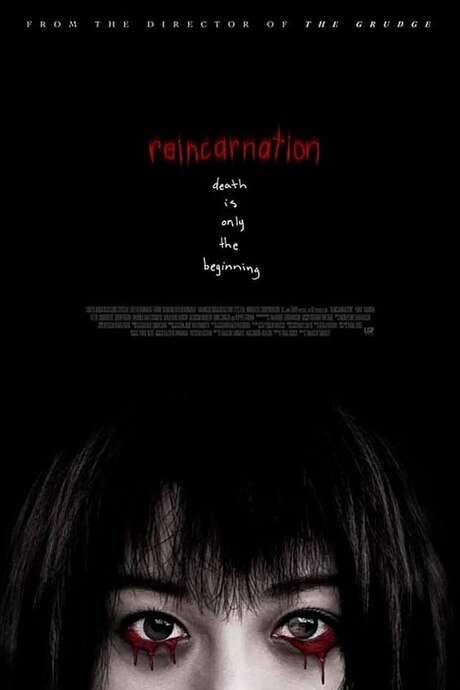
Reincarnation (2004) movie poster

Plot Summary

Reincarnation (2004) Plot Summary Explained

Release, runtime and language
2004 · 95 mins · Japanese
Directed by
Fei Wang
Starring
Xiang Ting Li, Joshua Michaell, Julia Sun

Yuka, a Japanese actress, encounters restless spirits after agreeing to star in a horror film based on the true story of a deranged professor who murdered 11 people, including his young daughter. The production is shot on the very site of the grisly killings. Directed by Takashi Shimizu (The Grudge), it is a dark, mesmerizing tale of crime, punishment and redemption.

On this page (5)
  1. 1 What happens: full plot
  2. 2 Plot questions answered
  3. 3 Movie threads
  4. 4 Movies like Reincarnation
  5. 5 Every angle

Full plot summary · contains spoilers

What Happens in Reincarnation: Full Plot Summary

The whole story of Reincarnation (2004) explained, from the opening scene to the final frame: every key event, every twist and what it all adds up to. Read it as a quick recap before the sequel, to check a scene you missed, or to finally understand what really happened.

In 1970, a disturbing pursuit of answers leads Professor Norihasa Omori to a local hotel where he records himself killing eleven people—including hotel guests, staff, and his own children—before taking his own life. He does this in a rarefied attempt to grasp the idea of reincarnation, but after the act, the footage mysteriously vanishes, as if the truth itself had hidden away with the crime.

Thirty-five years pass, and horror movie director Ikuo Matsumura decides to bring the massacre to life on screen. As the production nears, Nagisa Sugiura, the actress set to star as Omori’s daughter Chisato, is besieged by the lingering presence of the victims’ ghosts. Her reality begins to blur as she experiences vivid hallucinations and nightmares of the killings, and she stumbles upon an old film camera that resembles the one Omori used.

Meanwhile, college student Yayoi Kinoshita encounters Yuka Morita, an actress who had auditioned for Matsumura’s film. Yuka speaks of a “past life” and shows Yayoi a birthmark that she believes serves as evidence of strangulation. Soon after, the ghosts reappear and drag Yuka away, leaving Yayoi to piece together the eerie clues. Her investigation leads to Ayumi, Omori’s wife and the massacre’s sole survivor, who explains Omori’s fixation on the body as merely a vessel and his unsettling belief that deeper forces governed what a body could become.

As filming continues, Nagisa’s visions intensify. Her agent reviews the recovered camera—the same device Omori used to document his killings—and as the film runs, Nagisa is pulled into reenactment after reenactment of the past. She watches the people around her—Yayoi, Ikuo, and the two men from the opening—transform into the very figures they portray. The victims begin to walk toward her, and she bolts away, fleeing into the town. At the same moment, her agent observes Nagisa’s escape from Omori’s own point of view. Cornered in a shop, Nagisa seizes a shard of glass and teeters on the edge of suicide; when she looks into the glass, she sees Omori’s face reflected back at her. Her agent witnesses Omori witnessing Nagisa’s reflection instead of his own before he cuts his throat. Nagisa tries to repeat Omori’s suicide, but a doll stops her, whispering that they will be together forever.

A team of executives watches Nagisa’s performance, including Ayumi, who remains a quiet, ominous presence. As the shoot nears its end, Nagisa collapses—trembling, screaming—while crew members rush to assist. Later, in a mental ward, Nagisa lies wrapped in a full-body restraint, still haunted by the souls of Omori’s children. Ayumi looks in through the door window and then presents Nagisa with her children’s favorite toys—a red ball and a doll. Nagisa screams at first, but a chilling calm gradually settles over her as the ghosts of the children close in, leaving a lingering sense that the past has not finished speaking.

Last updated: November 22, 2025 at 16:00

Was this helpful?

Plot questions answered

Reincarnation Plot Explained: Your Questions Answered

The questions people ask most about Reincarnation (2004): what happens in the confusing scenes, why the characters do what they do, the twists, hidden details and what the ending means. Each answer contains spoilers.

Q1

Why did Professor Omori kill his own children?

Professor Omori believed the body was merely a vessel for something greater and became obsessed with proving the existence of reincarnation. He murdered his own children as part of a broader ritual to understand what happens to consciousness after death, seeking empirical evidence of rebirth through the act of killing and documenting it.

  • professor omori
  • children
  • murder
  • reincarnation
  • obsession
Q2

How did the film footage disappear after the massacre?

The footage vanished mysteriously after Omori recorded himself committing the murders and suicide. The film essentially disappeared as if the truth itself had hidden away with the crime, becoming a legendary lost recording that filmmakers and investigators searched for decades but never recovered.

  • footage
  • vanished film
  • camera
  • evidence
  • mystery
Q3

Why is Nagisa specifically targeted by the ghosts?

Nagisa is targeted because she is playing Omori's daughter Chisato in the film about the massacre. As filming progresses and she uses the same camera Omori used, she becomes a conduit for the past. The ghosts draw her into reenactments, and she begins experiencing the events from both the victims' and ultimately Omori's perspective, making her the focal point of the supernatural activity.

Foreshadowing: Early in production, Nagisa finds an old camera similar to Omori's and senses it carries memories rather than just film.

  • nagisa
  • ghosts
  • possessed
  • chISATO
  • actress
Q4

What is the significance of the old camera Nagisa finds?

The camera Nagisa discovers is the same device Omori used to document his killings. It serves as a direct physical link between the 1970 massacre and the present-day filming. When the production team reviews footage from this camera, the past bleeds into reality, allowing Omori's recorded perspective to see through Nagisa as she reenacts the tragedy.

  • camera
  • omori
  • filming
  • relic
  • haunting
Q5

Why does Nagisa see Omori's face when she looks in the glass?

When Nagisa looks into the glass shard while attempting suicide, she sees Omori's face reflected back instead of her own. This occurs because the supernatural film has merged their perspectives, Omori is watching through her eyes from the afterlife, and the boundary between victim and killer has blurred. Her agent simultaneously observes Omori witnessing Nagisa's reflection rather than his own.

  • reflection
  • omori
  • nagisa
  • suicide
  • perspective
Q6

What do the red ball and doll represent at the end?

The red ball and doll are Ayumi's children's favorite toys, the same children Omori killed in 1970. When Ayumi presents them to Nagisa in the mental ward, they represent the lingering attachment of the murdered children and their attempt to claim Nagisa as their mother or vessel. The toys symbolize the past's grip and the cyclical nature of the haunting that refuses to end.

Foreshadowing: Ayumi explains early on that Omori viewed the body as merely a vessel for something greater, hinting at the children's spiritual continuation.

  • toys
  • doll
  • ball
  • children
  • ayumi
  • nagisa
Q7

Why does Ayumi give Nagisa her children's toys?

Ayumi gives Nagisa the toys because she recognizes that the spirits of her children have attached themselves to Nagisa. Whether as an act of mercy, a continuation of the cycle, or a deliberate surrender to the haunting, Ayumi provides the objects that anchor the children's spirits, effectively allowing the haunting to complete itself through Nagisa.

  • ayumi
  • toys
  • children
  • mental ward
  • surrender
Q8

Is Nagisa possessed by ghosts or experiencing psychological breakdown?

The film deliberately blurs this line. Nagisa experiences genuine supernatural phenomena, ghosts appear, she is pulled into reenactments, and objects from the past respond to her. However, her collapse into a full-body restraint in a mental ward suggests genuine psychological deterioration. The ambiguity is central to the film's horror, as it implies the haunting may be both literal and psychological.

  • possession
  • trauma
  • nagisa
  • breakdown
  • ghosts
Q9

What happened to Ayumi after she survived the massacre?

Ayumi was the sole survivor of Omori's killing spree in 1970. She lived with the trauma for 35 years before the film production brought the events back into focus. By the end, she remains a quiet, ominous presence among the executives watching the final takes, and she personally delivers her children's toys to Nagisa, suggesting she has become complicit in or surrendered to the supernatural cycle.

  • ayumi
  • survivor
  • wife
  • omori
  • trauma
Q10

How does the camera allow Omori to see through the actors?

The original camera Omori used to record the massacre functions as a supernatural conduit. When the modern film crew uses it, Omori's recorded consciousness merges with the filming process. The footage shows events from Omori's point of view even while actors perform, meaning he essentially watches and controls the reenactments through the camera, pulling Nagisa into his perspective.

  • camera
  • omori
  • POV
  • actors
  • seeing
Q11

What does the title Reincarnation mean in the context of this film?

The title refers to multiple layers: Omori's literal attempt to prove reincarnation through murder, the way the past lives on through the film and its actors, and the final merging of identities where Nagisa becomes vessels for the dead. The cycle repeats, filmmaking about tragedy recreates the tragedy, suggesting reincarnation as an inescapable curse rather than liberation.

  • reincarnation
  • title
  • meaning
  • cycle
  • rebirth
Q12

How did Yuka know about her past life memories?

Yuka Morita, an actress who auditioned for the film, claimed to have memories from a past life and showed Yayoi a birthmark she believed was evidence of strangulation. This suggests she may have been one of Omori's victims in a previous life. The ghosts eventually drag her away, confirming her connection to the past life and indicating the supernatural forces do not distinguish between the film production and original events.

  • yuka
  • past life
  • birthmark
  • strangulation
Q13

Why do the ghosts focus on the actors in the film?

The ghosts target actors because the film production itself serves as a ritual that bridges the past and present. By casting people to portray the victims and perpetrator, the production literally invites the spirits to reenact the tragedy. The actors become possessed because they are embodying the dead, making them conduits for the unresolved souls.

Foreshadowing: Nagisa's visions intensify specifically during filming, and the actors begin transforming into the characters they portray.

  • actors
  • ghosts
  • possession
  • film production
  • targets
Q14

What does the ending mean - is Nagisa now one of the spirits?

In the ending, Nagisa transitions from terror to a chilling calm and smiles as the ghosts close in around her. This suggests she has been claimed by the spirits of Omori's children and is now part of their realm. The restraints are removed as she surrenders to the haunting, and the lingering shot of the red ball and doll implies she has become the next vessel or victim, with the cycle continuing beyond the film's conclusion.

  • ending
  • nagisa
  • spirits
  • smile
  • possession

Movie threads

More Movies Like Reincarnation, by Mood & Story

Curated lists built around what makes Reincarnation tick: the same mood, the same kind of story or the same emotional payoff. Each list explains why these movies belong together.

Movies about haunted film productions like Reincarnation

Films where the act of making a film unleashes dark, supernatural forces. If you liked the unsettling premise of Reincarnation, where filming a horror movie about a real crime brings ghosts to life, you'll find more chilling movies here. This thread gathers stories where the act of creation itself becomes a curse, blurring reality and fiction in terrifying ways.

  • meta-horror
  • cursed
  • unsettling
  • claustrophobic
  • paranoid
  • suspenseful
  • Tone: dark, unsettling
  • Pacing: steady, building tension
Why these movies?

The story pattern: The narrative typically follows a group of artists—actors, directors, writers—who delve into a dark historical event or legend for their project. Their research and reenactment act as an invocation, drawing the actual malevolent forces or tragic spirits into their world. The conflict becomes about surviving the story they are trying to tell.

Why they belong together: These movies are grouped by their unique premise of a 'cursed production,' creating a sense of meta-horror. They share a vibe of self-reflexive dread, where characters are punished for their artistic ambition, and the setting of a film set becomes a claustrophobic trap for supernatural activity.

Movies with psychological unraveling like Reincarnation

Stories where a character's sanity steadily fractures under supernatural pressure. Fans of Reincarnation's portrayal of an actress losing her grip on reality will appreciate these films. This collection focuses on character-driven horror where the central terror is the slow, inevitable collapse of the protagonist's mind under supernatural or psychological strain.

  • psychological
  • slow burn
  • haunting
  • dread
  • melancholic
  • unsettling
  • Tone: dark, bleak, melancholic
  • Pacing: steady, slow burn
Why these movies?

The story pattern: The plot follows a single character's point of view as they experience increasingly disturbing and inexplicable events. The pacing is methodical, building dread not with jump scares but with the relentless accumulation of doubt and fear. The climax is often the character's complete mental surrender or institutionalization, with no clear victory over the forces tormenting them.

Why they belong together: These films are united by their focus on the internal landscape of horror. The similarity lies in the steady pacing, the high emotional weight of watching a psyche crumble, and the overwhelmingly bleak tone that offers no easy escapes or happy endings.

If you liked this

Movies Like Reincarnation

Similar movies to Reincarnation: the same genre, themes or kind of story. Each one comes with its own plot summary, timeline and ending explained.

Browse all movie summaries

Every angle

Reincarnation (2004) Explained: Plot, Timeline & Characters

Everything about Reincarnation in one place: what happens in the plot summary, the timeline in chronological order, the characters and meaning and a spoiler-free summary. What's After the Movie adds the cast, box office and post-credit scenes.

Coming soon on iOS and Android

The Plot Explained Movie Summary App

Plot summaries, endings explained and timelines on your phone. Catch up on any movie in minutes, save your favorites and never miss a twist again.

Be the first to know when we launch. Your email stays private, always.

Learn more about the app