Plot Explained Spoilers guaranteed!
Plot Explained

Browse by genre

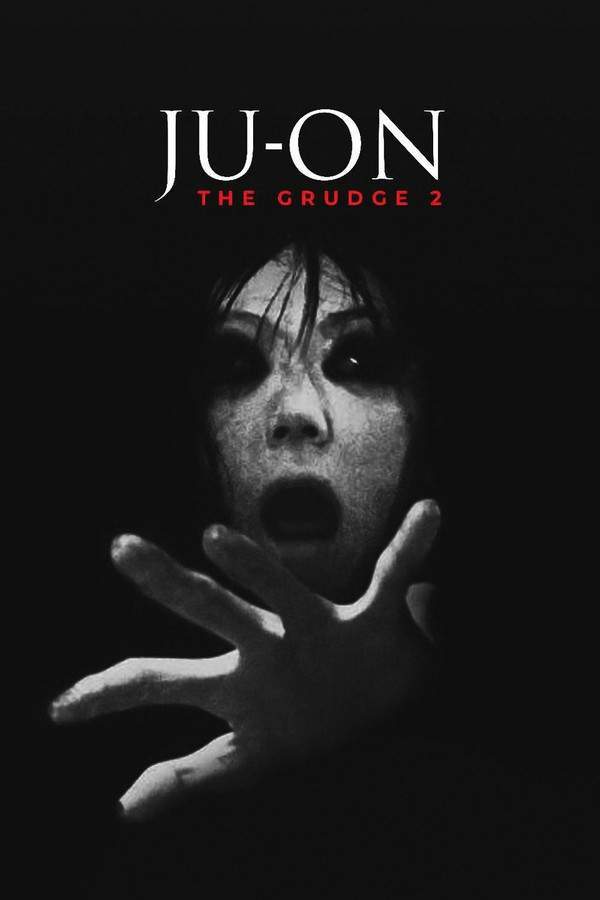
Ju-on: The Grudge (2004) movie poster

Plot Summary

Ju-on: The Grudge (2004) Plot Summary Explained

Release, runtime and language
2004 · 92 min · Japanese
JustWatch #15,549 8
Directed by
Takashi Shimizu
Starring
Misa Uehara, Megumi Okina, Misaki Ito

A terrifying curse haunts a house in Japan, born from a violent tragedy and fueled by unrelenting rage. Anyone who enters the house becomes a target of the vengeful spirits, experiencing increasingly horrific events. A dedicated caregiver finds herself caught in the deadly spiral, struggling to understand the origins of the curse and desperately trying to escape its grasp as the vengeful spirits claim new victims.

On this page (6)
  1. 1 Where to watch
  2. 2 What happens: full plot
  3. 3 Plot questions answered
  4. 4 Movie threads
  5. 5 Movies like Ju-on: The Grudge
  6. 6 Every angle

Where to watch

Where to Watch Ju-on: The Grudge (2004)

Where can you watch Ju-on: The Grudge? Stream, rent or buy it in the US, including on ARROW, Amazon Video and Apple TV Store: current JustWatch availability with up-to-date prices.

Streaming availability powered by JustWatch

Full plot summary · contains spoilers

What Happens in Ju-on: The Grudge: Full Plot Summary

The whole story of Ju-on: The Grudge (2004) explained, from the opening scene to the final frame: every key event, every twist and what it all adds up to. Read it as a quick recap before the sequel, to check a scene you missed, or to finally understand what really happened.

The story unfolds with the tragic suicide of Peter and culminates with Karen in a hospital bed, showcasing a chilling narrative of obsession and horror. The tale begins with Kayako Saeki (Takako Fuji), a discontented young woman trapped in a miserable marriage with Takeo Saeki (Takashi Matsuyama). Consumed by her feelings for Peter Kirk (Bill Pullman), an American professor in Tokyo, she pours her heart into a diary and sends him letters.

One fateful night, upon returning home, Kayako discovers her husband reading her diary. In a fit of rage, Takeo brutally attacks her, leading to a horrific confrontation. As she crawls for escape, he snaps her neck, leaving a witness—Toshio Saeki (Yuya Ozeki), their innocent eight-year-old son. In a horrifying act, Takeo drags Toshio to the bathroom and drowns him, further killing their beloved cat before taking his own life.

The following day, Peter arrives at the Saeki residence, carrying one of Kayako's letters, unaware of the house's dark past. He discovers disturbing evidence of the tragedy that occurred there, including photographs with Kayako's face torn out and sinister signs of something lurking in the shadows. As he delves deeper, he witnesses escalating supernatural events—Kayako's ghostly figure and the horrors of the past come to life around him.

As the narrative continues, Matthew Williams (William Mapother), his wife Jennifer (Clea DuVall), and his mother Emma (Grace Zabriskie) move to Tokyo due to Matthew's job promotion. Despite Emma's unease about their new home, they attempt to settle in. However, as the unsettling presence of Kayako infiltrates their lives, dark events unfold, leading to Jennifer's terrifying encounter with the supernatural.

When Karen Davis (Sarah Michelle Gellar) arrives to care for Emma, she inadvertently gets entwined in the haunting saga. Discovering the frightened Toshio, she faces the sinister force of Kayako. As the story escalates, Alex, Karen’s boss, uncovers grim discoveries, leading to the realization that the entire house is entwined with a gruesome history of violence and loss.

Determined to uncover the truth behind the hauntings, Karen’s investigation reveals the tragic incidents connected to Kayako and her family's demise. Each encounter with the supernatural intensifies her quest for answers, but as her plight continues, every door she opens only brings her closer to a terrifying fate. In a final act of desperation, she confronts the malevolence, igniting a sequence of events that leads to tragedy and chaos.

Eventually, as chaos ensues and Kayako's dark influence becomes overwhelming, Karen faces the ultimate horror in a desperate struggle for survival, unraveling the dreadful legacy of Kayako and Takeo's actions. As the film concludes, viewers are left with an unsettling sense of dread, embodied by Kayako's chilling presence, as she manifests in the most haunting of ways, leaving a lasting impression that lingers long after the credits roll.
Last updated: November 03, 2024 at 11:16

Was this helpful?

Plot questions answered

Ju-on: The Grudge Plot Explained: Your Questions Answered

The questions people ask most about Ju-on: The Grudge (2004): what happens in the confusing scenes, why the characters do what they do, the twists, hidden details and what the ending means. Each answer contains spoilers.

Q1

Why did Takeo kill Kayako and Toshio?

Takeo discovered Kayako's diary which revealed her feelings for Peter Kirk. Consumed by jealousy and rage, he attacked Kayako and snapped her neck. He then drowned Toshio in the bathtub to prevent the boy from telling anyone what he witnessed, before committing suicide. The murder of his own child demonstrates his complete mental breakdown.

Foreshadowing: The diary appears early in the story as a symbol of Kayako's hidden desires and frustrations.

  • takeo saeki
  • kayako saeki
  • toshio
  • murder
  • jealousy
  • diary
Q2

How does the curse spread to new victims?

The curse is location-based and spreads through anyone who enters the Saeki house. Once someone enters, they become marked by the spirits and will experience supernatural attacks. The curse can also spread indirectly, those who have been in the house can transmit the malevolent presence to others even outside the location.

  • curse
  • transmission
  • haunted house
  • victims
  • spirits
Q3

Why is Kayako's spirit so vengeful?

Kayako died with extreme emotional trauma, murdered by her husband while reaching out for help, and she witnessed her son being drowned moments later. Her spirit returned consumed by rage and sorrow, unable to accept her tragic death. This violent death combined with her unfulfilled longing for love and escape created the powerful vengeful entity.

Foreshadowing: Kayako's diary entries reveal her desperate unhappiness and longing for a different life, establishing the emotional foundation for her supernatural vengeance.

  • kayako saeki
  • spirit
  • rage
  • revenge
  • death
  • emotion
Q4

What happens to Karen at the end of the film?

Karen becomes the final target of Kayako's curse. After investigating the house and uncovering the truth, she is trapped by the spirits. In the film's bleak conclusion, Karen is killed by Kayako's malevolent spirit, becoming another victim claimed by the house.

Foreshadowing: Karen's investigation progressively angers Kayako, and each revelation brings her closer to the spirits' wrath.

  • karen davis
  • ending
  • death
  • final confrontation
  • protagonist
Q5

Who is Toshio and why is he important to the curse?

Toshio is Kayako and Takeo's eight-year-old son who witnessed his father murder his mother before drowning him in the bathtub. He died traumatized and became a malevolent spirit alongside his mother. Toshio serves as Kayako's messenger and helps lure victims deeper into the house, appearing as a eerie child figure who draws people into the curse.

Foreshadowing: Toshio's presence as a ghost echoes his role as witness to the original tragedy, he continues to draw others into witnessing the horror.

  • toshio saeki
  • child ghost
  • curse
  • victim
  • bait
Q6

How does Peter Kirk die?

Peter arrives at the Saeki house carrying one of Kayako's letters, unaware of the tragedy that occurred there. While investigating the home, he experiences supernatural phenomena and is killed by Kayako's vengeful spirit. His death marks the first instance of the curse claiming a victim outside the immediate family.

Foreshadowing: Kayako's letters to Peter symbolize her longing for escape, ironically, those same letters draw him to his death.

  • peter kirk
  • american professor
  • death
  • first victim
  • letters
Q7

What is the origin of the Ju-on curse?

The curse originates from the brutal murders of Kayako and her son Toshio by Takeo Saeki, followed by his suicide. These violent deaths, steeped in jealousy, rage, and trauma, created a powerful supernatural entity. The house itself became contaminated with this malevolent energy, turning it into a nexus of vengeful spirits.

  • curse origin
  • saeki house
  • murder
  • suicide
  • supernatural
  • haunted
Q8

Why can't anyone escape the house once cursed?

The curse represents an eternal cycle of violence and trauma that cannot be broken. The spirits of Kayako and her family are trapped in their moment of violent death, endlessly re enacting their murders. Victims become part of this cycle rather than escaping it, the house absorbs them into its tragic narrative.

  • escape
  • cycle
  • trapped
  • spirits
  • eternal
  • house
Q9

Why does the story jump between different characters and time periods?

The nonlinear structure reflects how the curse works, it's not bound by linear time. The spirits exist in a perpetual state of reliving their deaths, causing past and present to overlap. This fragmented narrative mirrors the psychological horror of the curse itself, where victims are haunted by events they didn't witness.

  • timeline
  • narrative structure
  • nonlinear
  • confusion
  • storytelling
Q10

How does Kayako die in the film?

Kayako is murdered by her husband Takeo after he discovers her diary. As she crawls away trying to escape his rage, he grabs her and snaps her neck, killing her. This violent death while reaching for escape became the foundation of her vengeful spirit's iconic appearance.

Foreshadowing: Kayako's crawl toward the door mirrors her character's desire to escape her marriage, her death freezes her in that perpetual moment of desperation.

  • kayako death
  • murdered
  • neck
  • takeo
  • violence

Movie threads

More Movies Like Ju-on: The Grudge, by Mood & Story

Curated lists built around what makes Ju-on: The Grudge tick: the same mood, the same kind of story or the same emotional payoff. Each list explains why these movies belong together.

Movies with Unrelenting Hauntings like Ju-on: The Grudge

Stories about curses born from rage with an unstoppable, escalating threat. If you liked the relentless, curse-based terror of Ju-on: The Grudge, explore movies with similar supernatural hauntings. These films feature vengeful spirits, systematic curses, and a pervasive sense of dread. They are perfect for fans of stories where the horror feels absolute and inescapable.

  • cursed
  • vengeful spirits
  • haunted
  • inescapable
  • dread-filled
  • oppressive
  • Tone: dark, terrifying, bleak
  • Pacing: variable, escalating
Why these movies?

The story pattern: These stories follow a pattern where a traumatic past event creates an active supernatural force. Characters, often investigators or innocent bystanders, become ensnared by this force, learning its origins as they attempt to survive. The narrative typically escalates the threat, showing the curse's power through a series of interconnected or sequential victims, leading to a conclusion where the evil often remains undefeated.

Why they belong together: Movies in this thread are united by their focus on a curse as the central antagonist. They share a high-intensity, dark tone, and a heavy emotional weight derived from the tragic origins of the haunting. The pacing often varies between investigative discovery and intense supernatural attacks, creating a cohesive experience of dread and inevitability.

Nonlinear Horror Anthologies like Ju-on: The Grudge

Horror stories told out of chronological order, piecing together a larger mystery. For viewers who enjoyed piecing together the curse in Ju-on: The Grudge, this section features movies with similar nonlinear horror narratives. These films use fragmented timelines and multiple perspectives to build suspense and deepen the mystery, perfect for fans of complex, puzzle-like horror stories.

  • nonlinear
  • fragmented
  • mysterious
  • disorienting
  • unraveling
  • anxious
  • Tone: dark, mysterious, unsettling
  • Pacing: variable, disorienting
Why these movies?

The story pattern: The narrative pattern involves presenting the horror through discrete but connected chapters or timelines. This structure allows the film to reveal the cause and effect of the central terror in a non-sequential way, often beginning with the aftermath before showing the origin. The emotional journey is one of cumulative dread and revelation, as each segment adds another layer to the overarching nightmare.

Why they belong together: These films are grouped by their complex narrative approach to horror. They share a sense of mystery and intellectual engagement alongside the scares. The tone is consistently dark and tense, with a variable pacing that alternates between slow-burn mystery and high-intensity frights, creating a uniquely disorienting and immersive experience.

If you liked this

Movies Like Ju-on: The Grudge

Similar movies to Ju-on: The Grudge: the same genre, themes or kind of story. Each one comes with its own plot summary, timeline and ending explained.

Browse all movie summaries

Every angle

Ju-on: The Grudge (2004) Explained: Plot, Timeline & Characters

Everything about Ju-on: The Grudge in one place: what happens in the plot summary, the timeline in chronological order, the characters and meaning and a spoiler-free summary. What's After the Movie adds the cast, box office and post-credit scenes.

Coming soon on iOS and Android

The Plot Explained Movie Summary App

Plot summaries, endings explained and timelines on your phone. Catch up on any movie in minutes, save your favorites and never miss a twist again.

Be the first to know when we launch. Your email stays private, always.

Learn more about the app