Plot Explained Spoilers guaranteed!
Plot Explained

Browse by genre

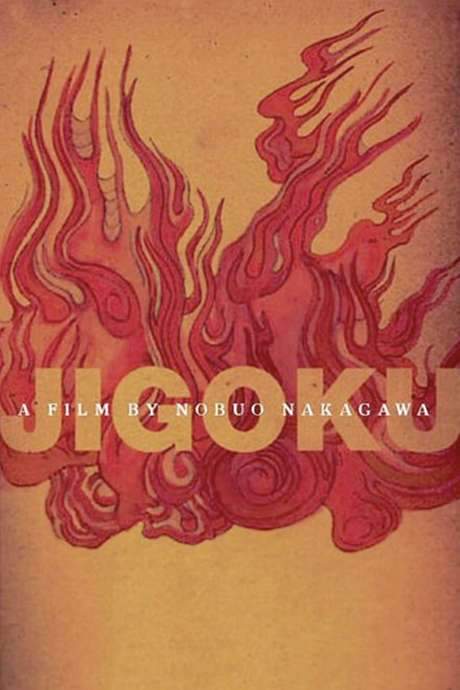
Jigoku (1960) movie poster

Plot Summary

Jigoku (1960) Plot Summary Explained

Release, runtime and language
1960 · 99 mins · Japanese
Loading streaming availability…
Directed by
Nobuo Nakagawa
Starring
Yôichi Numata, Shinji Suzuki, Takashi Yamaguchi, Shigeru Amachi, Kôichi Miya, Sakutarō Yamakawa

A group of sinners involved in interconnected tales of murder, revenge, deceit and adultery all meet at the Gates of Hell.

On this page (6)
  1. 1 Where to watch
  2. 2 What happens: full plot
  3. 3 Plot questions answered
  4. 4 Movie threads
  5. 5 Movies like Jigoku
  6. 6 Every angle
Loading streaming availability…

Full plot summary · contains spoilers

What Happens in Jigoku: Full Plot Summary

The whole story of Jigoku (1960) explained, from the opening scene to the final frame: every key event, every twist and what it all adds up to. Read it as a quick recap before the sequel, to check a scene you missed, or to finally understand what really happened.

Shirō is a student who is about to marry his girlfriend, Yukiko, the daughter of his professor, Professor Yajima. After the engagement is announced, Shirō’s colleague Tamura drives him home and, at Shirō’s request, takes a side street. On that street, Kyōichi, a feared yakuza gang leader, is fatally struck by the car. Kyōichi's mother, Kyōichi's Mother, who witnesses the crash, vows to hunt them down and exact revenge.

Tamura feels no guilt for the hit-and-run, while Shirō is wracked with remorse and contemplates going to the police. After telling Yukiko what happened, Shirō insists they take a taxi to the station, despite Yukiko’s pleas to walk. The taxi crash that follows kills Yukiko, and her funeral soon after deepens Shirō’s sense of loss and responsibility. At the funeral, Shirō encounters Yoko, a strip-bar worker and Kyōichi’s grieving girlfriend. Yoko learns of Shirō’s role in the accident after spending the night with him, and, together with Kyōichi’s mother, begins to plot revenge.

As Shirō mourns, he learns that his mother, Ito, who lives in a retirement community run by his father, Gōzō, is dying. At the community, Shirō meets a painter named Ensai, a former reporter named Akagawa, a corrupt detective named Hariya, the community doctor Dr. Kusama, and Sachiko, a nurse who bears a striking resemblance to Yukiko and who is Ensai’s daughter. Ito’s death sets off a fierce confrontation: Ensai, once Ito’s lover, chastises Gōzō for his years-long affair with a mistress. Tamura returns and reveals that every resident at the home bears some complicity in past murders—Yajima’s apparent war-time killing, Hariya and Akagawa’s frames that led to suicides, and Kusama’s misdiagnosis.

Yoko tracks Shirō down and confronts him on a rope bridge, revealing her identity and attempting to shoot him. She trips and falls to her death, and Tamura reappears, only to fall into the gorge after a struggle. Shirō then attends the community’s tenth anniversary party, where Gōzō has allowed cheap, rancid fish to be served. As the party devolves into intoxication and chaos, Mr. and Mrs. Yajima kill themselves by leaping in front of a train, and Gōzō’s mistress dies during a heated confrontation. The tainted fish claim the lives of many residents, and Kyōichi’s mother poisons the remaining wine. Tamura, nearing death, staggers into the party and shoots Sachiko; in a fit of rage, Shirō strangles Tamura, while Kyōichi’s Mother exacts her own fatal retribution.

In Limbo, Shirō meets Yukiko again, who reveals she was pregnant when she died and that she sent their baby girl, named Harumi, floating away on the Sanzu River. She pleads with Shirō to save his child. Shirō descends into Hell, where Lord Enma judges him for his sins. There, he witnesses the torments of those from his life—boiling, burning, flaying, and endless cycles of punishment—before Tamura taunts him with the illusion that there is no escape. Shirō searches for his daughter and encounters Sachiko, only to be confronted by Ito, who reveals that Sachiko is her daughter and Shirō is Ensai’s son. In a harrowing moment, Shirō sees his baby daughter spinning on a massive wheel as damned souls swirl around him; Lord Enma grants him a single chance to save her, but Shirō, bolstered by calls from Yukiko, Sachiko, and his mother, cannot reach Harumi in time.

Back in the living world, the party has ended in tragedy: Ensai has hanged himself after finishing his Hell portrait and setting it ablaze. In a final, poignant image, Sachiko and Yukiko appear, smiling and calling to Shirō as sister and lover, while lotus petals drift down, implying that Shirō’s effort to save his daughter may have freed their souls to ascend to Heaven.
Last updated: October 07, 2025 at 08:21

Was this helpful?

Plot questions answered

Jigoku Plot Explained: Your Questions Answered

The questions people ask most about Jigoku (1960): what happens in the confusing scenes, why the characters do what they do, the twists, hidden details and what the ending means. Each answer contains spoilers.

Q1

Why did Shirō insist on taking a taxi to the police station?

Shirō was overwhelmed with guilt after the hit-and-run killed Kyōichi and insisted on going to the police to confess. He believed turning himself in was the right thing to do, but this decision led to the taxi crash that killed Yukiko, making his attempt at righteousness the catalyst for even greater tragedy.

  • shirō guilt
  • taxi crash
  • confession
  • yukiko death
Q2

Why did Yoko fall from the rope bridge?

Yoko confronted Shirō on the rope bridge to demand vengeance for Kyōichi's death, revealing she was his girlfriend. During the confrontation, she tripped and fell to her death. Her demise add to Shirō's mounting guilt and the karmic cycle of violence.

  • yoko death
  • rope bridge
  • kyōichi girlfriend
  • revenge
Q3

What crimes did the retirement community residents commit?

Tamura revealed that each resident harbored dark secrets: Professor Yajima had killed someone during the war, Detective Hariya and reporter Akagawa had framed innocent people leading to suicides, and Dr. Kusama had made a fatal misdiagnosis. These past sins created a web of complicity that bound them all together.

  • retirement community
  • past crimes
  • yajima
  • hariya
  • akagawa
  • kusama
Q4

Why did Mr. and Mrs. Yajima commit suicide at the party?

Overwhelmed by guilt over their past sins, particularly Yajima's wartime killing and the recent tragedies, Mr. and Mrs. Yajima leapt in front of a train during the chaotic party. Their suicide represents the film's theme of karmic retribution catching up with sinners.

  • yajima suicide
  • train
  • guilt
  • karmic punishment
Q5

Who is Sachiko really?

Sachiko is revealed to be Ito's daughter and Ensai's daughter, making her Shirō's half-sister. This connection explains why she bears a striking resemblance to Yukiko, fate has drawn Shirō toward family he never knew existed.

Foreshadowing: The striking resemblance between Sachiko and Yukiko was noted earlier, hinting at a deeper connection.

  • sachiko
  • ito
  • ensai
  • family secret
  • half-sister
Q6

What happened to Yukiko's baby?

Yukiko was pregnant when she died in the taxi crash. In Limbo, she revealed she gave birth to a girl named Harumi and sent her floating away on the Sanzu River. Shirō descended into Hell to save her but couldn't reach her in time before Lord Enma's wheel consumed her.

  • yukiko pregnancy
  • harumi
  • sanzu river
  • baby salvation
Q7

Why was Shirō sent to Hell?

Shirō was judged for his sins: his role in Kyōichi's death (even if accidental), his failure to prevent Yukiko's death, and most critically, his murder of Tamura in a fit of rage. His moral compromises and violent act condemned him to face judgment in Hell.

Foreshadowing: The accumulation of guilt and the murder of Tamura were building toward this judgment.

  • shirō sins
  • judgment
  • lord enma
  • hell torments
Q8

What does the ending with the lotus petals mean?

In the final scene, lotus petals, symbols of spiritual purification in Buddhist imagery, drift down as Yukiko and Sachiko appear smiling and calling to Shirō. This suggests their souls have ascended to Heaven, and Shirō's sacrifice, while failing to save Harumi, may have earned them spiritual release even though he remains in Hell.

  • lotus petals
  • heaven
  • ascension
  • spiritual purification
  • ending meaning
Q9

Why did Kyōichi's mother poison the wine?

Kyōichi's mother had sworn vengeance after witnessing her son's death in the hit-and-run. After seeing the chaos unfold at the party, suicides, murders, and the tainted fish, she poisoned the remaining wine to ensure more victims, fulfilling her vow to destroy those responsible for Kyōichi's death.

  • kyōichi mother
  • poison
  • wine
  • revenge
  • victims
Q10

Why did Ensai hang himself after finishing his painting?

After completing his portrait of Hell, a painting depicting the torments he witnessed, Ensai hanged himself. This act represented his final artistic statement and perhaps his own acceptance of guilt, as he had been involved in the affair with Ito and harbored his own sins.

  • ensai hanging
  • hell painting
  • artistic suicide
  • final work
Q11

Why did Tamura shoot Sachiko at the party?

Tamura, having survived his fall into the gorge and near death, returned to the party in a delusional state. He shot Sachiko, likely because she represented Yukiko to him, or because he saw her as another connection to the world of sin and guilt that had consumed him.

  • tamura shooting
  • sachiko
  • party chaos
  • near-death state
Q12

What was Tamura's role in all the deaths?

Tamura was the driver who struck and killed Kyōichi during the hit-and-run. Unlike Shirō, he felt no guilt and continued living carelessly. He later revealed the residents' dark secrets, precipitated Tamura's own violent death at Shirō's hands, and was the one who shot Sachiko, becoming a central agent of destruction.

  • tamura driver
  • hit-and-run
  • kyōichi death
  • murderer

Movie threads

More Movies Like Jigoku, by Mood & Story

Curated lists built around what makes Jigoku tick: the same mood, the same kind of story or the same emotional payoff. Each list explains why these movies belong together.

Karmic Descent and Damnation movies like Jigoku

Vivid journeys into hellscapes where sin is met with graphic, inescapable punishment. If you liked Jigoku's harrowing journey into a vivid hell, you'll find similar experiences here. This thread gathers movies that explore moral corruption, graphic punishment, and surreal visions of the afterlife, all sharing a dark, oppressive tone and heavy emotional weight.

  • nightmarish
  • oppressive
  • guilt-ridden
  • surreal
  • harrowing
  • moral decay
  • Tone: dark, oppressive
  • Pacing: fast, relentless
Why these movies?

The story pattern: Stories in this thread often follow characters whose interconnected sins lead to a collective downfall, culminating in a judgmental and vividly realized afterlife. The narrative structure is frequently complex, weaving together multiple fates to illustrate a overarching theme of inescapable karmic retribution.

Why they belong together: These movies are grouped by their shared focus on moral decay and its violent, surreal consequences. They create a cohesive experience through high-intensity dread, a dark and melancholic tone, and a thematic obsession with guilt, fate, and the architecture of punishment.

Interconnected Sin movies with ensemble casts like Jigoku

Stories where separate lives collide through a chain reaction of moral failings. Fans of Jigoku's complex web of characters and their fates will appreciate these movies. This collection focuses on stories where multiple lives are intertwined through crime, deceit, and revenge, resulting in a fast-paced, complex narrative with a bittersweet or bleak ending.

  • anxious
  • unsettling
  • fateful
  • chaotic
  • complex
  • moral corruption
  • Tone: anxious, unsettling
  • Pacing: fast, converging
Why these movies?

The story pattern: The narrative pattern involves introducing a diverse cast whose actions, often driven by base desires like greed or lust, unknowingly set them on a collision course. The pacing accelerates as these threads converge, resulting in a climax of violence or revelation that ties all their fates together.

Why they belong together: These films share a complex, multi-threaded plot structure and a focus on how individual moral corruption creates a collective tragedy. They are united by a fast pacing that builds to a chaotic peak, a tone of fatalistic anxiety, and themes of inescapable consequence.

If you liked this

Movies Like Jigoku

Similar movies to Jigoku: the same genre, themes or kind of story. Each one comes with its own plot summary, timeline and ending explained.

Browse all movie summaries

Every angle

Jigoku (1960) Explained: Plot, Timeline & Characters

Everything about Jigoku in one place: what happens in the plot summary, the timeline in chronological order, the characters and meaning and a spoiler-free summary. What's After the Movie adds the cast, box office and post-credit scenes.

Coming soon on iOS and Android

The Plot Explained Movie Summary App

Plot summaries, endings explained and timelines on your phone. Catch up on any movie in minutes, save your favorites and never miss a twist again.

Be the first to know when we launch. Your email stays private, always.

Learn more about the app