Plot Explained Spoilers guaranteed!
Plot Explained

Browse by genre

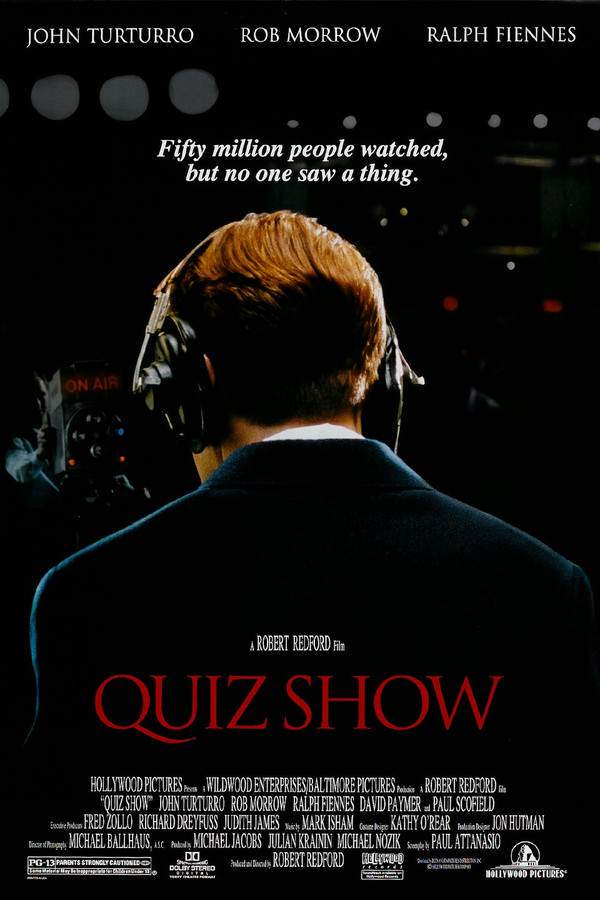
Quiz Show (1994) movie poster

Plot Summary

Quiz Show (1994) Plot Summary Explained

Release, runtime and language
1994 · 133 min · English
Loading streaming availability…
Starring
John Turturro, Ralph Fiennes

A Queens man's surprising success on the popular quiz show "Twenty One" triggers a national scandal. When network executives manipulate the game to favor a more appealing contestant, the original winner voices his suspicions, leading to a Congressional inquiry. The investigation threatens to reveal a web of deceit and corruption at the heart of American television, shaking the nation's trust in its most beloved entertainment.

On this page (6)
  1. 1 Where to watch
  2. 2 What happens: full plot
  3. 3 Plot questions answered
  4. 4 Movie threads
  5. 5 Movies like Quiz Show
  6. 6 Every angle
Loading streaming availability…

Full plot summary · contains spoilers

What Happens in Quiz Show: Full Plot Summary

The whole story of Quiz Show (1994) explained, from the opening scene to the final frame: every key event, every twist and what it all adds up to. Read it as a quick recap before the sequel, to check a scene you missed, or to finally understand what really happened.

In 1958, the backstage drama of NBC's acclaimed quiz show Twenty-One unfolds as the questions and answers are secured in a bank vault, transported to the studio for the latest episode. The spotlight shines on reigning champion Herb Stempel, portrayed by John Turturro, who boasts an impressive streak of correct answers. However, as the excitement wanes and Stempel's popularity plateaus, both the network and its sponsor, the tonic Geritol, decide that fresh talent could reignite viewer interest.

Producers Dan Enright and Albert Freedman are pleasantly surprised when Charles Van Doren, played by Ralph Fiennes, a Columbia University instructor hailing from a distinguished literary lineage, walks into their office wanting to audition. Recognizing his potential to rival Stempel, the producers attempt to manipulate the game by providing Van Doren the answers he previously handled during his auditions. Although he initially refuses their tempting offer, when he is presented with an audition question during a live show, he hesitates but ultimately provides the right answer. Unbeknownst to him, Stempel, facing pressure, deliberately throws an uncomplicated question, disposing of his chance at victory in favor of a promised television career.

In the following days, Van Doren skyrockets to fame, transforming into a national sensation. However, as the pressure mounts, he succumbs to the demands of Enright and Freedman, who start feeding him answers. Meanwhile, Stempel, having lost his prize winnings to a deceitful bookie, contemplates legal repercussions against NBC, prompting him to approach Frank Hogan, the New York County District Attorney. Hogan subsequently initiates a grand jury investigation into the allegations of corruption.

Young Congressional lawyer Richard Goodwin, portrayed by Rob Morrow, learns that the grand jury's results remain confidential and ventures to New York City to probe persistent rumors regarding rigged quiz shows. Engaging several contestants, including both Stempel and Van Doren, Goodwin starts to piece together the disturbing reality of Twenty-One being a charade. Nevertheless, Stempel's erratic behavior undermines his credibility, and others are reluctant to support his claims. In a moment of desperation, Stempel confides in Goodwin about the answers he was provided with during his run, pointing fingers at Van Doren as an accomplice. Another contestant further enriches the investigation by presenting Goodwin with answers he had mailed to himself prior to his appearance on the show, further solidifying the case against NBC.

As Van Doren experiences his own moral descent, he opts to lose a significant game, only to be rewarded by NBC with a lucrative contract for a role as a special correspondent on the morning Today show. The House Committee for Legislative Oversight convenes a hearing where Goodwin showcases the evidence of the quiz show’s corrupt nature. Despite Stempel's testimony, the committee remains unconvinced, with both Robert Kintner, head of NBC, and Martin Rittenhome, a Geritol executive, fervently denying any wrongdoing. Eventually, under the weight of evidence, Van Doren acknowledges his complicity in the deception.

Following the hearing, he is unceremoniously evicted from the Today show and learns he faces a forced resignation from Columbia University. Goodwin, who sensed he was on the brink of exposing Geritol and NBC, comes to a sobering realization as he watches Enright and Freedman protect their own careers by shifting responsibility onto the contestants, preserving the network's image and continuing the cycle of deceit.
Last updated: November 03, 2024 at 21:38

Was this helpful?

Plot questions answered

Quiz Show Plot Explained: Your Questions Answered

The questions people ask most about Quiz Show (1994): what happens in the confusing scenes, why the characters do what they do, the twists, hidden details and what the ending means. Each answer contains spoilers.

Q1

Why did NBC replace Herb Stempel with Charles Van Doren?

NBC and the show's sponsor Geritol grew concerned when Herb Stempel's popularity plateaued despite his winning streak. They believed a new, more marketable contestant could reignite viewer interest. Charles Van Doren, with his Ivy League background and distinguished literary family name, represented a more appealing image for television than the working-class Stempel, making him the perfect choice to revitalize ratings.

Foreshadowing: The opening scenes establish that ratings and sponsor appeal drive the show's decisions, setting up the replacement strategy.

  • herb stempel
  • charles van doren
  • nbc
  • geritol
  • ratings
  • quiz show Twenty-One
Q2

How did producers manipulate Twenty-One?

Producers Dan Enright and Albert Freedman fed answers to chosen contestants to control outcomes. They initially offered Charles Van Doren advance answers during audictions, and when he refused, they presented him with the same question during a live show that he'd already handled in his audition. They also arranged for Herb Stempel to intentionally lose by answering a simple question incorrectly, promising him a television career in exchange.

Foreshadowing: The film opens with questions being secured in a bank vault, emphasizing that integrity exists only on surface level.

  • dan enright
  • albert freedman
  • answers rigging
  • producer manipulation
  • Twenty-One quiz show
Q3

Why did Herb Stempel throw the question?

Stempel was under immense pressure from producers who wanted him to lose to the more marketable Van Doren. They promised him a future career in television if he deliberately answered incorrectly on an easy question. Stempel complied, sacrificing his chance at victory and his integrity, believing the promised career would compensate for his loss.

Foreshadowing: Earlier scenes show Stempel being pressured by network executives concerned about declining viewership.

  • herb stempel
  • throwing question
  • television career
  • producer pressure
  • losing intentionally
Q4

Why did Charles Van Doren eventually accept the answers?

Van Doren initially refused the producers' offer to receive answers in advance, wanting to win on his own merits. However, when faced with a difficult question during a live show that he had previously handled in his audition, he hesitated and ultimately accepted the manipulated answer. From there, the producers began regularly feeding him answers, and he did not resist.

Foreshadowing: His initial refusal establishes his moral conflict, making his later compromise more impactful.

  • charles van doren
  • moral compromise
  • accepting answers
  • integrity
  • live show question
Q5

What triggered the investigation into Twenty-One?

Herb Stempel, after losing his winnings to a deceitful bookie, sought legal recourse against NBC. He approached New York County District Attorney Frank Hogan, who initiated a grand jury investigation into allegations of quiz show corruption. This legal action opened the door for broader scrutiny of the show's practices.

Foreshadowing: Stempel's earlier decision to throw the question for a promised television career creates the motivation for his later legal action.

  • herb stempel
  • grand jury investigation
  • frank hogan
  • legal action
  • quiz show corruption
Q6

How did Richard Goodwin uncover the truth about Twenty-One?

Congressional lawyer Richard Goodwin traveled to New York City after learning the grand jury results remained confidential. He interviewed multiple contestants, including both Stempel and Van Doren. Stempel, despite his erratic behavior, provided Goodwin with specific information about receiving answers during his run. Another contestant additionally provided Goodwin with answers he had mailed to himself before appearing on the show, providing concrete evidence of the rigging.

Foreshadowing: Goodwin's persistence contrasts with the initial reluctance of contestants to come forward.

  • richard goodwin
  • investigation
  • testimony
  • evidence
  • congressional hearing
Q7

What evidence proved Twenty-One was rigged?

The key evidence included testimony from Herb Stempel about receiving answers from producers, and physical proof from another contestant who had mailed himself the answers before his appearance. Additionally, Goodwin gathered testimony from multiple contestants confirming the producers' manipulation. This evidence collectively demonstrated that the show's outcomes were predetermined.

Foreshadowing: The earlier scene showing answers transported in a bank vault gains ironic significance in light of this evidence.

  • evidence
  • testimony
  • mailing answers
  • producer confession
  • rigged quiz show
Q8

Why did Charles Van Doren confess to his involvement?

Van Doren confessed at the Congressional hearing after being confronted with overwhelming evidence, including testimony from other contestants and the physical proof of pre-sent answers. The weight of the evidence, combined with his growing moral conflict over the deception, left him unable to deny his complicity any longer.

Foreshadowing: Earlier scenes show Van Doren grappling with guilt, particularly when he chooses to lose a game rather than continue deceiving the public.

  • charles van doren
  • confession
  • congressional hearing
  • admitting guilt
  • moral conflict
Q9

What happened to Charles Van Doren after the hearings?

Following his confession, Van Doren was immediately removed from his position as a correspondent on NBC's Today show and was forced to resign from Columbia University. His career and reputation were permanently destroyed, representing the personal fallout from his involvement in the deception.

Foreshadowing: His earlier rise to fame as a national sensation directly contrasts with this dramatic downfall.

  • charles van doren
  • today show
  • columbia university
  • resignation
  • downfall
  • career end
Q10

Why were NBC and Geritol executives not punished?

Despite Goodwin's investigation and Van Doren's confession, NBC president Robert Kintner and Geritol executive Martin Rittenhome adamantly denied any wrongdoing during the Congressional hearing. The network shifted blame onto the contestants themselves, protecting the company's image. Producers Enright and Freedman similarly avoided consequences by placing responsibility on the contestants, allowing the executives to escape legal punishment while the contestants suffered the consequences.

Foreshadowing: The film establishes early that the network prioritizes its reputation above all else.

  • nbc
  • geritol
  • robert kintner
  • no punishment
  • executives
  • accountability
  • corporate responsibility
Q11

Why couldn't Richard Goodwin expose Geritol and NBC?

Goodwin realized that the producers, Enright and Freedman, would protect their own careers by shifting responsibility onto the contestants rather than implicating the network or sponsor. This systemic protection allowed NBC and Geritol to maintain their denials and avoid exposure, demonstrating how the cycle of deceit persisted at the highest levels of the industry.

Foreshadowing: Goodwin's earlier determination to expose the full truth contrasts with this realization of institutional protection.

  • richard goodwin
  • geritol
  • nbc
  • exposure
  • enright freedman
  • institutional protection

Movie threads

More Movies Like Quiz Show, by Mood & Story

Curated lists built around what makes Quiz Show tick: the same mood, the same kind of story or the same emotional payoff. Each list explains why these movies belong together.

Procedural Corruption Exposés like Quiz Show

Methodical investigations that peel back the layers of a corrupt system. Explore movies like Quiz Show, featuring steady-paced investigations into systemic deceit. If you liked the methodical exposure of corruption in media or other institutions, these films offer similar thoughtful and tense dramas about uncovering the truth.

  • investigative
  • tense
  • thoughtful
  • moral conflict
  • disillusioned
  • serious
  • Tone: tense, serious, investigative
  • Pacing: steady, methodical
Why these movies?

The story pattern: The narrative typically centers on an investigator or whistleblower who methodically uncovers a web of deceit within a powerful institution. The story unfolds through interviews, evidence gathering, and internal conflict, leading to a public reckoning that often leaves a bittersweet or disillusioning aftertaste.

Why they belong together: These films are grouped by their shared focus on a patient, investigative narrative structure, a tense and serious tone, and the thematic exploration of corruption. They deliver a similar experience of intellectual suspense and moral unease as the truth is slowly revealed.

Moral Compromise Dramas like Quiz Show

Stories where ambition leads to a costly erosion of personal integrity. Find movies similar to Quiz Show that explore the bittersweet cost of ambition and moral failure. These character-driven dramas focus on the personal downfall and complex emotions of protagonists who sacrifice their integrity for success.

  • moral conflict
  • thoughtful
  • disillusioned
  • anxious
  • serious
  • character study
  • Tone: thoughtful, disillusioned, tense
  • Pacing: steady, character-driven
Why these movies?

The story pattern: The narrative follows a protagonist who is presented with an opportunity that requires ethical shortcuts. As they ascend, their internal moral conflict grows, culminating in a crisis that exposes their deception. The ending is often bittersweet, involving a loss of innocence and reputation rather than clear-cut redemption or ruin.

Why they belong together: These movies share a central theme of moral descent and the complex emotional fallout of compromising one's values. They are united by a medium emotional weight, a thoughtful tone, and a focus on the psychological cost of ambition, creating a similarly reflective and sobering viewing experience.

If you liked this

Movies Like Quiz Show

Similar movies to Quiz Show: the same genre, themes or kind of story. Each one comes with its own plot summary, timeline and ending explained.

Browse all movie summaries

Every angle

Quiz Show (1994) Explained: Plot, Timeline & Characters

Everything about Quiz Show in one place: what happens in the plot summary, the timeline in chronological order, the characters and meaning and a spoiler-free summary. What's After the Movie adds the cast, box office and post-credit scenes.

Coming soon on iOS and Android

The Plot Explained Movie Summary App

Plot summaries, endings explained and timelines on your phone. Catch up on any movie in minutes, save your favorites and never miss a twist again.

Be the first to know when we launch. Your email stays private, always.

Learn more about the app