Plot Explained Spoilers guaranteed!
Plot Explained

Browse by genre

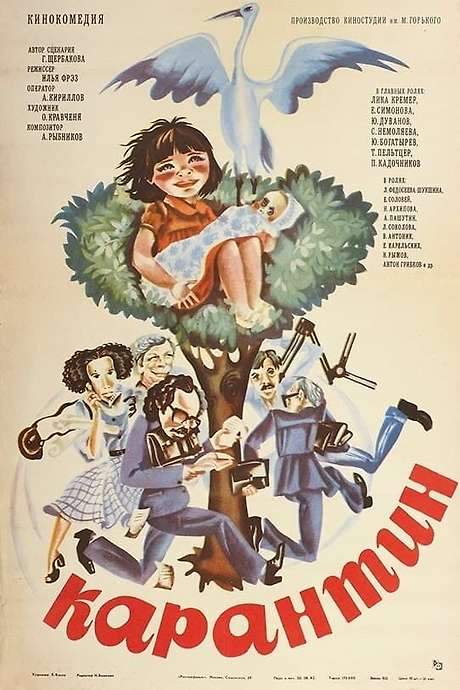
Quarantine (1983) movie poster

Plot Summary

Quarantine (1983) Plot Summary Explained

Release, runtime and language
1983 · 80 mins · Russian
Directed by
Ilya Frez
Starring
Yevgeniya Simonova, Aleksandr Pashutin, Svetlana Nemolyaeva, Lika Kremer, Lidiya Fedoseyeva-Shukshina, Lyubov Sokolova

Masha, an adventurous five years old girl tries to find what to do while her preschool is closed for quarantine.

On this page (5)
  1. 1 What happens: full plot
  2. 2 Plot questions answered
  3. 3 Movie threads
  4. 4 Movies like Quarantine
  5. 5 Every angle

Full plot summary · contains spoilers

What Happens in Quarantine: Full Plot Summary

The whole story of Quarantine (1983) explained, from the opening scene to the final frame: every key event, every twist and what it all adds up to. Read it as a quick recap before the sequel, to check a scene you missed, or to finally understand what really happened.

Masha, Lika Kremer, is buzzing with the usual first-day excitement for kindergarten, but the day takes an unexpected turn. After a chaotic bus ride with her father, they discover that the kindergarten is closed, and the plan for a smooth start dissolves into a weeklong stretch of improvisation and discovery. What follows isn’t a single, tidy day, but a mosaic of afternoons and evenings that unfold in a living room, a museum, a bustling street, and the nooks of their neighborhood. The story quietly tracks how a child learns to adapt when her routine is upended, and how curiosity can turn an ordinary challenge into a series of gentle adventures.

Throughout this wandering week, Masha is cared for by a circle that feels both intimate and familiar. At her father’s workplace, aunt Katya Lyubov Sokolova steps in to keep her engaged, and later a visit to a museum becomes a test of patience and good behavior. The thread of family mentorship weaves through the days as Grandmother Svetlana Nemolyaeva and Grandfather Yuri Bogatyryov take turns guiding her from one scene to the next. They are joined by Slavik Aleksandr Pashutin, the Grandmother’s longtime friend, who adds a touch of adult companionship to Masha’s world. Each stop—whether it’s a quiet moment with an elder or a snapshot with a friend—feels like a new page turned in a book written for a child’s sense of wonder.

As the days accumulate, the adults Masha encounters bring their own flavors of care and mischief. A Strange Woman Lidiya Fedoseyeva-Shukshina becomes a kind, if slightly mysterious, presence who helps her navigate small, everyday adventures—sometimes even steering them toward a cafe for a mid-day treat or a moment of calm in the bustle. The world outside the family loop also appears in little, bright vignettes: Masha imagines conversations with historical figures, and she shares in whimsical escapades with neighborhood friends like Dima, whose companionship brightens the longer days of quarantine.

The longer the quarantine lasts, the wilder Masha’s days feel in the most charming way. She roams a little more freely, tests boundaries with harmless mischief, and experiences moments of getting momentarily lost before being gently steered back by the adults who care for her. The story balances tenderness with playful misadventure, capturing the small dramas of childhood and the enduring warmth of a community that rallies around a curious child. In one quiet, heartfelt moment on the last day, she returns to kindergarten, reuniting with Dima and sealing a promise to remain friends “forever.” It’s a celebration of small, everyday miracles—the kind that grow out of patience, shared stories, and the simple joy of being together.

Overall, the film paints an intimate, episodic portrait of Masha’s world during an unusual week. It finds beauty in ordinary places—a bus ride, a workplace, a museum, a cafe, a playground—and in the people who fill them. With gentle humor, soft humor, and a touch of dreamlike imagination, the story follows a precocious child as she learns to navigate change with curiosity, wonder, and a little bit of mischief, all while being held steady by a loving and resilient community.
Last updated: February 18, 2026 at 23:45

Was this helpful?

Plot questions answered

Quarantine Plot Explained: Your Questions Answered

The questions people ask most about Quarantine (1983): what happens in the confusing scenes, why the characters do what they do, the twists, hidden details and what the ending means. Each answer contains spoilers.

Q1

Why is Masha's kindergarten closed?

Masha's kindergarten is closed because of a quarantine, which is why she cannot attend and must stay home for an extended period. This unexpected closure sets the entire story in motion, forcing her father to arrange alternative childcare for the week.

Foreshadowing: The quarantine is mentioned briefly at the start when Masha and her father discover the kindergarten is shut.

  • kindergarten closed
  • quarantine
  • Masha's school
Q2

Who takes care of Masha while the kindergarten is closed?

Masha is cared for by a rotating circle of adults throughout the week. Her father takes her on the first day, then Aunt Katya at his workplace, followed by her grandmother and grandfather who each spend time with her. Family friend Slavik also accompanies them, and a kind woman helps guide Masha during her adventures.

  • Aunt Katya
  • grandmother
  • grandfather
  • Slavik
  • caretakers
Q3

How does Masha meet Dima?

Masha meets Dima during her third day in the neighborhood while playing with other children in the streets and common areas near her home. Dima becomes her main playmate throughout the quarantine days, and they form a close friendship that becomes a central relationship in the story.

  • Dima
  • neighborhood friend
  • Masha's friend
Q4

What happens when Masha gets lost in the city?

During the third day, Masha wanders off and becomes momentarily lost in the city streets. A kind stranger notices she is alone and helps guide her back to safety. This brief incident reinforces the protective network of adults watching over her during the quarantine.

  • lost
  • kind stranger
  • city streets
Q5

Who is the kindly woman who takes Masha and Dima to a cafe?

The kindly woman is a friendly adult who appears during Masha's third-day adventures in the neighborhood. She guides the children to a local cafe where they can rest, share stories, and have treats. She represents the broader community support system that surrounds Masha during her week of quarantine.

  • kind woman
  • cafe
  • community help
Q6

Why does Masha visit the museum?

On her first day when the kindergarten is closed, Aunt Katya takes Masha to a museum as a way to keep her entertained and engaged. The museum visit becomes an opportunity for Masha to use her imagination and learn about exhibits while being taught to follow rules and behave appropriately.

  • museum
  • Aunt Katya
  • learning
  • rules
Q7

What does Masha dream about at night?

On the second night, Masha has dreams about historical figures and big ideas, reflecting her growing imagination and curiosity about the world. These dream sequences blur the line between play and learning, showing how her daytime experiences influence her nighttime thoughts.

  • dreams
  • historical figures
  • imagination
  • night
Q8

How do Masha's days change as the quarantine continues?

As the quarantine stretches on, Masha's days become more adventurous and free. She roams more freely, tests boundaries with harmless mischief, and has more unsupervised playtime with Dima. The adults remain supportive but allow her more independence as the week progresses, showing her growing ability to navigate the world around her.

Foreshadowing: The story notes that her days 'grow wilder but warm' as time passes.

  • quarantine days
  • freedom
  • mischief
  • growth
Q9

What happens on Masha's last day of quarantine?

On the final day, Masha returns to her kindergarten and reunites with her friend Dima. They seal their friendship with a heartfelt promise to stay friends forever, bringing the story to a warm, satisfying close. The ending celebrates the small miracles of childhood connections and community.

  • last day
  • kindergarten return
  • forever friends
  • Dima
Q10

Who is Slavik in the movie?

Slavik is an older family friend who accompanies Masha and her grandmother during their outings. He represents the extended community that helps care for Masha throughout the quarantine week, adding a touch of adult companionship to her world.

  • Slavik
  • family friend
  • grandmother's friend

Movie threads

More Movies Like Quarantine, by Mood & Story

Curated lists built around what makes Quarantine tick: the same mood, the same kind of story or the same emotional payoff. Each list explains why these movies belong together.

Gentle childhood odysseys like Quarantine

Simple, episodic adventures seen through the innocent eyes of a child. Find more movies like Quarantine with gentle childhood adventures. These films feature young protagonists exploring their neighborhoods and friendships with an innocent curiosity, perfect for family viewing and capturing the simple joys of growing up.

  • innocent
  • playful
  • curious
  • warm
  • gentle
  • cozy
  • Tone: whimsical, warm
  • Pacing: steady, episodic
Why these movies?

The story pattern: The narrative follows a low-stakes, episodic structure where a young protagonist explores different locations and interacts with various community figures. Each encounter is a self-contained mini-adventure that contributes to a gentle, overarching journey of discovery and connection.

Why they belong together: These movies are grouped by their gentle pacing, low intensity, and focus on a child's perspective. They share a whimsical tone, light emotional weight, and a happy, reassuring conclusion, creating a cozy and safe viewing experience.

Cozy community connection stories like Quarantine

Heartwarming stories where a community comes together through small, everyday moments. If you liked the community focus in Quarantine, you'll enjoy these movies. They highlight how neighbors and friends support each other through gentle, everyday adventures, creating a warm and optimistic view of the world.

  • warm
  • community
  • family
  • friendship
  • cozy
  • hopeful
  • Tone: warm, hopeful
  • Pacing: steady, character-driven
Why these movies?

The story pattern: The plot is driven by the protagonist's interactions with a diverse cast of characters within their community. These encounters, while simple, reveal the interconnectedness and support system of the neighborhood, leading to a heartwarming conclusion that celebrates collective well-being.

Why they belong together: They share a focus on community, family, and friendship as central themes. The tone is consistently warm and positive, with a straightforward narrative that emphasizes the importance of connection over high-stakes conflict.

If you liked this

Movies Like Quarantine

Similar movies to Quarantine: the same genre, themes or kind of story. Each one comes with its own plot summary, timeline and ending explained.

Browse all movie summaries

Every angle

Quarantine (1983) Explained: Plot, Timeline & Characters

Everything about Quarantine in one place: what happens in the plot summary, the timeline in chronological order, the characters and meaning and a spoiler-free summary. What's After the Movie adds the cast, box office and post-credit scenes.

Coming soon on iOS and Android

The Plot Explained Movie Summary App

Plot summaries, endings explained and timelines on your phone. Catch up on any movie in minutes, save your favorites and never miss a twist again.

Be the first to know when we launch. Your email stays private, always.

Learn more about the app