Plot Explained Spoilers guaranteed!
Plot Explained

Browse by genre

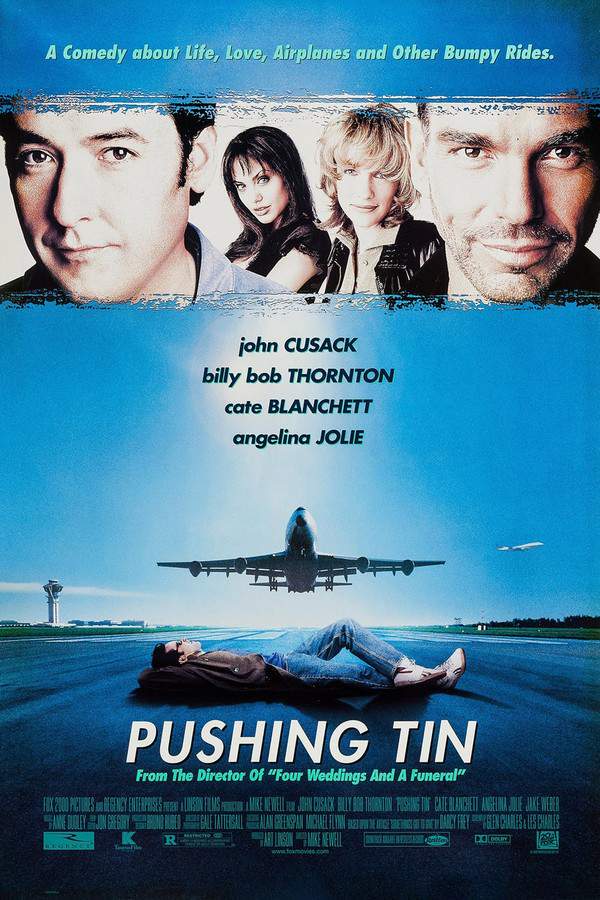
Pushing Tin (1999) movie poster

Plot Summary

Pushing Tin (1999) Plot Summary Explained

Release, runtime and language
1999 · 124 min · English
Loading streaming availability…
Directed by
Mike Newell
Starring
Billy Bob Thornton, John Cusack
Budget
$33M

Jack and Nick are ambitious air traffic controllers who thrive on the pressure of their high-stakes jobs. Their intense rivalry fuels a constant competition, pushing them to test their abilities and the boundaries of their profession. As they navigate increasingly complex situations and daring challenges, their friendship and careers are put to the ultimate test, leading to a thrilling and unpredictable game of one-upmanship.

On this page (6)
  1. 1 Where to watch
  2. 2 What happens: full plot
  3. 3 Plot questions answered
  4. 4 Movie threads
  5. 5 Categories
  6. 6 Every angle
Loading streaming availability…

Full plot summary · contains spoilers

What Happens in Pushing Tin: Full Plot Summary

The whole story of Pushing Tin (1999) explained, from the opening scene to the final frame: every key event, every twist and what it all adds up to. Read it as a quick recap before the sequel, to check a scene you missed, or to finally understand what really happened.

Nick "The Zone" Falzone and his team of air traffic controllers at New York TRACON pride themselves on their remarkable skills, with a daunting 50% drop-out rate for newcomers who struggle to cope with the extreme pressures of the job. However, things take a turn with the arrival of Russell Bell, a highly experienced controller from the Western United States known for his unconventional methods. His swift adaptation to the demanding environment earns him the admiration of the team, yet it plants seeds of insecurity in Nick, who is depicted as a less adventurous leader.

As the subplot unfolds, Nick's anxiety builds as he perceives Russell's techniques as reckless and dangerous. He feels it necessary to alert their supervisor about Russell's unpredictable nature, referring to an alarming incident where Russell blatantly stood on a runway, allowing the fierce winds created by a landing commercial airliner to buffet him. This episode raises serious doubts in Nick's mind about Russell's stability.

Things take a complicated turn when Nick encounters Russell's troubled wife, Mary, at a supermarket, where she is visibly distressed and seeking solace through alcohol. In an attempt to console her, they find themselves at the Bell residence, which leads to a moment of weakness and passion culminating in a one-night stand. When Mary reveals that this encounter somehow revitalized her marriage to Russell, it throws Nick into emotional turmoil.

As the plot thickens, workplace tensions escalate. Nick confronts Russell, anticipating confrontation, only to find him notably composed. Meanwhile, Nick's own struggles intensify when his wife, Connie, reveals her curiosity about Russell, triggering Nick's paranoia about an impending payback from his rival.

Things spiral further when a death in Nick's family requires him to travel for his father-in-law's funeral. While away, a confrontation with Connie exposes her sarcastic claim of sleeping with Russell, sending Nick into a frantic spiral of mistrust. The flight back to New York is marked by ominous weather, causing Nick to perceive impending doom as he suspects Russell of puppeteering events for sinister motives.

The palpable tension culminates when a bomb threat disrupts TRACON, requiring an evacuation. In a desperate act of bravery, both Nick and Russell volunteer to remain behind, taking on the immense task of ensuring the safety of all incoming flights. As Nick expertly manages most aircraft, anxiety grows regarding one lost plane with no radio contact. He makes a vital decision to exit just as the crisis nears its climax, leaving Russell to communicate with the wayward airplane's passengers through an Airfone. When the supposed threat turns out to be a falsification, Russell is celebrated as a hero for his unwavering commitment.

In the aftermath, Nick grapples with the crushing realization that Russell had maneuvered his flight not to incite discord but to facilitate safe landings. This revelation of betrayal deeply pierces Nick, leading to a significant decline in his workplace performance, resulting in two near-miss incidents in one shift and a subsequent demotion.

Desperate for redemption, Nick embarks on an impromptu road trip to Colorado, aiming to mend fences with both Russell and Mary. Upon confronting his former colleague for wisdom and support, Nick finds the communication lacking. Instead, Russell opts for a more visceral experience, taking Nick to a runway for a thrilling stunt that allows them to feel firsthand the powerful turbulence generated by an incoming aircraft. This intense encounter marks a transformative moment for Nick, leading him to thank Russell and return to New York rejuvenated.

With his personal and professional life rebalanced, Nick reconnects with Connie, marking a significant return to normalcy, and suggesting that sometimes, the path to recovery is paved with understanding and action.
Last updated: November 21, 2024 at 09:54

Was this helpful?

Plot questions answered

Pushing Tin Plot Explained: Your Questions Answered

The questions people ask most about Pushing Tin (1999): what happens in the confusing scenes, why the characters do what they do, the twists, hidden details and what the ending means. Each answer contains spoilers.

Q1

Why did Mary tell Nick that their one-night stand revitalized her marriage to Russell?

Mary's claim that the affair "revitalized" her marriage appears to be a coping mechanism rather than literal truth. After her emotional breakdown at the supermarket and the encounter with Nick, she likely realized her marriage was in trouble and chose to frame the experience in a way that allowed her to recommit to Russell rather than acknowledge the infidelity's painful complexity. This revelation also serves to deepen Nick's emotional turmoil by making him question whether his actions had any meaning at all.

Foreshadowing: Mary's visible distress at the grocery store foreshadows the instability in her marriage that Nick inadvertently becomes entangled with.

  • mary bell
  • affair
  • marriage
  • emotional turmoil
  • nick falzone
Q2

Why did Nick become convinced that Russell was manipulating his flight back to New York?

Nick's paranoia stems from his guilty conscience about the affair with Mary and his escalating rivalry with Russell at work. When Connie made her sarcastic remark about sleeping with Russell during Nick's absence, Nick's trust shattered completely. Combined with the ominous weather during his flight and his pre-existing anxiety about Russell's supposed "reckless" nature, Nick projected his own insecurities onto Russell, convinced his rival was orchestrating events to sabotage him.

Foreshadowing: Nick's earlier complaint to supervisors about Russell's unstable behavior establishes his pattern of viewing Russell as a threat.

  • nick falzone
  • russell bell
  • paranoia
  • flight
  • conspiracy
Q3

What happened during the bomb threat at TRACON?

During the bomb threat, TRACON was evacuated but Nick and Russell volunteered to stay behind to keep incoming flights safe. Nick managed most aircraft successfully, but one plane lost radio contact and disappeared from radar. As the crisis reached its climax, Nick made the critical decision to step back, leaving Russell to communicate with the lost airplane's passengers through an Airfone. When the threat turned out to be false, Russell was celebrated as the hero who remained composed during the crisis.

Foreshadowing: The earlier tension between Nick and Russell about their competing leadership styles sets up this moment where they must work together under extreme pressure.

  • bomb threat
  • tracon
  • crisis
  • russell bell
  • hero
  • evacuation
Q4

Why did Nick's performance decline and lead to his demotion?

Nick's demotion resulted from a combination of emotional distress and professional disillusionment after learning that Russell had intentionally maneuvered Nick's flight to help him land safely, not to cause harm as Nick had suspected. This realization that Russell had actually been trying to help, rather than sabotage him, crushed Nick's confidence and sense of judgment. In one shift following this revelation, Nick caused two near-miss incidents, dangerous mistakes that resulted in his demotion from his leadership position.

Foreshadowing: Nick's growing paranoia throughout the film directly foreshadows his inability to trust even genuine acts of kindness from Russell.

  • demotion
  • near-miss
  • performance
  • nick falzone
  • workplace
Q5

What was Russell actually trying to do when he manipulated Nick's flight path?

Russell was not trying to sabotage Nick or create chaos, instead, he was attempting to help Nick's plane land safely by rerouting it through favorable weather conditions. Russell's unconventional methods, which Nick had previously criticized as reckless, were actually designed to ensure safety rather than create danger. This revelation completely undermines Nick's entire narrative about Russell being unstable or malicious.

Foreshadowing: Russell consistently demonstrates unconventional but effective techniques throughout the film, earning the team's admiration despite Nick's objections.

  • russell bell
  • flight manipulation
  • safe landing
  • weather
  • intentions
Q6

Why did Russell take Nick to the runway at the end of the film?

Russell took Nick to the runway to give him a visceral, firsthand experience of the powerful turbulence created by landing aircraft. Instead of offering verbal wisdom or reconciliation, Russell believed Nick needed to confront his fear of the very forces he controls from behind the radar screen. This intense, physical encounter, whether real or imagined, represented Nick's transformation from a anxious controller who feared Russell's methods to someone who could appreciate and even embrace the raw power of aviation.

Foreshadowing: Earlier scenes showing Russell standing on the runway during high winds foreshadow this climactic moment where he again demonstrates his fearless approach.

  • runway
  • russell bell
  • turbulence
  • transformation
  • nick falzone
Q7

Why was Russell celebrated as a hero after the bomb threat?

Russell was celebrated as a hero because he remained calm and composed during the crisis while communicating with the lost airplane's passengers through the Airfone, ultimately ensuring their safe landing. While Nick stepped back at the crucial moment, Russell stayed focused and completed the communication that brought the plane down safely. His willingness to remain behind during the evacuation and his unwavering performance under extreme pressure earned him recognition from colleagues and supervisors alike.

Foreshadowing: The team's earlier admiration for Russell's unconventional but effective skills sets up this moment where those same qualities are heroically showcased.

  • russell bell
  • hero
  • bomb threat
  • recognition
  • tracon
Q8

Why did Nick report Russell to their supervisor about his methods?

Nick reported Russell to their supervisor because he genuinely believed Russell's techniques, especially the incident where Russell stood on the runway during high winds, were dangerous and reckless. However, Nick's concern was also motivated by professional insecurity; Russell's arrival threatened Nick's status as the star controller at TRACON. Nick feared that Russell's unconventional approach would reflect poorly on Nick's own leadership and potentially endanger the team.

Foreshadowing: Nick's pride in being 'The Zone' establishes his need to be the best, which makes Russell's arrival threatening to his identity.

  • nick falzone
  • russell bell
  • supervisor
  • report
  • rivalry
  • insecurity
Q9

What caused the escalating tension between Nick and Russell at work?

The tension between Nick and Russell stemmed from a combination of professional rivalry and personal insecurity. Nick, portrayed as a less adventurous leader, felt threatened by Russell's unconventional methods that earned rapid admiration from the team. Russell's confidence and willingness to take risks contrasted sharply with Nick's cautious approach, making Nick fear his own position was being undermined. This professional rivalry became intertwined with the personal complications arising from Nick's affair with Mary, further poisoning their relationship.

Foreshadowing: The 50% dropout rate at TRACON establishes the high-pressure environment where controllers must prove themselves constantly.

  • rivalry
  • tension
  • workplace
  • nick falzone
  • russell bell
  • professional
Q10

What happened between Nick and Connie at the end of the film?

After Nick's transformation following the runway encounter with Russell, he returned to New York and reconnected with his wife Connie, marking a significant return to normalcy in their relationship. The film suggests that Nick's journey to Colorado and his visceral experience helped him process his guilt, insecurity, and paranoia, allowing him to rebuild trust with Connie. Their reconciliation implies that personal recovery often requires confronting one's fears directly rather than avoiding them.

Foreshadowing: Connie's sarcastic comment about sleeping with Russell plants seeds of distrust that must be overcome for their relationship to heal.

  • connie
  • nick falzone
  • reconciliation
  • marriage
  • return home
Q11

Why did Nick end up having a one-night stand with Mary Bell?

Nick's affair with Mary began when he encountered her at a grocery store, visibly distressed and seeking comfort through alcohol. In a moment of compassion, or perhaps vulnerability himself, Nick tried to console her, which led to the Bell residence and ultimately a passionate encounter. The affair appears to be a moment of weakness driven by emotional vulnerability rather than a calculated betrayal, though it ultimately created more emotional complexity for both parties.

Foreshadowing: Nick's growing anxiety about Russell's presence creates emotional instability that makes him susceptible to Mary's distress.

  • affair
  • mary bell
  • nick falzone
  • one-night stand
  • emotional vulnerability

Movie threads

More Movies Like Pushing Tin, by Mood & Story

Curated lists built around what makes Pushing Tin tick: the same mood, the same kind of story or the same emotional payoff. Each list explains why these movies belong together.

Movies about high-stakes workplace pressure like Pushing Tin

Stories where pressure-cooker jobs push ambitious characters to the brink. If you liked the intense, competitive world of air traffic control in Pushing Tin, this section features similar movies about pressure-cooker jobs and professional rivalries. Discover other stories where ambitious characters face workplace crises and personal meltdowns in high-stakes environments.

  • tense
  • anxious
  • competitive
  • stressful
  • chaotic
  • high-pressure
  • Tone: tense, stressful, competitive
  • Pacing: fast, chaotic
Why these movies?

The story pattern: Narratives in this thread typically follow a character or pair of rivals at the top of their game, whose hunger for success and one-upmanship leads to escalating risks. The plot often spirals into a crisis of confidence, personal failure, or a near-disaster, forcing a moment of reckoning and often a difficult path back from the edge.

Why they belong together: These films are grouped by their shared high-intensity atmosphere, fast pacing driven by workplace crises, and a tense tone born from professional competition. They explore the universal theme of how extreme pressure can both forge and break a person, creating a consistently gripping and anxious viewing experience.

Movies about flawed redemption arcs like in Pushing Tin

Characters who hit rock bottom before finding a fragile path back. If you appreciated the complex journey of Nick in Pushing Tin, this section highlights movies with similar arcs of self-destruction and difficult redemption. Find other films where flawed protagonists face the consequences of their actions and work towards a bittersweet, realistic second chance.

  • redemptive
  • cathartic
  • bittersweet
  • flawed protagonist
  • marital strife
  • addiction
  • Tone: bittersweet, cathartic, tense
  • Pacing: variable, building to crisis
Why these movies?

The story pattern: The narrative pattern involves a protagonist whose major character flaws drive the central conflict, causing them to lose what they hold dear. The story builds to a point of total collapse, after which the character must humbly confront their mistakes. The resolution is often bittersweet, focusing on the beginning of healing rather than a full restoration, leaving a lasting emotional weight.

Why they belong together: These films share a compelling emotional mix: the tension and sadness of a character's downfall, followed by the cathartic release of a hard-earned, imperfect redemption. The pacing often builds to a crisis point, and the tone balances melancholy with a flicker of hope, creating a deeply resonant and thought-provoking experience.

Categories

Movie Lists Featuring Pushing Tin

Pushing Tin appears in these hand-built movie categories. Each one groups movies by a specific mood, theme or story type, with their plot summaries and endings explained.

View all movie categories

Every angle

Pushing Tin (1999) Explained: Plot, Timeline & Characters

Everything about Pushing Tin in one place: what happens in the plot summary, the timeline in chronological order, the characters and meaning and a spoiler-free summary. What's After the Movie adds the cast, box office and post-credit scenes.

Coming soon on iOS and Android

The Plot Explained Movie Summary App

Plot summaries, endings explained and timelines on your phone. Catch up on any movie in minutes, save your favorites and never miss a twist again.

Be the first to know when we launch. Your email stays private, always.

Learn more about the app