Plot Explained Spoilers guaranteed!
Plot Explained

Browse by genre

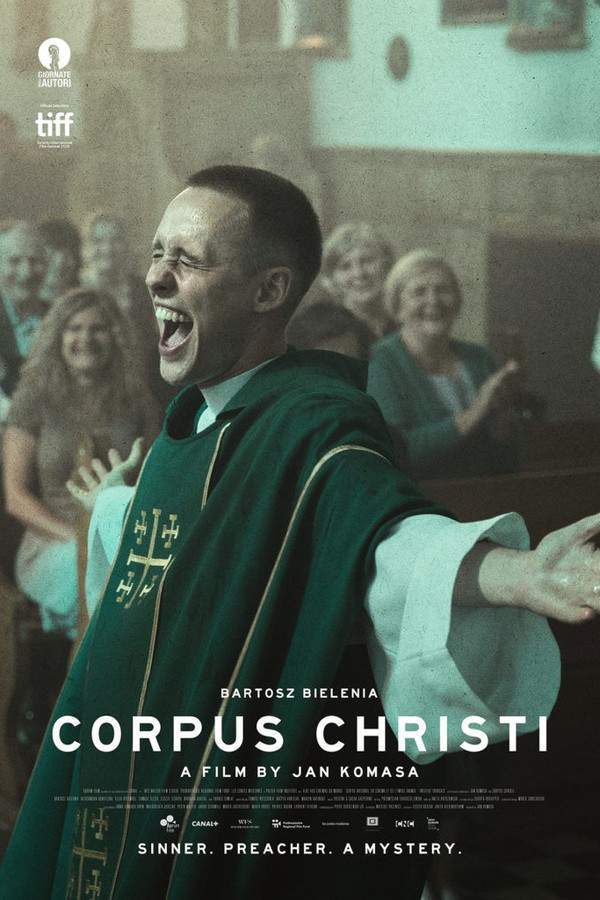
Corpus Christi (2019) movie poster

Plot Summary

Corpus Christi (2019) Plot Summary Explained

Release, runtime and language
2019 · 116 mins · Polish
Echo score 87
Directed by
Jan Komasa
Starring
Aleksandra Konieczna, Anna Biernacik, Bartosz Bielenia, Eliza Rycembel, Leszek Lichota, Jan Hrynkiewicz
Budget
$1.3M

A young delinquent, posing as a priest, unexpectedly takes charge of a small-town parish. His arrival offers the community a chance to heal and move forward after a devastating tragedy that occurred the previous year. This charismatic young man, seemingly a sinner turned preacher, finds himself at the center of a perplexing mystery.

On this page (5)
  1. 1 What happens: full plot
  2. 2 Plot questions answered
  3. 3 Movie threads
  4. 4 Movies like Corpus Christi
  5. 5 Every angle

Full plot summary · contains spoilers

What Happens in Corpus Christi: Full Plot Summary

The whole story of Corpus Christi (2019) explained, from the opening scene to the final frame: every key event, every twist and what it all adds up to. Read it as a quick recap before the sequel, to check a scene you missed, or to finally understand what really happened.

Daniel, a devout Catholic Bartosz Bielenia serving a sentence for second-degree murder, returns to civilian life with a stubborn roadblock: his criminal past keeps him from realizing his dream of becoming a priest. He is assigned to a sawmill worker’s life in a quiet village, and on a visit to the village church, he pretends to be a priest. The vicar of the church, unaware of the deception, leaves him in charge while he travels for medical treatment, trusting that a newcomer who seems earnest can handle the parish in his absence.

From his first days in the role, Daniel throws himself into every duty with a mix of surprising flair and a certain unorthodox charm. The parishioners respond with warmth and curiosity, appreciating how he approaches rituals with a fresh, untraditional touch while still honoring the core beliefs that drew him to this calling. Daniel’s sermons carry an unusual blend of honesty and raw emotion, and he is unafraid to share confessions even when they reveal inconvenient truths about himself. His willingness to lean into uncomfortable conversations earns both admiration and unease among different parts of the community.

As he begins to probe a recent car crash, the community’s mood shifts. One car carried an adult man who died, while the other involved six teenagers. The man is portrayed as a disliked outcast with a history of violent behavior, yet the villagers resist considering the possibility that the teenagers might bear responsibility for what happened. Daniel’s curiosity is not healed by silence; instead, it grows, drawing him toward a troubling missing piece in the story.

Daniel’s path intersects with Marta, a local woman whose brother was among the victims. Marta, Eliza Rycembel, becomes a crucial ally and a gateway to a darker truth that is not easy for the town to accept. She shares with him a video her brother sent hours before the accident—a clip showing the group, including the driver, engaging in heavy drinking and drug use. She keeps the video private for now, but its existence unsettles the village’s reluctance to reexamine culpability. A new, hard-edged reality begins to surface, and the town’s power structures grow wary of Daniel’s questions. The mayor, Leszek Lichota, warns Daniel to stop digging, insisting that the matter is closed and that further inquiry could destabilize a fragile social balance. Still, the question of who should be buried in the village cemetery becomes a point of deep contention.

Months pass, and Daniel learns that the cremated remains of the driver are waiting to be laid to rest. The town’s response becomes personal and cruel: many residents have sent hateful, threatening letters to the driver’s widow, who herself has become ostracized for insisting on her husband’s innocence. Feeling a growing responsibility to restore dignity, Daniel, joined by a guilt-ridden Marta, challenges the villagers with the letters and demands a proper burial for the solo driver. This act of defiance reframes the conflict from a mere accident to a communal reckoning with guilt, blame, and mercy.

Tension spikes when Marta’s mother reacts harshly to the uncovering of these documents, ejecting Marta from the home and forcing her to seek refuge in the temporary rectory with Daniel. In this intimate space, their relationship deepens, moving beyond professional complicity toward something more personal, even as they navigate the moral fog surrounding the accident. A sense of hope flickers as the two work together to honor the deceased, even as outsiders whisper about imposture and consequences.

The burial service itself becomes a turning point. The village atmosphere shifts as many residents set aside their animosity to pay their respects at last. Yet the peace is short-lived: just before the Mass that would follow, a priest from Daniel’s youth detention center arrives, having been tipped off about the impostor in their midst. He orders Daniel to leave immediately, forcing a dramatic escape. Rather than vanish, Daniel seizes the moment to stage a farewell Mass of his own, revealing tattoos that mark his history and his willingness to claim a different path, even as he departs.

Back behind bars, Daniel confronts a raw, brutal moment: he meets the brother of the man he murdered and engages in a ferocious fight. The skirmish ends with Daniel prevailing, and in a surprising turn of mercy, the other prisoners permit him to walk free. The film closes on a note that feels both earned and unsettled, a meditation on faith, guilt, community pressure, and the precarious line between truth and the need for belonging.


Last updated: February 25, 2026 at 08:16

Was this helpful?

Plot questions answered

Corpus Christi Plot Explained: Your Questions Answered

The questions people ask most about Corpus Christi (2019): what happens in the confusing scenes, why the characters do what they do, the twists, hidden details and what the ending means. Each answer contains spoilers.

Q1

Why does Daniel pretend to be a priest in the village?

Daniel, a devout Catholic who served time for second-degree murder, dreams of becoming a priest but his criminal record blocks him from entering the seminary. When he arrives at the village sawmill job, he seizes the opportunity to experience priestly life by pretending to be one when the vicar leaves him in charge. His deception stems from genuine faith combined with a desperate need for purpose and belonging that his criminal past has denied him.

  • daniel
  • priest
  • impostor
  • church
  • village
  • seminary
Q2

What does Daniel discover about the car crash?

Daniel learns that the car crash killed an adult driver and six teenagers, but the village refuses to consider that the teenagers might be responsible. The driver was an unpopular outcast with a history of violent behavior, and the community has already blamed him for the accident. Daniel's investigation uncovers evidence that challenges this convenient narrative and forces the town to confront uncomfortable questions about guilt and responsibility.

Foreshadowing: The villagers' immediate hostility toward the driver's widow foreshadows their unwillingness to accept any evidence that challenges their version of events.

  • car crash
  • accident
  • investigation
  • teenagers
  • driver
  • blame
Q3

Why does Daniel confess to murder during his sermon?

Daniel confesses to having murdered someone directly from the pulpit as an act of radical honesty and spiritual transparency. He believes that true confession and openness about sin are essential to genuine faith, even when those confessions are shocking. This unorthodox approach both unsettles and attracts villagers, establishing his reputation as an unconventional but compelling spiritual figure.

  • confession
  • murder
  • sermon
  • truth
  • sin
Q4

What is in the video Marta shows Daniel?

Marta shares a video her brother sent hours before the accident, showing the group of teenagers drinking heavily and using drugs. This footage suggests the teenagers may have been responsible for causing the crash, contradicting the village's narrative that blamed the adult driver. Marta has kept the video private, but it becomes crucial evidence that Daniel uses to challenge the community's refusal to reconsider the accident's true cause.

Foreshadowing: Marta's hesitation to reveal the video earlier establishes her as someone torn between protecting her brother's memory and seeking justice.

  • video
  • marta
  • teenagers
  • drugs
  • alcohol
  • evidence
Q5

Why are the villagers against burying the driver?

The villagers refuse to bury the adult driver in the village cemetery because they have already decided he was responsible for the crash that killed six teenagers from the community. Their refusal represents both grief and a need for someone to blame. The driver's widow faces social ostracism for insisting on her husband's innocence, and villagers send her threatening letters demanding she accept the community's version of events.

  • burial
  • cemetery
  • driver
  • widow
  • village
  • ostracism
Q6

Why does Marta's mother kick her out?

Marta's mother ejects her from home after Marta helps Daniel confront the villagers with the hateful letters sent to the driver's widow. This act of defiance against the community's collective stance proves too much for Marta's mother, who prioritizes social acceptance over pursuing truth. Marta then seeks refuge in the temporary rectory with Daniel, where their relationship deepens beyond their initial alliance.

  • marta
  • mother
  • house
  • family
  • conflict
  • refuge
Q7

Who exposes Daniel as an impostor?

A priest from Daniel's youth detention center arrives at the village after being tipped off about the impostor. He orders Daniel to leave immediately, forcing Daniel to escape through a window. Rather than simply fleeing, Daniel stages a farewell Mass where he reveals his tattoos, marks of his criminal past, before departing, publicly exposing his true identity to the community he had served.

  • exposed
  • priest
  • detention
  • escape
  • tattoos
  • identity
Q8

What happens when Daniel returns to prison?

After being exposed as an impostor, Daniel is returned to prison where he confronts the brother of the man he murdered years earlier. They engage in a brutal fight, with Daniel prevailing. This violent encounter represents the unfinished business of his past crime catching up with him, forcing him to face the consequences of his original sin directly.

  • prison
  • jail
  • fight
  • brother
  • murder
  • violence
Q9

Why do the prisoners let Daniel go at the end?

After Daniel defeats the brother of his murder victim in their fight, the other prisoners permit him to walk free. This seemingly contradictory mercy suggests the prisoners recognize something redemptive in Daniel, he has genuinely changed and has used his brief freedom to help others rather than merely serving himself. The ending reflects the film's themes of forgiveness and transformation despite ongoing sinfulness.

  • prisoners
  • release
  • freedom
  • forgiveness
  • mercy
Q10

What does Daniel achieve by the end of the film?

Despite returning to prison, Daniel achieves genuine redemption by helping the driver's widow secure a proper burial for her husband and forcing the village to confront its collective guilt. He experiences spiritual transformation through honest confession and service, and earns respect from both the community and even his fellow prisoners. His journey demonstrates that genuine faith and moral courage can emerge from the darkest circumstances, even if freedom remains elusive.

  • redemption
  • achievement
  • burial
  • community
  • faith
  • transformation

Movie threads

More Movies Like Corpus Christi, by Mood & Story

Curated lists built around what makes Corpus Christi tick: the same mood, the same kind of story or the same emotional payoff. Each list explains why these movies belong together.

Movies about impostor saviors like Corpus Christi

Characters who find purpose and redemption through a borrowed identity. If you were captivated by the premise of Corpus Christi, explore more movies about characters who find redemption through an assumed identity. This list features dramatic stories of unorthodox saviors and the communities they unexpectedly transform.

  • morally complex
  • redemptive
  • unorthodox
  • tense
  • anxious
  • gripping
  • Tone: tense, redemptive
  • Pacing: steady, character-driven
Why these movies?

The story pattern: The narrative follows a character who, often by accident or desperation, steps into a position of authority or trust they haven't earned. Their deception forces them to confront their own morality, and their unique perspective often allows them to solve a problem that has stumped the establishment, leading to a complex journey of personal and communal redemption.

Why they belong together: These films are grouped together because they share a powerful central conceit: a protagonist's lie becomes the catalyst for profound truth and healing. They blend high-stakes tension with deep themes of faith, forgiveness, and the search for second chances, creating a gripping and morally complex viewing experience.

Gripping dramas about community trauma like Corpus Christi

Intense stories about fractured communities grappling with a shared tragedy. Fans of the intense community dynamics in Corpus Christi will appreciate these movies. Discover similar gripping dramas that explore how towns and groups grapple with shared loss, secrets, and the long road to healing after a devastating event.

  • gripping
  • solemn
  • intense
  • conflicted
  • anxious
  • morally complex
  • Tone: solemn, intense, gripping
  • Pacing: steady, methodical
Why these movies?

The story pattern: These stories typically begin in the shadow of a past tragedy that has left a community paralyzed by grief, guilt, or secrets. A new character or event disrupts the fragile status quo, forcing hidden truths to the surface. The narrative builds steadily towards a confrontation with the past, leading to a cathartic, often bittersweet, resolution for the collective.

Why they belong together: This thread connects films that share a heavy emotional weight and a focus on the social dynamics of trauma. They are characterized by a tense, solemn mood and a steady pacing that allows the psychological impact of the event to unfold realistically, creating a deeply immersive and emotionally resonant experience.

If you liked this

Movies Like Corpus Christi

Similar movies to Corpus Christi: the same genre, themes or kind of story. Each one comes with its own plot summary, timeline and ending explained.

Browse all movie summaries

Every angle

Corpus Christi (2019) Explained: Plot, Timeline & Characters

Everything about Corpus Christi in one place: what happens in the plot summary, the timeline in chronological order, the characters and meaning and a spoiler-free summary. What's After the Movie adds the cast, box office and post-credit scenes.

Coming soon on iOS and Android

The Plot Explained Movie Summary App

Plot summaries, endings explained and timelines on your phone. Catch up on any movie in minutes, save your favorites and never miss a twist again.

Be the first to know when we launch. Your email stays private, always.

Learn more about the app