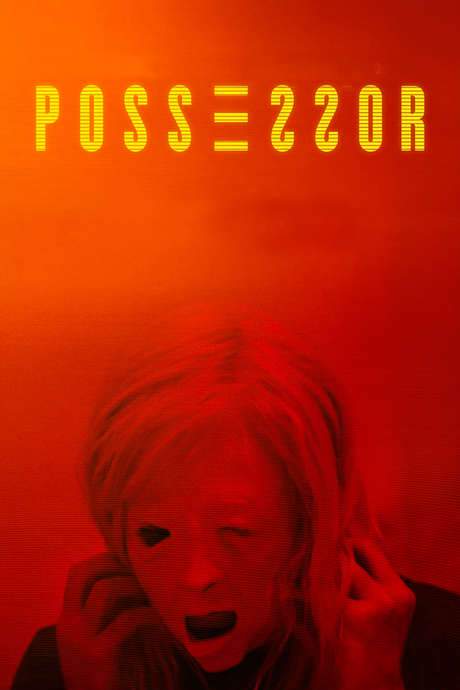
Year: 2020
Runtime: 103 mins
Language: English
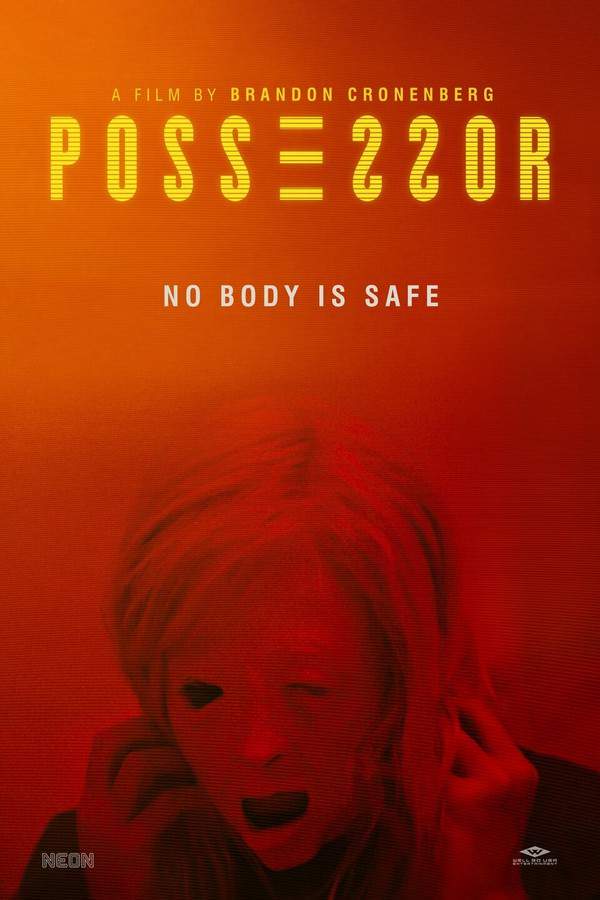
Director: Brandon Cronenberg
Echo Score: 78Budget: $2.5M
Tasya Vos is an elite corporate assassin who utilizes brain-implant technology to inhabit other people’s bodies, carrying out targeted assassinations. As she becomes increasingly immersed in a complex assignment, she finds herself trapped within a host mind, jeopardizing her own identity and threatening to consume her. The lines between assassin and host blur as she struggles to maintain control.
Find where to stream, rent, or buy Possessor (2020) in the US with current JustWatch availability, up-to-date pricing, and platform listings for subscription, rental, and digital purchase options.
Warning: spoilers below!
Haven’t seen Possessor yet? This summary contains major spoilers. Bookmark the page, watch the movie, and come back for the full breakdown. If you're ready, scroll on and relive the story!
Read the complete plot breakdown of Possessor (2020), including all key story events, major twists, and the ending explained in detail. Discover what really happened, and what it all means.
Tasya Vos is an assassin who uses an advanced implant to seep her consciousness into other people’s bodies, allowing her to carry out precision hits without being seen. Through this unsettling technology, she can inhabit a host’s mind, carry out the job, and then return to her own body by forcing the host to commit suicide at the end of the mission. The film opens with a bold, destabilizing first hit where she abandons her usual protocol and finds herself blocked by a version of herself who resists self-destruction. Rather than using her own gun, she ends up directing the host to be shot in the chaos of an armed arrival, a moment that foreshadows the fragility of boundaries between self and host.
As the narrative unfolds, Vos grapples with disorienting neurological symptoms that blur the line between her professional identity and the person she shares a life with. The strain seeps into her marriage with Michael Vos, and into the quiet intimacy she shares with her son, Ira Vos. The routine of domestic life becomes a testing ground for her ability to act normal, to perform the everyday rituals of parenting and partnership while her consciousness remains tethered to the bodies of strangers. She practices not just the外 impersonation of others but the careful maintenance of a familiar persona, a discipline that mirrors the meticulous craft she uses on the job. The domestic scenes carry a taut tension, as Vos experiences intrusive thoughts of violence that intrude upon bedtime rituals and intimate moments with Michael, turning tenderness into a battleground of competing identities.
Her handler, Girder, is a retired assassin who serves as a stern critic and practical supervisor. In debriefings designed to pull Vos back toward a clean professional identity, Girder argues that Vos would be more effective if she could sever the emotional ties that bind her to family and home. The tension between duty and attachment becomes the core conflict of Vos’s inner life. In a moment of eerie symbolism during a debriefing, Vos sorts through a collection of personal mementos and lingers on a butterfly she once pinned and framed as a child, a memory that underscores a persistent sense of guilt. She confesses to Girder that even the butterfly’s killing felt wrong, hinting at a deep, unhealed wound beneath her methodical exterior.
When a high-profile assignment lands on her desk—targeting the wealthy CEO John Parse and his daughter Ava Parse—Vos decides to push forward by possessing Ava’s fiancé, Colin Tate. The plan is simple on paper: step into a life that can offer Vos a seamless cover and then execute the hit. Yet the neurological strain worsens as she navigates the host’s reality, masking the deterioration beneath a cultivated normalcy. The mission becomes a double-edged sword, a test of will where Ava dies in the process of the broader calculation, and Parse remains alive, leaving Vos with a botched completion of her protocol.
The attempt to complete the job by coercing Tate into suicide spirals into a nightmare of dissociation. Vos fights to maintain control as Tate’s consciousness pushes back, culminating in a brutal dissociative break in which Tate stabs himself, damaging the implant and triggering cascading neurological symptoms in Vos’s own body. The shock of physical pain, memory fragments, and a loss of agency render Vos powerless for a sprawling moment, and Tate—driven by a wave of confusion and trauma—manages to flee, seeking aid from his friend Reeta. The narrative then spirals through a jagged cascade of memory fragments, as Vos discovers that memory itself can be weaponized and weapon discarded.
The human price of Vos’s work becomes starkly clear when Tate kills Eddie, a coworker who turns out to be a plant within Vos’s agency. In a brutal cascade of dissociative episodes, Tate’s awareness of Vos’s presence inside his body intensifies until he gains access to intimate memories of Vos’s husband and child. The violence is intimate and shattering: Tate returns to Vos’s home and confronts the people closest to her. He holds Michael at gunpoint, demanding the truth of what Vos did to him, and the encounter becomes a crucible in which Vos’s different selves clash with the host’s own memories.
In a tense, psychic confrontation, Vos tries to exert control from within Tate’s mind, goading him toward killing Michael. When Michael finally wrests the weapon from Tate, the situation escalates into a brutal family tragedy: Michael is killed by a meat cleaver, and Ira—Vos’s son in the host’s body—stabs Tate in the throat, echoing the stabbing of the opening sequence. The immediate aftermath reveals a darker twist: Vos herself uses Tate’s last moments to shoot Ira dead, and it’s disclosed in a devastating reveal that Ira had, in fact, been a host all along. The violence, driven by the layered transfer of consciousness, reveals a cruel irony: the very lives Vos sought to uplift or protect end up becoming collateral damage in the service of a more brutal agency agenda.
As the dust settles, Vos returns to her own body only to discover a chilling shift in control: Girder had managed to seize Ira’s consciousness, and with both Michael and Ira dead, Vos is momentarily liberated from human attachments—just as Girder had planned. The debriefing that follows becomes a ceremonial reckoning, a quiet ritual in which Vos confronts the objects of her past again. She looks at the butterfly once more, this time without the sting of guilt that once haunted her, as Girder praises her for surviving a cascade of loss and violence that would unmoor most people.
The film closes on a quiet, unsettling note, emphasizing the price of Vos’s work and the fragility of identity when a person’s body can be inhabited by another. The interplay of memory and allegiance—the butterfly she pinned, the husband she killed, the son she might have protected—leaves Vos in a moment of ambiguous power: she is free of the attachments that previously tethered her to a single life, yet she remains forever altered by the lives she has possessed. In the final debriefing, the echoes of memory and identity converge, and Girder’s quiet praise signals a bleak triumph: Vos has proved herself capable, but at what cost to the person she is and the people she has become?
Last updated: February 25, 2026 at 08:21
Explore frequently asked questions about Possessor (2020) with spoiler-rich answers covering the full plot summary, major story beats, character motivations, hidden details, and ending meaning. This movie summary FAQ helps explain confusing scenes, plot twists, and narrative decisions in clear, searchable detail.
During her first assignment, Vos attempted to force the host to commit suicide with their own gun as per protocol. However, police arrived during the operation, creating chaos. Rather than using her own weapon, Vos directed the situation so the host was shot by police, resulting in a compromised outcome. This incident foreshadowed the fragility of the boundaries between herself and her hosts, as she found herself blocked by a version of herself that resisted self-destruction.
The opening sequence foreshadows the eventual breakdown of host-assassin boundaries that occurs with Colin Tate.
Vos uses an advanced neural implant that allows her consciousness to slip into a host's body. While inhabiting the host, she can control their actions to carry out precision assassinations. At the end of each mission, protocol demands she force the host to commit suicide so she can return to her own body. The technology creates a shared consciousness where both the host and Vos can experience intrusive thoughts and memories.
Vos selected Colin Tate because he was Ava Parse's fiancé, giving her intimate access to the Parse family circle. This provided a seamless cover to approach both John Parse and his daughter Ava. The plan was to navigate Tate's life while hiding her presence, using his relationships to get close to the targets. However, the neurological strain of maintaining control while inhabiting a host she had deeper connections to worsened significantly.
The assassination attempt resulted in Ava's death while Parse survived because the execution went differently than planned. Vos was experiencing worsening neurological symptoms during the operation, which compromised her ability to complete the protocol cleanly. Parse survived the attack, leaving the hit incomplete and forcing Vos to deal with the consequences of a botched assignment.
During the dissociative struggle, Tate's consciousness overpowered Vos and gained access to her memories. This psychic invasion allowed him to see her husband Michael, her son Ira, and their home. He used this knowledge to travel to Vos's actual residence and confront her family, demanding answers about what she had done to him.
The memory invasion was possible because the implant was damaged when Tate stabbed himself in the skull.
Ira Vos, who appeared to be Tasya Vos's son, was actually a host body, just like the targets she inhabited for assassinations. This devastating reveal showed that Girder had been using the same possession technology on Vos's own family. Ira had been a host all along, meaning Vos had been unknowingly connected to another assassin's consciousness through her own child.
Girder's earlier advice that Vos would be more effective without emotional attachments hinted at her manipulation.
Girder deliberately orchestrated the cascade of events that led to Michael and Ira's deaths. Her goal was to sever Vos's emotional attachments to family, believing this would make her a more effective assassin. After the climactic violence, Girder had actually taken control of Ira's consciousness. With both Michael and Ira dead, Vos was freed from personal attachments, just as Girder had planned. This was a deliberate manipulation to create a completely detached killer.
Girder repeatedly argued that Vos would be more effective without emotional ties to family.
When Ira (in Tate's body) stabbed Tate in the throat and killed him, Vos used Tate's last moments of life to shoot Ira dead. This was a complex moment where Vos, still partially in Tate's consciousness, eliminated what she believed to be an attacker. However, given that Ira was revealed to be a host, Vos was actually killing another host body controlled by someone else, possibly Girder herself. The violence became a tragic cycle of possession and elimination.
The butterfly is a childhood memento that Vos pinned and framed as a child. During debriefings, she confesses that even killing the butterfly felt wrong, revealing a deep sense of guilt beneath her methodical exterior. At the film's end, she looks at the butterfly again but feels no guilt this time, her emotional capacity has been so eroded that past moral conflicts no longer affect her. This marks her complete transformation into a detached killer.
When Tate held Michael at gunpoint, demanding answers about what Vos did to him, a struggle ensued. After Michael knocked the gun away during the confrontation, Tate grabbed a meat cleaver from the kitchen and killed Michael with it. The weapon choice reflects the escalating violence and the chaotic, intimate nature of the confrontation in Vos's home.
Tate stabbed himself in the skull during a dissociative episode when Vos was trying to force him to shoot himself to complete the assassination protocol. This act of self-destruction was Tate fighting back against Vos's control. The self-inflicted wound damaged the implant, triggering severe neurological symptoms in Vos's own body and preventing her from leaving Tate's consciousness or fully overpowering him.
The ending shows Vos returning to her own body after the devastating sequence of events, now completely freed from emotional attachments as Girder intended. In the final debriefing, she contemplates the butterfly without guilt, her last remnant of humanity is gone. She has become a fully detached professional killer, with Girder praising her performance. The film closes on the horrifying implication that Vos is now exactly what her agency wanted: a completely disposable assassin with nothing left to lose.
Still wondering what the ending of Possessor (2020) really means? Here’s a spoiler-heavy breakdown of the final scene, major twists, and the deeper themes that shape the film’s conclusion.
The climax of Possessor unfolds in a surreal, subconscious plane where the assassin Tasya Vos and her host, Colin Tate, battle for dominance. Although Tasya is a seasoned professional, her psyche has been eroded by years of jumping into other people’s lives, leaving her emotionally hollow and weak. Conversely, Colin possesses a stronger, more intact sense of self, allowing him to overpower her. In a visceral metaphor for identity theft, Colin symbolically tears Tasya’s face from her subconscious body and wears it as his own, seizing her memories and gaining the upper hand. When Colin wakes up in the real world, he acts on his threat for revenge, murdering Tasya’s partner, Michael, seemingly in retaliation for Tasya’s indifference toward him.
The violence spirals further when Colin is abruptly stabbed in the throat by Ira, Tasya’s young son. In a shocking reveal, it turns out Ira is not acting of his own volition; he is being possessed by Girder, Tasya’s boss. As Colin shoots the boy in self-defense, the connection severs, and both women are pulled back to their respective bodies. This final twist underscores the ruthless nature of the corporation Tasya works for. Girder’s willingness to possess a child to tie up loose ends reveals that the company views its agents and their families as disposable assets.
By the film’s conclusion, Tasya is restored to her own body, but the cost is absolute. The traumatic possession and the loss of her family have stripped away the last vestiges of her humanity. She is left entirely void of empathy, a hollow vessel effectively owned by the corporation. The ending serves as a bleak cautionary tale about the loss of self in the face of advancing technology and corporate greed, suggesting that the act of taking control of others ultimately destroys the controller.
Last updated: March 30, 2026 at 18:14
Discover curated groups of movies connected by mood, themes, and story style. Browse collections built around emotion, atmosphere, and narrative focus to easily find films that match what you feel like watching right now.
Stories where the self unravels and the body becomes a prison.Explore a collection of unsettling movies like Possessor where characters face the complete breakdown of their identity through advanced technology, psychological manipulation, or grotesque bodily transformations.
Narratives in this thread often chart an unstoppable descent into madness or the loss of self. A protagonist's mind or body is no longer their own, invaded by external forces leading to internal horror, blurring the lines between reality and nightmare, and culminating in a horrific transformation or annihilation.
These films are grouped by their shared focus on the horror of losing one's identity and bodily autonomy, often through a disturbing mix of psychological thriller elements with visceral, graphic body horror. The tone is relentlessly bleak, and the pacing often reflects a spiral into chaos.
Thrillers where shadowy corporations weaponize technology for control.Find tense sci-fi thrillers like Possessor that explore themes of corporate espionage, technological manipulation, and the high personal cost of being a pawn in a larger, brutal game.
The narrative arc typically follows a skilled operative who becomes entangled in an assignment far more complex and dangerous than anticipated. The lines between controller and controlled blur, forcing the protagonist to confront the horrifying reality of their situation, often leading to a violent confrontation or a bleak realization.
These films share a common backdrop of corporate or institutional power wielding advanced tech, creating a high-stakes world of espionage and assassination. They blend fast-paced action with deep psychological stakes, often featuring protagonists whose grip on reality or morality is tested.
Don't stop at just watching - explore Possessor in full detail. From the complete plot summary and scene-by-scene timeline to character breakdowns, thematic analysis, and a deep dive into the ending - every page helps you truly understand what Possessor is all about. Plus, discover what's next after the movie.
Track the full timeline of Possessor with every major event arranged chronologically. Perfect for decoding non-linear storytelling, flashbacks, or parallel narratives with a clear scene-by-scene breakdown.
Discover the characters, locations, and core themes that shape Possessor. Get insights into symbolic elements, setting significance, and deeper narrative meaning - ideal for thematic analysis and movie breakdowns.
What really happened at the end of Possessor? This detailed ending explained page breaks down final scenes, hidden clues, and alternate interpretations with expert analysis and viewer theories.