Year: 1997
Runtime: More mins
Language: Telugu
Director: Sarath
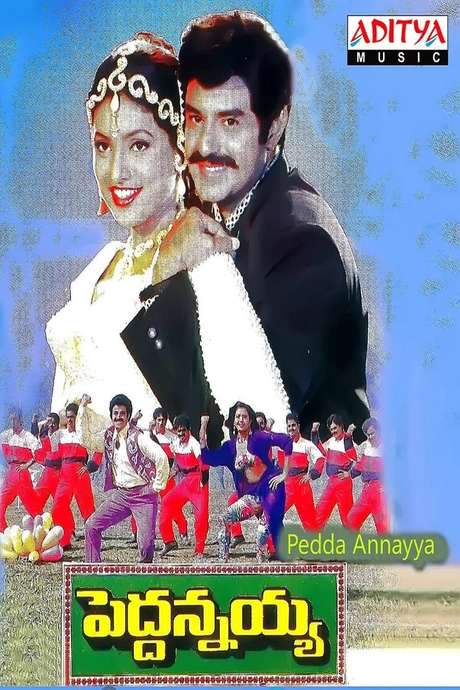
Pedda Annayya is a 1997 Telugu film directed by Sharath. The film stars Balakrishna, Roja Selvamani, Indraja and Kota Srinivasan Rao in lead roles.
Find where to stream, rent, or buy Peddannayya (1997) in the US with current JustWatch availability, up-to-date pricing, and platform listings for subscription, rental, and digital purchase options.
Warning: spoilers below!
Haven’t seen Peddannayya yet? This summary contains major spoilers. Bookmark the page, watch the movie, and come back for the full breakdown. If you're ready, scroll on and relive the story!
Read the complete plot breakdown of Peddannayya (1997), including all key story events, major twists, and the ending explained in detail. Discover what really happened, and what it all means.
Starring: Brahmanandam, Kota Srinivasa Rao, Roja Selvamani, Nandamuri Balakrishna, Charan Raj, Annapoorna, Indraja, Madhurima Narla
Ramakrishna Prasad, a steadfast patriarch who presides over a conscientious joint family, finds his steady world at odds with Bhaskar Rayudu, a formidable rival who once stood as his closest ally. The old friendship between these two power players now fuels a tense, high-stakes feud that threads through every corner of the household. Ramakrishna’s life centers on his three cousins—Sai Prasad, Durga Prasad, and Bhavani Prasad—and their mother, all of whom revere him as a near-deity and rely on his steady leadership. Seeta Mahalakshmi, a spirited and patient woman, has waited fifteen years to win Ramakrishna’s heart and vows not to give up that dream until he finally agrees to marry. Meanwhile, Bhavani, a cheerful yet impulsive doctor, finds himself clashing with his colleague Sravani, adding a layer of personal complication to the already fragile family balance.
Durga’s love for Neelaveni, the daughter of Bhaskar Rayudu’s ally Chenchuramaiah, sets the stage for a calculated plot to fracture the family’s unity. The scheme to drive a wedge between the factions falters, however, because the family’s bonds—built on mutual respect and shared history—hold firm against scheming and betrayal. Amid these tensions, Bhaskar Rayudu schemes to profit from a government project by constructing an inferior structure, a move Durga becomes entangled with. Ramakrishna cannot ignore the deception; he confronts his rival, forces him to resign, and works to recover the stolen funds. In the midst of these power struggles, Bhavani’s heart becomes entangled with Sravani—someone whose past could stigmatize them both—yet Bhavani resolves to marry her to guard against evils, even if others do not approve. Chenchuramaiah, never far from the shadows, engineers a blaze to inflame the house and push the family toward ruin. Ramakrishna, appreciating Bhavani’s courage, backs Bhavani’s decision and the fire incident, but conflict remains, and Bhavani ultimately seeks refuge at a farmhouse away from the rest of the clan.
Time passes, and Sai and Durga push forward with a factory project that encroaches on Bhavani’s residence, forcing a division of property. Ramakrishna tries to safeguard the family by keeping the maximum share for the sake of their cohesion, but his intentions are misread as greed, and the family’s distrust deepens. Bhaskar Rayudu uses the opportunity to manipulate outcomes, letting the public deposit grow while Sai handles the funds, and a later theft framed against Bhavani threatens to derail the entire clan. To cover the losses, Ramakrishna sacrifices his own brothers’ shares, a move that fuels resentment and prompts the others to push him out of the house, even as their mother defends him and proclaims his true nobility.
Ramakrishna and Seeta eventually become lovers, and wedding plans begin in earnest. A separate tragedy unfolds when Ravindra, Bhaskar Rayudu’s brother, betrayed Ramakrishna’s sister Parvati, driving her to suicide. Enraged and resolute, Ramakrishna retaliates by killing Ravindra. The family mourns and a dying uncle entrusts his infants to Ramakrishna, who then vows to raise them with honor and strength. The family members come to regret their past misjudgments and beg forgiveness as they attempt to heal the rift and bring Bhavani and Sravani back into the fold. A key demand emerges: Ramakrishna must unite with Seeta to secure their future, a promise he accepts.
But Bhaskar Rayudu and Chenchuramaiah conspire again, this time to strike at Seeta, garrote her, and stage it as a suicide, framing Ramakrishna for the crime. In a harrowing twist, Ramakrishna ties the wedding chain to Seeta’s lifeless body to honor her vow and preserve their union, even as the police close in and arrest him. Bhaskar Rayudu, Chenchuramaiah, and Neelaveni confront the consequences of their schemes as the truth begins to unravel, and the nears-inevitable reckoning follows. In the end, Ramakrishna and Bhavani prevail over the villains, thwarting their plots, but the victory is bitter-sweet. Wounded and exhausted, Ramakrishna makes the ultimate sacrifice, choosing self-immolation beside Seeta as the story’s tragedy and its final testament to love, loyalty, and the price of power.
Last updated: October 09, 2025 at 11:16
Explore frequently asked questions about Peddannayya (1997) with spoiler-rich answers covering the full plot summary, major story beats, character motivations, hidden details, and ending meaning. This movie summary FAQ helps explain confusing scenes, plot twists, and narrative decisions in clear, searchable detail.
Ramakrishna kills Ravindra because Ravindra, who is Bhaskar Rayudu's brother, betrayed Ramakrishna's sister Parvati. This betrayal drove Parvati to commit suicide, and in retaliation, Ramakrishna takes revenge by killing Ravindra.
Seeta Mahalakshmi made a vow to not burn (referring to the Hindu ritual of a widow burning herself on the funeral pyre) until Ramakrishna married her. She remained patient for fifteen years, waiting for Ramakrishna to accept her as his wife, while Ramakrishna himself had promised to stay unmarried until his siblings were settled.
After Bhaskar Rayudu and Chenchuramaiah murder Seeta and frame it as a suicide, Ramakrishna ties the wedding mangalsutra (wedding chain) to her lifeless body to honor his vow to Seeta and preserve their union, even in death. He chooses to fulfill his promise to her despite knowing she is dead and that he will be arrested.
The property division occurs when Sai Prasad and Durga Prasad push forward with a factory project on land where Bhavani resides. Ramakrishna tries to protect the family's assets by keeping the maximum share for himself, which Sai and Durga misinterpret as greed. This misreading, combined with the earlier theft framed against Bhavani, deepens the family's distrust and leads to the split.
Bhavani wants to marry Sravani despite learning she grew up in a prostitute's house. This background could stigmatize both Bhavani and his family, making the marriage socially unacceptable to many. However, Bhavani resolves to marry her to protect her from evils, demonstrating his commitment despite the societal judgment they would face.
Bhaskar Rayudu was once Ramakrishna's closest ally but becomes his formidable rival. His primary motive is profit and power - he schemes to steal from a government project by constructing an inferior structure. When Ramakrishna confronts him, forces his resignation, and recovers the stolen funds, Bhaskar becomes Ramakrishna's sworn enemy, orchestrating multiple schemes against the family.
Durga Prasad falls in love with Neelaveni, who is the daughter of Chenchuramaiah (Bhaskar Rayudu's ally). This relationship becomes part of the scheme to create a rift within the family. However, the family's strong bonds of mutual respect and shared history prevent the manipulation from succeeding, and the plot ultimately falters.
Chenchuramaiah engineers the fire that engulfs the family home. He uses this desperate act to inflame the situation and push the family toward ruin, exploiting the controversy surrounding Bhavani's marriage to Sravani. The fire forces Bhavani to relocate to the farmhouse and deepens the rift within the clan.
After defeating the villains in the final confrontation, Ramakrishna and Seeta (who has been murdered and reframed as a suicide) choose to end their lives together in ritual self-immolation. This tragic ending serves as their ultimate testament to love and loyalty - Ramakrishna would rather die with his beloved than live without her, while also escaping the consequences of being framed for her murder.
Parvati, Ramakrishna's sister, is betrayed and sexually exploited by Ravindra, who is Bhaskar Rayudu's brother. The shame and trauma of this betrayal drive Parvati to commit suicide. This tragic event is the catalyst for Ramakrishna's revenge killing of Ravindra.
Ramakrishna is arrested at Seeta's funeral because Bhaskar Rayudu and Chenchuramaiah have murdered Seeta and staged her death as a suicide, framing Ramakrishna for the crime. When Ramakrishna ties the wedding chain to her dead body to honor his vow, the police arrive and take him into custody for her alleged murder.
Discover curated groups of movies connected by mood, themes, and story style. Browse collections built around emotion, atmosphere, and narrative focus to easily find films that match what you feel like watching right now.
Intense dramas where personal sacrifice is the price of upholding family legacy.Explore movies like Peddannayya, where family loyalty, patriarchal duty, and revenge drive a tragic narrative. These emotionally heavy dramas feature high stakes, betrayal, and sacrificial endings, ideal for viewers seeking similar tales of honor and vengeance.
Stories in this thread typically follow a central, often patriarchal, figure whose unwavering devotion to family honor is tested by external rivalries and internal betrayals. The plot escalates through a series of high-stakes tragedies—such as framed accusations, suicides, and murders—leading to a final, fiery act of revenge or sacrifice that resolves the conflict at a tremendous personal cost.
Movies are grouped here for their shared focus on the destructive power of family honor, their high emotional intensity, dark tone, and the specific narrative pattern of a tragic hero fulfilling their duty through ultimate sacrifice. The experience is defined by a heavy, oppressive mood and a steady, relentless pacing towards a catastrophic yet morally resolved ending.
Stories where love and duty culminate in a final, devastating act of self-immolation.If you were gripped by the final act in Peddannayya, discover other movies where a character's ultimate sacrifice defines the story. These films share a dark tone, heavy emotional weight, and a powerful, bittersweet culmination of intense personal drama.
The narrative pattern involves a protagonist accumulating immense loss and injustice, which fuels a growing sense of inescapable fate. The plot steadily escalates the emotional stakes, eliminating any chance for a peaceful resolution, until the only path left is a final, grand, and often self-destructive gesture—like self-immolation—that serves as both atonement and ultimate defiance.
These films are united by their specific climax: a final, catastrophic sacrifice that is both a narrative conclusion and a powerful symbolic act. They share a high-intensity, dark, and passionate vibe, with a pacing that deliberately builds towards this singular, emotionally devastating moment, making the sacrifice the defining feature of the viewing experience.
Don't stop at just watching - explore Peddannayya in full detail. From the complete plot summary and scene-by-scene timeline to character breakdowns, thematic analysis, and a deep dive into the ending - every page helps you truly understand what Peddannayya is all about. Plus, discover what's next after the movie.
Track the full timeline of Peddannayya with every major event arranged chronologically. Perfect for decoding non-linear storytelling, flashbacks, or parallel narratives with a clear scene-by-scene breakdown.
Discover the characters, locations, and core themes that shape Peddannayya. Get insights into symbolic elements, setting significance, and deeper narrative meaning - ideal for thematic analysis and movie breakdowns.
Discover movies like Peddannayya that share similar genres, themes, and storytelling elements. Whether you’re drawn to the atmosphere, character arcs, or plot structure, these curated recommendations will help you explore more films you’ll love.
Peddannayya (1997) Scene-by-Scene Movie Timeline
Peddannayya (1997) Movie Characters, Themes & Settings
Peddannayya (1997) Spoiler-Free Summary & Key Flow
Movies Like Peddannayya – Similar Titles You’ll Enjoy
Kobbari Matta (2019) Story Summary & Characters
Chennakesava Reddy (2002) Movie Recap & Themes
Oka Radha Iddaru Krishnula Pelli (2003) Full Movie Breakdown
Allari Pidugu (2005) Film Overview & Timeline
Chukkallo Chandrudu (2006) Movie Recap & Themes
Bhakta Prahlada (1983) Film Overview & Timeline
Brahma Puthrudu (1988) Film Overview & Timeline
Muddula Mavayya (1989) Full Movie Breakdown
Rajakumarudu (1999) Ending Explained & Film Insights
Pedarayudu (1995) Spoiler-Packed Plot Recap
Annamayya (1997) Detailed Story Recap
Chinarayudu (1992) Film Overview & Timeline
Kurangu Pedal (2024) Full Movie Breakdown
Krishnarjuna (2008) Movie Recap & Themes
Akkada Ammayi Ikkada Abbayi (1996) Story Summary & Characters