Plot Explained Spoilers guaranteed!
Plot Explained

Browse by genre

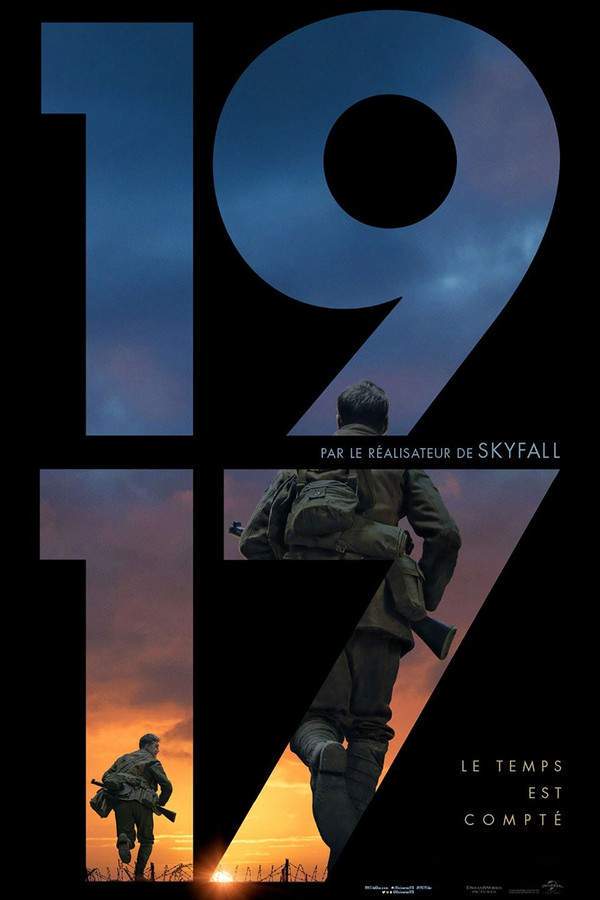
1917 (2019) movie poster

Plot Summary

1917 (2019) Plot Summary & Ending Explained

Release, runtime and language
2019 · 119 min · English
Echo score 80
JustWatch #685 155
Directed by
Sam Mendes
Starring
George MacKay, Benedict Cumberbatch, Teresa Mahoney, Richard Madden, Mark Strong, Adrian Scarborough
Budget
$95M

During the First World War, British soldiers Schofield and Blake are given a critical mission. They must cross enemy territory to deliver a vital message that could save the lives of 1,600 men. Facing dangerous landscapes and the brutal realities of combat, the pair race against time, forging a bond as they confront the perilous journey and the heavy responsibility placed upon them.

On this page (7)
  1. 1 Where to watch
  2. 2 What happens: full plot
  3. 3 Plot questions answered
  4. 4 How it ends
  5. 5 Movie threads
  6. 6 Movies like 1917
  7. 7 Every angle

Where to watch

Where to Watch 1917 (2019)

Where can you watch 1917? Stream, rent or buy it in the US, including on Netflix, Netflix Standard and Amazon Video: current JustWatch availability with up-to-date prices.

Streaming availability powered by JustWatch

Full plot summary · contains spoilers

What Happens in 1917: Full Plot Summary

The whole story of 1917 (2019) explained, from the opening scene to the final frame: every key event, every twist and what it all adds up to. Read it as a quick recap before the sequel, to check a scene you missed, or to finally understand what really happened.

At the height of World War I in April 1917, two young British soldiers, Lance Corporal Will Schofield (George MacKay) and Lance Corporal Tom Blake (Dean-Charles Chapman), receive a critical mission directly from General Erinmore (Colin Firth). They must deliver a message to the 2nd Battalion of the Devonshire Regiment, effectively calling off their planned attack on the German forces. The Germans have tricked the Allies into thinking they are retreating, setting up formidable defenses along the Hindenburg Line, which is laden with artillery and traps designed to ambush the battalion of 1,600 men, including Blake's brother Lieutenant Joseph Blake (Richard Madden). With no functioning phone lines, this urgent task falls squarely on the shoulders of Schofield and Blake.

Despite Schofield’s desire to wait until dark to set off, Blake's urgency to save his brother pushes them to depart immediately, setting off on a trek of 9 miles that should take at most 6 to 8 hours. They begin their perilous journey from a trench commanded by Lieutenant Leslie ([Andrew Scott]), who, skeptical of Erinmore’s assessment, warns them that it may be a trap but provides them the safest route across No Man's Land.

As they traverse the dangerous terrain, Schofield suffers an injury to his left hand while navigating through barbed wire. Their exploration of abandoned German trenches reveals a horrifying trap; an explosion triggered by a rat nearly takes Schofield’s life, but Blake acts swiftly to save him. Their adventure leads them to a deserted farmhouse where they rescue a downed German pilot trapped in the wreckage. Amidst the chaos, however, tragedy strikes when the pilot stabs Blake, leading Schofield to shoot the assailant and rush to comfort his dying friend, promising to complete the mission and inform Blake’s mother of his bravery.

Eventually, Schofield is picked up by a British unit led by Captain Smith ([Mark Strong]), who warns him of the callous nature of some men under fire, fearful that Colonel Mackenzie ([Benedict Cumberbatch]) may refuse to halt the impending attack. A shattered canal bridge near Ecoust-Saint-Mein complicates matters further, forcing Schofield to continue alone. He encounters hostile fire from a sniper, resulting in a tense standoff that leaves him unconscious after being hit in the helmet.

Upon waking at night, Schofield navigates through eerily illuminated ruins, before meeting a French woman with a baby who offers to help him. Despite her urgings, he realizes that time is not on his side and ventures onward. In a desperate act of survival, he kills a German soldier and narrowly escapes by jumping into a river, carried away by the current until he finds himself free from danger.

With dawn approaching, Schofield finally reaches the 2nd Battalion, only to discover that the attack is already underway. He desperately seeks out Colonel Mackenzie, pushing through a throng of soldiers to deliver the message. As chaos erupts around him and the infantry rushes into battle, Schofield manages to reach Mackenzie, who begrudgingly cancels the assault after reading the urgent letter.

In the aftermath, Schofield finds Joseph and, struggling with the weight of his revelations, relays the heartbreaking news of Tom’s death, returning his brother’s rings and dog tags. Even amidst their grief, Joseph expresses gratitude for Schofield’s efforts. Exhausted, Schofield takes a moment to rest under a tree, reflecting on his family as he contemplates the profound message written on a photograph’s back: > “Come back to us.”
Last updated: November 16, 2024 at 12:30

Was this helpful?

Plot questions answered

1917 Plot Explained: Your Questions Answered

The questions people ask most about 1917 (2019): what happens in the confusing scenes, why the characters do what they do, the twists, hidden details and what the ending means. Each answer contains spoilers.

Q1

Why did Blake insist on leaving immediately instead of waiting until dark?

Blake's urgency stemmed from his brother Joseph serving as a lieutenant in the 2nd Battalion that was about to launch the attack. Blake knew the assault was imminent and couldn't bear the thought of waiting while his brother faced almost certain death. His personal connection to the mission override Schofield's tactical preference to wait for darkness, driving him to depart immediately despite the increased danger.

Foreshadowing: Earlier in the trench, General Erinmore specifically mentions that Blake's brother is among the 1,600 men who will die if the message doesn't arrive.

  • tom blake
  • schofield
  • brother
  • joseph
  • urgency
  • mission
Q2

Why was it so critical to stop the attack on the Hindenburg Line?

The Germans had deliberately pretended to retreat, luring the British into what was actually a carefully prepared ambush. The Hindenburg Line was heavily fortified with artillery and traps designed to wipe out the entire 2nd Battalion of 1,600 men, including Blake's brother. Waiting even hours could mean the attack would begin before the message arrived, making it too late to save them.

Foreshadowing: General Erinmore explains the trap to Schofield and Blake, warning that the Germans have rigged the entire area with machine guns and artillery.

  • hindenburg line
  • message
  • attack
  • 1600 men
  • trap
  • ger
Q3

What was the Hindenburg Line and why was it so dangerous?

The Hindenburg Line was a German defensive position deep behind enemy lines, fortified with extensive wire obstacles, artillery placements, and hidden machine gun nests. The Germans purposely spread word of their retreat to draw the British into attacking this heavily fortified position, turning what seemed like an easy advance into a massacre trap.

Foreshadowing: General Erinmore tells Schofield and Blake that the Germans are not retreating but have simply fallen back to a stronger position loaded with traps.

  • hindenburg line
  • german defensive
  • trap
  • artillery
Q4

Why did the German pilot attack Blake and Schofield after they rescued him?

Despite being wounded and rescued by enemy soldiers, the German pilot remained committed to his side's cause. In a desperate act of resistance or perhaps pain-induced confusion, he attacked Blake with a concealed knife. This tragic moment illustrates how the brutal nature of war can turn humanitarian gestures into deadly encounters, even when both parties momentarily showed mercy.

Foreshadowing: Schofield and Blake discuss whether to trust the pilot, with Schofield noting that helping the enemy could have consequences.

  • german pilot
  • knife attack
  • blake death
  • rescue
Q5

Why was Colonel Mackenzie reluctant to stop the attack?

Colonel Mackenzie was under intense pressure to advance and prove the British offensive was succeeding. Captain Smith warned Schofield that Mackenzie was the kind of man who would send 1,000 men to their death rather than admit the attack was based on false intelligence. His ego and the high command's expectations made him resistant to cancelling an attack he had already ordered.

Foreshadowing: Captain Smith tells Schofield that some officers, when pushed, will keep pushing forward no matter the cost.

  • colonel mackenzie
  • attack
  • cancel
  • captain smith
  • officer
Q6

What happened to Blake after he was stabbed by the German pilot?

Blake was fatally stabbed in the side by the German pilot. Schofield shot the attacker dead and then stayed with Blake as he died. In his final moments, Blake made Schofield promise to complete the mission and told him to write to his mother, assuring her that Blake was brave. Schofield kept this promise and later delivered the tragic news to Blake's brother Joseph.

Foreshadowing: The pilot's sudden violent act subverts the moment of mercy, showing that war prevents even brief moments of humanity.

  • tom blake death
  • german pilot
  • stabbing
  • promise
Q7

How was Schofield able to reach the 2nd Battalion despite all the obstacles?

Schofield pushed through relentless dangers: he survived an explosion in the German trenches, escaped a shattered canal bridge, endured a sniper attack that left him unconscious, killed a German soldier in hand-to-hand combat, and jumped into a river to escape pursuing troops. Each time he overcame an obstacle, he continued moving forward driven by his promise to Blake and the weight of 1,600 lives depending on his success.

Foreshadowing: The film repeatedly shows Schofield getting knocked down only to rise again, emphasizing his determination to fulfill his promise.

  • schofield
  • journey
  • obstacles
  • survival
  • mission
Q8

Why did the attack begin before Schofield delivered the message?

The attack was already underway by the time Schofield reached the 2nd Battalion because he arrived at dawn while the attack had been scheduled for first light. The narrow window between his arrival and the assault's start created the film's climactic tension, forcing Schofield to run directly through the chaos of battle to reach Colonel Mackenzie before it was too late.

Foreshadowing: The timeline establishes that Schofield's journey of 9 miles had to be completed in 6-8 hours, but multiple setbacks pushed him against the clock.

  • attack started
  • dawn
  • battle
  • schofield
  • colonel mackenzie
Q9

What would have happened if Schofield had failed to deliver the message?

If Schofield had failed, the entire 2nd Battalion of 1,600 men would have walked directly into the German trap at the Hindenburg Line. The British assault would have been decimated by hidden machine guns, artillery, and defensive traps, resulting in catastrophic casualties. Blake's brother Joseph and virtually all the soldiers in the battalion would have been killed or wounded.

Foreshadowing: General Erinmore emphasizes the math clearly: 1,600 men will die if the message doesn't get through.

  • 1600 men death
  • consequences
  • failure
  • battalion
Q10

Why did Schofield give Blake's rings and dog tags to Joseph instead of keeping them?

Schofield delivered the personal effects to Joseph because he had promised dying Blake that he would tell his mother about his bravery. Handing the rings directly to Blake's brother Joseph was the most meaningful way to fulfill that promise and ensure Blake's family received confirmation of his sacrifice. It also provided closure for both soldiers at the end of their shared mission.

Foreshadowing: Blake specifically told Schofield to let his mother know he was brave, establishing the emotional importance of delivering this news personally.

  • rings
  • dog tags
  • joseph blake
  • tom blake
  • family
Q11

Why did Schofield sit down under the tree at the end of the movie?

After completing the mission and delivering the devastating news to Joseph, Schofield was emotionally and physically exhausted. He sat beneath the tree to rest and reflect, thinking about his own family. The photograph in his pocket bore the message "Come back to us," which he had carried throughout the journey, serving as a reminder of what awaited all soldiers who survived. This quiet moment allowed him to process everything he had endured and lost.

Foreshadowing: The photograph message appears early in the film, establishing Schofield's personal stakes and what drives his survival instinct.

  • schofield
  • tree
  • rest
  • photograph
  • family
  • reflection
Q12

Why didn't the British simply use phone lines to deliver the message to stop the attack?

The phone lines had been cut by shell fire, which is why General Erinmore was forced to send two runners with a written message rather than simply calling the 2nd Battalion. This communication breakdown is what created the entire premise of the mission, without functional communication, there was no way to warn the battalion except by physically crossing enemy territory to deliver the order in person.

Foreshadowing: General Erinmore mentions that the lines are down, creating the urgent need for messengers.

  • phone lines
  • communication
  • cut
  • message delivery

Ending explained

What Happens at the End of 1917?

How 1917 (2019) ends, in short: the final scene, the last twist and what it means for the characters. The full ending explained, with every spoiler, lives on its own page.

Read the full ending explained

At the end of 1917, Schofield finds a moment of peaceful reflection, sitting against a tree, as he did at the start of his harrowing journey, now holding a family photo and a note that reads "Come back to us." This poignant parallel highlights the cyclical nature of war and peace, emphasizing the film's theme that the journey has returned him to the same point where it all began — a quiet, seemingly peaceful place amid chaos. Throughout the film, trees symbolize endurance and hope; the opening scene shows Schofield resting against a tree before Blake's mission, and the final shot mirrors this, symbolizing resilience amid the horrors of war.

A significant reveal behind this scene is that Schofield has a family waiting for him back home — a detail kept until the very end to deepen the emotional impact. It clarifies why he is so driven to succeed: he wants to ensure the safety of his loved ones, especially after Blake's sacrifice. Knowing his mission is personal, the stakes are heightened, especially since the war around him still rages on, even after this critical victory. The real-world timeline reminds us that the war did not end until over a year later, meaning Schofield's moment of peace is fleeting and that he will likely be called back to fight again.

Continue reading the ending (1 more paragraphs)

The ending also underscores the futility and cyclical nature of war. By closing where it began, the film suggests that despite individual heroism and moments of hope, war's destructive cycle continues, and the battles may never truly end. The filmmakers, including Krysty Wilson-Cairns, aimed to portray Schofield as a changed man—more like Blake—who has become more willing to take risks and show compassion because of his journey. Ultimately, the final scene leaves viewers pondering the ongoing sacrifice and the endless toll war takes on those who serve, encapsulating the film’s core message about the relentless, often senseless, cycle of conflict.

1917 ending explained in full

Movie threads

More Movies Like 1917, by Mood & Story

Curated lists built around what makes 1917 tick: the same mood, the same kind of story or the same emotional payoff. Each list explains why these movies belong together.

Movies with a tense race against time like 1917

High-stakes journeys where every second counts and failure is not an option. If you liked the relentless, high-stakes urgency of 1917, you'll find similar tension in these movies. This collection features stories built around a desperate mission against the clock, where the pacing is fast and the consequences are dire. Discover other films that capture the same feeling of an exhausting, high-anxiety journey.

  • urgent
  • anxious
  • exhausting
  • high-stakes
  • suspenseful
  • tense
  • Tone: tense, urgent, anxious
  • Pacing: fast, propulsive
Why these movies?

The story pattern: The narrative follows a linear, goal-oriented structure centered on a single, critical objective. Characters are driven by an urgent deadline, facing a series of escalating challenges that test their endurance and resolve. The plot is straightforward but intensely focused, creating a seamless and immersive experience of a pressure-cooker scenario.

Why they belong together: Movies are grouped here for their shared foundation of a high-pressure mission with a strict time limit. They exhibit similar fast pacing, high intensity, and a tense tone that keeps viewers on the edge of their seats. The emotional core often revolves around survival, duty, and the immense weight of responsibility.

Grim war movies with a heavy emotional weight like 1917

Sobering portrayals of combat that focus on survival and the human cost. For viewers who appreciated the somber, realistic depiction of World War I in 1917, this list collects similarly heavy war dramas. These movies share a grim tone, high emotional weight, and a focus on the human experience of combat. Find other films that explore the brutality of war, the bonds of brotherhood, and profound themes of sacrifice.

  • grim
  • somber
  • claustrophobic
  • brutal
  • hopeful
  • exhausting
  • Tone: grim, somber, bleak
  • Pacing: steady, immersive
Why these movies?

The story pattern: The narrative often follows a small group or individual through a dangerous landscape, using their journey to expose the futility and brutality of conflict. Character arcs are defined by trauma, loss, and the struggle to retain humanity. Endings are typically bittersweet or bleak, highlighting the personal cost rather than a clear victory.

Why they belong together: These films are connected by their immersive, gritty portrayal of war, a heavy emotional weight, and a somber, often hopeless atmosphere. They prioritize the sensory and emotional experience of combat over complex plotting, creating a powerful and exhausting viewing experience centered on themes of survival and duty.

If you liked this

Movies Like 1917

Similar movies to 1917: the same genre, themes or kind of story. Each one comes with its own plot summary, timeline and ending explained.

Browse all movie summaries

Every angle

1917 (2019) Explained: Plot, Ending, Timeline & Characters

Everything about 1917 in one place: what happens in the plot summary, the timeline in chronological order, the characters and meaning, the ending explained and a spoiler-free summary. What's After the Movie adds the cast, box office and post-credit scenes.

Coming soon on iOS and Android

The Plot Explained Movie Summary App

Plot summaries, endings explained and timelines on your phone. Catch up on any movie in minutes, save your favorites and never miss a twist again.

Be the first to know when we launch. Your email stays private, always.

Learn more about the app