Plot Explained Spoilers guaranteed!
Plot Explained

Browse by genre

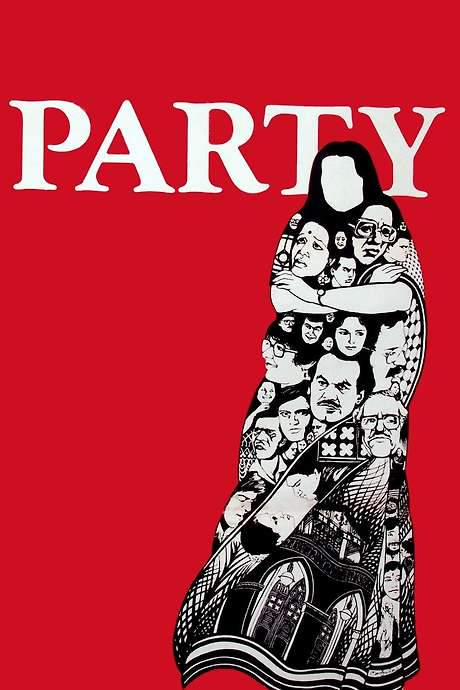
Party (1984) movie poster

Timeline

Party (1984) Timeline Explained – Every Event in Order

Release, runtime and language
1984 · 113 mins · Hindi
Loading streaming availability…
Directed by
Govind Nihalani
Starring
Naseeruddin Shah, Om Puri, Soni Razdan, Ila Arun, Benjamin Gilani, Srilekha

Celebrities flock to an opulent Bombay soirée held in tribute to Divakar’s contribution to the arts and cinema. Yet the night unravels as rumors spread, unexpected guests appear, and a dead body is discovered, threatening to ruin the celebration.

On this page (5)
  1. 1 Where to watch
  2. 2 Events in order (12)
  3. 3 Timeline questions answered
  4. 4 Movie threads
  5. 5 Every angle
Loading streaming availability…

12 events in order · contains spoilers

Party Timeline: Events in Chronological Order

Every key event of Party (1984) in order, scene by scene, with when and where it takes place. Use it to untangle flashbacks, time jumps and parallel storylines, to refresh your memory before the sequel or to find the exact scene you are thinking of.

  1. Damayanti Rane hosts an exclusive evening

    A rich widow hosts the gathering for urban patrons, filling the halls with art, privilege, and gossip. The air is thick with expectations as attendees size up each other and the night's implied bargains. The stage is set for a night where appearances will clash with unspoken truths.

    When
    Evening
    Where
    Damayanti Rane's residence
  2. Diwakar Barve receives the National Literary Award

    The room erupts in a toast as Barve is celebrated for his achievement, a moment that feels earned yet strategic. Behind the accolades, conversations buzz about how the award may reflect Damayanti's influence and the establishment's approval. The atmosphere is a mix of pride and suspicion.

    When
    Early evening
    Where
    Main hall
  3. Whispers about Barve's links to power

    A thread of rumors threads through the room, suggesting Damayanti's political clout helped Barve secure the prize or kept him within the establishment's good graces. Some patrons smile with satisfaction, others with wary skepticism. The discussion marks the first crack in the party's polished surface.

    When
    Early evening
    Where
    Near the library alcove
  4. Arts versus politics: cynicism of the elite

    Conversations turn sharply on whether art should resist or embrace power, and whether the party's glamour masks inequality. Attendees trade catty remarks and resigned sighs about a system that rewards status over substance. The sense of unease deepens as the night continues.

    When
    Mid-evening
    Where
    Reception hall
  5. Amrit emerges as the real winner in absentia

    Gradually the talk centers on Amrit, the talented writer-poet who left party life to work with tribal communities. Though not present, he is hailed as the true victor for embodying the ideals the gathering claims to admire. The conversation reframes the night around his principled choice and the distance between ideal and reality.

    When
    Mid-evening
    Where
    Throughout the party
  6. Amrit's absence becomes a moral presence

    The missing figure repeatedly returns in conversations as a moral touchstone, reminding guests of banality, deceit, and neglect of societal inequities. Attendees argue and rationalize, yet his absence haunts the room. The dialogue reveals how art is often used to comfort privilege while ignoring real injustice.

    When
    Mid to late evening
    Where
    Various rooms
  7. Artists' noble aim vs party’s petty calculations

    Discourses shift to the core aim of art: ennobling humanity, a standard many claim to uphold but rarely practice. In tone and memory, Amrit is invoked as the standard against which others measure their own vanity. The gulf between rhetoric and action becomes painfully obvious.

    When
    Late evening
    Where
    Main hall
  8. Tensions erupt as the night wears on

    The party devolves into cliques and competitive maneuvering, and the promise of meaningful art dissolves into social bargaining. Some guests pretend to champion Amrit's cause while others seize the opportunity to advance personal agendas. The atmosphere grows tense, with undercurrents of fear and anger.

    When
    Late evening
    Where
    Various rooms
  9. The harrowing moment: Amrit's murder by police

    As the party unfolds, the country’s heartlands become the stage for a brutal police killing described as the left-wing terrorist act against Amrit. The revelation shocks the attendees and reframes every prior conversation under the shadow of state violence. The moment feels like a rupture that exposes the society's true violence.

    When
    Late evening
    Where
    Heartland of the country
  10. Parallel events collide with the celebration

    News of Amrit's death travels through the party as the action continues, creating a gulf between words and reality. Attendees struggle to reconcile their previous judgments with the brutal truth of the murder. The party's celebratory mood collapses into uneasy silence.

    When
    Late evening
    Where
    Party venue
  11. Aftershocks and reflection

    The conversations falter as the murder sinks in, forcing the attendees to confront their complicity and the inequities they ignored. Some pledge reforms, others retreat into cynicism, and the space becomes haunted by what art should resist but failed to do. The narrative emphasizes that the powerful can shield privilege at the cost of human life.

    When
    Very late evening
    Where
    Reception area
  12. Art's true aim affirmed by tragedy

    The tale closes with a meditation that the ennobling of humanity remains art's highest aim, even when lived tragedy contradicts it. Amrit's memory serves as a moral compass for what the gathering should strive toward, and the film leaves the question bittersweet: will the world change or merely talk about it? The ending underscores the gap between ideals and reality.

    When
    End of party

Last updated: February 18, 2026 at 23:44

Was this helpful?

Timeline questions answered

Party Timeline Explained: Your Questions Answered

When does it happen, and why in that order? The questions people ask about the chronology of Party (1984): time jumps, flashbacks, cause and effect between scenes and the correct order of events, each answered with spoilers.

Q1

Why is Amrit considered the real winner despite not attending the party?

Amrit is considered the true winner because he embodies the ideals the party claims to celebrate, genuine art committed to social justice and human dignity. While Diwakar Barve receives the National Literary Award through what appears to be political maneuvering and establishment favoritism, Amrit actually sacrificed his literary career to live and work among tribal communities, using his art to serve the marginalized. His principled withdrawal from the urban art world makes him the moral victor in contrast to the self-serving attendees.

Foreshadowing: Early whispers about Barve's connections to Damayanti's political influence establish the corruption that makes Amrit's authenticity stand out.

  • amrit
  • diwakar barve
  • national literary award
  • moral victory
  • authentic art
Q2

Why was Amrit murdered by the police?

Amrit was killed by police and branded a "left-wing terrorist" in the film's devastating revelation. This reflects the historical reality of state violence against dissenting voices and writers in India during the 1970s-80s period. Amrit's work with tribal communities and his principled stand against exploitation made him a threat to those in power. His murder occurs roughly simultaneously with the party, symbolizing how the urban elite remain oblivious to the real violence happening in the nation's heartland while they debate abstract questions about art and responsibility.

Foreshadowing: The escalating discussions about art's role in society and the guests' discomfort with their own complicity foreshadow the revelation of state violence.

  • amrit murder
  • police killing
  • left-wing terrorist
  • state violence
  • dissent
Q3

Why does Damayanti Rane host this elaborate party?

Damyanti Rane hosts the party as a display of her wealth and influence as a patron of the arts. She is a wealthy middle-aged widow and renowned cultural figure in Bombay who uses her resources to bring together the city's elite. The party ostensibly celebrates Diwakar Barve's National Literary Award, but the gathering also serves as a platform for Damayanti to maintain her status and demonstrate her cultural capital. The rumors about her political connections suggest she uses both art and politics to consolidate power.

  • damayanti rane
  • patron of arts
  • host
  • elite gathering
  • social status
Q4

What is the connection between the party guests and Amrit?

The connection between the party guests and Amrit is one of guilt and rationalization. Most attendees invoke Amrit's name throughout the evening, some genuinely admiring his principled choices, others using his absence to bolster their own credentials. Amrit represents what they claim to value but fail to embody: art in service of humanity rather than art as social currency. Their repeated references to him reveal both genuine respect and performative guilt. The final revelation of his murder forces them to confront their complicity in a system that silences voices like his.

Foreshadowing: The mid-evening discussions about art versus politics establish Amrit as the moral standard against which all present are measured.

  • amrit
  • guests
  • connection
  • guilt
  • complicity
Q5

Why does the party happen at the same time as Amrit's murder?

The simultaneous timing is deliberately symbolic. While the cultural elite gather in Bombay's opulent interiors to celebrate artistic achievement, Amrit is being murdered in the country's heartland by the very state apparatus that some guests may暗中 support or depend upon. This parallel structure exposes the vast gulf between the party's bubble of privilege and the brutal reality faced by those genuinely committed to social change. The timing forces every guest to reckon with their disconnection from actual suffering.

Foreshadowing: Timeline events 9 and 10 explicitly show the parallel between the party's late evening and Amrit's murder.

  • simultaneous events
  • timing
  • murder parallel
  • privilege violence
Q6

What critique of the art establishment does the film make?

The film critiques the Indian art establishment for being hypocritical, self-serving, and disconnected from real social struggles. The party attendees claim to value art's ennobling purpose while simultaneously engaging in political maneuvering, social backbiting, and facilitating systems of power that perpetuate inequality. Their discussions about art versus politics ring hollow because they benefit from the very establishment they pretend to question. Amrit represents the path they could have taken but chose not to, genuine engagement over comfortable patronage.

  • art establishment critique
  • hypocrisy
  • elite
  • social responsibility
  • patronage
Q7

Why does the film have such a bleak ending?

The ending is bleak because the film's central tragedy remains unresolved, the murder of an innocent poet by state violence goes unpunished and unacknowledged by the party guests. Rather than catalyzing meaningful change, the revelation prompts varied reactions: some guests make vague pledges to do better, others retreat into cynicism, and the powerful continue their comfortable existence. The final meditation suggests art's ennobling purpose remains an ideal rarely achieved in practice. The gap between the party's pretensions and Amrit's fate represents a society that celebrates artistic achievement while silencing the voices that actually challenge injustice.

  • bleak ending
  • tragedy
  • resolution
  • social change
  • unresolved
Q8

Who is Diwakar Barve and why does he receive the award?

Diwakar Barve is a celebrated playwright who receives the National Literary Award at the party. While presented as a genuine achievement, the award is shrouded in controversy, guests whisper that Damayanti Rane's political connections helped secure the prize or kept Barve within the establishment's good graces. This ambiguity reflects the film's broader critique: literary honors often recognize conformity to power rather than genuine artistic merit or social conscience. Barve's presence at the party represents the success available to those who navigate institutional politics rather than challenge them.

  • diwakar barve
  • national literary award
  • playwright
  • establishment
Q9

Why did Amrit withdraw from the urban literary scene?

Amrit left the urban literary scene to live and work among tribal communities, giving up fame and comfort to directly engage with marginalized people. His withdrawal represents a conscious rejection of the art world's self-serving culture in favor of art that serves those outside it. This choice makes him the moral center of the film, he actually practices what the party guests merely talk about. His absence from the party is therefore meaningful: he has no interest in the social bargaining and status-seeking that defines the event.

  • amrit
  • tribal communities
  • withdrawal
  • artistic integrity
  • compromise
Q10

What role does politics play in the party's discussions?

Politics pervades the party through multiple layers: the guests debate whether art should resist or embrace power, rumors circulate about Damayanti's political influence over Diwakar's award, and the final revelation shows police killing a writer labeled a "left-wing terrorist." The party's polished surface cannot hide the political calculations behind every accolade and social alliance. The film suggests the art world is deeply entangled with political power, whether through direct connections like Damayanti's or through the state violence that eliminates dissenting voices like Amrit.

  • politics
  • art vs power
  • establishment
  • police
  • left-wing
Q11

What happens in the final moments of the film?

In the final moments, the shocking news of Amrit's murder reaches the party, shattering the celebratory atmosphere. The conversations falter as guests struggle to reconcile their earlier debates about art and responsibility with this brutal truth. Some make vague pledges to change, others retreat into cynicism, and the space becomes haunted by the contrast between what art should be and what it has become. The film closes with a meditation on art's true purpose, the ennobling of humanity, leaving viewers with the bittersweet question of whether genuine change is possible or whether the cycle of complicity will continue.

Foreshadowing: The mounting tension throughout the evening builds toward this collision between party illusions and reality.

  • final moments
  • amrit death
  • revelation
  • confrontation
  • aftermath
Q12

What does the single party setting represent in the film?

The confined party setting functions as a microcosm of Indian society, the glittering interiors represent urban privilege and cultural prestige, while the off-screen murder in the heartland represents the violence and inequality the elite ignore. By remaining in one location, the film emphasizes how the rich live in bubbles insulated from the real suffering happening across the country. The party's progression from elegant celebration to uncomfortable revelations mirrors society's ability to hold contradictory beliefs about art, justice, and responsibility without taking meaningful action.

  • party setting
  • microcosm
  • society
  • privilege
  • bubble

Movie threads

More Movies Like Party, by Mood & Story

Curated lists built around what makes Party tick: the same mood, the same kind of story or the same emotional payoff. Each list explains why these movies belong together.

Claustrophobic social thrillers like Party

High society gatherings where tension escalates behind a polished facade. If you enjoyed the tense, confined setting of Party, explore more movies like it. This list features films where a single social event unravels under the weight of secrets and hypocrisy, creating a similar atmosphere of claustrophobic dread.

  • claustrophobic
  • tense
  • satirical
  • unsettling
  • critical
  • melancholic
  • Tone: tense, cynical, unsettling
  • Pacing: steady, deliberate
Why these movies?

The story pattern: These narratives typically unfold in a single, opulent location like a party or dinner. The plot is driven by dialogue and character revelations rather than action, steadily building tension as secrets are exposed and social masks slip, often culminating in a dramatic or devastating climax.

Why they belong together: Movies in this thread share a focus on confined settings that amplify social and psychological tension. They use the contrast between surface-level civility and underlying corruption to create a pervasive sense of unease and critique societal structures.


Bleak exposés of moral decay like Party

Stories that pull back the curtain on corruption, leaving little hope. For viewers who appreciated Party's harsh critique of social and political hypocrisy, this list collects similar movies. These films share a heavy emotional weight and a bleak outlook, exploring themes of corruption and moral failure with unflinching honesty.

  • bleak
  • critical
  • melancholic
  • cynical
  • unsettling
  • heavy
  • Tone: bleak, critical, melancholic
  • Pacing: steady, methodical
Why these movies?

The story pattern: The emotional journey in these films is one of disillusionment. Characters, and by extension the audience, gradually discover the depth of corruption surrounding them. The arc is often downward, moving from a state of ignorance or complicity to a stark, hopeless awareness of systemic moral failure.

Why they belong together: These films are grouped by their shared purpose: to critically examine and expose societal ills like corruption, hypocrisy, and class disparity. They create a heavy, thought-provoking experience by presenting a world where integrity is crushed by cynicism.

Every angle

Party (1984) Explained: Plot, Timeline & Characters

Everything about Party in one place: what happens in the plot summary, the timeline in chronological order, the characters and meaning and a spoiler-free summary. What's After the Movie adds the cast, box office and post-credit scenes.

Coming soon on iOS and Android

The Plot Explained Movie Summary App

Plot summaries, endings explained and timelines on your phone. Catch up on any movie in minutes, save your favorites and never miss a twist again.

Be the first to know when we launch. Your email stays private, always.

Learn more about the app