Plot Explained Spoilers guaranteed!
Plot Explained

Browse by genre

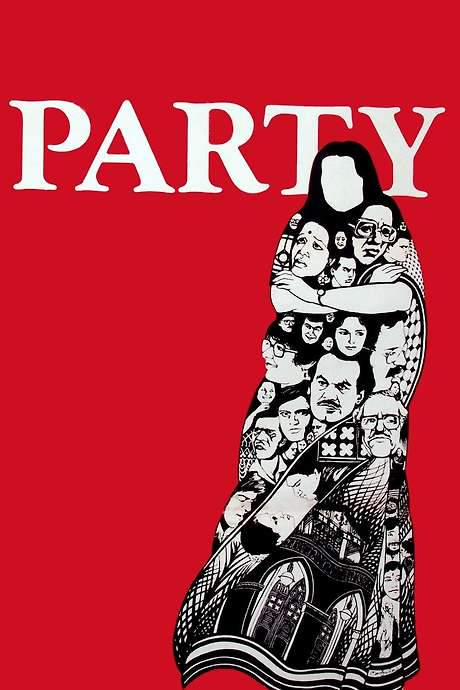
Party (1984) movie poster

Characters & Themes

Party (1984) Characters, Setting & Themes Explained

Release, runtime and language
1984 · 113 mins · Hindi
Loading streaming availability…
Directed by
Govind Nihalani
Starring
Naseeruddin Shah, Om Puri, Soni Razdan, Ila Arun, Benjamin Gilani, Srilekha

Celebrities flock to an opulent Bombay soirée held in tribute to Divakar’s contribution to the arts and cinema. Yet the night unravels as rumors spread, unexpected guests appear, and a dead body is discovered, threatening to ruin the celebration.

On this page (7)
  1. 1 Where to watch
  2. 2 Characters explained (5)
  3. 3 Where & when it takes place
  4. 4 Themes & meaning (4)
  5. 5 Character & meaning questions
  6. 6 Movie threads
  7. 7 Every angle
Loading streaming availability…

5 main characters · contains spoilers

Party Characters Explained: Who Is Who

The main characters of Party (1984), heroes and villains: what drives them, how they change over the course of the story and what each of them reveals about the film's bigger ideas.

  • Amrit (Naseeruddin Shah)

    A renowned writer-poet who withdrew from urban literary circles to live among a tribal community; his memory and ideals haunt the party’s conversations. Though not present, his influence acts as a moral touchstone challenging the room’s banality and deceit.

    • 🧠 Intellectual
    • 🎭 Visionary
    • 💬 Contemplative
  • Damyanti Rane (Vijaya Mehta)

    A wealthy, middle‑aged widow and renowned patron of the arts who hosts the gathering. Her political clout and status position her at the center of the room’s power dynamics, inviting scrutiny of who really benefits from cultural prestige.

    • 👑 Social power
    • 🎭 Patronage
    • 🗝️ Influence
  • Divakar Barve

    played by Manohar Singh

    A celebrated playwright who has just been awarded the National Literary Award; his achievement acts as the evening’s central catalyst. His presence triggers conversations about art, recognition, and the cost of artistic integrity.

    • 🎨 Artist
    • 🏆 Acclaimed
    • 🗣️ Catalyst
  • Ravindra "Ravi" (Shafi Inamdar)

    An attendee whose remarks reflect the room’s sharp, sometimes caustic observations. He embodies the social atmosphere where remarks reek of ambition and insecurity, contributing to the party’s tense undercurrents.

    • 💬 Attendee
    • 🗨️ Cynical
    • 🧭 Observer
  • Sona Rane (Deepa Sahi)

    A guest whose presence highlights the party’s social reach beyond the core cultural elite. Her demeanor and interactions contribute to the salon’s dynamics and the shifting tensions as the night unfolds.

    • 🌐 Social circle
    • 🫖 Insider
    • 🧩 Connector

Last updated: February 19, 2026 at 09:14

Was this helpful?

Setting

Where and When Does Party Take Place?

The setting of Party (1984): the year and time period, the places and locations, and how they shape the characters, the mood and the tension of the story.

Time period

Evening

The events take place over a single party-filled evening, moving from casual conversations to a brutal reckoning. The pacing relies on social dynamics and shifting loyalties rather than a fixed historical moment. The film contrasts glamorous urban life with looming consequences that spill into the country’s rural spaces.

Location

Metropolitan city, Rural heartland

The action unfolds at an opulent evening party in a metropolitan city, a hub of cultural prestige and social power. The venue is filled with art patrons, politicians, and journalists who shape taste and influence. As the night progresses, the narrative shifts from glamorous interiors to the stark rural heartland, highlighting the distance between urban privilege and the rest of the country.

  • 🏙️ Urban setting
  • 🌾 Rural landscape

Last updated: February 19, 2026 at 09:14

Was this helpful?

4 major themes

Party Meaning: Themes & Message Explained

What is Party (1984) really about? The emotional, social and philosophical themes the film keeps returning to, its symbolism and the message beneath the surface.

  • Power & Corruption

    The party exposes how political clout and cultural capital steer judgments and the distribution of prestige. Accusations about Damyanti’s influence reveal how art and awards can be entangled with power. The setting shows a world where success is negotiated through networks as much as merit, blurring lines between artistry and politics.

  • Art & Responsibility

    Amrit’s legacy acts as a moral touchstone despite his absence, prompting attendees to argue about what art owes society. The conversations insinuate responsibility beyond aesthetic prestige, questioning who benefits from literature. The murder underscores the peril artists face when dissent collides with authority.

  • Truth & Hypocrisy

    The party serves as a mirror for urban elites, exposing pretenses, banality, and competing loyalties. In the glare of polished illusions, people’s true motives emerge through sharp remarks and insinuations. The gathering forces a confrontation with the gap between stated values and real actions.

  • State Violence

    The revelation that Amrit has been murdered by the police signals how state power can silence dissent. The branding of Amrit as a 'left-wing terrorist' shows the use of ideology to justify brutal tactics. This moment reframes the party as a stage where political violence intrudes on culture and art.

Last updated: February 19, 2026 at 09:14

Was this helpful?

Character & theme questions

Party Characters & Meaning: Your Questions Answered

The questions people ask about Party (1984): who the characters really are, their relationships, what the symbols mean, where it takes place and what the movie is really about. Each answer contains spoilers.

Q1

Where is the party held and what does the setting represent?

The party takes place in a luxurious Bombay mansion belonging to Damyanti Rane, a wealthy art patron. The opulent urban setting represents the world of cultural prestige and political power, contrasting sharply with the rural heartland where Amrit chose to live among tribal communities. This contrast highlights the divide between urban elite privilege and the rest of India.

  • bombay setting
  • mansion party
  • urban elite
  • art patrons
Q2

When does the story take place?

The events unfold over a single evening, from casual cocktail conversations through to the brutal revelation at nightfall. While the film was released in 1984, the narrative is set in a contemporary period where urban literary and artistic circles interact with political figures and journalists.

  • single night
  • evening
  • contemporary setting
Q3

Who is Damyanti Rane and what is her role in the story?

Damyanti Rane is a wealthy, middle-aged widow and renowned patron of the arts who hosts the gathering in honor of Divakar Barve. Her political clout and social status position her at the center of the room's power dynamics, making her the gatekeeper of cultural prestige. She represents how wealth and connections shape who receives recognition in artistic circles.

  • damyanti rane
  • host
  • art patron
  • social power
Q4

Who is Amrit and why is he important despite being absent?

Amrit is a renowned writer-poet, played by Naseeruddin Shah, who withdrew from urban literary circles to live among a tribal community in the rural heartland. Though not physically present at the party, his memory and ideals serve as a moral touchstone throughout the evening. His legacy prompts attendees to confront questions about what art owes society and who truly benefits from cultural prestige.

  • amrit
  • writer poet
  • tribal community
  • moral compass
Q5

Who is Divakar Barve and why is he the center of attention?

Divakar Barve is a celebrated playwright who has just been awarded the National Literary Award, making him the guest of honor at the party. His achievement acts as the evening's central catalyst, triggering heated conversations about art, recognition, and the cost of artistic integrity. His presence forces the elite to confront their own relationship with success and legitimacy.

  • divakar barve
  • playwright
  • literary award
  • national award
Q6

What is the Power & Corruption theme about?

The film explores how political clout and cultural capital intertwine to steer judgments about art and influence the distribution of prestige. Accusations about Damyanti's influence reveal how art and awards can be entangled with power. The party showcases a world where success is negotiated through networks as much as merit, blurring the lines between artistry and politics.

  • power
  • corruption
  • politics
  • art awards
  • influence
Q7

What does the Art & Responsibility theme explore?

The theme examines what obligations artists have to society beyond creating aesthetically pleasing work. Amrit's legacy, through his absence, prompts attendees to argue about whether art should serve a social purpose. The conversations suggest that artists bear responsibility for who benefits from their work, especially when dissent collides with authority.

  • artist responsibility
  • social duty
  • literature
  • art and society
Q8

How does the film handle Truth & Hypocrisy?

The party serves as a mirror for urban elites, exposing their pretenses and banality. In the glare of polished social illusions, people's true motives emerge through sharp remarks and insinuations. The gathering forces a confrontation between stated values and actual behavior, revealing how the artistic elite preach ideals they do not practice.

  • hypocrisy
  • truth
  • elites
  • pretension
  • social facade
Q9

What does the State Violence theme reveal?

The revelation that Amrit has been murdered by the police signals how state power can silence dissent. The branding of Amrit as a 'left-wing terrorist' shows how ideological labels are used to justify brutal tactics against artists. This theme reframes the glamorous party as a stage where political violence intrudes upon culture and art.

  • police murder
  • state violence
  • censorship
  • political repression
  • terrorist label
Q10

What is the significance of the urban-rural contrast in the film?

The film contrasts the glamorous interiors of the Bombay party with the stark rural heartland where Amrit lived among tribal communities. This geographic divide represents the broader distance between urban privilege and the rest of the country. The party's decadence exists in sharp relief against the reality of rural life and the political violence that ultimately claims Amrit's life.

  • urban vs rural
  • class divide
  • india
  • social inequality

Movie threads

More Movies Like Party, by Mood & Story

Curated lists built around what makes Party tick: the same mood, the same kind of story or the same emotional payoff. Each list explains why these movies belong together.

Claustrophobic social thrillers like Party

High society gatherings where tension escalates behind a polished facade. If you enjoyed the tense, confined setting of Party, explore more movies like it. This list features films where a single social event unravels under the weight of secrets and hypocrisy, creating a similar atmosphere of claustrophobic dread.

  • claustrophobic
  • tense
  • satirical
  • unsettling
  • critical
  • melancholic
  • Tone: tense, cynical, unsettling
  • Pacing: steady, deliberate
Why these movies?

The story pattern: These narratives typically unfold in a single, opulent location like a party or dinner. The plot is driven by dialogue and character revelations rather than action, steadily building tension as secrets are exposed and social masks slip, often culminating in a dramatic or devastating climax.

Why they belong together: Movies in this thread share a focus on confined settings that amplify social and psychological tension. They use the contrast between surface-level civility and underlying corruption to create a pervasive sense of unease and critique societal structures.


Bleak exposés of moral decay like Party

Stories that pull back the curtain on corruption, leaving little hope. For viewers who appreciated Party's harsh critique of social and political hypocrisy, this list collects similar movies. These films share a heavy emotional weight and a bleak outlook, exploring themes of corruption and moral failure with unflinching honesty.

  • bleak
  • critical
  • melancholic
  • cynical
  • unsettling
  • heavy
  • Tone: bleak, critical, melancholic
  • Pacing: steady, methodical
Why these movies?

The story pattern: The emotional journey in these films is one of disillusionment. Characters, and by extension the audience, gradually discover the depth of corruption surrounding them. The arc is often downward, moving from a state of ignorance or complicity to a stark, hopeless awareness of systemic moral failure.

Why they belong together: These films are grouped by their shared purpose: to critically examine and expose societal ills like corruption, hypocrisy, and class disparity. They create a heavy, thought-provoking experience by presenting a world where integrity is crushed by cynicism.

Every angle

Party (1984) Explained: Plot, Timeline & Characters

Everything about Party in one place: what happens in the plot summary, the timeline in chronological order, the characters and meaning and a spoiler-free summary. What's After the Movie adds the cast, box office and post-credit scenes.

Coming soon on iOS and Android

The Plot Explained Movie Summary App

Plot summaries, endings explained and timelines on your phone. Catch up on any movie in minutes, save your favorites and never miss a twist again.

Be the first to know when we launch. Your email stays private, always.

Learn more about the app