Plot Explained Spoilers guaranteed!
Plot Explained

Browse by genre

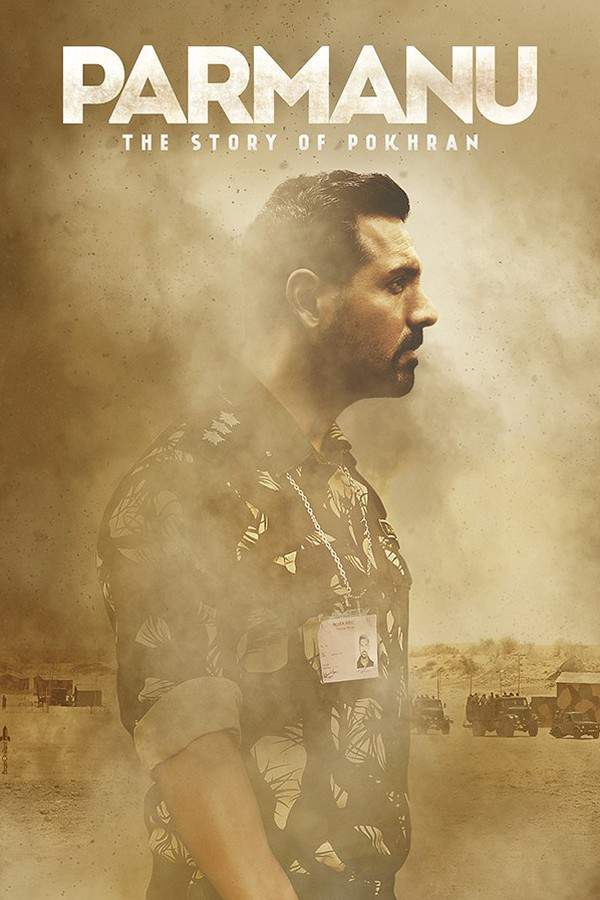
Parmanu: The Story of Pokhran (2018) movie poster

Timeline

Parmanu: The Story of Pokhran (2018) Timeline Explained – Every Event in Order

Release, runtime and language
2018 · 129 min · Hindi
Echo score 57
Directed by
Abhishek Sharma
Starring
Arush Nand, John Abraham, Zachary Coffin, Boman Irani, Mark Bennington, Diana Penty
Budget
$7.4M

In 1998, amidst rising global tensions, India secretly conducted nuclear tests in the Thar Desert. This film recounts the extraordinary and clandestine operation undertaken by a team of scientists, intelligence officers, and the military. Facing immense pressure and potential international repercussions, they race against time to prove India's capabilities and secure its place as a nuclear power. It's a thrilling account of courage, determination, and the high stakes involved in a pivotal moment in Indian history.

On this page (5)
  1. 1 Events in order (13)
  2. 2 Timeline questions answered
  3. 3 Movie threads
  4. 4 Movies like Parmanu: The Story of Pokhran
  5. 5 Every angle

13 events in order · contains spoilers

Parmanu: The Story of Pokhran Timeline: Events in Chronological Order

Every key event of Parmanu: The Story of Pokhran (2018) in order, scene by scene, with when and where it takes place. Use it to untangle flashbacks, time jumps and parallel storylines, to refresh your memory before the sequel or to find the exact scene you are thinking of.

  1. Collapse of the Soviet Union

    In 1995, the Soviet Union collapsed, leaving India without strong allies on the global stage. This geopolitical shift increased India's vulnerability, especially as neighboring Pakistan began solidifying its ties with the United States and China.

    When
    1995
  2. China's Nuclear Test

    As tensions increased, China conducted its 43rd nuclear test in 1995. Capt. Ashwat Rana recognized the threat this posed to India and began devising a plan to conduct nuclear tests to strengthen India's defense capabilities.

    When
    1995
  3. Failed Nuclear Test Preparation

    Despite creating a careful strategy, Ashwat's plans to conduct nuclear tests in 1995 were thwarted when his superior disregarded his warnings about potential leaks. US satellites identified the preparations, leading to the tests' cancellation and Ashwat's disgrace.

    When
    1995
  4. Ashwat's Dismissal

    Following the failed nuclear test preparations, Ashwat was scapegoated and subsequently dismissed from his position. He settled in Mussoorie with his family, grappling with the burden of his professional failures and its impact on family life.

    Where
    Mussoorie
  5. Political Shift in 1998

    In 1998, a significant political change occurred with the rise of the Vajpayee government. This shift brought key figures to power, including Himanshu Shukla, who sought to rectify past failures and strategize new nuclear tests.

    When
    1998
  6. Reconvening the Team

    Himanshu Shukla, recognizing the need for Ashwat's expertise, reached out to him to assemble a new team. Ashwat successfully recruited experts from various agencies, including the Indian Space Agency and BARC, to begin the preparations for nuclear tests.

  7. Plans at Pokhran Fort

    The team gathered at Pokhran Fort, where Ashwat outlined their ambitious goal: to conduct six nuclear bomb tests in thirty days. Major Prem Singh played a crucial role in using existing infrastructure to optimize their operations within schedule.

    Where
    Pokhran Fort
  8. Political Pressure and Setbacks

    As preparations progressed, the Vajpayee government faced pressure from coalition allies, jeopardizing their nuclear strategy. In a race against time, Ashwat had to convince Himanshu to proceed with the tests before a potential no-confidence motion could derail their plans.

  9. Under Surveillance

    While working on the tests, Ashwat and his team were shadowed by a Pakistani spy and a CIA operative. Their espionage efforts added pressure to the team, complicating the already challenging operational environment.

  10. Family Turmoil

    During this critical time, Ashwat faced personal challenges as his wife Sushma confronted him about his familial neglect. This emotional turmoil was compounded by the risk of their communications being intercepted during the nuclear preparations.

  11. Crafting a Deceptive Strategy

    To safeguard their preparations from US surveillance, Ashwat devised a clever ruse suggesting an imminent attack on Pakistan. This deception was crucial in diverting attention away from their actual nuclear test operations.

  12. Success of the Tests

    Finally, on May 11, 1998, Ashwat and his team successfully conducted the nuclear tests, marking India's entry into the nuclear club. This monumental achievement occurred at 3:45 PM amidst numerous challenges, showcasing both political strategy and determination.

    When
    May 11, 1998, 3:45 PM
    Where
    Pokhran
  13. Historical Impact

    The successful tests had profound implications for India's status globally, altering the balance of power in South Asia. The events explored in the film highlight not just a monumental historical milestone but also the intricate personal sacrifices behind national decisions.

Last updated: October 25, 2024 at 09:42

Was this helpful?

Timeline questions answered

Parmanu: The Story of Pokhran Timeline Explained: Your Questions Answered

When does it happen, and why in that order? The questions people ask about the chronology of Parmanu: The Story of Pokhran (2018): time jumps, flashbacks, cause and effect between scenes and the correct order of events, each answered with spoilers.

Q1

Why was Captain Ashwat Rana scapegoated after the 1995 nuclear test failure?

Ashwat Rana was scapegoated because his superior Suresh Yadav ignored his warnings about maintaining secrecy. When US satellites detected the preparations, the government needed someone to blame. Ashwat was dismissed and sent to Mussoorie, while his superior faced no consequences, despite Ashwat's careful warnings about satellite surveillance.

Foreshadowing: The 1995 failure establishes Ashwat's expertise and the political risks he would face again.

  • ashwat rana
  • scapegoated
  • 1995
  • nuclear test failure
  • dismissal
  • us satellites
Q2

How did the US detect India's nuclear preparations in 1995?

The US detected India's nuclear preparations through satellite surveillance. Ashwat Rana had warned his superiors that any leaks would prompt an American attack, but his superior ignored these cautions. US satellites spotted the test site preparations, leading to the humiliating cancellation of the planned tests.

Foreshadowing: This failure teaches the team the critical importance of satellite evasion in 1998.

  • us satellites
  • detection
  • 1995
  • surveillance
  • nuclear preparations
  • cancelled tests
Q3

Why did the Vajpayee government approach Ashwat Rana in 1998?

The Vajpayee government needed Ashwat's expertise because the 1995 attempt had failed catastrophically. Himanshu Shukla, appointed as Principal Secretary to the PM, recognized that only Ashwat understood how to evade US satellite surveillance and coordinate the complex scientific and intelligence aspects of the operation.

Foreshadowing: The political shift in 1998 creates the opportunity for Ashwat's redemption.

  • vajpayee government
  • himanshu shukla
  • ashwat rana
  • 1998
  • expertise
  • nuclear tests
Q4

How did Ashwat Rana evade US satellite surveillance during the Pokhran tests?

Ashwat devised a clever ruse by suggesting an impending attack on Pakistan. This false intelligence successfully diverted US satellite surveillance away from Pokhran, giving the team the critical time needed to finalize their preparations and conduct the tests.

Foreshadowing: Ashwat's experience with the 1995 failure directly informs this deception strategy.

  • ashwat rana
  • us satellite
  • surveillance
  • evasion
  • pakistan attack
  • deception
  • pokhran
Q5

Why were the nuclear tests conducted at exactly 3:45 PM on May 11, 1998?

The timing was critical because Major Prem Singh and the team specifically planned the tests to coincide with satellite blind spots. The exact 3:45 PM timing was calculated to minimize detection by American surveillance systems while maximizing the operational window available to the team.

Foreshadowing: Earlier timeline discussions emphasize the importance of satellite blind spots.

  • 3:45 pm
  • may 11 1998
  • timing
  • satellite blind spots
  • nuclear tests
  • pokhran
Q6

What roles did BARC and DRDO play in the Pokhran nuclear tests?

Dr. Viraf Wadia from BARC (Bhabha Atomic Research Centre) was responsible for bomb construction, while Dr. Naresh Sinha from DRDO (Defence Research and Development Organisation) handled the explosives. These two scientists formed the core scientific component of the six-bomb test operation.

Foreshadowing: Ashwat's team recruitment specifically targets experts from these key agencies.

  • barc
  • drdo
  • viraf wadia
  • naresh sinha
  • bomb construction
  • explosives
  • pokhran
Q7

How did the Pokhran team hide from CIA and Pakistani intelligence?

The team operated under intense espionage pressure from both a Pakistani spy and CIA operative Daniel. Beyond the fake Pakistan attack ruse, Capt. Ambalika Bandopadhyay from RAW managed security and mission secrecy. The team worked in shifts and used the remote Pokhran Fort location to minimize detection.

Foreshadowing: The presence of foreign intelligence is established early as a major threat.

  • cia
  • pakistani spy
  • raw
  • espionage
  • surveillance
  • ambalika bandopadhyay
  • pokhran fort
Q8

Why did coalition allies withdraw support from the Vajpayee government during the operation?

Coalition allies withdrew support, creating a political crisis that threatened to derail the nuclear tests. A no-confidence motion was imminent, which would have replaced the government and likely canceled the operation. Ashwat convinced Himanshu Shukla to proceed before this political shift could happen.

Foreshadowing: Political instability creates the urgent race-against-time element of the story.

  • vajpayee
  • coalition allies
  • no-confidence motion
  • political pressure
  • himanshu shukla
Q9

What was the significance of the sunken wells at Pokhran Fort?

Major Prem Singh identified existing sunken wells at Pokhran Fort that could be utilized for the nuclear tests. This pre-existing infrastructure saved significant time and allowed the team to conduct six nuclear bomb tests within the tight thirty-day window by optimizing their operational setup.

Foreshadowing: Prem's logistical expertise is highlighted during the Pokhran Fort planning meeting.

  • sunken wells
  • major prem singh
  • pokhran fort
  • infrastructure
  • logistics
  • thirty days
Q10

Why did India decide to conduct nuclear tests in 1998?

After the Soviet Union collapsed in 1995, India lost its powerful ally and became strategically vulnerable. Pakistan aligned with the US and China, while western powers pressured India with one-sided agreements. China's 43rd nuclear test in 1995 further intensified the threat, prompting India to demonstrate its nuclear capabilities.

Foreshadowing: The geopolitical context establishes India's urgent need for nuclear deterrence.

  • india
  • nuclear tests
  • 1998
  • soviet union
  • pakistan
  • china
  • nuclear club
  • security

Movie threads

More Movies Like Parmanu: The Story of Pokhran, by Mood & Story

Curated lists built around what makes Parmanu: The Story of Pokhran tick: the same mood, the same kind of story or the same emotional payoff. Each list explains why these movies belong together.

Thrilling historical missions like Parmanu: The Story of Pokhran

Thrilling accounts of clandestine, high-risk operations that changed history. If you enjoyed the secretive mission and historical triumph in Parmanu: The Story of Pokhran, explore these movies based on real-life covert operations. Discover stories of high-stakes teamwork, espionage threats, and the race to pull off impossible-seeming feats that shaped world events.

  • tense
  • clandestine
  • patriotic
  • methodical
  • urgent
  • high-stakes
  • Tone: tense, patriotic, urgent
  • Pacing: fast, methodical
Why these movies?

The story pattern: The narrative follows a clear mission objective, often based on true events, where a specialized team must operate in secrecy against near-impossible odds. The story is driven by a ticking clock, external surveillance threats, and complex execution, building tension towards a definitive, historically significant climax.

Why they belong together: Movies in this thread are grouped by their shared foundation in real-world events, their emphasis on procedural detail, and the intense, patriotic tension of a clandestine operation. They deliver a satisfying blend of historical education and edge-of-your-seat thriller pacing.

Procedural race-against-time movies like Parmanu: The Story of Pokhran

Methodical teams solving complex problems under immense deadline pressure. Fans of the detailed planning and high-pressure execution in Parmanu: The Story of Pokhran will appreciate these procedural thrillers. Find movies that focus on smart teams, intricate logistics, and the gripping tension of a mission where every second counts and failure is not an option.

  • tense
  • methodical
  • urgent
  • team effort
  • race against time
  • high-pressure
  • Tone: tense, anxious, focused
  • Pacing: fast, methodical
Why these movies?

The story pattern: The narrative structure is defined by a clear, complex goal and the detailed, often technical, steps required to achieve it. Conflict arises from tight deadlines, logistical failures, and external pressures that test the team's expertise and resolve, creating a satisfying intellectual and emotional payoff.

Why they belong together: These films are united by their focus on 'how' something difficult is accomplished. The shared experience is one of intellectual engagement with the process, combined with the visceral tension of a deadline, making the eventual success feel earned and deeply satisfying.

If you liked this

Movies Like Parmanu: The Story of Pokhran

Similar movies to Parmanu: The Story of Pokhran: the same genre, themes or kind of story. Each one comes with its own plot summary, timeline and ending explained.

Browse all movie summaries

Every angle

Parmanu: The Story of Pokhran (2018) Explained: Plot, Timeline & Characters

Everything about Parmanu: The Story of Pokhran in one place: what happens in the plot summary, the timeline in chronological order, the characters and meaning and a spoiler-free summary. What's After the Movie adds the cast, box office and post-credit scenes.

Coming soon on iOS and Android

The Plot Explained Movie Summary App

Plot summaries, endings explained and timelines on your phone. Catch up on any movie in minutes, save your favorites and never miss a twist again.

Be the first to know when we launch. Your email stays private, always.

Learn more about the app