Year: 1969
Runtime: 123 mins
Language: Bengali, Bangla
Director: Ajoy Kar
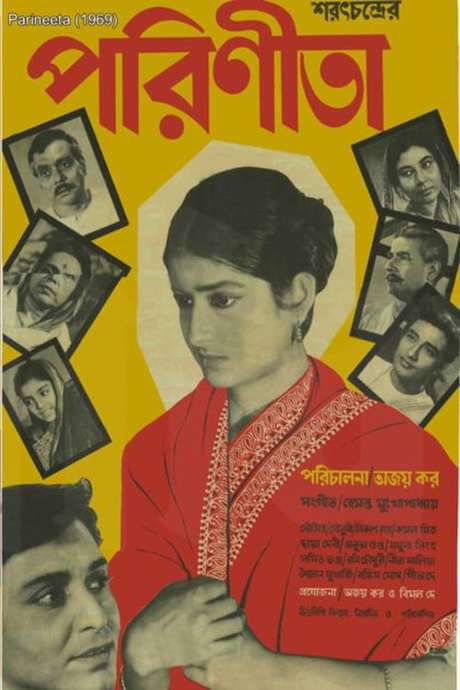
Ajoy Kar’s 1969 film adaptation of Sarat Chandra Chatterjee’s 1914 novel, ‘Parineeta’.
Warning: spoilers below!
Haven’t seen Parineeta yet? This summary contains major spoilers. Bookmark the page, watch the movie, and come back for the full breakdown. If you're ready, scroll on and relive the story!
Trace every key event in Parineeta (1969) with our detailed, chronological timeline. Perfect for unpacking nonlinear stories, spotting hidden connections, and understanding how each scene builds toward the film’s climax. Whether you're revisiting or decoding for the first time, this timeline gives you the full picture.
Last updated: October 05, 2025 at 11:23
Find frequently asked questions about the Parineeta (1969) timeline, including chronological order, nonlinear jumps, cause-and-effect links, and scene sequence clarifications. This timeline FAQ helps explain when key events happen, how moments connect, and why the story unfolds in that specific order.
Lalita and Shekhar married in secret because their union violated social norms. Shekhar was a wealthy, educated attorney while Lalita was a poor orphan under his family's care. A formal marriage would have been socially unacceptable due to their class difference and the fact that Lalita was technically a ward in the household. The garland exchange was a simple ceremony that symbolized their commitment to each other while allowing them to avoid the scrutiny and disapproval of their community.
Early in their relationship, Shekhar's possessiveness and the class tension between their families hinted at the obstacles their marriage would face.
Gurucharan adopted Brahmoism as a form of rebellion against the very social norms that condemned his niece's marriage. Brahmoism was a reform movement that rejected caste distinctions and idol worship, contrasting sharply with orthodox Hindu society. By converting, Gurucharan symbolically distanced himself from a community that had rejected his family, though this choice only further isolated them from their neighbors and relatives.
Girin's influence and advice had already begun challenging traditional perspectives within the household.
Girin married Annakali because Lalita had already secretly married Shekhar and claimed to be a wife. When Gurucharan lay dying, he asked Girin to become his son-in-law and care for the family. Lalita, believing her secret marriage to Shekhar was invalid due to the social obstacles, told Girin she was already married. Honoring his promise to Gurucharan, Girin married Lalita's cousin Annakali instead, fulfilling the letter of his vow while respecting Lalita's claim.
Lalita's secret marriage and her claim of being already wed created the misunderstanding that led Girin to choose Annakali.
On his deathbed, Gurucharan asked Girin to become his son-in-law and take responsibility for Lalita's future. He wanted someone to protect and provide for his family, especially Lalita, whom he had raised as his own daughter. Girin agreed to this arrangement, promising to marry into the family and care for them. However, the specific bride was left ambiguous, which later led to the misunderstanding when Lalita claimed she was already married.
This dying wish set in motion the chain of events that defined the story's final act.
Lalita hid as a spinster because her secret marriage to Shekhar could not be publicly acknowledged. Since Shekhar was away and the marriage had no legal or social standing given their class difference, Lalita maintained the appearance of being unmarried to protect herself from social disgrace. This pretense also allowed her to remain under Gurucharan's roof without bringing additional shame to the family during their period of ostracism.
The secret garland ceremony inherently required Lalita to conceal her true marital status.
The family faced ostracism primarily because Lalita's secret marriage to Shekhar violated Hindu social conventions. Additionally, Gurucharan's conversion to Brahmoism further alienated them from traditional Hindu society. The combination of an improper marriage and religious reform was too much for their community to accept, leading neighbors and relatives to distance themselves, cutting off social ties and support.
The story established early that society closely monitored proper marriage customs and religious traditions.
The mortgaged plot of land remained a point of contention throughout the story. Gurucharan had borrowed money from neighbor Nabin Roy, using the land as collateral. After both Gurucharan and Nabin Roy died, Lalita returned years later to sell Gurucharan's house to Nabin Roy's heirs to fulfill her uncle's wishes. The legal documents regarding this property transaction prompted Girin to visit Shekhar, leading to the final revelations.
The mortgage arrangement introduced Nabin Roy's covetous nature toward the land from the very beginning.
Shekhar hesitated because he believed Lalita was bound by Girin's promise to marry her. When Lalita returned as an eighteen-year-old, Shekhar had his own forthcoming marriage arranged to someone else. He was torn between his continuing feelings for Lalita and the belief that Girin had already claimed her through the arrangement with Gurucharan. The rumor of the old arrangement and Girin's position as son-in-law made him doubt whether he could pursue her.
Shekhar's possessiveness had earlier created tension with Girin's involvement in Lalita's life.
After learning the truth that Girin had married Annakali instead of Lalita, and that Shekhar had actually been married to Lalita all along, Bhubaneswari Devi gave her consent for their union. She had always loved Lalita like a daughter and had previously accepted her as a ward. The revelation cleared the path for the marriage to be officially recognized, and she blessed their union, allowing the story to end with family approval.
Bhubaneswari's longstanding affection for Lalita foreshadowed her eventual acceptance.
Lalita returned as an eighteen-year-old to sell Gurucharan's house to Nabin Roy's heirs. This journey was motivated by her desire to honor her uncle's final wishes and settle his affairs. The sale would also provide financial closure to the family after years of hardship. Her return coincidentally coincided with Shekhar's arranged marriage, setting the stage for the final revelations and reconciliation.
Gurucharan's death and the unfinished business of the estate had been established earlier.
Shekhar became jealous of Girin because Lalita's life became increasingly entwined with Girin's supportive presence. Girin helped stabilize Gurucharan's finances and offered practical support to the family, which shifted Lalita's attention and gratitude toward him. Shekhar, who had a possessive nature toward Lalita, resented this influence and feared losing her to Girin, even though Girin's intentions were honorable and centered on helping the family.
Shekhar's earlier possessiveness established his tendency to feel threatened by other male influences in Lalita's life.
Discover curated groups of movies connected by mood, themes, and story style. Browse collections built around emotion, atmosphere, and narrative focus to easily find films that match what you feel like watching right now.
Passionate love stories tested by rigid class divides and family obligations.Explore movies like Parineeta, where love is challenged by class differences and family expectations. These tender yet dramatic stories focus on characters navigating the complex rules of their society, often set in historical periods where tradition holds immense power.
Stories in this thread typically follow lovers from different social or economic backgrounds whose relationship is forbidden. The plot revolves around the external pressures—from family, community, or religious institutions—that seek to keep them apart. The narrative arc often involves secret meetings, painful sacrifices, and a climactic moment where love either triumphs over or is defeated by societal constraints.
Movies are grouped here for their shared focus on the intense emotional conflict between passionate, genuine love and the unyielding weight of social norms. They share a melancholic yet romantic tone, a slow-to-steady pacing that allows for deep emotional development, and a central theme of yearning for a freedom that society denies.

Stories where a gentle, melancholic mood gives way to a deeply earned resolution.Find more films that share the gentle, melancholic atmosphere of Parineeta. These movies move at a contemplative pace, exploring serious themes like loss and obligation, but ultimately guide their characters toward a hard-won, fulfilling resolution that feels genuinely earned.
The narrative pattern involves characters facing significant but not traumatic emotional challenges—such as financial strain, social estrangement, or familial duty. The story unfolds slowly, focusing on internal emotional states and quiet interpersonal dynamics rather than high-stakes action. A central misunderstanding or societal pressure creates tension, which is resolved in a finale that provides closure and happiness, but leaves a lingering echo of the sadness that preceded it.
These films are grouped by their distinctive emotional mix: a primary tone of gentle melancholy, a slow, deliberate pacing that allows for reflection, and a narrative structure that builds towards a happy ending that feels meaningful because of the struggles overcome. They offer a medium emotional weight, providing depth without heaviness.
Don't stop at just watching - explore Parineeta in full detail. From the complete plot summary and scene-by-scene timeline to character breakdowns, thematic analysis, and a deep dive into the ending - every page helps you truly understand what Parineeta is all about. Plus, discover what's next after the movie.
Read a complete plot summary of Parineeta, including all key story points, character arcs, and turning points. This in-depth recap is ideal for understanding the narrative structure or reviewing what happened in the movie.
Discover the characters, locations, and core themes that shape Parineeta. Get insights into symbolic elements, setting significance, and deeper narrative meaning - ideal for thematic analysis and movie breakdowns.
Discover movies like Parineeta that share similar genres, themes, and storytelling elements. Whether you’re drawn to the atmosphere, character arcs, or plot structure, these curated recommendations will help you explore more films you’ll love.
Parineeta (1969) Plot Summary & Movie Recap
Parineeta (1969) Scene-by-Scene Movie Timeline
Parineeta (1969) Spoiler-Free Summary & Key Flow
Movies Like Parineeta – Similar Titles You’ll Enjoy
Amar Aponjon (2017) Full Movie Breakdown
Chokher Bali (2003) Detailed Story Recap
Parineeta (2005) Complete Plot Breakdown
Parzania (2005) Movie Recap & Themes
Parivaar (1987) Story Summary & Characters
Parinda (1989) Complete Plot Breakdown
Srikanto (1000) Complete Plot Breakdown
Pari (1995) Film Overview & Timeline
Parwana (1971) Full Movie Breakdown
Parichay (1972) Film Overview & Timeline
Sagarika (1956) Film Overview & Timeline
Parineeta (1953) Complete Plot Breakdown
Devdas (1936) Ending Explained & Film Insights
Parvathy Parinayam (1995) Film Overview & Timeline
Parthan Kanda Paralokam (2008) Story Summary & Characters