Plot Explained Spoilers guaranteed!
Plot Explained

Browse by genre

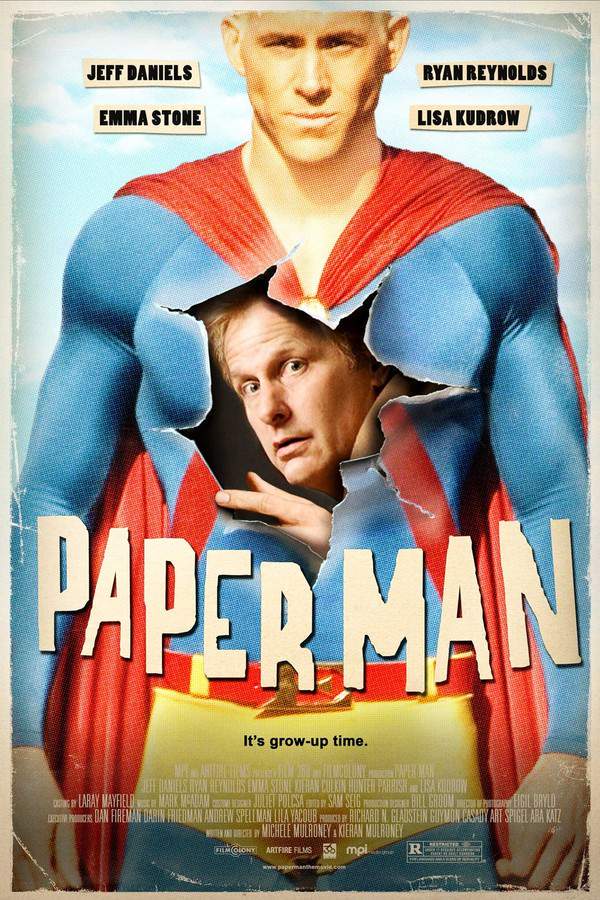
Paper Man (2010) movie poster

Timeline

Paper Man (2010) Timeline Explained – Every Event in Order

Release, runtime and language
2010 · 110 min · English
Loading streaming availability…
Directed by
Kieran Mulroney, Michele Mulroney

A novelist experiencing writer's block and a teenager mourning a family tragedy find solace in an unexpected friendship. Richard uses his childhood superhero persona, Captain Excellent, to navigate his struggles, while Abby seeks connection and understanding. As they spend time together, both find themselves searching for a way to move forward and rediscover a sense of purpose.

On this page (6)
  1. 1 Where to watch
  2. 2 Events in order (12)
  3. 3 Timeline questions answered
  4. 4 Movie threads
  5. 5 Movies like Paper Man
  6. 6 Every angle
Loading streaming availability…

12 events in order · contains spoilers

Paper Man Timeline: Events in Chronological Order

Every key event of Paper Man (2010) in order, scene by scene, with when and where it takes place. Use it to untangle flashbacks, time jumps and parallel storylines, to refresh your memory before the sequel or to find the exact scene you are thinking of.

  1. Richard and Claire move to a Long Island winter retreat

    Richard, a failed novelist, relocates with his wife Claire to a Long Island beach town to escape writer's block. He continues to consult his imaginary superhero friend Captain Excellent, who voices guidance and skepticism about his decisions. The move places them in a quiet, isolating setting that sets the stage for the unusual relationships to unfold.

    When
    Winter
    Where
    Long Island beach community
  2. Richard meets Abby and hires her as a babysitter

    On a town ride, Richard notices 17-year-old Abby lighting a fire in a trash can for no clear reason. He impulsively hires her as a weekly babysitter, despite having no children of his own. The encounter begins a tentative, unconventional bond that becomes the engine of the film's events.

    When
    early on
    Where
    town streets / around Richard's house
  3. Abby's first babysitting and Captain Excellent's guidance

    Abby arrives for her first babysitting session and Richard reveals he has no kids. Abby accepts the arrangement with ease, and Richard retreats to the pier to discuss his options with Captain Excellent. The imaginary mentor reinforces that Richard struggles to make solid decisions without his input.

    When
    shortly after first meeting
    Where
    Richard's house and the pier
  4. Abby prepares soup and Richard contemplates her hands

    When Richard returns home, he discovers Abby has made soup, a simple act that moves him because he struggles to do things with his own hands. He decides to hire Abby again for the next week, even as Captain Excellent warns this will lead to trouble. The scene highlights Richard's longing for tangible handiwork and connection.

    When
    subsequent week
    Where
    Richard's kitchen
  5. Growing bond and shared confidences

    Richard and Abby develop a father-daughter-like relationship. Abby tells him about the death of her twin sister Amy, and Richard confides in her about his failing marriage. The exchange deepens their dependency on each other and intensifies the complicated dynamics.

    When
    over several weeks
    Where
    various
  6. Christopher, Abby's imaginary friend, watches

    Christopher, Abby's imaginary friend since Amy's death, observes their relationship and feels neglected. He reveals that his priority is Abby's happiness, even if that happiness means stepping back. The dynamic adds a surreal layer to the evolving bond.

    When
    ongoing
    Where
    Abby's imagination
  7. A drunken party exposes tensions

    Richard hosts a drunken party for local high school students that spirals out of control. Abby's boyfriend punches Richard, and the house is left in disarray. The incident destabilizes their fragile arrangement and foreshadows deeper conflicts.

    When
    one night
    Where
    Richard's house
  8. Morning confrontation with Claire

    The party ends with Abby and Richard asleep on a couch, and Claire discovers them the next morning. A heated confrontation follows, during which Richard blames Claire for not having children. Claire reveals that the choice to remain childless was Richard's own decision.

    When
    morning after party
    Where
    Richard's house
  9. Imaginary friends disappear; note sent

    Abby and Richard lose their imaginary friends as the bond fractures. Richard writes and sends Abby a note and begins to retreat from their relationship to focus on his marriage. The loss of fantasy guidance marks a turning point toward separation.

    When
    after party
    Where
    home
  10. Richard faces a crossroads

    Without Captain Excellent's driving influence, Richard must decide whether to pursue reconciliation with Claire or to cling to the now fragile connection with Abby. He recognizes that his life is at a turning point. The story frames his decision through his own introspection and the fading imaginary voices.

    When
    post-note
    Where
    Long Island house
  11. Resolution: Richard attempts to rebuild his marriage

    Richard returns to attempt to rebuild his relationship with Claire, signaling a shift away from his alice-in-wonderland dynamics. Abby's withdrawal from the fantasy world underscores the seriousness of their choices. The narrative closes with the couple trying to reclaim normalcy and responsibility.

    When
    closing
    Where
    Long Island
  12. Captain Excellent's ongoing presence

    Captain Excellent continues to exist as a voice of temptation and guidance, reminding Richard that real decisions require more than heroism. The imaginary friend symbolizes the conflict between aspiration and responsibility throughout the story.

    When
    throughout
    Where
    inner voice

Last updated: November 22, 2025 at 15:58

Was this helpful?

Timeline questions answered

Paper Man Timeline Explained: Your Questions Answered

When does it happen, and why in that order? The questions people ask about the chronology of Paper Man (2010): time jumps, flashbacks, cause and effect between scenes and the correct order of events, each answered with spoilers.

Q1

Why does Richard hire Abby as a babysitter when he has no children?

Richard hires Abby on impulse after seeing her light a fire in a trash can. The sight of her sparks something unexpected in him, perhaps a recognition of raw, unguarded emotion that he feels lacking in his own life. Though he has no children, he's desperate for connection and purpose, and hiring her creates a reason for her to return. It's less about needing a babysitter and more about creating a tether to something living and real.

Foreshadowing: The initial hiring sets the entire unconventional relationship in motion, establishing the film's theme of seeking meaning through manufactured connections.

  • Richard
  • Abby
  • babysitter
  • connection
  • purpose
Q2

What is Captain Excellent and why does Richard still have an imaginary friend?

Captain Excellent is Richard's childhood superhero imaginary friend who persists into adulthood as a voice in his head. He represents Richard's internal guide, sometimes encouraging, sometimes critical, that helps him navigate decisions. The film uses Captain Excellent as a narrative device to externalize Richard's inner conflict between wanting to be heroic and being paralyzed by inadequacy. His continued presence signals that Richard has never fully matured past his fantasies.

Foreshadowing: Captain Excellent appears throughout, particularly at key decision points, reinforcing that Richard relies on imagined heroism rather than real action.

  • Captain Excellent
  • imaginary friend
  • Richard
  • inner voice
  • guidance
Q3

Why does Abby light the fire in the trash can when Richard first sees her?

The trash can fire is Abby's act of rebellion and grief, a way to channel her pain into something visible and destructive. Having lost her twin sister Amy, she struggles with overwhelming emotions she can't express normally. The fire represents her inner turmoil breaking out, and it's the raw emotion of this moment that draws Richard to her. He's drawn to the same kind of释放 he needs in his own stagnating life.

Foreshadowing: This moment establishes Abby as someone who acts from emotional impulse, foreshadowing the chaotic events that follow.

  • Abby
  • fire
  • trash can
  • grief
  • rebellion
Q4

What happened to Abby's sister Amy and how does it affect her?

Abby's twin sister Amy died, and this loss is the defining trauma of her life. The death has left Abby unable to fully engage with reality, which is why she still has an imaginary friend named Christopher. Her grief manifests as emotional detachment and impulsive behavior. She tells Richard about Amy's death during one of their conversations, revealing that the loss has made her feel incomplete and searching for connection wherever she can find it.

Foreshadowing: The death explains Abby's emotional fragility and her readiness to form an intense bond with Richard, as she's seeking the closeness she lost.

  • Abby
  • Amy
  • twin sister
  • death
  • grief
  • Christopher
Q5

Why does Claire reveal that Richard chose not to have children?

During the confrontation after finding Richard and Abby asleep together, Richard accuses Claire of depriving him of children, saying his family name will die with him. Claire's retort, that it was his choice not to have kids, reveals a deeper marital wound. This truth shocks both Richard and the audience, showing that Richard's failures and bitterness have been misdirected at his wife. It forces Richard to confront his own cowardice and tendency to blame others for his circumstances.

Foreshadowing: This revelation exposes the true source of Richard's resentment, suggesting his entire identity crisis stems from unacknowledged personal choices.

  • Claire
  • children
  • Richard
  • choice
  • marriage
  • confrontation
Q6

What leads to Richard and Abby falling asleep together on the couch?

The sleeping together results from a chaotic night: Richard hosts a drunken party for local high school students that spirals out of control, Abby's boyfriend punches Richard, the house is left in disarray, and by dawn both exhausted people collapse on the couch. It's not a romantic moment, it's two emotionally vulnerable people seeking comfort in the wreckage. The proximity blurs boundaries and becomes the catalyst for Claire's discovery and the subsequent confrontation.

Foreshadowing: This event marks the turning point where the relationship crosses from platonic companionship into something that threatens all three main characters.

  • Richard
  • Abby
  • party
  • couch
  • Claire
  • confrontation
Q7

Why do Richard and Abby lose their imaginary friends?

Richard and Abby both lose their imaginary friends, Captain Excellent and Christopher, after the night of the party and confrontation. The loss signals a rupture in their fantasy-driven coping mechanisms. As their bond becomes more complicated and crosses boundaries they can't justify even to themselves, the imaginary voices that sustained their separate worlds fall silent. This represents their forced return to reality and the need to face genuine choices rather than retreat into fantasy.

Foreshadowing: The disappearance marks the end of their protective fantasies and the beginning of real, difficult decisions.

  • Captain Excellent
  • Christopher
  • imaginary friends
  • loss
  • reality
  • fantasy
Q8

What does Richard's note to Abby say and why does he send it?

The exact contents of the note aren't specified in the summary, but its purpose is clear: it's Richard's attempt to break off their inappropriate relationship and return to his marriage. After losing Captain Excellent's guidance and facing the consequences of his choices, Richard chooses responsibility over the fantasy connection. The note represents his first real, adult decision, writing something concrete instead of relying on imaginary counsel. He sends it before making an effort to rebuild his relationship with Claire.

Foreshadowing: The note signals Richard's commitment to change and his willingness to let go of the fantasy that has been holding him back.

  • Richard
  • Abby
  • note
  • goodbye
  • marriage
  • closure
Q9

Does Richard stay with Claire at the end of the movie?

Yes, Richard attempts to rebuild his relationship with Claire at the end. After losing Captain Excellent and sending the note to Abby, Richard chooses to work on his marriage rather than pursue the fantasy connection with Abby. The ending shows him trying to reclaim normalcy with Claire, though the film presents this as a tentative, ongoing effort rather than a guaranteed reconciliation. It's a bittersweet resolution where Richard finally acts like an adult, but the future remains uncertain.

Foreshadowing: This choice represents the culmination of Richard's character arc, from fantasy-dependent to someone making real, difficult decisions.

  • Richard
  • Claire
  • reconciliation
  • marriage
  • ending
  • choice
Q10

Why does Christopher feel neglected by Abby?

Christopher is Abby's imaginary friend who appeared after her sister Amy's death. He has existed solely to keep her company and make her happy. As Abby's bond with Richard grows, she naturally spends less time in her own fantasy world with Christopher. He feels neglected because his entire purpose is Abby's happiness, and her increasing engagement with reality means she needs him less. Remarkably, he wants only her happiness, even if that means stepping back.

Foreshadowing: Christopher's acceptance of being sidelined foreshadows the eventual disappearance of all imaginary friends as the characters face reality.

  • Christopher
  • Abby
  • imaginary friend
  • neglected
  • happiness

Movie threads

More Movies Like Paper Man, by Mood & Story

Curated lists built around what makes Paper Man tick: the same mood, the same kind of story or the same emotional payoff. Each list explains why these movies belong together.

Movies about healing unlikely friendships like Paper Man

Isolated individuals find unexpected solace and purpose through a surprising connection. If you liked the redemptive connection between Richard and Abby in Paper Man, you'll find more movies here about unlikely bonds that mend broken spirits. These similar stories explore how unexpected friendships can guide characters through grief, loneliness, and a search for purpose.

  • introspective
  • hopeful
  • quiet
  • contemplative
  • healing
  • lonely
  • Tone: melancholic, hopeful
  • Pacing: slow, character-driven
Why these movies?

The story pattern: These narratives often begin with characters in states of emotional isolation—dealing with loss, creative block, or a midlife crisis. The plot revolves around the slow, authentic development of a friendship that challenges their isolation, leading to mutual growth and a bittersweet but hopeful resolution where both characters must let go of their emotional crutches.

Why they belong together: Movies are grouped here for their shared focus on the therapeutic power of connection. They typically blend melancholic tones with hopeful undertones, feature slow, introspective pacing, and center on character arcs defined by emotional healing rather than external plot. The journey is internal, and the bond is the primary vehicle for change.


Quiet melancholic character studies like Paper Man

Slow-burn dramas that explore internal struggles with a gentle, introspective hand. Looking for more movies with the gentle, introspective feel of Paper Man? This thread gathers similar quiet character studies that explore grief, loneliness, and midlife crises with a slow, melancholic pace. Discover films that share a wintry atmosphere and a focus on internal emotional journeys.

  • melancholic
  • quiet
  • wintry
  • contemplative
  • slow burn
  • introspective
  • Tone: melancholic, contemplative
  • Pacing: slow, atmospheric
Why these movies?

The story pattern: The narrative pattern is less about a conventional plot and more about immersing the viewer in a character's internal world. Conflicts are emotional and psychological, unfolding through subtle interactions and moments of quiet contemplation. The pace is deliberate, allowing the weight of the characters' struggles and their tentative steps forward to be fully felt, often culminating in a bittersweet but meaningful conclusion.

Why they belong together: These films are united by a specific mood and pacing. They create a cohesive experience defined by a melancholic tone, slow and deliberate pacing, and a medium emotional intensity that feels poignant without being overwhelming. The setting often acts as a reflection of the internal state of the characters.

If you liked this

Movies Like Paper Man

Similar movies to Paper Man: the same genre, themes or kind of story. Each one comes with its own plot summary, timeline and ending explained.

Browse all movie summaries

Every angle

Paper Man (2010) Explained: Plot, Timeline & Characters

Everything about Paper Man in one place: what happens in the plot summary, the timeline in chronological order, the characters and meaning and a spoiler-free summary. What's After the Movie adds the cast, box office and post-credit scenes.

Coming soon on iOS and Android

The Plot Explained Movie Summary App

Plot summaries, endings explained and timelines on your phone. Catch up on any movie in minutes, save your favorites and never miss a twist again.

Be the first to know when we launch. Your email stays private, always.

Learn more about the app