Plot Explained Spoilers guaranteed!
Plot Explained

Browse by genre

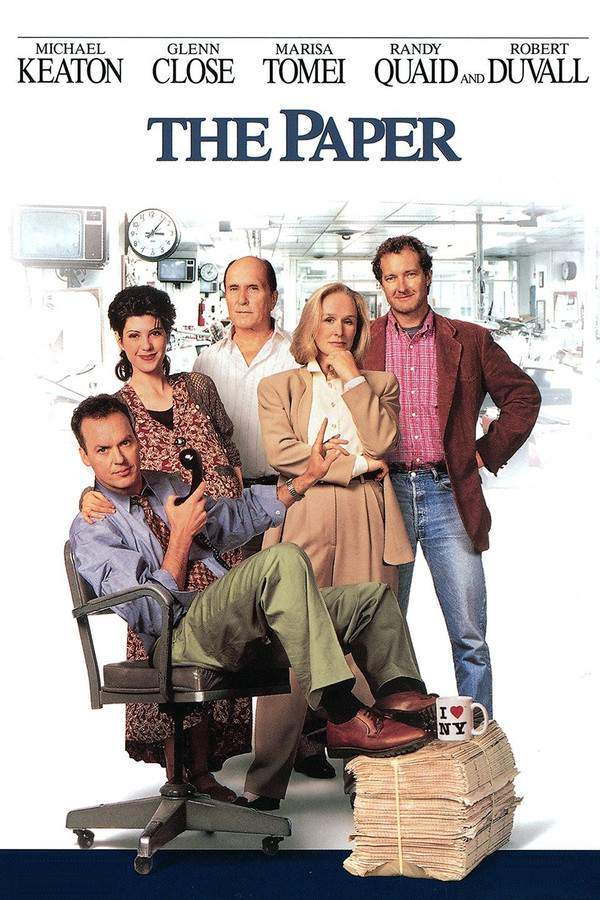
The Paper (1994) movie poster

Plot Summary

The Paper (1994) Plot Summary Explained

Release, runtime and language
1994 · 112 min · English
Loading streaming availability…
Directed by
Ron Howard
Starring
Catherine O'Hara, Michael Keaton, Marisa Tomei, Glenn Close, Robert Duvall, Jason Robards

Navigating the intense environment of tabloid journalism in New York City, Henry Hackett faces a difficult decision as editor of the New York Sun. Financial struggles and the prospect of starting a family with his pregnant wife push him to consider a lucrative job offer. However, a shocking and potentially career-defining story emerges, throwing his career and personal life into turmoil. He must then grapple with his moral compass and decide what truly matters.

On this page (6)
  1. 1 Where to watch
  2. 2 What happens: full plot
  3. 3 Plot questions answered
  4. 4 Movie threads
  5. 5 Movies like The Paper
  6. 6 Every angle
Loading streaming availability…

Full plot summary · contains spoilers

What Happens in The Paper: Full Plot Summary

The whole story of The Paper (1994) explained, from the opening scene to the final frame: every key event, every twist and what it all adds up to. Read it as a quick recap before the sequel, to check a scene you missed, or to finally understand what really happened.

Henry Hackett, Michael Keaton the metro editor of The New York Sun, loves his job but the grind of long hours and low pay wears on him. He fears becoming like Bernie White, his editor-in-chief who puts the paper first at the expense of his family. Bernie reveals a diagnosis of prostate cancer and, with a sense of urgency, tries to track down his estranged daughter to reconcile before his time runs out.

Facing dire financial straits, the paper’s owner has Alicia Clark Glenn Close, Henry’s nemesis and the managing editor, impose unpopular cutbacks. Henry’s pregnant wife Martha Marisa Tomei, a fellow Sun journalist on leave, worries that he won’t be around to help raise their child. She urges him to consider a job at the prestigious New York Sentinel, a move that would mean more money, more respect, and fewer hours—yet also more distance.

That same morning, a hot story erupts: the murder of two white businessmen in Williamsburg, Brooklyn. A pair of African-American teenagers are arrested, but Henry and columnist Michael McDougal Spalding Gray grow skeptical after overhearing cops criticizing the arrest on the newsroom police scanner. The case pulls Henry in, and he becomes obsessed with digging deeper, pushing his staff to chase every lead.

As the pressure builds, a source tells Martha that the murdered bankers were involved in stealing money from a reputed New York mobster, which strengthens Henry’s conviction that the Brooklyn youths were wrongly accused. His dedication threatens his standing and his chances at the Sentinel when he cannot resist secretly obtaining information from the Sentinel newsroom while interviewing for the job.

Henry fights to extend the deadline to give the story more time, but Alicia refuses, citing the costs of overtime for the press workers and the delivery trucks. With time running out, Henry and Michael McDougal secure the help of a police detective to verify the suspects’ innocence — they were in the wrong place at the wrong time, and the truth seems within reach for a big, undeniable scoop.

Back at the Sun, Henry confronts Alicia, who resists stopping the presses to publish the truth. A tense, awkward fistfight follows, and Alicia ultimately fires Henry. After sharing a drink with McDougal at a journalist hangout, Alicia experiences a change of heart when McDougal tells her this would be the Sun’s first knowingly false story, and she begins to reconsider the direction the paper is taking.

Yet fate intervenes in a brutal way: before she can reach the presses, a stray bullet from a drunken city official who had come to confront McDougal strikes her leg. The incident shifts the momentum of the day, as the hospital becomes the new center of action and decision.

Meanwhile, Henry arrives home just as Martha is rushed to the hospital for an emergency cesarean section. Doctors prepare Martha for surgery, and in another part of the hospital, Alicia insists on contacting The Sun to change the front page before the doctors treat her own wounds. The next morning, Alicia lies in the hospital bed with a copy of The Sun showing the headline They Didn't Do It! Henry visits the nursery to see his newborn son, then goes to Martha’s room. As he lies beside her, a bedside radio crackles with the news that the two innocent youths have been released, thanks to The Sun’s exclusive scoop, marking a hard-won vindication born from journalistic tenacity and the high cost of truth.
Last updated: October 09, 2025 at 15:44

Was this helpful?

Plot questions answered

The Paper Plot Explained: Your Questions Answered

The questions people ask most about The Paper (1994): what happens in the confusing scenes, why the characters do what they do, the twists, hidden details and what the ending means. Each answer contains spoilers.

Q1

Why does Henry Hackett consider leaving the Sun for the Sentinel?

Henry considers the Sentinel job because of severe financial pressure and the toll of working long hours for low pay at the Sun. His pregnant wife Martha worries he won't be around to help raise their child, and the Sentinel offer promises more money, more respect, and fewer hours. However, his obsession with proving the Brooklyn murder suspects' innocence ultimately jeopardizes his chances of getting that job.

Foreshadowing: Early scenes establish Henry's exhaustion and fear of ending up like Bernie White, who put the paper first at the cost of his family.

  • henry hackett
  • sentinel job
  • career change
  • financial pressure
  • new york sun
Q2

Were the teenagers arrested in The Paper actually innocent?

Yes, the two African-American teenagers arrested for the Williamsburg murder were innocent. Henry and McDougal discovered they were merely in the wrong place at the wrong time. A source revealed the murdered bankers had stolen money from a reputed New York mobster, suggesting the real killers had connections to organized crime.

Foreshadowing: Henry and McDougal become skeptical after overhearing cops on the newsroom scanner criticizing the arrest as rushed.

  • brooklyn murder
  • innocent teenagers
  • williamsburg
  • crime investigation
  • mobster
Q3

Why does Alicia Clark fire Henry Hackett?

Alicia fires Henry after a heated confrontation where Henry demands she stop the presses to publish the correct story about the innocent suspects. The argument escalates into a fistfight, and despite Alicia's later change of heart, she fires Henry in the moment, primarily because he openly challenged her authority and the paper's direction.

Foreshadowing: Earlier scenes establish the tension between Henry and Alicia over budget cuts and editorial decisions.

  • alicia clark
  • henry fired
  • new york sun
  • confrontation
  • firing
Q4

How does Henry prove the suspects are innocent?

Henry and McDougal recruit a police detective who confirms the suspects' innocence, the teenagers were simply in the wrong place at the wrong time. Additionally, Martha's source reveals the murdered bankers had stolen money from a mobster, providing a plausible motive for the real killers. This evidence builds their case for the Sun's exposé.

Foreshadowing: The investigation intensifies as Henry pushes his staff to chase every lead, showing his growing obsession with the truth.

  • investigation
  • detective
  • mckougal
  • proof of innocence
  • sun scoop
Q5

Why does Alicia Clark decide to publish the truth about the suspects?

Alicia experiences a change of heart after McDougal points out that publishing the false story would be the Sun's first knowingly false story. This moral argument, combined with her drink with McDougal at the bar, makes her reconsider the paper's direction. However, she is shot before she can reach the presses to stop the false story from printing.

Foreshadowing: Her earlier resistance to Henry's demands establishes her initial loyalty to the paper's owner and financial pressures.

  • alicia clark
  • moral compass
  • publish truth
  • false story
  • journalistic ethics
Q6

What happens to the innocent teenagers at the end of The Paper?

At the end of The Paper, the bedside radio in the hospital reports that the two innocent youths have been released from custody, thanks to The Sun's exclusive scoop. The paper's front page headline reads 'They Didn't Do It!', marking a vindicating victory for Henry and the Sun's journalistic integrity.

Foreshadowing: The entire plot builds toward this moment, with Henry fighting against time and opposition to prove their innocence.

  • teenagers released
  • they didn't do it
  • victory
  • sun headline
  • exoneration
Q7

Why does Martha need an emergency C-section in The Paper?

Martha goes into labor prematurely and requires an emergency cesarean section. The summary does not specify the exact medical reason, but the stress of the day's events, Henry's job crisis, the investigation, and the turmoil at the paper, likely contributed to the medical emergency. The baby is born successfully, and Henry names his newborn son.

Foreshadowing: Martha's pregnancy and concerns about Henry's availability for their child are established early in the film.

  • martha
  • emergency c-section
  • hospital
  • baby
  • childbirth
Q8

How does Alicia Clark get shot in The Paper?

Alicia gets shot by a stray bullet while at the bar after being fired. A drunken city official arrives at the bar to confront McDougal, and in the chaos, his gun fires accidentally, striking Alicia in the leg. This random act of violence shifts the entire momentum of the day and sends everyone to the hospital.

Foreshadowing: The bar scene shows Alicia contemplating doing the right thing, making her shooting feel tragically ironic.

  • alicia shot
  • stray bullet
  • bar
  • drunk official
  • mcdougal
Q9

Why is Bernie White trying to find his estranged daughter?

Bernie White reveals he has been diagnosed with prostate cancer and has limited time left. Driven by this sense of urgency, he tries to track down his estranged daughter to reconcile before his time runs out. His personal crisis contrasts with his professional reputation of putting the newspaper first at any cost.

Foreshadowing: Bernie's health diagnosis is revealed early, establishing the theme of personal sacrifice for the job.

  • bernie white
  • prostate cancer
  • estranged daughter
  • reconciliation
  • terminal illness
Q10

Why does Alicia Clark refuse to extend the deadline for the story?

Alicia refuses to extend the deadline because of the significant financial costs involved. Extending the deadline would require paying overtime to press workers and delivery truck drivers, which the struggling newspaper, already facing dire financial straits, could not afford. This business decision directly conflicts with Henry's journalistic goals.

Foreshadowing: The paper's financial troubles and Alicia's role in imposing cutbacks are established earlier in the day.

  • deadline
  • overtime costs
  • alicia
  • financial pressure
  • press delay
Q11

Why does Henry risk his Sentinel job by stealing information from their newsroom?

Henry cannot resist the opportunity to access information about the case while at the Sentinel newsroom for his job interview. His obsession with proving the Brooklyn suspects' innocence overrides his judgment, and he secretly obtains information that could help the Sun's investigation. This ethical violation ultimately jeopardizes his chances at the Sentinel.

Foreshadowing: Henry's growing obsession with the case is evident as he pushes his staff to dig deeper into every lead.

  • henry
  • steal information
  • sentinel interview
  • ethics
  • journalism scandal
Q12

Why do both Alicia and Martha end up at the same hospital?

The hospital becomes the convergence point for the film's parallel crises. Alicia is brought in after being shot in the leg by the stray bullet. Meanwhile, Martha goes into emergency labor and is rushed to the same hospital for a C-section. Both women require medical attention simultaneously, with Alicia even insisting on calling the Sun to change the front page before her wounds are treated.

Foreshadowing: The fast-paced single-day structure naturally builds toward this convergence of personal and professional conflicts.

  • hospital
  • alicia
  • martha
  • convergence
  • emergency

Movie threads

More Movies Like The Paper, by Mood & Story

Curated lists built around what makes The Paper tick: the same mood, the same kind of story or the same emotional payoff. Each list explains why these movies belong together.

High-stakes pressure cookers like The Paper

Movies where a ticking clock and high stakes create relentless, frenetic tension. If you liked the frantic, deadline-driven energy of The Paper, explore other movies like it. This list features similar tense dramas and thrillers where characters face immense pressure, high stakes, and a race against time that drives the entire narrative.

  • urgent
  • high-stakes
  • pressure-cooker
  • frenetic
  • tense
  • race-against-time
  • Tone: tense, urgent
  • Pacing: fast, frenetic
Why these movies?

The story pattern: Stories in this thread typically unfold over a compressed timeframe, creating a 'race against the clock' structure. Characters are faced with a high-stakes mission, often professional, that forces them to make rapid, consequential decisions. The plot is driven by escalating obstacles and a sense of urgency that rarely lets up.

Why they belong together: Movies are grouped here for their shared fast pacing, high intensity, and tense tone. They all create a viewing experience defined by relentless pressure, professional or moral urgency, and a narrative structure that feels like a constant sprint to a critical finish line.

Bittersweet professional victories like in The Paper

Stories where hard-won triumphs come with significant personal sacrifice. For viewers who appreciated the complex ending of The Paper, this collection features similar movies about professional success. These dramas show characters achieving their goals, but the journey leaves them with a bittersweet feeling, having paid a personal cost for their professional triumph.

  • bittersweet
  • reflective
  • moral-compromise
  • cost-of-ambition
  • work-life-balance
  • cathartic
  • Tone: bittersweet, reflective
  • Pacing: steady, character-driven
Why these movies?

The story pattern: The narrative pattern follows a protagonist deeply dedicated to their work, facing a major ethical or professional challenge. While they ultimately succeed in their professional goal, the path to victory forces difficult choices that damage personal relationships, compromise ideals, or result in collateral damage, leaving the success feeling hollow or qualified.

Why they belong together: These movies are grouped by their shared bittersweet ending feel and thematic focus on the cost of ambition. They balance professional drama with personal stakes, creating a coherent experience where victory is real but emotionally complex, resonating with anyone who understands that success often has a downside.

If you liked this

Movies Like The Paper

Similar movies to The Paper: the same genre, themes or kind of story. Each one comes with its own plot summary, timeline and ending explained.

Browse all movie summaries

Every angle

The Paper (1994) Explained: Plot, Timeline & Characters

Everything about The Paper in one place: what happens in the plot summary, the timeline in chronological order, the characters and meaning and a spoiler-free summary. What's After the Movie adds the cast, box office and post-credit scenes.

Coming soon on iOS and Android

The Plot Explained Movie Summary App

Plot summaries, endings explained and timelines on your phone. Catch up on any movie in minutes, save your favorites and never miss a twist again.

Be the first to know when we launch. Your email stays private, always.

Learn more about the app