














Plot Explained Spoilers guaranteed!
Plot Explained

Browse by genre

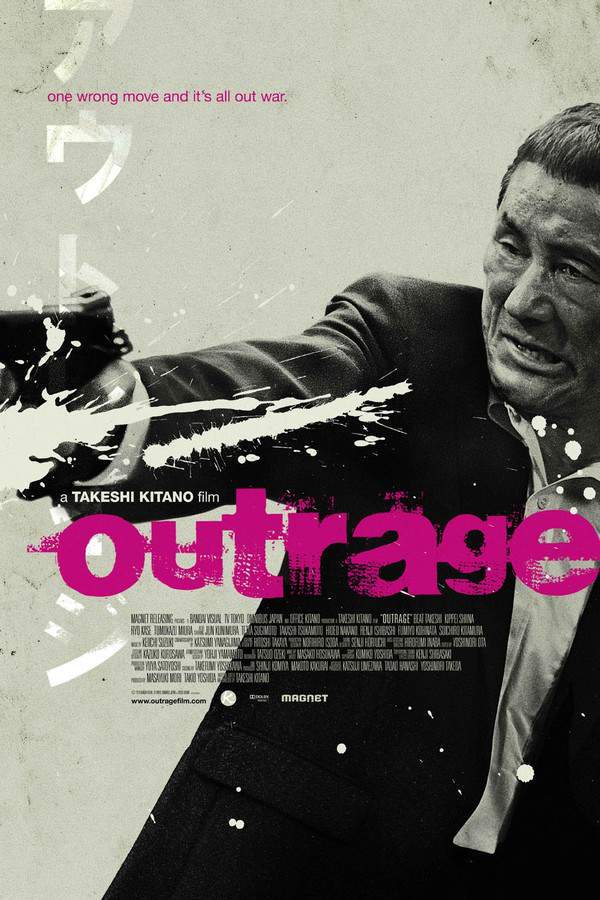
Outrage (2009) movie poster

Characters & Themes

Outrage (2009) Characters, Setting & Themes Explained

Release, runtime and language
2009 · 90 min · Japanese
JustWatch #3,672 39
Directed by
Kirby Dick
Starring
Barney Frank

This provocative documentary explores the surprising contradiction between the personal lives and public actions of influential figures who identify as LGBTQ+, while simultaneously advocating for policies that harm the community. Featuring candid interviews with key individuals, the film delves into the complex psychological reasons behind this hypocrisy and examines how the media contributes to the ongoing situation. It offers a revealing look at the conflict between identity and political maneuvering.

On this page (8)
  1. 1 Where to watch
  2. 2 Characters explained (6)
  3. 3 Where & when it takes place
  4. 4 Themes & meaning (3)
  5. 5 Character & meaning questions
  6. 6 Movie threads
  7. 7 Movies like Outrage
  8. 8 Every angle

Where to watch

Where to Watch Outrage (2009)

Where can you watch Outrage? Stream, rent or buy it in the US, including on Amazon Prime Video, Philo and Kanopy: current JustWatch availability with up-to-date prices.

Streaming availability powered by JustWatch

6 main characters · contains spoilers

Outrage Characters Explained: Who Is Who

The main characters of Outrage (2009), heroes and villains: what drives them, how they change over the course of the story and what each of them reveals about the film's bigger ideas.

  • Sekiuchi

    The Grand Yakuza leader who commands the Sanno-kai and rules the Kanto region with a ruthless, calculating mind. His opulent estate hosts lavish banquets that mask brutal political games. His displeasure at internal alliances triggers a deadly chain of betrayals that reconfigure the underworld's power map.

    • 🗡️ Ruthless
    • 🏯 Powerful
    • 🎯 Calculating
  • Kato

    Underboss of the Sanno-kai, he orchestrates moves to bring Ikemoto's faction into line and crush rival factions. He moves quietly, calculating every consequence before acting. His ability to orchestrate alliances and betrayals sets the stage for his final act of seizing control after killing Sekiuchi.

    • 💼 Calculating
    • 🚦 Controlling
    • 🏛️ Ambitious
  • Ikemoto

    Chief lieutenant to Sekiuchi who plays a dangerous game of loyalty and manipulation. He delegates the task of curbing Murase to Otomo while maneuvering behind the scenes. His scheme to weaken Murase ultimately leads to his own demise alongside Murase.

    • 🧭 Manipulative
    • 🔒 Secretive
    • 🎭 Deceptive
  • Otomo

    A capable captain under Ikemoto who carries out the plan to destabilize Murase’s faction. He oversees the nightclub ruse that triggers the wider conflict and ends up imprisoned after a brutal ambush. His arc culminates in prison violence as Kimura fatally wounds him.

    • ⚔️ Brutal
    • 🏁 Obedient
    • 🔎 Cunning
  • Murase

    Rival gang leader whose Murase-gumi is drawn into conflict by Ikemoto’s schemes. He relies on past prison friendships for support, but those bonds prove fragile in the merciless world of power politics. His downfall comes as his resources dwindle and he is killed along with Ikemoto.

    • 🎭 Rival
    • 🤝 Loyal
    • 🗺️ Strategist
  • Kimura

    Murase’s chief lieutenant who sustains Murase’s organization until the endgame. He bears scars from Ikemoto’s manipulation and strategically engages in the prison ambush that leads to Otomo’s demise. His actions push the narrative toward the final power shift.

    • 🔬 Investigative
    • 🧩 Calculating
    • 💥 Violent

Last updated: October 04, 2025 at 08:05

Was this helpful?

Setting

Where and When Does Outrage Take Place?

The setting of Outrage (2009): the year and time period, the places and locations, and how they shape the characters, the mood and the tension of the story.

Time period

Modern-day Japan

Set in contemporary Japan, the story unfolds in a yakuza landscape where power is negotiated through violence and strategic maneuvering. Privilege and fear govern the hierarchy, while betrayals are used as instruments to reshape the balance of influence. The modern setting amplifies the stakes, with lavish feasts and high-stakes confrontations serving as the theater for gang politics.

Location

Sekiuchi's opulent estate, Murase's nightclub

The action centers on Sekiuchi's opulent estate, a fortress of wealth where power is negotiated behind closed doors. The world also moves through Murase's nightclub, a glamorous venue that doubles as a frontline in the gang war. Together these locations anchor the film's brutal politics and the shifting loyalties of the Sanno-kai and its rivals in the Kanto region.

  • 🏯 Opulence
  • 🗡️ Crime
  • 🌆 Underworld

Last updated: October 04, 2025 at 08:05

Was this helpful?

3 major themes

Outrage Meaning: Themes & Message Explained

What is Outrage (2009) really about? The emotional, social and philosophical themes the film keeps returning to, its symbolism and the message beneath the surface.

  • Betrayal

    Loyalties are constantly tested as orders from higher-ups destabilize friendly fronts. Ikemoto uses his position to undermine Murase, exploiting old ties to chip away at his strength. Murase's trust in former prison friends proves costly, accelerating the collapse of his faction. The cycle culminates in the secret killing of Sekiuchi and a shift in power.

  • Power

    The film traces the rise and fall of leaders within the Sanno-kai as the balance of fear, influence, and violence determines who holds the reins. Kato maneuvers from the shadows, coordinating betrayals to position himself as the new head. The leadership transition is marked by calculated moves, assassinations, and a ruthless consolidation of authority.

  • Loyalty

    Loyalty is explored as a shifting construct—old bonds collide with new interests and practical survival. Ikemoto's pragmatic loyalty to the Sanno-kai masks his true agenda, while Murase clings to fragile alliances to keep his gang afloat. The film exposes how loyalty can be a weapon or a vulnerability, depending on who wields it.

Last updated: October 04, 2025 at 08:05

Was this helpful?

Character & theme questions

Outrage Characters & Meaning: Your Questions Answered

The questions people ask about Outrage (2009): who the characters really are, their relationships, what the symbols mean, where it takes place and what the movie is really about. Each answer contains spoilers.

Q1

Where does the story take place?

The film is set in modern-day Japan, primarily centered on two key locations: Sekiuchi's opulent estate, a luxurious mansion that serves as the headquarters for the Sanno-kai's operations, and Murase's nightclub, a glamorous venue that becomes a frontline in the escalating gang war between rival factions.

  • setting
  • japan
  • sekitei estate
  • nightclub
  • locations
Q2

What is the Sanno-kai?

The Sanno-kai is the primary yakuza organization depicted in the film, led by the ruthless Sekiuchi. It dominates the Kanto region's underworld and operates as a hierarchical crime syndicate where power is maintained through a combination of violence, strategic maneuvering, and calculated betrayals.

  • sanno-kai
  • yakuza
  • organization
  • crime syndicate
Q3

Who is Sekiuchi?

Sekiuchi is the grand leader of the Sanno-kai, commanding the yakuza organization that controls the Kanto region. He rules with a ruthless, calculating mind, hosting lavish banquets at his opulent estate that mask brutal political games. His displeasure at internal alliances triggers the deadly chain of betrayals that drives the story.

  • sekitani
  • leader
  • sanno-kai
  • boss
  • underworld
Q4

Who is Kato?

Kato is the underboss of the Sanno-kai who operates from the shadows, orchestrating moves to bring rival factions into line. He calculates every consequence before acting and possesses the ability to coordinate complex alliances and betrayals, ultimately positioning himself to seize control after eliminating Sekiuchi.

  • kato
  • underboss
  • sanno-kai
  • strategist
Q5

Who is Ikemoto?

Ikemoto serves as the chief lieutenant to Sekiuchi within the Sanno-kai, playing a dangerous game of loyalty and manipulation. He delegates risky tasks to subordinates while maneuvering behind the scenes, using his position to undermine rivals like Murase while pursuing his own hidden agenda.

  • ikemoto
  • lieutenant
  • sanno-kai
  • manipulation
Q6

Who is Murase?

Murase is the leader of the Murase-gumi, a rival yakuza gang drawn into conflict by the Sanno-kai's political scheming. He relies heavily on past prison friendships for support, though these bonds prove fragile in the ruthless world of yakuza politics. His downfall comes as his resources dwindle under coordinated attack.

  • murase
  • rival gang
  • murase-gumi
  • prison connections
Q7

What is the yakuza world like in the film?

The film portrays the yakuza world as a brutal hierarchy where power is negotiated through violence and strategic maneuvering. Privilege and fear govern the organization, with betrayals serving as instruments to reshape the balance of influence. Lavish feasts and high-stakes confrontations serve as the theater for these criminal politics.

  • yakuza
  • underworld
  • crime world
  • hierarchy
  • japan
Q8

What does the film say about betrayal?

Betrayal is central to the film's narrative, depicting how loyalties are constantly tested as orders from higher-ups destabilize friendly fronts. Characters exploit old ties to undermine allies, and trust in former relationships proves costly. The cycle culminates in secret killings that reshape the underworld's power structure.

  • betrayal
  • loyalty
  • trust
  • alliances
  • deception
Q9

What does the film explore about power?

The film traces the rise and fall of leaders within the Sanno-kai, showing how the balance of fear, influence, and violence determines who holds power. Leadership transitions are marked by calculated moves, assassinations, and ruthless consolidation of authority, demonstrating that in this world, power is always temporary and contested.

  • power
  • leadership
  • authority
  • ambition
  • control
Q10

How does the film portray loyalty?

Loyalty is depicted as a shifting, contradictory construct in the yakuza world. Old bonds collide with new interests and practical survival needs. Characters demonstrate how loyalty can be both a weapon and a vulnerability, depending on who wields it and for what purpose, ultimately exposing its futility in a world governed by pure pragmatism.

  • loyalty
  • bonds
  • trust
  • pragmatism
  • survival
Q11

Who is Otomo?

Otomo is a capable captain under Ikemoto who carries out the plan to destabilize Murase's faction. He oversees the nightclub ruse that triggers the wider conflict between the organizations. His actions set events in motion that lead to his own imprisonment and eventual death in prison violence.

  • otomo
  • captain
  • sanno-kai
  • nightclub
  • prison
Q12

What is the tone of the film?

The film maintains an unequivocally dark tone, exploring the harsh realities of a criminal empire where personal bonds are weaponized for political gain. The narrative carries heavy emotional weight through graphic violence and psychological manipulation, leading to a bleak conclusion that suggests the cycle of ambition and violence is endless.

  • tone
  • atmosphere
  • violence
  • dark
  • bleak

Movie threads

More Movies Like Outrage, by Mood & Story

Curated lists built around what makes Outrage tick: the same mood, the same kind of story or the same emotional payoff. Each list explains why these movies belong together.

Calculated stories of betrayal and power like in Outrage

Stories of intricate power webs where every alliance is a potential trap. Explore movies like Outrage that dissect the brutal logic of power struggles within rigid organizations. If you enjoyed the intricate schemes and constant tension of Outrage, you'll find similar complex narratives of loyalty tested and alliances shattered in these selections.

  • calculating
  • mistrustful
  • treacherous
  • power struggle
  • ruthless
  • claustrophobic
  • Tone: dark, calculating
  • Pacing: steady, methodical
Why these movies?

The story pattern: Narratives in this thread follow a steady, often unforgiving, escalation of conflict within a closed society. Characters navigate a web of obligations and rivalries, where a single miscalculation can trigger a chain reaction of violence. The journey is typically one of moral erosion, culminating in a conclusion that reinforces the ruthless nature of the world.

Why they belong together: Movies are grouped here based on their shared focus on complex power dynamics, a pervasive atmosphere of mistrust, and a narrative structure that emphasizes strategic gameplay over impulsive action. They deliver a specific kind of tension born from psychological manipulation and the cold calculation of survival.
Bleak crime stories with moral collapse like in Outrage

Unflinching portraits of systems that consume their own, leaving little hope. Find more movies like Outrage that explore the crushing weight of criminal institutions and their bleak, cyclical nature. These films share a heavy emotional weight, a dark tone, and endings that offer little redemption, perfect for viewers who appreciated the unforgiving worldview of Outrage.

  • bleak
  • oppressive
  • brutal
  • hopeless
  • grim
  • violent
  • Tone: dark, bleak, oppressive
  • Pacing: steady, grim
Why these movies?

The story pattern: The narrative pattern is often tragic and circular. Characters are bound by codes that demand violence, leading to a series of escalating retaliations. The plot moves toward an ending that is fundamentally bleak, affirming that the cycle of ambition and violence is endless and that the institution will always demand more than any individual can give.

Why they belong together: These films are united by their oppressive atmosphere, heavy emotional weight, and a conclusive, bleak ending feel. They share a high intensity derived from graphic violence and disturbing themes, creating a coherent viewing experience for those seeking stark, uncompromising narratives about the cost of power.

If you liked this

Movies Like Outrage

Similar movies to Outrage: the same genre, themes or kind of story. Each one comes with its own plot summary, timeline and ending explained.

Browse all movie summaries

Every angle

Outrage (2009) Explained: Plot, Timeline & Characters

Everything about Outrage in one place: what happens in the plot summary, the timeline in chronological order, the characters and meaning and a spoiler-free summary. What's After the Movie adds the cast, box office and post-credit scenes.

Coming soon on iOS and Android

The Plot Explained Movie Summary App

Plot summaries, endings explained and timelines on your phone. Catch up on any movie in minutes, save your favorites and never miss a twist again.

Be the first to know when we launch. Your email stays private, always.

Learn more about the app