






Plot Explained Spoilers guaranteed!
Plot Explained

Browse by genre

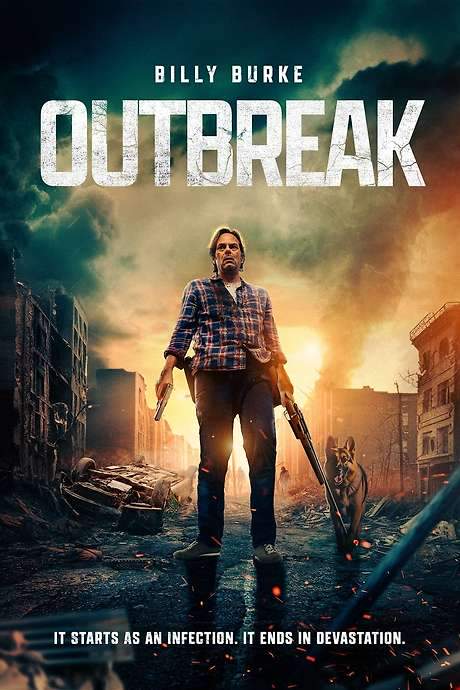
Outbreak (2024) movie poster

Ending Explained

Outbreak (2024) Ending Explained – Final Scene & Meaning

Release, runtime and language
2024 · 87 mins · English
Echo score 30
JustWatch #13,079 14
Directed by
Jeff Wolfe
Starring
Billy Burke, Taylor Handley, Alyshia Ochse, Jessica Frances Dukes, Dani Oliveros, Raoul Max Trujillo

A State Park Ranger and his wife struggle with the disappearance of their son when a mysterious outbreak begins to affect their community. As the situation escalates, they must confront not only the growing threat but also the strain it puts on their relationship and their perception of what is real. The outbreak quickly spreads, leading to devastation and testing the limits of their sanity.

On this page (6)
  1. 1 Where to watch
  2. 2 What happens at the end
  3. 3 Final events in order
  4. 4 Ending questions answered
  5. 5 Movie threads
  6. 6 Every angle

Where to watch

Where to Watch Outbreak (2024)

Where can you watch Outbreak? Stream, rent or buy it in the US, including on Hulu, Amazon Video and Apple TV Store: current JustWatch availability with up-to-date prices.

Streaming availability powered by JustWatch

Ending explained · contains spoilers

What Happens at the End of Outbreak?

How Outbreak (2024) ends, what the final scene means, which earlier moments set it up and how to read the ending if the film leaves it open. The full ending explained, with every spoiler.

Neil’s desperate search for his missing son turns out to be a desperate attempt to escape a far more painful truth. After an argument with Ben, the boy runs away and falls from a cliff; he dies, and Neil, unable to accept his son’s death, constructs a nightmarish reality in which a deadly virus turns people into zombie‑like predators. In this imagined outbreak, he fights through hordes, sees his wife Abby infected, and witnesses friends such as Mike and Gibson either dead or transformed. Each violent encounter is a projection of his own guilt and self‑destruction.

The film’s climax strips away the illusion. When the police finally corner Neil, he looks into a mirror and sees his own face warped in the same way as the “infected” victims—a visual metaphor that his mind has become the true contagion. The officers order him to drop his weapon, but he cannot relinquish the delusion that he is still fighting to survive. In a final, fatal misunderstanding, they shoot him, ending the self‑inflicted nightmare.

In essence, Outbreak reveals that the zombie apocalypse never existed; it was a hallucination born of grief. Neil’s inability to confront the accident that claimed Ben—combined with Abby’s own denial—drives him into a psychotic break. His death marks the moment his mind can no longer shield him from the reality he tried so fiercely to rewrite.

Last updated: August 19, 2025 at 19:40

Was this helpful?

The last 4 events

How Outbreak Ends: The Final Events in Order

The last events of Outbreak (2024) in chronological order, the run-up to the ending explained above. The complete timeline has all 12 events, scene by scene.

Open the full timeline
  1. Outbreak as a manifestation of guilt

    Neil confronts the possibility that the outbreak is a manifestation of his fractured psyche, a constructed explanation for the chaos in his life. The revelation reframes all prior events as projections of guilt over what happened to Ben. He must decide whether the line between truth and illusion can ever be trusted.

    When
    Towards the climax
    Where
    Mind / Home
  2. Facing the truth about Ben

    The seeds of responsibility for Ben's fate surface, forcing Neil to face the possibility that his actions or inaction contributed to his son's disappearance. This newfound accountability heightens the emotional intensity of the crisis. The town's nightmare becomes an internal confession.

    When
    Climax
    Where
    Home
  3. Reality and illusion collide

    With the truth emerging, the physical outbreak and the mental unraveling collide, threatening to fully break Neil from reality. The narrative collapses into a merging of fear, guilt, and perception as characters confront what is real. The resolution remains precarious, keeping the audience in limbo.

    When
    Final act
    Where
    Town / Home
  4. Ambiguous ending and lasting guilt

    In the closing moments, Neil confronts the consequences of his mind's creation and the possibility that he must live with the outcome of his family's tragedy. The film ends with ambiguity about what is real and what was imagined. The last image lingers on a man who cannot escape his guilt.

    When
    Ending
    Where
    Home

Ending questions answered

Outbreak Ending: Your Questions Answered

The questions people ask most about the ending of Outbreak (2024): what the final scene means, how the twist works, what happens to each character and how to read the ending. Each answer contains spoilers.

Q1

Was the zombie outbreak real or all in Neil's mind?

The outbreak was entirely a hallucination. Neil created a fictional zombie apocalypse to cope with the traumatic reality that his son Ben died after falling from a cliff during an argument. The entire outbreak narrative, zombies, infected victims, violent encounters, was a psychological defense mechanism his mind constructed to avoid accepting his guilt and grief.

Foreshadowing: Earlier scenes showing the strange behavior of community members take on new meaning when the truth is revealed.

  • outbreak hallucination
  • neil delusion
  • zombie apocalypse fake
  • psychological thriller twist
Q2

What really happened to Ben in the film?

Ben, Neil's young son, died after running away during an argument with Neil and falling from a cliff. This tragedy occurred before the film’s events began, and Neil was unable to accept responsibility for his son's death. Rather than confronting this painful truth, he developed a elaborate delusional world where a deadly virus was threatening his family and community.

Foreshadowing: Neil's obsessive search for his missing son is revealed as a metaphor for his attempt to find a way out of his own guilt.

  • ben death
  • neil son died
  • cliff fall
  • missing son truth
Q3

What does the mirror scene reveal about Neil?

When Neil looks into the mirror, he sees his own face warped and distorted, the same way the 'infected' victims appear throughout the film. This visual metaphor confirms that Neil himself is the source of the contagion: his fractured mind is the true infection. The reflection shows that he has become the thing he was fighting against, and his perception of the world around him is hopelessly corrupted by grief and psychosis.

Foreshadowing: The film subtly shows that only Neil sees the victims as monstrous, while others seem to perceive a different reality.

  • mirror scene
  • neil reflection
  • infected face
  • visual metaphor
Q4

Why do the police shoot Neil at the end?

The police corner Neil during what they perceive as a standoff with an armed, erratic man. Neil is unable to let go of his delusion, he still believes he is fighting to survive against the outbreak. When ordered to drop his weapon, he cannot release the false reality he has been living in. The officers perceive him as a threat and shoot him, ending both his life and his constructed nightmare.

Foreshadowing: Throughout the film, Neil's refusal to accept any version of events other than his own foreshadows his inability to surrender the delusion even when confronted with reality.

  • police shooting
  • neil death
  • fatal misunderstanding
  • end confrontation
Q5

Was Neil responsible for Ben's death?

The film implies Neil bears responsibility for Ben's death. The text states the boy ran away 'after an argument with Ben,' suggesting Neil's anger or confrontation triggered Ben's flight and subsequent fall. Neil's guilt manifests throughout his delusion as the driving force behind the entire outbreak narrative, a way his mind attempts to rewrite or escape the consequences of his own actions.

Foreshadowing: Neil's desperate search for his son masked as a rescue mission is actually an attempt to undo the accident he caused.

  • neil guilt
  • ben accident
  • father responsibility
  • blame for death
Q6

What happens to Abby in the real world?

In the real world, Abby is Neil's wife who is alive and not infected. The 'infection' Neil sees in Abby is part of his delusion. The film suggests Abby also struggled with denial about Ben's death, which may have contributed to Neil's ability to maintain his psychotic break. When Neil's illusion collapses, Abby is left to face the truth of what actually happened to their son.

Foreshadowing: Abby's presence throughout the 'outbreak' follows Neil's movements without truly connecting with him, reflecting her own separate denial.

  • abby fate
  • neil wife
  • real world character
  • family survival
Q7

Why can't Neil accept Ben's death?

Neil's inability to accept Ben's death stems from overwhelming guilt. Having caused his son's death through their argument, Neil cannot psychologically process this trauma. Instead, his mind constructs an alternate reality where Ben is missing rather than dead, and where Neil becomes a hero fighting to save his family. This delusion allows him to remain the 'good guy' rather than confront being the cause of his son's death.

Foreshadowing: Neil's violent determination to 'find' his son contrasts with the quiet acceptance other characters show toward loss.

  • grief denial
  • psychological break
  • guilt complex
  • unprocessed trauma
Q8

What is the meaning of the film's ending?

The ending delivers a bleak commentary on grief and self-destruction. Neil's death represents the ultimate cost of refusing to confront painful truth, he loses his life while living in a delusion he created to avoid accountability. The film suggests that unchecked grief, when combined with denial, can become a contagion more destructive than any virus. There is no redemption or closure; Neil's story ends in tragedy both in his fantasy and in reality.

Foreshadowing: The constant escalation of violence throughout the 'outbreak' mirrors Neil's internal spiral toward self-destruction.

  • ending meaning
  • tragic conclusion
  • grief as contagion
  • no redemption
Q9

Are Mike and Gibson really dead in the film?

Mike and Gibson are not actually dead. In the 'real' world, they are likely alive and never infected. Neil's encounters with their dead or transformed bodies were projections of his guilt and paranoia. These characters represent the people Neil felt he couldn't save, reinforcing his delusion of being a protector fighting against overwhelming odds.

Foreshadowing: Mike and Gibson appear only in situations where Neil feels responsible for others' safety, never in neutral contexts.

  • mike gibson fate
  • characters alive
  • projection guilt
  • not infected
Q10

Why does Neil create a zombie outbreak in his mind?

Neil constructs a zombie apocalypse because the reality of accidentally causing his son's death is unbearable. A viral outbreak provides an external enemy to fight, transforming Neil from a father who caused his child's death into a hero fighting to protect his family. The 'outbreak' gives his guilt an external target and allows him to channel his self-destructive impulses into a heroic narrative.

Foreshadowing: The film's shift from a missing son mystery to an outbreak thriller signals Neil's psychological shift away from facing the truth.

  • delusion mechanism
  • avoidance coping
  • grief fantasy
  • zombie metaphor
Q11

What does the film say is the 'real' contagion?

The film presents Neil's mind as the true contagion. His psychological break spreads its influence through his perception of everyone around him, transforming his wife into an 'infected' victim, his friends into corpses or monsters, and his community into a war zone. The mirror scene visually confirms that Neil himself has become infected, not by a virus, but by his own grief and denial.

Foreshadowing: Only Neil perceives the outbreak; others around him seem to experience a different, normal reality.

  • mind contagion
  • psychological infection
  • true plague
  • mental illness metaphor

Movie threads

More Movies Like Outbreak, by Mood & Story

Curated lists built around what makes Outbreak tick: the same mood, the same kind of story or the same emotional payoff. Each list explains why these movies belong together.

Mind-bending horror movies like Outbreak

Stories where the horror comes from within, blurring reality and inner trauma. If the psychological torment and blurred reality of Outbreak gripped you, explore these movies where internal trauma fuels the horror. These films focus on characters confronting threats that may be as internal as they are external, creating a uniquely claustrophobic and paranoid viewing experience.

  • psychological
  • paranoid
  • unsettling
  • claustrophobic
  • mind-bending
  • despairing
  • Tone: tense, paranoid, bleak
  • Pacing: steady, escalating
Why these movies?

The story pattern: These narratives typically follow a protagonist, often already burdened by trauma like grief or guilt, who faces a growing crisis that mirrors or amplifies their internal state. The plot deliberately blurs the line between a tangible threat and a psychological breakdown, leading the character and the audience to question the nature of the horror.

Why they belong together: Movies in this thread are grouped by their shared focus on the psychological dimension of horror. They prioritize a tense, paranoid mood and often feature a bleak outlook, united by the central theme of reality becoming unstable under the weight of a character's internal struggles.

Family survival thrillers like Outbreak

Personal relationships fracture as society unravels around them. If you were captivated by how Outbreak used a community-wide outbreak to test a marriage strained by grief, these movies offer similar gripping tales. They explore how catastrophic events push familial bonds to the breaking point, blending high-stakes survival with heavy emotional drama.

  • grieving
  • anxious
  • harrowing
  • despairing
  • claustrophobic
  • unsettling
  • Tone: tense, harrowing, despairing
  • Pacing: steady, relentless
Why these movies?

The story pattern: The narrative pattern involves a family or couple already dealing with a private trauma or conflict. An escalating external catastrophe—be it an outbreak, invasion, or natural disaster—forces them into isolation and survival mode. The true conflict becomes internal, as the threat outside magnifies their personal struggles, testing their sanity and the foundations of their relationship.

Why they belong together: These films are grouped by their dual focus on a large-scale societal breakdown and a small-scale interpersonal collapse. They share a heavy emotional weight, a steady or fast pacing driven by continuous escalation, and a tone that balances intense external threat with profound internal despair.

Every angle

Outbreak (2024) Explained: Plot, Ending, Timeline & Characters

Everything about Outbreak in one place: what happens in the plot summary, the timeline in chronological order, the characters and meaning, the ending explained and a spoiler-free summary. What's After the Movie adds the cast, box office and post-credit scenes.

Coming soon on iOS and Android

The Plot Explained Movie Summary App

Plot summaries, endings explained and timelines on your phone. Catch up on any movie in minutes, save your favorites and never miss a twist again.

Be the first to know when we launch. Your email stays private, always.

Learn more about the app