








Plot Explained Spoilers guaranteed!
Plot Explained

Browse by genre

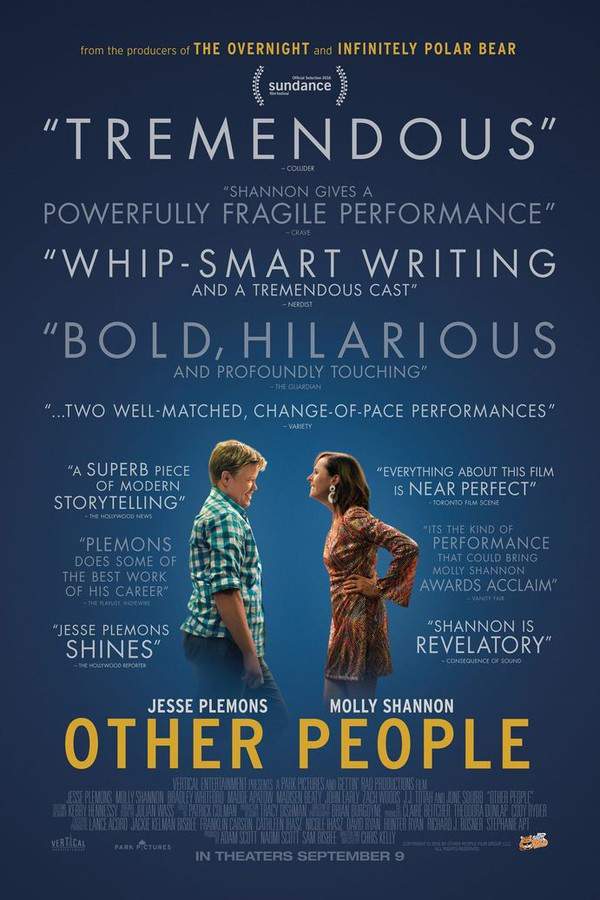
Other People (2016) movie poster

Characters & Themes

Other People (2016) Characters, Setting & Themes Explained

Release, runtime and language
2016 · 97 min · French
JustWatch #18,647 30
Directed by
Chris Kelly

A comedy writer, struggling with a breakup and a creative slump, returns home to Sacramento to help care for his mother who is facing health challenges. He finds himself confronting difficult family relationships and his own vulnerabilities, forcing him to examine his past and question his current state of mind. David must find a way to cope with the situation while trying to maintain a sense of composure and prove to himself and those around him that he's still capable.

On this page (8)
  1. 1 Where to watch
  2. 2 Characters explained (8)
  3. 3 Where & when it takes place
  4. 4 Themes & meaning (3)
  5. 5 Character & meaning questions
  6. 6 Movie threads
  7. 7 Movies like Other People
  8. 8 Every angle

Where to watch

Where to Watch Other People (2016)

Where can you watch Other People? Stream, rent or buy it in the US, including on Amazon Prime Video, Hoopla and The CW: current JustWatch availability with up-to-date prices.

Streaming availability powered by JustWatch

8 main characters · contains spoilers

Other People Characters Explained: Who Is Who

The main characters of Other People (2016), heroes and villains: what drives them, how they change over the course of the story and what each of them reveals about the film's bigger ideas.

  • David Mulcahey (Jesse Plemons)

    A struggling comedy writer who returns to his childhood home to care for his mother during her cancer battle. He negotiates a tense relationship with his conservative father while managing a recent breakup with his boyfriend Paul. His quest for creative opportunity competes with family demands, as he seeks authenticity in a life that often prefers appearances over truth.

    • 🎭 Identity
    • 👨‍👩‍👧 Family
    • 💔 Breakup
  • Joanne Mulcahey (Molly Shannon)

    David’s mother, diagnosed with leiomyosarcoma, who undergoes chemotherapy and ultimately chooses hospice care. She wrestles with fear, pride, and regret about her initial reactions to David’s sexuality, seeking forgiveness from her son. Her death becomes a pivotal moment that redefines the family’s bonds and priorities.

    • ❤️ Motherhood
    • 🎗 Illness
    • 🤝 Forgiveness
  • Norman Mulcahey (Bradley Whitford)

    The family’s conservative father who still struggles to accept his son’s sexuality. He embodies conflict between tradition and evolving beliefs, but his actions—like paying for Paul’s plane ticket—signal an underlying care and a willingness to support his children in his own way. His journey mirrors the broader theme of reconciliation within the family.

    • 🧭 Acceptance
    • 🏳️‍🌈 Tolerance
  • Alexandra Mulcahey (Maude Apatow)

    David’s distant sister who is present but not always emotionally connected. She represents a different facet of family dynamics, offering a practical and sometimes reserved perspective within the siblings’ circle. Her presence reinforces the film’s exploration of sibling relationships and shared memory.

    • 🌟 Support
    • 🤝 Sibling dynamics
  • Rebeccah Mulcahey (Madisen Beaty)

    The younger sister who navigates her own place within the family drama. She contributes to the family’s emotional balance and provides a sense of continuity as the parents confront aging and loss. Her interactions help illuminate the generational perspectives within the household.

    • 🎀 Family dynamics
    • 👯‍♀️ Support
  • Paul (Zach Woods)

    David’s ex-boyfriend, whose relationship status becomes a source of tension and a test of the family’s willingness to adapt. The decision to maintain appearances for Joanne contrasts with the truth of their breakup, complicating David’s emotional landscape. Paul remains part of the narrative through care and distant connection.

    • 💔 Breakup
    • 🎭 Relationship
  • Gabe (John Early)

    David’s high school friend who re-enters his life with a candid, supportive energy. He introduces David to a broader social circle and helps illuminate the complexities of friendship and acceptance. Gabe’s dynamic with Justin adds color and humor to the otherwise somber family drama.

    • 💬 Friendship
    • 🗽 NYC
  • Justin (Josie Totah)

    Gabe’s flamboyant adopted brother who brings a vivid sense of self-expression into the ensemble. His presence challenges traditional norms and contributes to the film’s conversations about identity and belonging. Justin’s openness highlights the theme of chosen family within the broader circle.

    • 🏳️‍🌈 Identity
    • 🎉 Celebration

Last updated: October 03, 2025 at 19:50

Was this helpful?

Setting

Where and When Does Other People Take Place?

The setting of Other People (2016): the year and time period, the places and locations, and how they shape the characters, the mood and the tension of the story.

Time period

Present day

The events unfold over the course of a single year in contemporary America. The timeline moves from summer through winter, with a trip to New York in the middle and the hospice period toward the year's end. Modern medical treatments, therapy, and a potential TV-writing opportunity anchor the narrative in a current, real-world context.

Location

Sacramento, California, New York City, New York

The story centers on the Mulcahey family home in Sacramento, California, a quiet, everyday American setting that grounds the intimate family drama. New York City serves as a contrasting backdrop for David's artistic ambitions, symbolizing opportunity and the unpredictability of his career. The contrast between the intimate home and the bustling city highlights the tension between family obligations and personal dreams.

  • 🏡 Domestic setting
  • 🗽 Urban backdrop

Last updated: October 03, 2025 at 19:50

Was this helpful?

3 major themes

Other People Meaning: Themes & Message Explained

What is Other People (2016) really about? The emotional, social and philosophical themes the film keeps returning to, its symbolism and the message beneath the surface.

  • Family & Acceptance

    The film probes how a family negotiates love, loyalty, and acceptance in the face of secrets and longstanding tensions. David's coming out strains the父 father’s willingness to acknowledge his son’s sexuality, revealing deep-seated fears and pride. Forgiveness evolves slowly as Joanne’s illness brings the family back together and forces honest conversations about identity, forgiveness, and belonging.

  • Illness & Mortality

    Joanne’s cancer diagnosis and subsequent hospice care provide the emotional spine of the film. The family confronts the fragility of life, the pain of impending loss, and the ways in which caregivers cope with sorrow. The story tracks how death redefines relationships and triggers moments of vulnerability, tenderness, and reconciliation.

  • Art & Ambition

    David’s career as a comedy writer and his improv dreams frame the struggle between personal authenticity and external approval. The New York opportunity represents hope, while the family’s reactions to his sexuality and romance complicate his path. The film ties creative pursuit to personal growth, showing how art can be both a shield and a catalyst for confronting difficult truths.

Last updated: October 03, 2025 at 19:50

Was this helpful?

Character & theme questions

Other People Characters & Meaning: Your Questions Answered

The questions people ask about Other People (2016): who the characters really are, their relationships, what the symbols mean, where it takes place and what the movie is really about. Each answer contains spoilers.

Q1

Where does Other People take place?

The story is primarily set in Sacramento, California, at the Mulcahey family home where David returns to care for his mother. New York City serves as a contrasting setting representing David's professional ambitions and artistic aspirations. This geographic tension between the intimate family environment and the city of opportunity underscores the film's central conflict between family obligations and personal dreams.

  • sacramento
  • new york city
  • setting
  • mulcahey home
  • locations
Q2

What time period is Other People set in?

The film takes place in present-day contemporary America, unfolding over the course of a single year. The timeline moves from summer through winter, with a trip to New York in the middle of the year and the hospice period toward the year's end. This modern setting anchors the story in a recognizable world with current medical treatments, therapy options, and career opportunities.

  • present day
  • contemporary
  • modern era
  • time period
  • year timeline
Q3

What are the main themes in Other People?

The film explores three interconnected themes: Family & Acceptance, focusing on how David's coming out strains his relationship with his conservative father and how the family learns to reconcile; Illness & Mortality, examining the emotional weight of Joanne's cancer diagnosis and the family's confrontation with impending loss; and Art & Ambition, which frames David's career as a comedy writer as both a shield and catalyst for personal growth and confronting difficult truths.

  • themes
  • family acceptance
  • illness mortality
  • art ambition
  • reconciliation
Q4

How does Other People portray family acceptance?

The film examines how a family navigates love, loyalty, and acceptance despite longstanding tensions and secrets. David's coming out creates a rift with his father Norman, who struggles to acknowledge his son's sexuality. However, Joanne's illness gradually brings the family together, forcing honest conversations about identity, forgiveness, and belonging. The father's eventual act of paying for Paul's plane ticket signals a slow but meaningful step toward acceptance.

  • family acceptance
  • coming out
  • father son relationship
  • forgiveness
  • sexuality
Q5

What does Other People say about illness and mortality?

Joanne's cancer diagnosis and subsequent hospice care form the emotional spine of the film. The narrative explores how families confront the fragility of life, the pain of impending loss, and the different ways caregivers cope with sorrow. Her death becomes a pivotal moment that redefines family bonds, triggering vulnerability, tenderness, and reconciliation among the Mulcahey family members.

  • cancer
  • hospice
  • mortality
  • death
  • family grief
  • caregiver
Q6

Who are the main characters in Other People?

The film centers on David Mulcahey, a struggling comedy writer who returns home to care for his mother Joanne, who is battling leiomyosarcoma. His conservative father Norman, distant sister Alexandra, and younger sister Rebeccah round out the immediate family. Key supporting characters include Paul's ex-boyfriend Paul, David's friend Gabe, and Gabe's adopted brother Justin, who represents themes of chosen family and self-expression.

  • david mulcahey
  • joanne mulcahey
  • norman mulcahey
  • characters
  • cast
Q7

What is David's relationship with his father like in Other People?

David's relationship with his father Norman is tense and complicated by Norman's struggle to accept his son's sexuality. The conservative father embodies conflict between traditional values and evolving beliefs. However, his actions, like paying for Paul's plane ticket to visit, signal underlying care and a willingness to support his children in his own limited way. Their journey toward reconciliation mirrors the broader theme of family acceptance.

  • david mulcahey
  • norman mulcahey
  • father son conflict
  • conservative father
  • reconciliation
Q8

What role does David's mother play in the film?

David's mother Joanne Mulcahey serves as the emotional anchor of the film. Diagnosed with leiomyosarcoma, she undergoes chemotherapy and ultimately chooses hospice care. She wrestles with fear, pride, and regret about her initial reactions to David's sexuality, seeking forgiveness from her son. Her illness and eventual death become the catalyst that forces the family to confront their differences and find unity in their shared loss.

  • joanne mulcahey
  • mother
  • cancer
  • forgiveness
  • family bonds
Q9

What does New York City represent in Other People?

New York City serves as a symbolic backdrop for David's artistic ambitions and professional aspirations. The city represents opportunity and the unpredictable nature of his comedy writing career. David's trip to New York during the year highlights the tension between his personal dreams and his family obligations, as he must balance a potential career opportunity with his mother's declining health.

  • new york
  • career
  • ambition
  • comedy writing
  • opportunities
Q10

What is the emotional tone of Other People?

The film has a bittersweet tone that balances family tensions and personal failures against hard-won reconciliation and quiet acts of love. While the emotional weight is heavy due to its focus on terminal illness and anticipatory grief, the intensity is moderated by a steady, deliberate pacing. The narrative favors intimate character moments over suspense, creating a mournful yet hopeful atmosphere as the family navigates loss together.

  • tone
  • bittersweet
  • emotional
  • family drama
  • grief
  • reconciliation

Movie threads

More Movies Like Other People, by Mood & Story

Curated lists built around what makes Other People tick: the same mood, the same kind of story or the same emotional payoff. Each list explains why these movies belong together.

Intimate Family Dramas about Illness like Other People

Stories that explore the quiet bonds and tensions within a family confronting a serious health crisis. Explore movies like Other People that center on a family's journey through terminal illness. These films share a tender, bittersweet tone and focus on the quiet, character-driven moments of care, grief, and complicated familial love. If you were moved by the intimate portrayal of family bonds under duress, you'll find similar stories here.

  • melancholic
  • intimate
  • sorrowful
  • contemplative
  • tender
  • resigned
  • Tone: bittersweet, melancholic, tender
  • Pacing: steady, deliberate
Why these movies?

The story pattern: The narrative typically follows a family member's return home or increased involvement as a caregiver, forcing confrontations with past grievances. The central arc is the progression of the illness, which serves as a catalyst for resolving or simply enduring long-standing family conflicts, often leading to a bittersweet but meaningful resolution.

Why they belong together: These films are grouped by their shared focus on the domestic sphere under duress, a heavy emotional weight tempered by tender, intimate moments. They prioritize authentic character interaction over plot, often featuring a steady pace and a bittersweet tone that acknowledges both sorrow and the small comforts of connection.


Bittersweet Homecoming Stories like Other People

Characters returning home to confront their past and find a new understanding of themselves. Find movies similar to Other People where a character's return home sparks a period of deep personal reflection. These stories often involve creative struggles, parental tensions, and a bittersweet reconciliation with one's past. If you liked the theme of confronting old wounds and finding resilience in familiar surroundings, this thread is for you.

  • nostalgic
  • contemplative
  • melancholic
  • introspective
  • coming home
  • creative block
  • Tone: bittersweet, nostalgic, contemplative
  • Pacing: steady, reflective
Why these movies?

The story pattern: The narrative follows a protagonist, often feeling like a failure in their current life, who must return to their roots due to an external event (like a family illness) or internal crisis. The familiar environment acts as a crucible, forcing them to confront who they were, who they are, and what they truly value, resulting in an incomplete but significant personal shift.

Why they belong together: These movies share a specific emotional arc: the melancholy of returning to a place filled with memory, the tension of facing old judgments, and the bittersweet growth that comes from accepting one's history. They blend a steady, reflective pace with a mix of personal failure and hard-won insight, creating a poignant and relatable experience.

If you liked this

Movies Like Other People

Similar movies to Other People: the same genre, themes or kind of story. Each one comes with its own plot summary, timeline and ending explained.

Browse all movie summaries

Every angle

Other People (2016) Explained: Plot, Timeline & Characters

Everything about Other People in one place: what happens in the plot summary, the timeline in chronological order, the characters and meaning and a spoiler-free summary. What's After the Movie adds the cast, box office and post-credit scenes.

Coming soon on iOS and Android

The Plot Explained Movie Summary App

Plot summaries, endings explained and timelines on your phone. Catch up on any movie in minutes, save your favorites and never miss a twist again.

Be the first to know when we launch. Your email stays private, always.

Learn more about the app