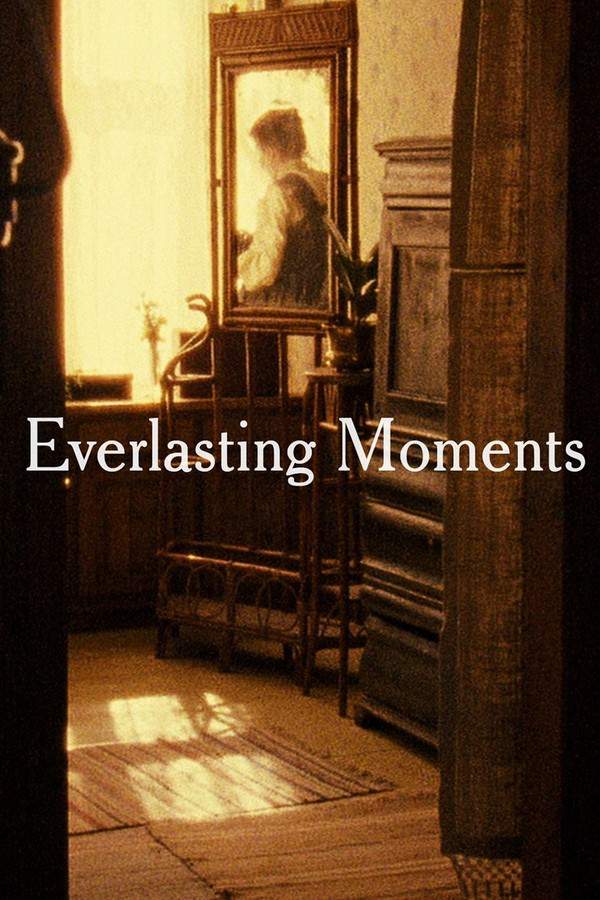
Year: 1987
Runtime: 112 mins
Language: Chinese
Director: Chen Kun-Hou
After losing both parents at twelve, Ti Hung vows at sixteen to escape her destitution. Through relentless effort she masters embroidery, gaining fame and wealth, which leads to a marriage into an affluent family—only for unforeseen tragedy to strike, reshaping her life.
Warning: spoilers below!
Haven’t seen Osmanthus Alley yet? This summary contains major spoilers. Bookmark the page, watch the movie, and come back for the full breakdown. If you're ready, scroll on and relive the story!
Read the complete plot breakdown of Osmanthus Alley (1987), including all key story events, major twists, and the ending explained in detail. Discover what really happened—and what it all means.
Set in the early 1900s, Ti-Hung and her younger brother Ti-Jiang are left to fend for themselves after their mother dies, with their aunt and uncle taking charge of their upbringing. As the elder sister, Ti-Hung shoulders the role of guardian, steering her life through hardship while trying to keep her family together.
Years pass, and Ti-Hung grows into a striking young woman whose exquisite embroidery and bound feet catch the eye of a wealthy matriarch, Lady Li of North Gate. She offers Ti-Hung’s hand in marriage to her grandson, Rui Yu, a match that promises security and a path out of poverty. In their village, a poor fisherman and close friend of Ti-Jiang, Ah Hai, silently admires Ti-Hung from afar, a quiet and steadfast presence who hopes for a future with her. The tale also threads in a troubling omen: Ti-Hung is said to be born with the “Cut Palm” fate—an omen discussed by Ti-Jiang and his fellow fishermen, hinting that such a fate would be a blessing for men but a curse for a woman by their side. The fear and curiosity around this fate shadow Ti-Hung as she steps toward the marriage that could redefine her life. Then tragedy strikes when Ti-Jiang dies in a drowning accident, leaving Ti-Hung to navigate a world that now demands even more from her.
Ti-Hung’s marriage to Rui Yu seems to lift her from poverty and brings a son, Hui Chih, into the world. Yet happiness is short-lived: Rui Yu dies of pneumonia, leaving his 23-year-old wife to raise their 5-year-old child and manage the family’s affairs. Rui Yu’s uncle steps in as the family’s accountant in the absence of Rui Yu, but he is plagued by a heavy opium habit. Ti-Hung, now the sole guardian of Hui Chih, becomes protective and strict, blaming the forces of fate for Rui Yu’s untimely death. She eventually learns, through the uncle’s revealing discussions and a monk’s predictions about Rui Yu when he was a boy, that Rui Yu’s life was never meant to be long, which momentarily eases her burden of guilt.
With the weight of responsibility pressing on her, Ti-Hung begins to enjoy the comforts that come with wealth and status, indulging in opera and neglecting some of her duties to Hui Chih. A concerned personal maid, Hsin Yue, hints that the family is quietly unraveling. Ti-Hung soon discovers that Rui Yu’s uncle has accumulated debt, exacerbated by his opium habit. To protect Hui Chih’s future, she arranges for Hui Chih to be sent to Japan for further study, while she remains to address the family’s mounting problems.
After the uncle’s death, Ti-Hung attends the wake, feigning sorrow as she slips into opium smoking herself. It is then that she enters into a passionate, complicated relationship with the young servant Chun Shu, whom she had previously encountered as a figure of intrigue. Their affair grows tense as Chun Shu becomes cocky, and Ti-Hung, driven by fear of exposure and control over her own fate, schemes to silence him by setting him up for theft and having him imprisoned.
A new chapter arrives when Ti-Hung realizes she is pregnant again. She struggles to keep the news secret while Hui Chih, now grown, returns to visit his mother. He accepts the situation and proposes taking Ti-Hung to Japan to deliver the baby away from gossip and judgment, ensuring a safer environment for the family name. The newborn is eventually placed for adoption in Japan, far from the village’s eyes.
Back in her homeland, Ti-Hung worries about the vitality and prospects of Hsin Yue, who has a dowry in place for her marriage. The prospective groom is Ah Chu, a former staff member Ti-Hung once fired for allegedly leading Hui Chih astray. Ti-Hung gives her blessing to Hsin Yue’s union with Ah Chu, wishing them well despite her personal regrets and the tangled history she has lived through.
Decades slip by, and Ti-Hung now stands in her seventies, weathered by time and swollen with regret. Ah Hai has risen from fisherman to a successful businessman and influential figure, reshaping the social landscape around her. Hui Chih, busy with his duties as a delegate to the Japanese, rarely returns to visit his mother, who spends her final days surrounded by the riches she once longed for but never fully possessed. In the quiet of a temple, Ti-Hung accepts that her life’s path has brought her to a solitary end. The memories of her youth flicker before her as she passes away, alone among the splendors that surround her, fulfilling a life story that began with hardship, ambition, love, and loss.
Last Updated: October 09, 2025 at 14:26
Discover curated groups of movies connected by mood, themes, and story style. Browse collections built around emotion, atmosphere, and narrative focus to easily find films that match what you feel like watching right now.
Stories of women whose lives are shaped by a relentless, tragic destiny.For viewers who appreciated the powerful story of Ti-Hung in Osmanthus Alley, this collection features movies with similar themes. Discover other dramatic tales of women grappling with tragic destinies, showing immense resilience against overwhelming loss and societal expectations. If you liked Osmanthus Alley, you'll find these emotionally heavy journeys compelling.
The narrative follows a linear, often decades-spanning life story, where the protagonist's resilience is constantly tested by a cascade of tragic events. The plot emphasizes the weight of fate and circumstance, showing how the character's strength is forged through repeated personal losses and societal hardships, often leading to a solitary or bittersweet conclusion despite their efforts.
These films are grouped by their shared focus on a female protagonist's grim, fated journey and her enduring spirit. They share a melancholic tone, heavy emotional weight, and a pacing that allows the full impact of a life's tragedies to accumulate, creating a profound and reflective viewing experience.
Epic, sorrowful family dramas that unfold slowly across generations.If the generational tragedy and slow-paced drama of Osmanthus Alley resonated with you, explore this selection of similar films. These movies feature sprawling family stories with a melancholic feel, exploring themes like grief, social mobility, and the heavy weight of destiny. Find more movies like Osmanthus Alley that deliver a powerful, emotionally rich narrative.
Narratives in this thread are typically linear but cover extensive timeframes, detailing the interconnected fates of family members. They often involve a central character striving for a better life, only to be met with unforeseen tragedies—such as addiction, financial ruin, or death—that reshape their legacy, resulting in a poignant and bittersweet reflection on life's hardships.
These films share a specific combination of slow pacing, melancholic tone, and a narrative structure centered on a multi-generational or life-spanning family drama. The experience is defined by a heavy, reflective mood and a plot that emphasizes the gradual accumulation of sorrow and the complexities of familial duty and social standing.
Don't stop at just watching — explore Osmanthus Alley in full detail. From the complete plot summary and scene-by-scene timeline to character breakdowns, thematic analysis, and a deep dive into the ending — every page helps you truly understand what Osmanthus Alley is all about. Plus, discover what's next after the movie.
Track the full timeline of Osmanthus Alley with every major event arranged chronologically. Perfect for decoding non-linear storytelling, flashbacks, or parallel narratives with a clear scene-by-scene breakdown.
Discover the characters, locations, and core themes that shape Osmanthus Alley. Get insights into symbolic elements, setting significance, and deeper narrative meaning — ideal for thematic analysis and movie breakdowns.
Get a quick, spoiler-free overview of Osmanthus Alley that covers the main plot points and key details without revealing any major twists or spoilers. Perfect for those who want to know what to expect before diving in.
Visit What's After the Movie to explore more about Osmanthus Alley: box office results, cast and crew info, production details, post-credit scenes, and external links — all in one place for movie fans and researchers.
Discover movies like Osmanthus Alley that share similar genres, themes, and storytelling elements. Whether you’re drawn to the atmosphere, character arcs, or plot structure, these curated recommendations will help you explore more films you’ll love.
Osmanthus Alley (1987) Scene-by-Scene Movie Timeline
Osmanthus Alley (1987) Movie Characters, Themes & Settings
Osmanthus Alley (1987) Spoiler-Free Summary & Key Flow
Movies Like Osmanthus Alley – Similar Titles You’ll Enjoy
Dam Street (2005) Plot Summary & Ending Explained
A Flower in the Rainy Night (1983) Spoiler-Packed Plot Recap
Stolen Life (2005) Story Summary & Characters
Alley of Love (1983) Full Movie Breakdown
Rouge of the North (1988) Complete Plot Breakdown
The Rice Dumpling Vendors (1969) Ending Explained & Film Insights
Women from the Lake of Scented Souls (1993) Full Summary & Key Details
Spring Silkworms (1933) Movie Recap & Themes
Ahu’s Husband (1968) Plot Summary & Ending Explained
Two Stage Sisters (1964) Ending Explained & Film Insights
The Straits of Love and Hate (1937) Detailed Story Recap
Otar’s Widow (1957) Detailed Story Recap
Blossoms in Adversity (1000) Full Summary & Key Details
Meet You at the Blossom (1000) Movie Recap & Themes
Blossom (1000) Ending Explained & Film Insights