The film unfolds in a Taliban-ruled Afghanistan, where the strict regime enforces repressive measures, especially against women. As women are stripped of their rights to work, education, and movement, they take to the streets in desperate protests, risking their lives for basic freedoms. The Taliban respond with violence, openly firing on the demonstrators, resulting in numerous casualties. Women are subjected to severe restrictions, including mandatory burqas in public and prohibition from leaving home without a male escort.
Within this harsh landscape, one family's plight becomes central to the narrative. This family consists of three generations of women: a young girl, her mother, Zubaida Sahar, and her grandmother. With the male figures of the family, including the girl's father and uncle, killed in conflict, the women must navigate a world where they cannot rely on men for support. Their struggle intensifies as they face not only poverty but also harassment from a local street urchin named Espandi, who recognizes them and exploits their situation for his gain.
The mother, who was once a nurse, finds her hospital in ruins due to Taliban funding cuts. Patients suffer as vital medical supplies dwindle, and the hospital becomes uninhabitable. As staff members go unpaid, including the mother and her daughter, they must find means to survive. Amidst chaos, the mother narrowly escapes the Taliban's brutal raid on the hospital by pretending that the patient she cares for is her husband. Outside the hospital, she manages to care for patients while receiving small payments, but she faces harassment when traveling without a male companion.
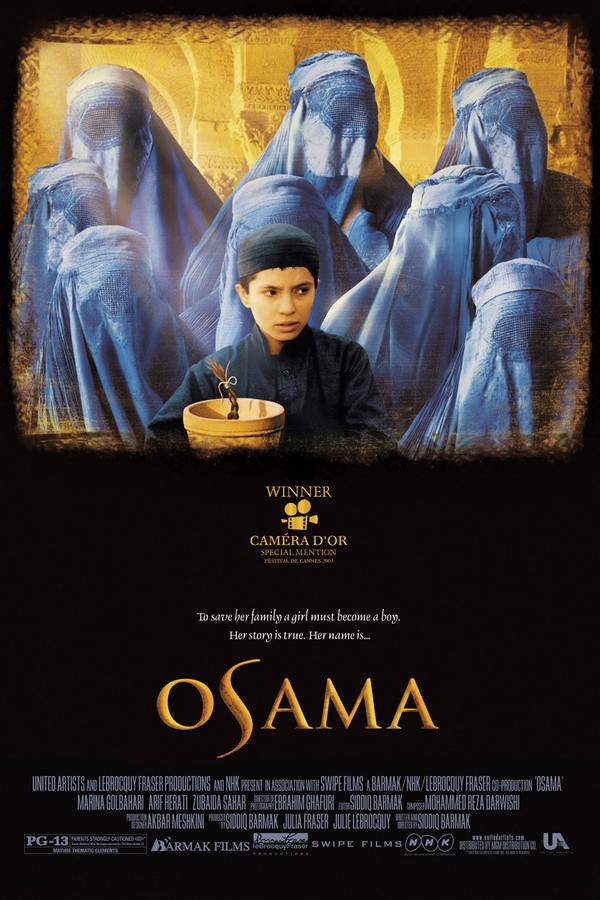
As desperation grows, the grandmother, who firmly believes in equality between genders, devises a daring plan for survival. She decides that the young girl, Marina Golbahari, should disguise herself as a boy, using her late father's clothes modified to fit her. Despite her initial fear of being discovered and facing certain death at the hands of the Taliban, the girl eventually agrees to this precarious plan, inspired by an Afghan fable about transformation. In a heartfelt moment, they cut her hair and plant the lock in a flowerpot, symbolizing her sacrifice.
With her new identity as "Osama," the girl must navigate the treacherous life of a boy in Taliban-controlled society. Daily prayers and rituals become a source of anxiety as Osama fights to maintain her secret in a community where any deviation could lead to fatal consequences. Tension mounts as Taliban forces begin drafting boys into a militant madrasa, further complicating Osama's masquerade.
Her difficulties compound as her feminine traits and mannerisms attract suspicion among the boys at the madrasa. Although Espandi attempts to shield her from discovery, her identity is ultimately revealed during a critical moment of menstruation. This devastating turn of events leads to Osama's arrest, alongside a Western journalist and a foreign nurse captured in the same raid.
The film reaches a heartbreaking climax as the journalist and nurse are sentenced to death, but due to Osama’s vulnerable position, her life is spared. Instead, she is given in marriage to a much older man, who already has three wives. These women, all oppressed by him, feel pity for Osama yet remain powerless to assist her.
In a tragic reflection of their situation, Osama’s new husband demonstrates his possessiveness through harsh measures, including locking her in a room, highlighting the grim reality faced by women under the Taliban's regime. This poignant narrative unveils the extreme lengths to which these women go for survival in a society that has stripped them of fundamental human rights.