Mary was incarcerated for setting her boyfriend, James Lincoln Fields, Cole Vigue the serial killer nicknamed the “Rain Ripper,” on fire. He torments Mary from within the walls of her memory, calling from prison when it rains and playing Raindrops by Dee Clark—the tune he used as a grim soundtrack during his killings and the moment he forced her to watch. The trauma lingers as vivid hallucinations keep him close, a haunting she manages with medication that dulls the edges of fear.
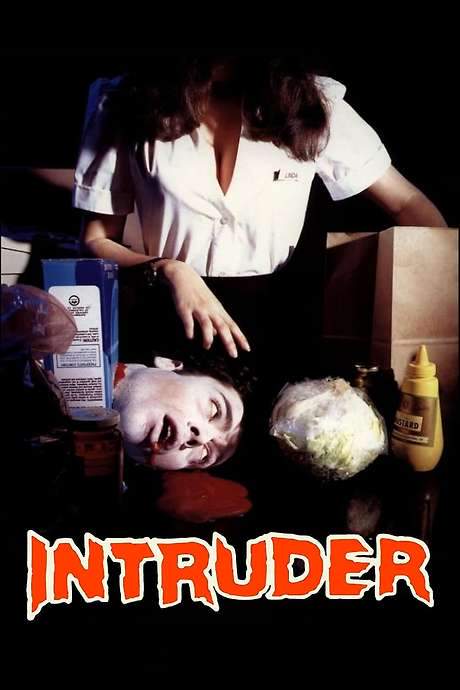
Now free, Mary takes a long, lonely night shift from 10 pm to 6 am at the Deer Gas Market, a quiet, fluorescent-lit crossroads where bad nights seem to stretch forever. On her first shift, Bobby [Brendan Fletcher] instructs her on the basics, a practical guide to handling trouble when the world feels unsettled. Debbie [Emily Tennant], Mary’s childhood friend, stops by for a visit, bringing a brief echo of normalcy before the night spirals. After she leaves, a hooded assailant targets Debbie and drags her away into the dark, a brutal reminder that danger can arrive without warning. A sleazy trucker lingers near the pumps, hitting on Mary and carelessly leaving his credit card behind, a small beacon of the predatory world she tries not to notice.
The night grows stranger as Mary starts receiving cryptic phone calls from a woman asking when they close. A customer mentions the outside toilet is out of order, and when Mary checks, she finds Debbie’s driver’s license in the bowl. The moment turns surreal: the toilet fills with blood and arms reach through the wall to grab her, but it’s only another hallucinatory echo of the trauma she carries. She tries to call her parole officer, Tom [Daniel O’Meara], but can’t get through, the line swallowing silence instead of answers.
Bobby returns to check on her, and Mary briefly shares a fragment of her history with James. He offers a quiet, human companionship that is interrupted when his truck breaks down and the hooded attacker strikes. Then James arrives, insisting that he is real, promising that people will die and that she will watch. Mary fights to hold onto reality, treating him as just another horrifying echo—until a gas-station customer’s voice reveals itself to be the voice on the phone, a moment that pulls Debbie’s mother—victim’s relative—into the fray. She attacks, driven by a grotesque belief in James’s control. Mary flees to the back room and finds Bobby and Debbie bound and menaced. Tom arrives and shoots the woman, but James slips away, leaving chaos behind.
The confrontation escalates when James appears behind Tom and knocks him unconscious. Mary is tied to a chair, forced to watch as James brutally murders Tom with a sledgehammer and suffocates Debbie with a plastic bag, a merciless tableau designed to break her. He moves on to Bobby, threatening to burn him alive, while the sleazy trucker—who has been lurking in the margins all night—returns, signaling to the police that something is wrong. James leaves to investigate, and the room fills with a tense, metallic hush.
Mary fights to free herself and unties Bobby, who reveals a shotgun hidden in the owner’s locker. With the weapon in hand, she makes a careful plan to ambush James. In the ensuing chaos, she accidentally shoots the trucker, a tragic misstep that scatters the room’s fragile balance. Bobby and Mary sprint for safety, but James cuts the power and takes life, first claiming Bobby’s in a brutal blaze of control.
Outside, a lone police officer arrives, and Mary darts toward the protection of the car, only to have James kill the officer with the shotgun. She stumbles into an old wrecking yard, where James stalks her through the rusting silhouettes of machinery. She lashes out with a shovel, finally breaking free and fleeing back toward the gas station. Locking herself in the office, she faces the haunting echo of the night—there, a deer's head hangs as a grim totem—and James shatters the door, only to be met with a brutal, primal counterattack: she impales him with the deer antlers. James collapses, whispering a final, unsettling declaration of love as the life drains away. Mary slumps, waking at sunrise to a startling absence of blood—no trace of James remains, and she steps away from the station into the uncertain light of a new day.
The story closes with a stark, unsettling glimpse of a new life. Mary appears at a hairdresser’s, sweeping and cleaning, a quiet semblance of normalcy finally returning. Then a familiar silhouette crosses the mirror: James’s reflection stares back from the glass, and the screen cuts to black, leaving the wound of trauma unhealed and the threat haunting her future.