Plot Explained Spoilers guaranteed!
Plot Explained

Browse by genre

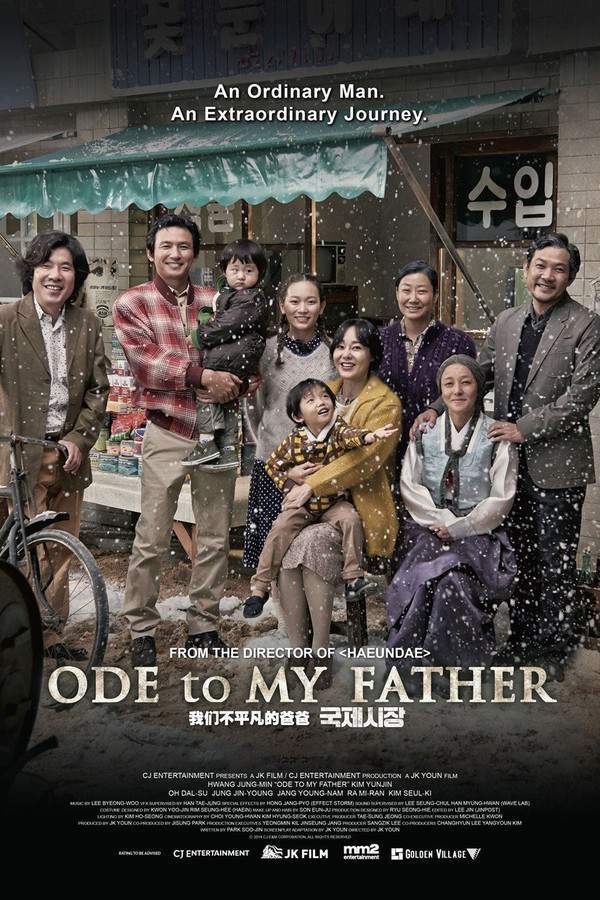
Ode to My Father (2015) movie poster

Characters & Themes

Ode to My Father (2015) Characters, Setting & Themes Explained

Release, runtime and language
2015 · 126 min · Korean
Directed by
Youn Jk

This moving drama chronicles Duk-soo’s difficult life, beginning with his childhood during the Korean War and following him as he strives to provide for his family. Driven by a desire to understand his father's past and the sacrifices made for their survival, Duk-soo embarks on a journey of discovery, confronting painful memories and searching for a deeper connection to his heritage. It's a story of resilience, family, and the enduring power of love across generations.

On this page (6)
  1. 1 Characters explained (4)
  2. 2 Where & when it takes place
  3. 3 Themes & meaning (3)
  4. 4 Character & meaning questions
  5. 5 Movie threads
  6. 6 Every angle

4 main characters · contains spoilers

Ode to My Father Characters Explained: Who Is Who

The main characters of Ode to My Father (2015), heroes and villains: what drives them, how they change over the course of the story and what each of them reveals about the film's bigger ideas.

  • Deok-soo

    Deok-soo is a resilient and dutiful young boy thrust into adulthood by the chaos of the Korean War. His unwavering commitment to his family's safety and well-being defines his character, as he navigates significant challenges both at home and abroad. The burden of responsibility weighs heavily on him, yet his capacity for love and hope shines through, making him a compelling protagonist.

    • 👨‍💼 Provider
    • 💔 Resilient
    • 🪖 Soldier
  • Mak-soon

    Mak-soon, Deok-soo's sister, represents the poignant loss and longing that permeate the film. Her early disappearance sets the stage for Deok-soo's journey, showcasing how her absence profoundly affects their family's dynamics. The eventual search for familial connections underscores the significance of her character in the narrative.

    • 👧 Sister
    • 💔 Loss
    • 🔍 Search
  • Yeong-ja

    Yeong-ja is a nurturing nurse who embodies warmth and love during Deok-soo's harrowing journey. Her relationship with him not only brings comfort amidst the chaos but also introduces themes of hope and companionship. Together, they forge a path toward a better future, even in the face of adversity.

    • 💖 Nurturer
    • 🌟 Hope
    • 👩‍⚕️ Caregiver
  • Dal-goo

    Dal-goo is Deok-soo's loyal friend who stands by him through both the harsh realities of working in Germany and the trials they encounter. His unwavering support highlights the bonds of friendship during difficult times, contributing to the film's exploration of camaraderie amidst struggle.

    • 👫 Loyalty
    • 💪 Friendship
    • 🌍 Worker

Last updated: October 22, 2024 at 23:13

Was this helpful?

Setting

Where and When Does Ode to My Father Take Place?

The setting of Ode to My Father (2015): the year and time period, the places and locations, and how they shape the characters, the mood and the tension of the story.

Time period

1950s to 1983

The narrative spans from the early 1950s during the Korean War to 1983, a time marked by significant changes in Korea and around the world. The film encapsulates the emotional turmoil and struggles of families displaced by war, while also exploring the enduring theme of sacrifice. The 1970s serves as a critical period of conflict and personal growth for Deok-soo as he navigates the demands of military service and family obligations.

Location

Hungnam, Busan, Germany, Hamborn, Vietnam

The movie begins in Hungnam, where the chaos of the Korean War creates a backdrop for personal tragedies. Busan serves as a place of refuge and hope for Deok-soo and his family. The story then transitions to Germany, specifically Hamborn, where the harsh realities of life as Gastarbeiter unfold amidst labor challenges. Vietnam represents the war-torn backdrop of Deok-soo's military service, highlighting the global impact of the conflict.

  • 🏙️ City
  • 🛤️ Journey
  • 🌍 Global

Last updated: October 22, 2024 at 23:13

Was this helpful?

3 major themes

Ode to My Father Meaning: Themes & Message Explained

What is Ode to My Father (2015) really about? The emotional, social and philosophical themes the film keeps returning to, its symbolism and the message beneath the surface.

  • Sacrifice

    Sacrifice is a central theme in the movie as Deok-soo shoulders immense responsibilities from a young age. His journey is driven by the need to provide for his family, illustrating the lengths one goes to protect loved ones amidst chaos. Each decision he makes reflects the notion that love often comes with the cost of personal dreams and aspirations.

  • Hope

    Despite the overwhelming challenges, hope permeates Deok-soo's life. From his first breaths of love with Yeong-ja to the eventual reunion with family, moments of joy shine through the darkness. The film ultimately highlights the resilience of the human spirit in the face of adversity, encapsulating the belief that brighter days can emerge even from the most daunting circumstances.

  • Family

    Family is a driving force behind Deok-soo's actions and decisions. The bonds of brotherhood, love, and loss shape his identity and journey throughout the film. As the story unfolds, the importance of reconnecting with family becomes paramount, showcasing the complexity of family ties against a backdrop of historical events.

Last updated: October 22, 2024 at 23:13

Was this helpful?

Character & theme questions

Ode to My Father Characters & Meaning: Your Questions Answered

The questions people ask about Ode to My Father (2015): who the characters really are, their relationships, what the symbols mean, where it takes place and what the movie is really about. Each answer contains spoilers.

Q1

Where does the movie take place during the Korean War?

The movie begins in Hungnam during the Korean War, depicting the chaos and personal tragedies of that period. The family then seeks refuge in Busan, which serves as a place of hope and safety. Later, the story shifts to Germany, specifically the industrial city of Hamborn where Deok-soo works as a Gastarbeiter, and to Vietnam where he serves in the military.

  • hungnam
  • busan
  • korean war
  • setting
  • refugees
Q2

What is Deok-soo's experience like working in Germany?

Deok-soo works as a Gastarbeiter (guest worker) in Hamborn, Germany, facing harsh labor conditions and the challenges of being a foreigner in a foreign land. This period represents a significant chapter in his life where he endures physical strain and loneliness while trying to provide for his family back in Korea. His loyal friend Dal-goo stands by him during these difficult times.

  • germany
  • gastarbeiter
  • hamburg
  • labor
  • foreign worker
  • 1970s
Q3

What time period does the movie cover?

The narrative spans from the early 1950s during the Korean War through to 1983, covering approximately three decades of Korean history. The 1970s serves as a particularly critical period when Deok-soo navigates the demands of military service and family obligations while the world around him undergoes significant changes.

  • 1950s
  • 1970s
  • 1983
  • korean war
  • time period
  • decades
Q4

What does the movie say about sacrifice?

Sacrifice is the central theme of the film, as Deok-soo shoulders immense responsibilities from a young age. His journey is driven by the need to protect and provide for his family, making difficult decisions that often require giving up personal dreams and aspirations. Each choice he makes reflects how love for family can come at the cost of one's own happiness.

  • sacrifice
  • family duty
  • responsibility
  • korean war
  • trauma
Q5

How does hope function as a theme in the film?

Despite overwhelming challenges, hope permeates Deok-soo's life through his relationship with Yeong-ja and eventual family reunions. The film highlights the resilience of the human spirit, showing how moments of joy emerge even in the darkest times. The story encapsulates the belief that brighter days can come from seemingly hopeless situations.

  • hope
  • resilience
  • love
  • recovery
  • yeong-ja
Q6

What role does family play in the story?

Family is the driving force behind Deok-soo's actions and identity throughout the film. The bonds of brotherhood, love, and loss shape his entire journey. The search for lost family members, particularly his sister Mak-soon, becomes a central quest that underscores the complexity and importance of familial connections against the backdrop of historical upheaval.

  • family
  • brotherhood
  • reunion
  • loss
  • mak-soon
  • identity
Q7

Who is Deok-soo and what defines his character?

Deok-soo is the protagonist, a resilient and dutiful young boy forced into adulthood by the chaos of the Korean War. His unwavering commitment to his family's safety defines him, as he navigates challenges both at home and abroad. The burden of responsibility weighs heavily on him, yet his capacity for love and hope makes him a compelling character.

  • deok-soo
  • protagonist
  • dutiful
  • resilient
  • responsibility
  • korean war
Q8

Who is Yeong-ja and what is her role in the story?

Yeong-ja is a nurturing nurse who brings warmth and love into Deok-soo's life during his most difficult moments. Their relationship provides him with comfort amid chaos and represents hope and companionship. Together they forge a path toward a better future, illustrating the theme of finding love despite adversity.

  • yeong-ja
  • nurse
  • love
  • hope
  • companion
  • relationship
Q9

What happened to Mak-soon and why is she important?

Mak-soon is Deok-soo's sister whose early disappearance profoundly affects the family's dynamics and sets the stage for Deok-soo's lifelong journey. Her absence drives much of his motivation to find and reconnect with family members. The search for her underscores the film's exploration of loss and the enduring power of familial bonds.

  • mak-soon
  • sister
  • disappearance
  • loss
  • search
  • family
Q10

Who is Dal-goo and what does he represent?

Dal-goo is Deok-soo's loyal friend who remains by his side through the harsh realities of working in Germany and other trials they face. His unwavering support highlights the importance of friendship during difficult times. Dal-goo represents the bonds of camaraderie that help characters survive amidst struggle.

  • dal-goo
  • friend
  • loyalty
  • support
  • camaraderie
  • germany
Q11

Does the movie depict the Vietnam War?

Yes, the movie includes scenes set in Vietnam, which serves as the war-torn backdrop of Deok-soo's military service. This setting highlights the global impact of conflict on Korean lives during the Cold War era, showing how the effects of war extended beyond the Korean peninsula to affect ordinary people in multiple theaters.

  • vietnam
  • military service
  • cold war
  • global conflict
  • war
Q12

What is the emotional tone of the film?

The film has a predominantly melancholic tone due to the lifelong series of sacrifices and losses the protagonist endures, from childhood trauma to adult disappointments. The ending is bittersweet, featuring a heartwarming family reunion but shadowed by the death of Deok-soo's mother and his realization that his father is likely gone. This emotional weight centers on themes of duty, lost opportunities, and the psychological toll of survival.

  • melancholy
  • bittersweet
  • emotional tone
  • sacrifice
  • family reunion
  • ending

Movie threads

More Movies Like Ode to My Father, by Mood & Story

Curated lists built around what makes Ode to My Father tick: the same mood, the same kind of story or the same emotional payoff. Each list explains why these movies belong together.

Epic family sagas across generations like Ode to My Father

Sweeping stories that chart the lives and sacrifices of a family over decades. If you liked the multi-generational scope of Ode to My Father, you'll appreciate these movies that chart a family's journey through history. Discover similar Korean drama stories and other epic family narratives filled with duty, sacrifice, and the enduring bonds that time cannot break.

  • epic
  • nostalgic
  • heartfelt
  • resilient
  • somber
  • generational
  • Tone: melancholic, heartfelt
  • Pacing: steady, expansive
Why these movies?

The story pattern: Stories in this thread typically unfold chronologically, spanning several decades to show the full arc of a family's history. They often use historical events as a backdrop for personal struggles, focusing on the sacrifices parents make for their children and how those choices echo through time.

Why they belong together: Movies are grouped here for their shared focus on the intergenerational family unit as the central subject, their use of a long timeframe, and their exploration of themes like heritage, duty, and the cost of providing a better future for the next generation.

Bittersweet reflections on a life lived like in Ode to My Father

Character-driven dramas about looking back on a life of sacrifice and memory. Find movies similar to Ode to My Father that explore a character's reflective journey through their own past. These poignant dramas share a melancholic tone and a focus on memory, sacrifice, and the bittersweet feeling of evaluating one's life and the choices that shaped it.

  • melancholic
  • nostalgic
  • reflective
  • somber
  • bittersweet
  • heartfelt
  • Tone: melancholic, reflective, bittersweet
  • Pacing: steady, character-driven
Why these movies?

The story pattern: The narrative pattern involves a character, often in their later years, revisiting pivotal moments from their youth and adulthood. The story is driven by memory and introspection, weaving past and present to uncover the emotional truth of a lifetime of experiences, frequently centered on themes of survival and duty.

Why they belong together: This thread groups movies that share a specific emotional mix: a melancholic tone, a steady, reflective pace, and a narrative structure built around memory. They all deliver a heavy emotional weight and conclude with a bittersweet feeling, making the viewer contemplate the complexity of a life fully lived.

Every angle

Ode to My Father (2015) Explained: Plot, Timeline & Characters

Everything about Ode to My Father in one place: what happens in the plot summary, the timeline in chronological order, the characters and meaning and a spoiler-free summary. What's After the Movie adds the cast, box office and post-credit scenes.

Coming soon on iOS and Android

The Plot Explained Movie Summary App

Plot summaries, endings explained and timelines on your phone. Catch up on any movie in minutes, save your favorites and never miss a twist again.

Be the first to know when we launch. Your email stays private, always.

Learn more about the app