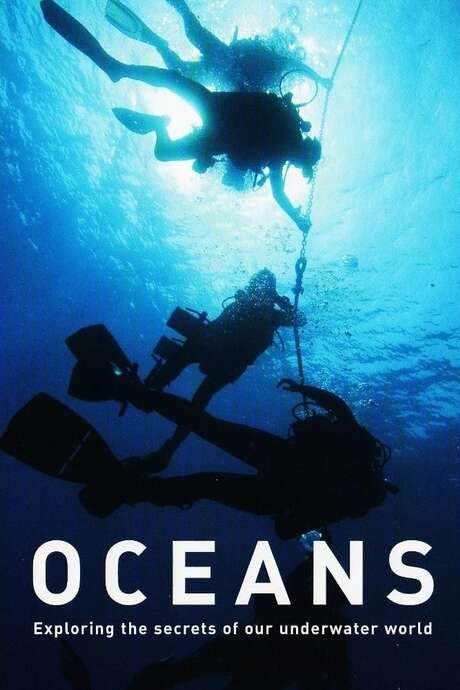
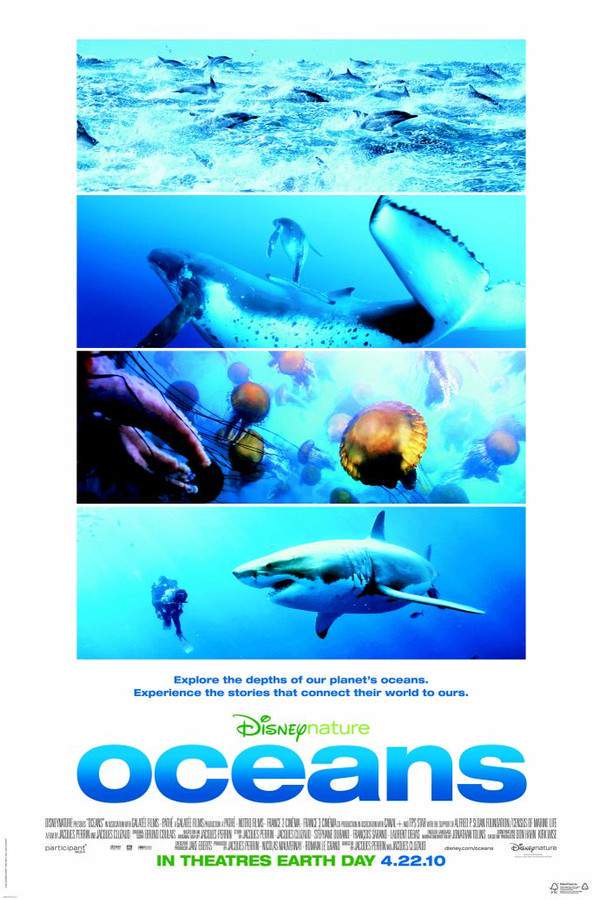
Oceans invites you into a sweeping, up-close exploration of the sea’s vast journey, guided by Mark Halliley the narrator, who patiently threads together the rhythms of life both above and below the surface. The film opens on a sunlit beach where children dash toward the waves, and one curious boy pauses to wonder what the ocean truly is. From there, the voyage unfolds across blue horizons and hidden depths, inviting viewers to observe how ecosystems connect across continents and scales.
The voyage first lands in the Galápagos, where a small clan of marine iguanas and wandering horseshoe crabs exist in a delicate balance with the tides and thermals. Night brings a dramatic interruption as an Ariane rocket launches into the sky, a startling beacon that momentarily disrupts two distant clans and then climbs outward toward the cosmos, reminding us of humanity’s reach far beyond the shoreline. The journey then dives beneath the surface to a trench where the tiny larvae of sea urchins and delicate crustacean eggs drift in the cold currents, illustrating the steady, secret birth of oceans’ creatures.
A swarm of moon jellyfish glides through the water, its bodies pulsing with the sea’s timeless tempo. By day, another colony of jellyfish drifts along the current, reminding us of the ocean’s ceaseless choreography and the many forms that life can take within it. Moving to the coast of South Africa, a busy scene unfolds: dolphins, gannets, bronze whalers, and bryde’s whales converge to hunt sardines, while manta rays sweep in to snatch a few fish from the fray. A quiet blanket octopus glides along the current, and the sardines themselves begin to twist and coil in unusual patterns, a sign of a living, breathing ocean in constant motion.
On a sun-warmed beach, sea lions bask before the sea leans back into deeper waters, where a humpback whale and her calf perform flipper slaps, spyhops, and breaches that punctuate the rhythm of life. The hunters’ chorus intensifies as some sea lions return home, only to face predation from a great white shark and a killer whale lurking in nearby currents. In deeper seas, a blue whale fattens itself on krill, a reminder of the immense chains of feeding that sustain even the largest creatures. As twilight settles, birds rotate between nests and the surface, while at night carnivores emerge to hunt along reef edges, including a mantis shrimp that demonstrates a remarkable display of predation.
Crossing to Australia, a Spanish dancer—an eye-catching sea creature—emerges from its hidden home, adding color and drama to the underwater panorama. By day, bottlenose dolphins leap along the swells, and a dugong along with a green sea turtle graze on seagrass, highlighting the quiet, steady abundance of coastal ecosystems. On the beach, baby sea turtles begin their perilous journey to the ocean, a harrowing climb that pits them against frigatebirds circling above; only one young turtle survives this perilous passage. In the open sea, sailfish chase prey with lightning speed, adding to the display of marine hustle that characterizes life on and around the reef.
Back at a thriving coral reef, the daily rhythms persist as creatures mind their own business in a busy social order. A cuttlefish stalks crabs with precision, garden eels and razorfish glide through their sandy lanes, and spider crabs engage in a dramatic, slow-motion skirmish. Large migrations fill the oceans as humpback whales, blue whales, sunfish, blue sharks, sperm whales, and whale sharks travel across wide distances, while spinner dolphins, yellowfin tuna, and manta rays share the open waters for long stretches of time. A pair of Asian sheepshead wrasse engage in mating, and a sea otter smashes on clams with practiced ease, demonstrating the varied tools life uses to feed and thrive. In Alaska, humpback whales arrive at their rich feeding grounds, and the documentary cuts to netted fleets and the perilous global reach of fishing as countless species appear in nets—tuna, whale sharks, sailfish, sea turtles, and sunfish among them.
A satellite image reveals ocean trash drifting across the seas, a stark reminder of human impact on marine life. Underwater, mounds of debris threaten fur seals’ habitats, illustrating another pressing challenge facing the world’s oceans. The journey then shifts toward the polar realms of the Arctic and Antarctica, where divers approach the peril and wonder of the cold seas and one diver even swims with a great white shark, a moment that captures the raw, unpredictable beauty of life in the far north. As the film closes, the narrator invites a provocative reflection: we shouldn’t ask what exactly is the ocean, we should ask what exactly are we.
> "we shouldn't ask what exactly is the ocean, we should ask what exactly are we"
The documentary is presented with a panel of voices and specialists, among them Philippe Cousteau Jr., Paul Rose, Lucy Blue, and Tooni Mahto, whose perspectives guide the viewer through the marvels and the fragilities of Earth’s seas, linking distant scenes with a shared thread of curiosity, wonder, and responsibility. The film’s rhythm—alternating between intimate wildlife moments and broad, planetary-scale overviews—creates a cohesive, immersive portrait of life in the oceans, inviting both awe and reflection without losing sight of the real-world stakes at stake.