After rescuing a faint, wounded woman from an alley, Seligman brings her to his modest home. She calls herself Joe, a self‑confessed nymphomaniac, and recounts her sexual experiences with countless men since her teenage years. Seligman shares his passions—fly‑fishing, Fibonacci, and organ music—forming a dialogue on desire and philosophy.
Find where to stream, rent, or buy Nymphomaniac (1000) in the US with current JustWatch availability, up-to-date pricing, and platform listings for subscription, rental, and digital purchase options.
Warning: spoilers below!
Haven’t seen Nymphomaniac yet? This summary contains major spoilers. Bookmark the page, watch the movie, and come back for the full breakdown. If you're ready, scroll on and relive the story!
Trace every key event in Nymphomaniac (1000) with our detailed, chronological timeline. Perfect for unpacking nonlinear stories, spotting hidden connections, and understanding how each scene builds toward the film’s climax. Whether you're revisiting or decoding for the first time, this timeline gives you the full picture.
Last updated: December 30, 2025 at 11:34
Find frequently asked questions about the Nymphomaniac (1000) timeline, including chronological order, nonlinear jumps, cause-and-effect links, and scene sequence clarifications. This timeline FAQ helps explain when key events happen, how moments connect, and why the story unfolds in that specific order.
Joe carries a deep sense of personal culpability rooted in her childhood. Her father, a doctor, shaped her view of desire through stories that framed longing as dangerous and consequential. This childhood education made her interpret her own sexual impulses as inherently sinful, not as religious doctrine, but as a personal burden she chose to bear. The statement reflects her internalized belief that her uncontrollable sexual appetite makes her fundamentally flawed.
Earlier scenes establish her father's cautionary tales about the ash tree, hinting at how desire was framed as risky and beautiful but ultimately dangerous.
Seligman uses fly-fishing to explain desire itself: the fly is light and tempting, the line represents the heavy pull of addiction or compulsion, and the lure must match the fish's specific hunger. He applies this directly to Joe, suggesting her sexual conquests are like fishing, strategic, rhythmic, and driven by a need to satisfy an insatiable appetite. The metaphor frames her behavior not as mere hedonism but as a fundamental mismatch between her desires and her ability to fulfill them.
The metaphor appears early when Joe is still reluctant to share her story, setting up the analytical lens through which her life will be examined.
Joe's refusal stems from deep mistrust of institutional intervention and a desire to maintain control over her own narrative. After being badly beaten, she insists that if he calls authorities, she will leave before he returns. This reflects her pattern of self-reliance and her belief that she deserves her suffering, she explicitly states she's a bad human being and doesn't deserve help. It's also a narrative device that forces Seligman to engage with her story on her terms.
This moment establishes her resistance to being saved or fixed, a theme that recurs throughout her confessions.
The ash tree is a recurring motif from Joe's childhood that her doctor father used to teach her about beauty, danger, and the cycle of seasons. His stories about the ash tree's winter-dark buds combined scientific knowledge with subtle warnings about the risks of desire. This imagery colors Joe's adult view of longing, she sees desire as something that can be beautiful but ultimately carries hidden dangers. The tree becomes a symbol of how her father both enchanted and frightened her about her own impulses.
The ash tree appears in early childhood memories, establishing the lens through which Joe interprets her own sexuality as both alluring and destructive.
Jerôme is a man from Joe's past who becomes one of her three central lovers, the second voice in her polyphonic life. Introduced initially as an uncomfortable, almost predatory presence in her memories, their relationship evolves across decades from an early uncomfortable encounter to a professional reconnection in her office years. Their complicated history represents a recurring pattern in Joe's life: the tension between past trauma and present desire, and the blurred lines between power dynamics and genuine connection. Their climactic sexual encounter is presented as a three-way split-screen, mirroring the organ's three voices.
Jerôme first appears as an uneasy figure in Joe's train memories, establishing a pattern of unresolved tension that resurfaces throughout her adult life.
The Mrs. H chapter introduces Uma Thurman as a wife who enters Joe's life with a quiet, unsettling presence. This encounter represents a complicated domestic situation, literally a ménages, that serves as a mirror for Joe's own patterns of destruction. Mrs. H becomes a reflection of loss, memory, and the stubborn persistence of desire even in the face of emotional devastation. The scene challenges Joe to confront what it means to both destroy and be destroyed by her own appetites, functioning as a psychological turning point rather than a simple sexual encounter.
Earlier chapters establish Joe's pattern of seeking relationships that echo her childhood emotional voids, making Mrs. H's impact inevitable.
Seligman introduces the concept of polyphony, multiple independent melodies coexisting harmoniously, to explain Joe's approach to love and desire. He draws a parallel between the organ's three voices and Joe's three core relationships: the bass (a steady, devoted partner), the melody (a predatory, boundary-testing lover), and a third voice that represents deeper fusion. The cantus firmus is an anchored melodic line that remains constant while other voices weave around it, representing Joe's attempt to find a stable core within her chaotic sexual history. This musical framework becomes an analytical tool for understanding her life as a composition.
This discussion occurs before Joe fully reveals her three main relationships, making the metaphor a preview of what Seligman will help her articulate.
The Delirium chapter shifts to a stark, black-and-white sequence set in hospital wards where Joe's father, a doctor, confronts serious illness. This section explores themes of mortality, guilt, and the gap between memory and reality, particularly through the lens of delirium tremens. It provides crucial context for Joe's relationship with her father and explains the emotional void she has been trying to fill with sexual conquests. The intimate, harrowing hospital scenes show her father as devoted and exhausted, offering a counterpoint to Joe's self-destructive patterns and deepening the film's exploration of how people cope with loss.
Earlier chapters establish Joe's complicated feelings about her father and his stories, making his illness and death a pivotal emotional reckoning.
By the film's end, Joe confesses that she can no longer feel the same intensity she once did, a consequence of years of sexual excess and emotional numbness. This confession comes after the climactic three-way encounter with Jerôme, where she experiences raw vulnerability but finds herself emotionally hollow. The statement represents the psychological toll of her lifelong compulsion: she has numbed herself through repetition and quantity, and now stands at a point where desire no longer provides the meaning or connection she sought. The open ending suggests this emptiness drives the continuation in Volume II.
Earlier scenes show Joe's growing difficulty connecting emotionally, even during moments of physical intimacy.
Joe divides her romantic life into three distinct relationships that Seligman compares to the three voices of an organ: the bass (a man with a red car, predictable, devoted, patient), the second voice (a Jaguar-driving predator who tests her boundaries), and the third voice (a close confidant who represents deeper fusion). These three relationships are presented in split-screen during the climactic sequence with Jerôme, visually mirroring the polyphonic structure. The metaphor suggests Joe's life is a composition of competing melodies that she's tried to harmonize, with each lover representing a different aspect of her emotional and sexual self.
The three voices are introduced gradually throughout the film, with each lover appearing in separate chapters before the connection is made explicit.
As a young woman, Joe and her friend B engage in a ritualized contest on a train, seeing who can seduce the most men before reaching their destination. The game is strategic, involving counting, timing, and learning the rhythms of attraction. This sequence establishes Joe's lifelong approach to sex as both a game and a competitive sport, using the same fishing metaphors Seligman will later employ. The train journey also includes her pivotal first sexual encounter and a tense moment with a married man, foreshadowing the emotional costs that come with her lifestyle.
The train sequence establishes patterns of objectification and competition that define Joe's adult sexual behavior.
The line 'Fill all my holes' appears in the film as a raw expression of Joe's emptiness and desperate need for connection. While it functions on a surface level as explicit dialogue about physical desire, it carries deeper thematic weight, representing Joe's psychological void that she believes can only be filled through sexual conquest. The phrase encapsulates her belief that she is fundamentally incomplete or broken, and that sex is the only language through which she knows how to communicate her needs. This becomes especially poignant given her later confession that she can no longer feel anything at all.
This quote appears during moments of peak sexual activity but is juxtaposed with Joe's growing emotional disconnection.
Discover curated groups of movies connected by mood, themes, and story style. Browse collections built around emotion, atmosphere, and narrative focus to easily find films that match what you feel like watching right now.
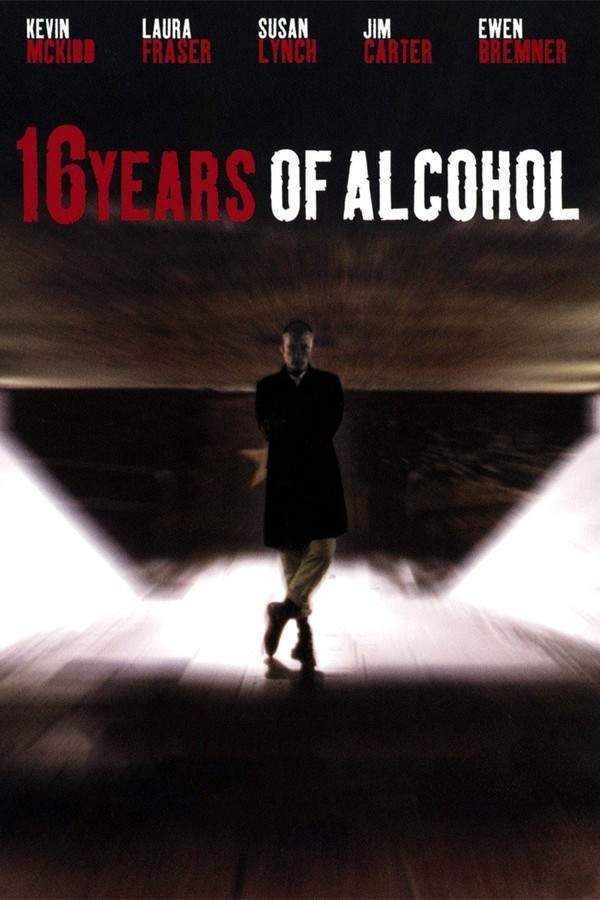
Characters recount their lives, framed by philosophical dialogues on human nature.If you liked Nymphomaniac's dialogue-driven structure, explore more movies like it. This section features films where a character's life confession is framed by philosophical discussions, creating introspective and thematically heavy stories about human nature.
The narrative pattern involves a central character recounting their life story, often in a non-linear fashion, to an interlocutor who provides a contrasting perspective. This framing device allows for a dual exploration: the raw, emotional journey of the protagonist and a detached, analytical commentary on its meaning.
These films are grouped by their unique narrative structure that merges intimate memoir with philosophical inquiry. They share a dark, introspective tone and a steady, reflective pacing, creating a deeply thoughtful and emotionally heavy viewing experience centered on understanding a complex life.
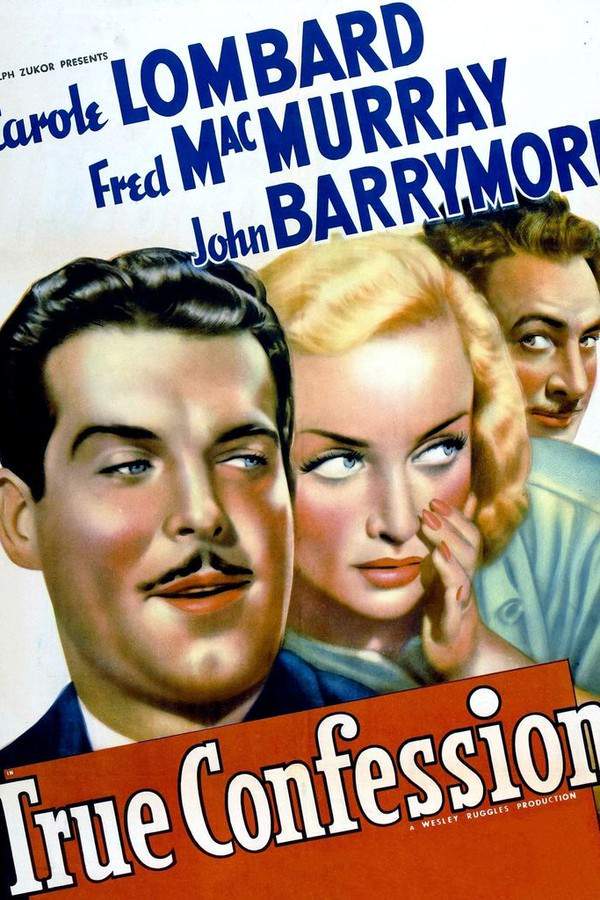
Unflinching, analytical examinations of compulsive behavior and its emotional fallout.Find movies similar to Nymphomaniac that offer a stark look at addiction. These films explore compulsive behaviors like nymphomania or other obsessions with a clinical, unflinching approach, focusing on psychological depth and heavy emotional themes.
Stories follow a protagonist's downward spiral driven by a powerful addiction or compulsion. The narrative is often episodic, charting the progression of the behavior and its impact on relationships and self-identity. The tone is brutally honest, avoiding glamorization to instead focus on the isolating and destructive nature of the obsession.
These films are united by their stark, voyeuristic approach to depicting addiction. They share a high intensity, dark tone, and heavy emotional weight, prioritizing a psychological and existential examination over simple drama. The pacing is often steady, allowing for a thorough and harrowing character study.
Don't stop at just watching - explore Nymphomaniac in full detail. From the complete plot summary and scene-by-scene timeline to character breakdowns, thematic analysis, and a deep dive into the ending - every page helps you truly understand what Nymphomaniac is all about. Plus, discover what's next after the movie.
Read a complete plot summary of Nymphomaniac, including all key story points, character arcs, and turning points. This in-depth recap is ideal for understanding the narrative structure or reviewing what happened in the movie.
Discover the characters, locations, and core themes that shape Nymphomaniac. Get insights into symbolic elements, setting significance, and deeper narrative meaning - ideal for thematic analysis and movie breakdowns.