Plot Explained Spoilers guaranteed!
Plot Explained

Browse by genre

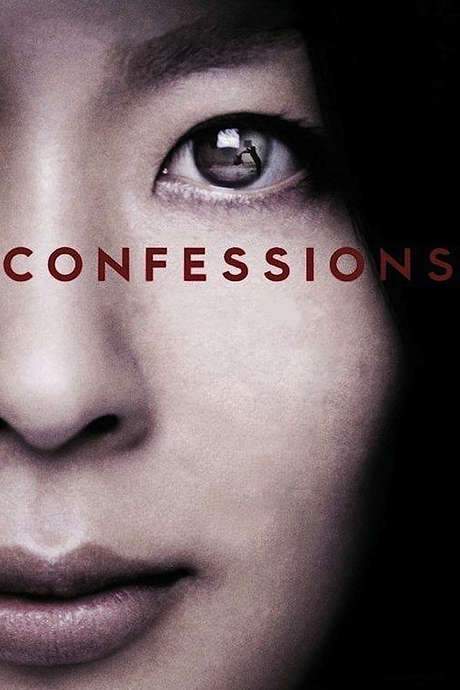
Confessions (2010) movie poster

Timeline

Confessions (2010) Timeline Explained – Every Event in Order

Release, runtime and language
2010 · 107 mins · Japanese
Loading streaming availability…
Directed by
Tetsuya Nakashima
Starring
Masaki Okada, Takako Matsu, Yukito Nishii, Non, Mana Ashida, Ayaka Miyoshi

After her four‑year‑old daughter is murdered by her own pupils, a grieving middle‑school teacher becomes obsessed with vengeance. As she investigates, she discovers the children are far from innocent and uncovers the unsettling secrets hidden within the school and its community.

On this page (5)
  1. 1 Where to watch
  2. 2 Events in order (14)
  3. 3 Timeline questions answered
  4. 4 Movie threads
  5. 5 Every angle
Loading streaming availability…

14 events in order · contains spoilers

Confessions Timeline: Events in Chronological Order

Every key event of Confessions (2010) in order, scene by scene, with when and where it takes place. Use it to untangle flashbacks, time jumps and parallel storylines, to refresh your memory before the sequel or to find the exact scene you are thinking of.

  1. Yuko's family life and Manami's daily presence at school

    With her HIV-positive husband gradually worsening, Yuko Moriguchi maintains a fragile balance at home while bringing her four-year-old daughter Manami to the school. The arrangement keeps the family connected but also tethers Manami to the school environment. The routine foreshadows how far the family and the classroom will be pulled into tragedy.

    When
    Before Manami's death
    Where
    Home
  2. Manami's death in the school pool

    Manami is found dead in the school swimming pool, sending shock through Yuko, her students, and the school community. The loss triggers a wave of grief and questions about who could have harmed someone so young. Yuko's grief soon hardens into a resolve to uncover the truth.

    When
    The day of the death
    Where
    School pool
  3. Yuko resigns and publicly hints at two killers

    In a calm but chilling move, Yuko tells her class she will resign before spring break and reveals that two students in the class—Student A and Student B—murdered Manami. She refuses to name them outright, instead inviting the students to deduce the guilty parties. Her confrontation sets the moral and legal stakes for everyone involved.

    When
    Shortly after Manami's death
    Where
    Classroom
  4. The bunny-purse clue and Naoki's implication

    While sorting through Manami's belongings, Yuko discovers a small purse with a bunny mascot that seems linked to the crime. This clue leads her to confront Naoki Shimomura, the classmate identified as Student B. The purse becomes a pivotal trigger that moves the investigation from rumor to a pointed accusation.

    When
    After Manami's death
    Where
    School/Classroom
  5. Shop flashback: Yuko, Manami, and Shuya cross paths

    In a flashback, Yuko is in a shop with Manami when she refuses to buy the purse because she has already bought a jacket with the same bunny motif. Shuya Watanabe notices her and loudly questions why Manami cannot have the purse, setting up tensions that will echo through the students later. The encounter foreshadows conflicts between the teacher and students.

    When
    Flashback preceding the purse purchase
    Where
    Shop
  6. Shuya confesses in the science lab and nearly dies

    Shuya visits the school's empty science lab and bluntly admits to killing Manami, then rushes to jump out a window, feigning remorse as he taunts Yuko with 'just kidding.' The moment reveals the chilling arrogance and cruelty behind his actions. It also exposes the fragile line between confession and further manipulation.

    When
    Immediately after the purse clue and flashback
    Where
    School science lab
  7. Yuko names the law and reveals the HIV-milk plan

    In the classroom, Yuko explains why she won't publicly name the students due to Juvenile Law. She then lays out how she deduced the killer and shockingly reveals that she injected HIV-positive blood from Manami's father into the milk cartons. The class erupts in panic as the implications of her action sink in.

    When
    During the confession
    Where
    Classroom
  8. Post-revelation fallout and shifting perspectives

    The narrative fractures into who is responsible as the class grapples with guilt, fear, and shifting loyalties. Mizuki Kitahara begins to tell her side of things, and the film intercuts with flashbacks to deepen the mystery surrounding the deaths. The aftermath centers on how the students and teachers confront responsibility.

    When
    After Yuko's confession
    Where
    School (classroom and hallways)
  9. Naoki's descent and the murder of his mother

    Naoki isolates himself, believing he has contracted HIV from the contaminated milk. His mother, wracked with shame, plans murder-suicide to free them both, but Naoki stabs her to death in the struggle and is arrested by the police. This act compounds the tragedy and deepens the mystery around Manami's death.

    When
    After the classroom events
    Where
    Naoki's home
  10. Revealing how Manami really died

    It is revealed that Naoki did not throw Manami into the pool to make her death look accidental as previously claimed; he knew she was unconscious after Shuya's botched murder attempt and threw her in anyway. The truth reframes the earlier narrative and shows how deception and fear drove the tragedy. The revelation shifts some blame away from the initial ringleader and tightens focus on the dynamics among the students.

    When
    During the investigation
    Where
    School pool area / Police investigation
  11. Shuya's backstory and early inventions

    Flashbacks reveal Shuya's troubled upbringing and his fixation on scientific achievement. His electrified anti-mugging wallet earns him recognition but also points toward the chilling drive behind his later actions. The history explains, in part, why he pursues control through experimentation and notoriety.

    When
    Past
    Where
    Various; flashback sequences
  12. Mizuki's confession and Shuya's murder of Mizuki

    Mizuki Kitahara confesses she identifies with the poisoned girl and begins a relationship with Shuya. He ends up killing her and storing pieces of her body in his fridge, underscoring his detached, controlling nature. This brutal act heightens the sense that any ordinary person in the class could be swept up in his calculations.

    When
    After earlier events
    Where
    Shuya's home / school surroundings
  13. Shuya's graduation-day bomb plan and its misfire

    Shuya travels to the university for graduation, expecting a reunion with his mother who is away on honeymoon. He plants a bomb in his own school and links it to his phone, intending to explode during his speech. The device fails to detonate, setting the stage for Yuko's climactic intervention.

    When
    Graduation day
    Where
    University, then school during graduation
  14. Yuko's ultimate revenge and the 'just kidding' moment

    Yuko arrives at the graduation assembly and reveals that she orchestrated the cascade of events to force Shuya into a brutal reckoning with his past. She declares that redemption can begin, only to deadpan and say 'just kidding,' upending his sense of control. The twist recasts the entire saga as a twisted pedagogical exercise.

    When
    Graduation day / climactic ending
    Where
    School assembly hall

Last updated: October 09, 2025 at 15:32

Was this helpful?

Timeline questions answered

Confessions Timeline Explained: Your Questions Answered

When does it happen, and why in that order? The questions people ask about the chronology of Confessions (2010): time jumps, flashbacks, cause and effect between scenes and the correct order of events, each answered with spoilers.

Q1

Why does Yuko inject HIV-positive blood into the milk cartons?

Yuko infects the milk cartons with her husband's HIV-positive blood as a form of vigilante justice. Since the juvenile law prevents her from having the two student murderers arrested, she devises a psychological punishment that forces them to live in constant fear of having contracted a deadly disease. She wants them to experience the same terror and vulnerability her family endures due to their cruel actions.

  • hiv blood
  • milk cartons
  • revenge
  • punishment
  • psychological torture
Q2

How did Manami actually die?

Manami was killed in two stages. Shuya Watanabe first attempted to kill her by using a homemade device that rendered her unconscious near the school pool. Naoki Shimomura then discovered her unconscious body and deliberately threw her into the pool to make her death look like an accident. The revelation shows that even after Shuya's failed attempt, Naoki chose to finish the act.

Foreshadowing: The flashback showing Shuya's device at the pool foreshadows his involvement in the initial attack.

  • manami death
  • pool
  • shuya
  • naoki
  • murder method
Q3

Why did Shuya and Naoki kill Manami?

The film never provides a clear moral motivation for the murder. Shuya appears driven by a desire for notoriety and experimentation, treating murder as another test of his scientific capabilities. Naoki follows Shuya's lead, showing no discernible reason beyond blind obedience to his classmate. Their cruelty seems motiveless, reflecting the film's dark exploration of unchecked adolescent violence.

Foreshadowing: Shuya's earlier inventions and obsession with notoriety hint at his willingness to commit violent acts for attention.

  • shuya
  • naoki
  • motivation
  • killing
  • notoriety
Q4

What is the significance of the bunny purse?

The bunny purse serves as the crucial piece of evidence that leads Yuko to identify Naoki as one of the murderers. She discovers the purse among Manami's belongings and recalls a flashback where she refused to buy it for Manami because she had already purchased a jacket with the same bunny logo. The purse connects Naoki to Manami, since only someone close to her would have had access to it.

Foreshadowing: The shop flashback early in the film, where Shuya questions why Manami can't have the purse, plants the seed for this discovery.

  • bunny purse
  • naoki
  • evidence
  • clue
  • manami belongings
Q5

Why does Shuya say 'just kidding' after confessing to killing Manami?

Shuya's 'just kidding' is a calculated act of cruelty designed to manipulate and torment Yuko. After confessing to the murder in what appears to be a moment of remorse, he immediately reveals it was a lie, demonstrating his enjoyment of psychological torture. This pattern repeats at the film's climax, where he offers what seems like genuine redemption before cruelly withdrawing it.

Foreshadowing: This early moment establishes Shuya's character as someone who derives pleasure from toying with others' emotions.

  • just kidding
  • confession
  • shuya
  • cruelty
  • manipulation
Q6

Why does Naoki kill his mother?

Naoki's mother, overwhelmed by shame after learning her son is believed to be a murderer and potentially infected with HIV, plans a murder-suicide to escape the social stigma. During the struggle, Naoki stabs her to death instead, leading to his arrest. The murder is not premeditated but occurs in the heat of their violent confrontation.

Foreshadowing: The mounting pressure from the community and the HIV fear creates the desperate atmosphere leading to this tragedy.

  • naoki
  • mother
  • murder-suicide
  • shame
  • arrest
Q7

Why does Shuya kill Mizuki?

Shuya kills Mizuki after she begins confessing her identification with a previous poisoning case and grows close to him. He stores her body parts in his refrigerator, displaying the same detached, experimental approach to murder that characterizes his other crimes. Her death underscores Shuya's complete lack of empathy and his willingness to eliminate anyone who gets too close.

Foreshadowing: Mizuki's confession about identifying with the poisoned girl foreshadows her tragic end.

  • mizuki
  • shuya
  • killing
  • body disposal
  • relationship
Q8

What was Yuko's ultimate revenge plan against Shuya?

Yuko's final revenge involves orchestrating events to force Shuya into killing his own mother. She fakes an email from his mother suggesting a reunion, leading Shuya to travel to her university expecting reconciliation. Instead, he discovers she has remarried and is away on honeymoon. Yuko then manipulates him into a confrontation where she reveals she has driven him to the brink of murdering his own parent.

Foreshadowing: Yuko's earlier manipulation of the students shows her capacity for elaborate psychological manipulation.

  • yuk
  • revenge
  • shuya mother
  • bomb
  • psychological manipulation
Q9

Why can't Yuko legally name the student murderers?

Yuko cannot publicly name the students because of Japan's Juvenile Law of 1947, which protects the identities of minors involved in crimes. Rather than having them arrested, she chooses to publicly reveal their crimes while keeping their names anonymous, forcing them to face moral accountability without legal prosecution.

  • juvenile law
  • legal protection
  • minors
  • naming
  • accountability
Q10

What is Shuya's backstory and why is he dangerous?

Shuya grew up with an absent mother who abandoned the family, fueling his obsession with scientific achievement and notoriety. His early inventions, including an electrified anti-mugging wallet, earned him recognition but also revealed a disturbing drive to experiment with dangerous ideas. A previous case involving a poisoned parent once overshadowed him, shaping a mind driven by the desire for recognition through shocking acts.

Foreshadowing: His invention history and need for recognition foreshadow his willingness to commit murder for attention.

  • shuya
  • backstory
  • mother abandonment
  • inventions
  • notoriety
Q11

Why does the bomb fail to go off during graduation?

The bomb that Shuya plants at the school fails to detonate during his graduation speech. While the exact technical reason is not explicitly explained in the summary, this failure sets the stage for Yuko's climactic intervention. The misfire allows her to take control of the situation and execute her own revenge plan instead.

  • bomb
  • graduation
  • failure
  • shuya
  • detonation
Q12

What does the final 'just kidding' mean?

At the climax, after driving Shuya to psychological breaking point and presenting what appears to be a path to redemption, Yuko delivers her own 'just kidding' moment. This cruel reversal shows that she, like Shuya, has been manipulating him all along and offers no genuine catharsis. It underscores the film's bleak message that the cycle of cruelty continues without resolution.

Foreshadowing: The earlier 'just kidding' moment between Shuya and Yuko establishes this pattern of psychological torture.

  • just kidding
  • final
  • redemption
  • cycle cruelty
  • psychological reversal

Movie threads

More Movies Like Confessions, by Mood & Story

Curated lists built around what makes Confessions tick: the same mood, the same kind of story or the same emotional payoff. Each list explains why these movies belong together.

Movies about chilling revenge like Confessions

Stories of meticulously planned vengeance that corrupts everyone it touches. If you were captivated by the methodical and unsettling vengeance in Confessions, this list features similar movies. Discover other stories where grief transforms into a cold, calculated plan, exposing moral corruption and challenging concepts of justice in a deeply disturbing way.

  • vengeful
  • disturbing
  • calculating
  • oppressive
  • unsettling
  • morally complex
  • Tone: dark, vengeful, bleak
  • Pacing: steady, methodical
Why these movies?

The story pattern: Narratives in this thread typically follow a protagonist whose profound loss leads them to orchestrate a complex and psychologically devastating form of payback. The story often unfolds through shifting perspectives, revealing how the plan impacts a web of characters and ultimately leads to a morally bleak resolution.

Why they belong together: Movies are grouped here for their shared focus on intellectualized revenge, their dark and oppressive tone, and their exploration of how the pursuit of justice can become an act of profound moral corruption, leaving no character untouched.


Movies with puzzle box narratives like Confessions

Films where the story is a mosaic of perspectives, forcing you to piece together the truth. For viewers who enjoyed piecing together the haunting truth in Confessions, this selection offers similar complex narratives. Explore other films that use multiple unreliable narrators, fragmented timelines, and psychological depth to create a gripping and intellectually challenging mystery.

  • unreliable narrator
  • complex
  • psychological
  • gripping
  • mind-bending
  • suspenseful
  • Tone: unsettling, mysterious, psychological
  • Pacing: steady, deliberate
Why these movies?

The story pattern: The narrative pattern involves a central, often traumatic, event that is revisited from the vantage points of different characters. Each account adds new information but also introduces contradictions and reveals personal biases, building towards a shocking revelation that recontextualizes everything that came before.

Why they belong together: These films are connected by their complex, non-linear storytelling structure, their reliance on psychological depth over physical action, and their ability to create a deeply engaging and unsettling experience where the audience must actively participate in uncovering the narrative.

Every angle

Confessions (2010) Explained: Plot, Timeline & Characters

Everything about Confessions in one place: what happens in the plot summary, the timeline in chronological order, the characters and meaning and a spoiler-free summary. What's After the Movie adds the cast, box office and post-credit scenes.

Coming soon on iOS and Android

The Plot Explained Movie Summary App

Plot summaries, endings explained and timelines on your phone. Catch up on any movie in minutes, save your favorites and never miss a twist again.

Be the first to know when we launch. Your email stays private, always.

Learn more about the app