Plot Explained Spoilers guaranteed!
Plot Explained

Browse by genre

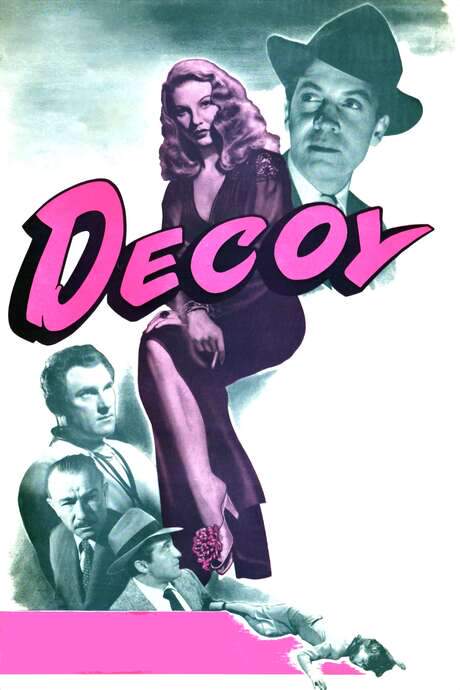
Decoy (1946) movie poster

Plot Summary

Decoy (1946) Plot Summary Explained

Release, runtime and language
1946 · 76 mins · English
Directed by
Jack Bernhard
Starring
Robert Armstrong, Sheldon Leonard, Ray Teal, Philip Van Zandt, Bert Roach, Herbert Rudley

She Treats Men the Way They’ve Been Treating Women for Years! A fatally shot female gangleader recounts her sordid life of crime to a police officer just before she dies.

On this page (5)
  1. 1 What happens: full plot
  2. 2 Plot questions answered
  3. 3 Movie threads
  4. 4 Movies like Decoy
  5. 5 Every angle

Full plot summary · contains spoilers

What Happens in Decoy: Full Plot Summary

The whole story of Decoy (1946) explained, from the opening scene to the final frame: every key event, every twist and what it all adds up to. Read it as a quick recap before the sequel, to check a scene you missed, or to finally understand what really happened.

A tense noir thriller unfolds from a rural gas station in California to a crowded San Francisco apartment, where a mysterious man—later revealed to be Dr. Lloyd Craig [Herbert Rudley]—hitches a ride and suddenly opens fire on a young woman. Police Detective Joe Portugal [Sheldon Leonard] arrives at the scene to find the man dead and the woman mortally wounded, setting off a meticulous interrogation that unpacks a web of motive, betrayal, and an extraordinary crime.

The woman is Margot Shelby [Jean Gillie], the former lover of Frankie Olins [Robert Armstrong], a man already on death row for a brazen armored-car robbery that yielded $400,000 and vanished without a trace. The missing money haunts the case, and investigators suspect Frankie hid the fortune somewhere known only to him. As the confession unfolds, Margot reveals she no longer loves Frankie and has teamed up with a new ally, Jim Vincent [Edward Norris], to locate the stash. The two hatch plans that swing between legal maneuvering and outright deception, driven by the promise of wealth and a dangerous romance.

At first, Margot and Jim attempt to overturn Frankie’s conviction through an appeal. When that path proves fruitless, they pivot to a much more audacious scheme: Margot intends to see Frankie executed by lethal hydrogen cyanide gas, then revive him with a chemical she vaguely recalls from a long-forgotten source—methylene blue. She ensnares the prison physician, Dr. Lloyd Craig [Herbert Rudley], into helping her carry out the plan. The double-edged plot hinges on timing, secrecy, and a physician’s fragile ethics in a setting where every breath could seal a fate.

The execution is carried out, and Frankie’s body is removed from the prison without an autopsy. Margot employs hired help to murder the hearse driver, ensuring the process remains clandestine and providing a decoy for cremation. Frankie’s body ends up at Dr. Craig’s office, where the doctor administers methylene blue through a breathing mask. The revived man wakes briefly, disoriented but coherent enough to reveal a hand-drawn map that supposedly points to the location of his stolen money. Before the map can be used to its fullest, Jim Vincent shoots Frankie dead, cutting the thread of Frankie’s potential redemption.

With the map obtained, Margot, Jim, and Dr. Craig speed toward the burial site to recover the loot. Along the way, Margot makes the grim decision to murder Jim by running him down when his tire gives out, leaving Dr. Craig to shoulder the dangerous recon of the treasure alone. Reaching the burial ground, a coerced Dr. Craig digs at gunpoint and uncovers a wooden strongbox. Margot takes the prize, and in a final, merciless act, she shoots Dr. Craig twice while she laughs with chilling glee.

The film returns to the present, where the audience learns the true motive behind Dr. Craig’s earlier shooting: a tangled web of greed and jealousy driving the killers. As Margot’s tale winds to a close, she pleads with Detective Portugal to open the strongbox so she can touch the money one last time. She purrs a taunting line to “Jo-Jo,” inviting him to descend to her level for once and kiss her. > Jo-Jo

Portugal finally opens the box, only to find it filled not with riches but with scrap paper and a single envelope. Inside is a one-dollar bill and a note addressed to “you who double crossed me,” a chilling reminder of a plan that collapsed into a catastrophe of ambition and murder.

In the final image, the story’s threads tighten into a dark moral: the loot remains elusive, the victims many, and the price of deceit paid in life and memory.

- Frankie Olins [Robert Armstrong]

- Margot Shelby [Jean Gillie]

- Jim Vincent [Edward Norris]

- Dr. Lloyd Craig [Herbert Rudley]

- Sergeant Joe Portugal [Sheldon Leonard]
Last updated: October 09, 2025 at 10:42

Was this helpful?

Plot questions answered

Decoy Plot Explained: Your Questions Answered

The questions people ask most about Decoy (1946): what happens in the confusing scenes, why the characters do what they do, the twists, hidden details and what the ending means. Each answer contains spoilers.

Q1

Why does Margot want Frankie executed when she needs him alive to find the money?

Margot's plan was to have Frankie executed, then revive him using methylene blue administered by Dr. Craig. She reasoned that after being legally declared dead, Frankie would be free from prison and could lead her to the hidden money without fear of recapture. The scheme relied on the mistaken belief that methylene blue could reverse the effects of cyanide poisoning and bring Frankie back from death.

Foreshadowing: Earlier, Margot tells Jim that she's heard of a chemical that can revive someone after execution, planting the seeds of the risky plan.

  • methylene blue
  • execution
  • revival plan
  • Frankie Olins
  • margot shelby
Q2

Why does Jim kill Frankie after he reveals the map?

Jim kills Frankie because Frankie has served his purpose, the map has been obtained. Keeping Frankie alive would create complications: he could recant the location, identify his betrayers, or become a liability once the authorities realize the execution was faked. Jim shoots Frankie dead to eliminate any witness who could link them to the crime or demand a share of the loot.

Foreshadowing: Jim's willingness to kill the hearse driver earlier establishes his ruthlessness and willingness to eliminate anyone who becomes a problem.

  • jim vincent
  • frankie olins
  • murder
  • map
  • killing
Q3

Why does Margot kill Jim on the road?

Margot kills Jim because he has become a liability and she wants the entire fortune for herself. With the map now in their possession, Jim is no longer useful, he knows too much and would expect an equal share of the $400,000. When Jim stops to change a flat tire, Margot sees her opportunity and runs him down, removing the last person who could claim a stake in the treasure.

Foreshadowing: Margot's cold calculation throughout the film, including her manipulation of both Frankie and Dr. Craig, foreshadows her willingness to eliminate anyone who stands between her and the money.

  • margot shelby
  • jim vincent
  • murder
  • road
  • double cross
Q4

What is the note in the strongbox about?

The note reads "you who double crossed me" and was addressed to whoever found the box. It reveals that Frankie knew all along he would be betrayed, the map was a trap. The strongbox contains only scrap paper and a one-dollar bill, confirming that the legendary $400,000 never existed or was never buried. The entire fortune was a fiction designed to punish those who would scheme to find it.

Foreshadowing: Frankie's apparent willingness to cooperate and reveal the map location seems oddly convenient given his stubborn silence during the trial.

  • strongbox
  • note
  • double crossed
  • money
  • taunt
Q5

Why does Dr. Lloyd Craig shoot Margot at the beginning of the film?

Dr. Craig shoots Margot because he realizes he's been double-crossed. After helping her resurrect Frankie, murder the hearse driver, kill Jim, and dig up the strongbox at gunpoint, Margot turns the gun on him and shoots him twice, laughing as she does so. Craig's shooting is either self-defense or a desperate attempt to prevent Margot from escaping with the prize, or possibly to enact revenge for being used and betrayed.

Foreshadowing: Throughout the scheme, Margot manipulates Dr. Craig by seducing him and leveraging his medical ethics, building toward the moment she has no more use for him.

  • dr lloyd craig
  • margot shelby
  • shooting
  • shooting scene
  • double cross
Q6

What happened to the $400,000 from the armored car robbery?

The $400,000 never actually existed, or at least, it was never buried anywhere. When Detective Portugal opens the strongbox, it contains only scrap paper and a one-dollar bill with a mocking note. This reveals that Frankie either hid the money elsewhere, never had it, or deliberately created a false treasure trail to punish the greedy people who would come looking for it.

Foreshadowing: The $400,000 vanishes without a trace after the robbery, and no one ever produces evidence of its existence despite everyone believing in it.

  • 400000
  • armored car
  • robbery
  • money
  • fortune
  • missing
Q7

Why does Margot have the hearse driver killed?

Margot hires thugs to kill the hearse driver to maintain the cover story that Frankie was actually executed and cremated. By replacing the real body with a decoy, Margot ensures the prison authorities won't conduct an autopsy or investigate further. This allows the entire resurrection scheme to proceed without arousing suspicion from the authorities.

Foreshadowing: The initial plan involves removing Frankie from prison without an autopsy, requiring a dead body as a stand-in.

  • hearse driver
  • killed
  • murder
  • decoy
  • body
Q8

Why does Margot kill Dr. Craig at the end?

Margot kills Dr. Craig because he has served his purpose and becomes a liability. After using him to revive Frankie, force him to dig up the strongbox, and drive her to the location, she has no further need for him, and keeping him alive risks him testifying against her. She shoots him twice without hesitation, laughing coldly as she does so, demonstrating her complete moral corruption.

Foreshadowing: Margot's pattern of using men and discarding them, Frankie, Jim, establishes that Dr. Craig was always destined to be eliminated once he was no longer useful.

  • margot shelby
  • dr lloyd craig
  • murder
  • shooting
  • killing
Q9

How does methylene blue revive Frankie after execution?

Methylene blue is used as an antidote for cyanide poisoning because it converts methemoglobin back to hemoglobin, allowing the blood to carry oxygen again. Margot recalls this property from an old medical text and convinces Dr. Craig to administer it via a breathing mask after Frankie's execution. The plan works, Frankie briefly revives, though the film doesn't address the medical plausibility of this reversal.

Foreshadowing: Margot mentions remembering a chemical that can revive someone after execution, a detail she uses to recruit Dr. Craig's help.

  • methylene blue
  • revive
  • execution
  • cyanide
  • dr craig
  • medical
Q10

Why does Margot betray Frankie when she was his lover?

Margot reveals during her confession that she no longer loves Frankie, she's bitter and cynical about their relationship. Rather than waiting for Frankie to be executed or hoping he'll reveal the money after serving time, she decides to take matters into her own hands. Her betrayal is driven by greed and a desire for the fortune, combined with resentment over years of waiting for a man who never shared his secret.

Foreshadowing: Margot's bitterness about Frankie's silence on the money location sets her on the path to betrayal and the elaborate scheme.

  • margot shelby
  • frankie olins
  • lover
  • betrayal
  • money
  • revenge
Q11

Why does Margot confess everything to Detective Portugal?

Margot is dying from her gunshot wound and has only minutes to live. With nothing left to lose and likely seeking some form of release or final reckoning, she chooses to unburden herself by recounting the entire scheme. Her confession serves as both a final act and possibly a way to ensure that those who betrayed her, particularly Frankie, don't profit from their crimes.

Foreshadowing: The film opens with Margot mortally wounded, setting up the confessional frame narrative.

  • confession
  • detective portugal
  • margot shelby
  • dying
  • police

Movie threads

More Movies Like Decoy, by Mood & Story

Curated lists built around what makes Decoy tick: the same mood, the same kind of story or the same emotional payoff. Each list explains why these movies belong together.

Fatalistic Noir Betrayal Movies Like Decoy

Where greed and cynical ambition poison every relationship, leading to downfall. If you liked the greedy schemes and fatalistic betrayals in Decoy, this list features movies with a similar dark noir vibe. These crime thrillers focus on cynical characters corrupted by ambition, fast-paced plots of double-crossing, and bleak endings that underscore the futility of their actions.

  • cynical
  • sinister
  • fatalistic
  • anxious
  • gritty
  • suspenseful
  • Tone: dark, cynical, fatalistic
  • Pacing: fast, relentless
Why these movies?

The story pattern: These narratives typically follow characters, often femme fatales or desperate criminals, as they execute complex, high-stakes plans. The plot is fueled by betrayal, where alliances are temporary and every character is ultimately out for themselves. The story structure often leads to an inevitable collapse, reinforcing a nihilistic message about the consequences of unchecked avarice.

Why they belong together: Movies are grouped here because they share a core DNA of dark tone, high intensity, and a fast-paced plot centered on betrayal. They create a cohesive experience of tense, anxious suspense built on the premise that no one can be trusted, and ambition leads to ruin.

Gritty High-Stakes Crime Thrillers Similar to Decoy

Relentless, high-tension stories where ruthless characters execute dangerous schemes. For viewers who enjoyed the gritty suspense and high-stakes criminal plot of Decoy, this collection features similar fast-paced thrillers. These movies share a dark tone, heavy emotional weight, and a tense atmosphere filled with violence and psychological manipulation, perfect for fans of ruthless crime dramas.

  • gritty
  • suspenseful
  • tense
  • anxious
  • sinister
  • ruthless
  • Tone: dark, tense, sinister
  • Pacing: fast, relentless
Why these movies?

The story pattern: The narrative pattern involves a central, dangerous scheme—such as a heist, a resurrection plot, or a power grab—that drives the action forward at a breakneck pace. Characters are often hardened and morally ambiguous, operating in a world where violence is a constant threat. The journey is one of rising tension and inevitable collision with the brutal realities of their choices.

Why they belong together: These films are grouped by their shared combination of a gritty aesthetic, a fast and relentless pacing, and a consistently high level of tension. They deliver a coherent viewing experience of anxiety and suspense, rooted in the realistic and high-stakes world of crime.

If you liked this

Movies Like Decoy

Similar movies to Decoy: the same genre, themes or kind of story. Each one comes with its own plot summary, timeline and ending explained.

Browse all movie summaries

Every angle

Decoy (1946) Explained: Plot, Timeline & Characters

Everything about Decoy in one place: what happens in the plot summary, the timeline in chronological order, the characters and meaning and a spoiler-free summary. What's After the Movie adds the cast, box office and post-credit scenes.

Coming soon on iOS and Android

The Plot Explained Movie Summary App

Plot summaries, endings explained and timelines on your phone. Catch up on any movie in minutes, save your favorites and never miss a twist again.

Be the first to know when we launch. Your email stays private, always.

Learn more about the app