Plot Explained Spoilers guaranteed!
Plot Explained

Browse by genre

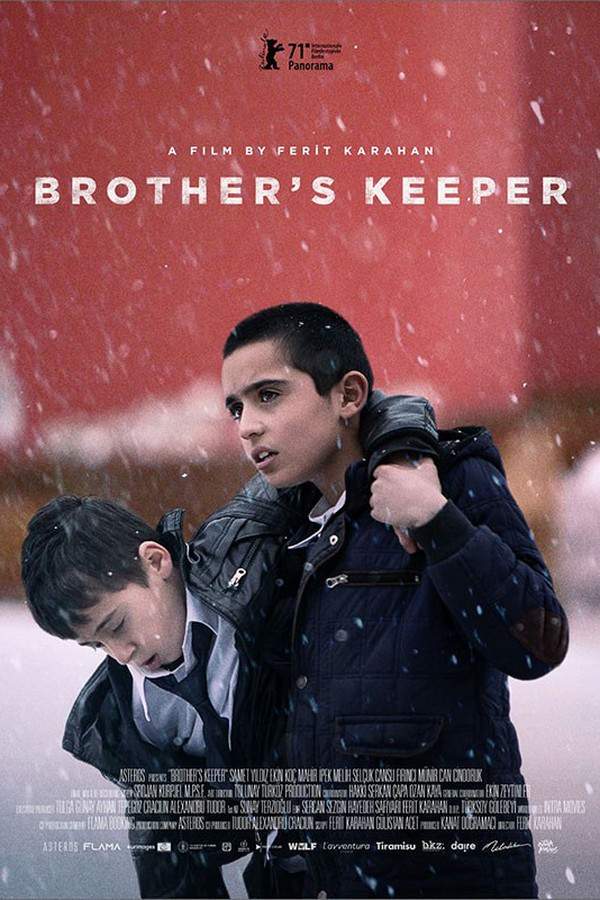
My Brother’s Keeper (1948) movie poster

Plot Summary

My Brother’s Keeper (1948) Plot Summary Explained

Release, runtime and language
1948 · 86 mins · English
Loading streaming availability…
Directed by
Alfred Roome
Starring
Jack Warner, Bill Owen, John Boxer, Valentine Dyall, David Tomlinson, George Cole

After a daring escape from the police, former war hero‑turned‑criminal George Martin discovers he is handcuffed to the clueless young thief Willie Stannard. Using a clever ruse to secure railway tickets, they race against relentless police and a prowling press, forcing George to devise a way to free himself from Willie and complete his flight.

On this page (6)
  1. 1 Where to watch
  2. 2 What happens: full plot
  3. 3 Plot questions answered
  4. 4 Movie threads
  5. 5 Movies like My Brother’s Keeper
  6. 6 Every angle
Loading streaming availability…

Full plot summary · contains spoilers

What Happens in My Brother’s Keeper: Full Plot Summary

The whole story of My Brother’s Keeper (1948) explained, from the opening scene to the final frame: every key event, every twist and what it all adds up to. Read it as a quick recap before the sequel, to check a scene you missed, or to finally understand what really happened.

Handcuffed together, George Martin and Willie Stannard are two prisoners being transported to prison. Martin is a hardened, cynical career criminal, while Stannard is a naïve, relatively dull-witted youth who has never before gotten into trouble and is terrified by the idea of prison. He stubbornly proclaims his innocence regarding the rape he’s accused of, and the duo’s uneasy bond forms as the journey unfolds.

During the trip, a chance to escape presents itself. Martin, quick and calculating, steals an army corporal’s uniform and passes Stannard off as a deserter, a ruse that makes their return seem to be to a military tribunal rather than a civilian prison. This swap explains why they are still handcuffed together as they flee.

Their escape route leads toward a garage run by his mistress Nora Lawrence, Jane Hylton, where the pair find overnight shelter. The next day they slip away to a derelict, isolated cottage, still bound by the handcuffs as they try to separate them. In the quiet of the ruin, a hunter with a shotgun stumbles upon them, forcing a confrontation. Martin knocks the man unconscious and kills him, a brutal turn that shadows the path ahead.

Moments later, the handcuffs come free, and Martin abandons Stannard, slipping off to vanish on his own. Stannard, crushed and terrified, surrenders to the authorities and is promptly charged with murder, leaving him to face the consequences of the chaotic escape.

Back in London, Martin’s wife—Beatrice Varley as Mrs. Martin—is drawn into the perilous game. She arranges a way to send money and clothes to him, coordinating a taxi ride to the hiding place and leaving the items at a barber’s shop for pickup. But just as her plan unfolds, the police close in, cornering Martin with the net tightening around him.

Rather than surrender, Martin makes one final, doomed bid for freedom. He tries to reach safety through a warning-sign minefield, a perilous stretch watched by a chorus of onlookers—police, reporters, his wife, and a crowd of sensational spectators—whose presence amplifies the tension of his last, desperate gambit.

Last updated: February 24, 2026 at 09:50

Was this helpful?

Plot questions answered

My Brother’s Keeper Plot Explained: Your Questions Answered

The questions people ask most about My Brother’s Keeper (1948): what happens in the confusing scenes, why the characters do what they do, the twists, hidden details and what the ending means. Each answer contains spoilers.

Q1

Why is George Martin handcuffed to Willie Stannard?

They were both prisoners being transported to prison together. Martin was a hardened career criminal, while Stannard was a young man accused of rape whom the police were also transporting. During the journey, Martin orchestrated an escape and stole an army corporal's uniform, using the ruse that Stannard was a deserter in his custody, this explained why they remained handcuffed as they fled.

Foreshadowing: The opening scene establishes their handcuffed pairing as the central claustrophobic premise that drives the entire film.

  • george martin
  • willie stannard
  • handcuffed
  • escape
  • prisoners
Q2

How did George and Willie escape from police?

During the transport journey, Martin spotted an opportunity and seized it. He stole an army corporal's uniform and convinced the authorities that Stannard was actually a deserter in his military custody, being taken to a military tribunal rather than a civilian prison. This clever deception allowed them to move freely while still appearing to be under official escort.

Foreshadowing: Martin's quick thinking and criminal ingenuity are established early as his primary character trait.

  • escape
  • army uniform
  • deserter
  • police
  • disguise
Q3

Why did George Martin kill the hunter?

After escaping to a derelict cottage and attempting to file through their handcuffs, Martin and Stannard were discovered by a hunter with a shotgun. When confronted, Martin struck the man on the head with a gun or object, killing him. This brutal murder was committed to eliminate the witness who could alert authorities to their location.

Foreshadowing: The hunter's sudden appearance marks the turning point where the escape escalates from evasion to violence.

  • hunter
  • murder
  • cottage
  • violence
  • witness
Q4

Why did George abandon Willie at the cottage?

Once the handcuffs were finally separated after the hunter's death, Martin chose to abandon Stannard and continue his escape alone. Martin was a hardened, self-interested criminal who had no loyalty to the young man. He simply used Stannard as a convenient cover for his escape and discarded him once the handcuffs no longer forced them together.

Foreshadowing: Martin's cynical nature is established early, making his abandonment of the naive Stannard a logical character beat rather than a surprising twist.

  • abandonment
  • handcuffs
  • betrayal
  • stannard
  • criminal
Q5

What happened to Willie Stannard after the escape?

After Martin abandoned him at the cottage, Stannard was left alone and terrified of facing prison for the rape charge he claimed he was innocent of. Rather than continue running, he surrendered to the authorities. Since he was present at the cottage where the hunter was killed, he was promptly charged with murder and had to face the legal consequences alone.

Foreshadowing: Stannard's earlier insistence on his innocence sets up the tragic irony that he ultimately faces serious criminal charges regardless.

  • willie stannard
  • surrender
  • murder charge
  • prison
  • legal consequences
Q6

Why was Willie charged with murder when George killed the hunter?

Stannard was charged with murder because he was present at the scene of the killing. Although Martin was the one who struck and killed the hunter, both men were fugitives together, and the authorities had no reason to believe Stannard's claim that Martin was the sole culprit. As the only defendant who surrendered, Stannard bore the full weight of the murder charge.

Foreshadowing: The film's tragic irony hinges on Stannard's inability to escape his circumstances, whether accused of rape or murder.

  • murder charge
  • court
  • stannard
  • accountability
  • tragedy
Q7

How did the police track George Martin's hideout?

George's wife Beatrice coordinated a plan to send money and clothes to help him escape. She arranged for a taxi driver friend to deliver the items to a barber's shop for pickup. However, the police were already tracking her movements and her communications with George. By following her approach to the hiding place, they successfully located and cornered Martin.

Foreshadowing: The wife's involvement, while intended to help, inadvertently leads the police directly to George.

  • police
  • tracking
  • wife
  • barber shop
  • surveillance
Q8

What was the minefield scene at the end of the film about?

Cornered by police with no remaining escape routes, George refused to surrender. Instead, he made a final desperate attempt to reach safety by crossing a minefield marked with warning signs. This doomed gambit was watched by police, reporters, his wife, his mistress Nora, and a gathered crowd, the entire pursuit had become a public spectacle. The attempt was hopeless, and the film leaves his fate ambiguous but clearly tragic.

Foreshadowing: The minefield represents the inevitable conclusion of George's Choices, each escape leading to a more impossible situation.

  • minefield
  • final escape
  • doomed
  • public spectacle
  • climax
Q9

Why did George Martin pose as a deserter with Willie?

The deserter ruse allowed Martin to explain why two men remained handcuffed together while traveling. By presenting himself as a military corporal escorting a deserter to a tribunal, he could move through areas with less suspicion and avoid questions about why civilian prisoners would be chained together. It was a practical deception that kept their story believable during the early stages of flight.

Foreshadowing: The ruse works initially because it exploits military authority rather than raising questions about civilian prisoner transport.

  • deserter
  • military
  • disguise
  • deception
  • uniform
Q10

What was Nora Lawrence's role in the escape?

Nora Lawrence was George Martin's mistress. She ran the garage where the two fugitives sought shelter on the first night after their escape. She provided them overnight refuge and likely assisted with their escape planning. She also appears at the climax, present among the crowd watching George's final minefield attempt.

Foreshadowing: Nora's garage provides temporary safety before the violence at the cottage escalates everything.

  • nora lawrence
  • mistress
  • garage
  • shelter
  • support

Movie threads

More Movies Like My Brother’s Keeper, by Mood & Story

Curated lists built around what makes My Brother’s Keeper tick: the same mood, the same kind of story or the same emotional payoff. Each list explains why these movies belong together.

Desperate Fugitive Thrillers like My Brother’s Keeper

Thrillers where escape becomes a tense, fatalistic race against authority. If you enjoyed the relentless tension of My Brother’s Keeper, you'll find more movies here about doomed escapes and fatalistic chases. These films capture the high-stakes anxiety of being hunted, featuring stories where the quest for freedom spirals into tragedy.

  • tense
  • desperate
  • doomed
  • claustrophobic
  • paranoid
  • gritty
  • Tone: tense, bleak, desperate
  • Pacing: fast, relentless
Why these movies?

The story pattern: Stories in this thread typically follow a linear escape structure that accelerates towards an inevitable, bleak conclusion. The narrative focus is on the mechanics of the chase and the psychological toll on the characters, with external pressure constantly mounting until it becomes overwhelming.

Why they belong together: Movies are grouped here based on their shared high-tone tension, fast pacing mirroring a frantic escape, and a fatalistic narrative arc that ends in tragedy. The dominant feeling is one of claustrophobia and desperation, even in open spaces.

Crime Stories with Fatefully Bound Partners like My Brother’s Keeper

Stories where chance encounters force mismatched partners into a deadly situation. Fans of the handcuffed dynamic in My Brother’s Keeper will enjoy these movies about mismatched partners bound by circumstance. Explore films where a chance encounter forces two strangers into a high-stakes crime plot, creating tension from their clashing personalities and moral codes.

  • tense
  • anxious
  • clashing duo
  • moral dilemma
  • fateful
  • gritty
  • Tone: tense, anxious, morally complex
  • Pacing: fast, steady
Why these movies?

The story pattern: The narrative pattern revolves around a central 'odd couple' forced to cooperate under extreme duress. The plot explores the friction and reluctant dependency between them, using their contrasting natures to drive both conflict and character development, often under a tight time constraint.

Why they belong together: These films are linked by their focus on a core relationship forged in crisis. They share a tense, anxious mood stemming from the characters' forced proximity and the moral compromises they must make, leading to emotionally heavy outcomes.

If you liked this

Movies Like My Brother’s Keeper

Similar movies to My Brother’s Keeper: the same genre, themes or kind of story. Each one comes with its own plot summary, timeline and ending explained.

Browse all movie summaries

Every angle

My Brother’s Keeper (1948) Explained: Plot, Timeline & Characters

Everything about My Brother’s Keeper in one place: what happens in the plot summary, the timeline in chronological order, the characters and meaning and a spoiler-free summary. What's After the Movie adds the cast, box office and post-credit scenes.

Coming soon on iOS and Android

The Plot Explained Movie Summary App

Plot summaries, endings explained and timelines on your phone. Catch up on any movie in minutes, save your favorites and never miss a twist again.

Be the first to know when we launch. Your email stays private, always.

Learn more about the app