

Plot Explained Spoilers guaranteed!
Plot Explained

Browse by genre

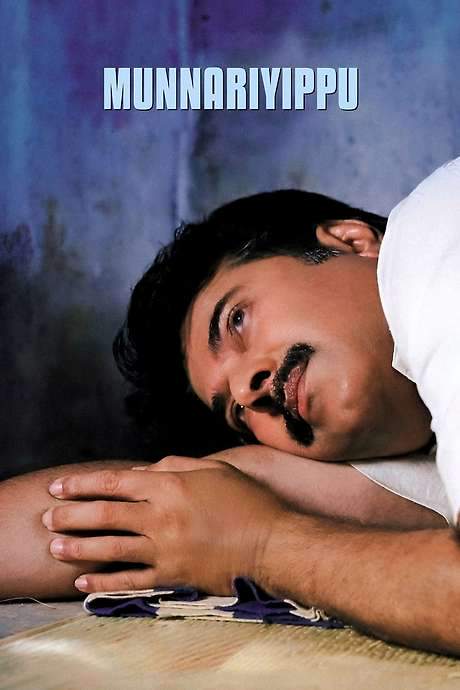
Munnariyippu (2014) movie poster

Timeline

Munnariyippu (2014) Timeline Explained – Every Event in Order

Release, runtime and language
2014 · 115 mins · Malayalam
Directed by
Venu
Starring
Joy Mathew, Mammootty, Prithviraj Sukumaran, Kochu Preman, Prathap Pothan, Sudheesh

The deadline Raghavan, a simple and lonely man, comes out of jail. His life changes after he meets Anjali, a journalist who wants to prove herself professionally.

On this page (5)
  1. 1 Where to watch
  2. 2 Events in order (12)
  3. 3 Timeline questions answered
  4. 4 Movie threads
  5. 5 Every angle

Where to watch

Where to Watch Munnariyippu (2014)

Where can you watch Munnariyippu? Stream, rent or buy it in the US, including on Sun Nxt: current JustWatch availability with up-to-date prices.

Streaming availability powered by JustWatch

12 events in order · contains spoilers

Munnariyippu Timeline: Events in Chronological Order

Every key event of Munnariyippu (2014) in order, scene by scene, with when and where it takes place. Use it to untangle flashbacks, time jumps and parallel storylines, to refresh your memory before the sequel or to find the exact scene you are thinking of.

  1. Anjali interviews Rama Moorthy to ghostwrite his autobiography

    Anjali, a freelance journalist, interviews retiring jail superintendent Rama Moorthy as she begins ghostwriting his autobiography. The conversation hints at a larger, dangerous world behind the prison system. This initial encounter plants the seed for a deeper investigation into the double homicide saga tied to Rama's era.

    When
    early
    Where
    Jail superintendent's office
  2. Anjali meets Raghavan and learns of the double homicide claim

    During her inquiry, Anjali meets C. K. Raghavan, a prisoner who has spent twenty years for a double murder but insists he is innocent. His unwavering insistence casts doubt on the official verdict and invites Anjali to probe his side of the story. The encounter marks the shift from profile to investigation.

    When
    early-mid
    Where
    Prison visiting area
  3. Raghavan's writings reveal his worldview

    As Anjali delves into Raghavan's writings, she encounters a worldview filtered through his own idiosyncratic lens. His reflections on perception, guilt, and freedom begin to shape her understanding of the case and his truth. The passages pull her deeper into the mystery and challenge her sense of objective reality.

    When
    mid
    Where
    Anjali's office
  4. Publishers express interest in a full biography

    Publishers push for a complete biography that could redefine Raghavan's legacy, pressuring Anjali to tell his story on his terms. The potential bestseller heightens the stakes and threatens to compromise her objectivity. Anjali grapples with balancing professional ambition and ethical boundaries.

    When
    mid
    Where
    Publishers' offices
  5. Raghavan agrees to participate; collaboration begins

    Raghavan tacitly approves Anjali's approach and begins to participate in the documentation process. Anjali starts collecting material, with the support of his followers who help frame his self-portrayal. As material accumulates, the line between fact and self-mythologizing becomes blurred.

    When
    mid
    Where
    Prison
  6. Logistics, relocation, and early tensions emerge

    With publishers demanding more, Anjali navigates the logistics of Raghavan's release and possible relocation to a discreet place. She arranges living space for him and asks him to write more about events and their meanings, but he hesitates and drifts. The administrative pressure tests their uneasy alliance.

    When
    late
    Where
    Planning office / newsroom
  7. A night out and Raghavan's provocative views on freedom

    At a night out with aspirants, Raghavan articulates a stark philosophy of freedom: removing elements that obstruct the person equals freedom, whether in domestic life or society. His provocative views unsettle Anjali and deepen the aura of control he wields over the project. The exchange crystallizes the power dynamics shaping the biography.

    When
    night
    Where
    Social outing
  8. Personal stakes rise as Anjali's life is affected

    The project strains Anjali's personal life, including her prospects of marriage with Chackochan. The risk to her future intensifies the tension surrounding the story and her safety. The relationship becomes a mirror of the ethical compromises the piece demands.

    When
    mid-late
    Where
    Anjali's home
  9. The diary, money, and the complete script are laid bare

    Confronting Raghavan with the diary, the rehabilitation money, and his criticisms of accommodations, Anjali forces a reckoning with his narrative. He answers with a calm, almost knowing smile and delivers the complete script of his story, tightening his hold over the truth. The power shift signals that the journalist is losing control over the subject.

    When
    late
    Where
    Prison interview room
  10. A dangerous turn: he seeks a new accommodation and return to jail

    Raghavan reveals his true intent: he wants a new accommodation and a return to jail, signaling a dangerous turn in their collaboration. Anjali senses the danger but has already pushed for a revised approach to the piece. The tension peaks as the boundaries between truth-telling and manipulation blur.

    When
    final phase
    Where
    Prison
  11. The murder: Anjali is killed

    The conflict culminates in violence when Anjali is struck by Raghavan and dies from a single blow to the head. The film closes on the stark image of Raghavan back in his cell, with photographs of Anjali and his victims arranged on the wall as trophies. The ending probes the cost of pursuing a sensational story at any ethical price.

    When
    climax
    Where
    Prison cell
  12. Final tableau and reflection on power and storytelling

    In the aftermath, Raghavan sleeps in his cell while the faces of those he shaped into his narrative watch from the jail walls. The final tableau prompts a meditation on power, control, and the price of liberation. It asks how easily truth can be bent when the hunger for an extraordinary story eclipses humanity.

    When
    end
    Where
    Prison cell

Last updated: October 03, 2025 at 10:35

Was this helpful?

Timeline questions answered

Munnariyippu Timeline Explained: Your Questions Answered

When does it happen, and why in that order? The questions people ask about the chronology of Munnariyippu (2014): time jumps, flashbacks, cause and effect between scenes and the correct order of events, each answered with spoilers.

Q1

Why does Raghavan want to return to jail after being released?

Raghavan's true nature emerges when he reveals he never wanted true freedom. Throughout the story, he manipulates Anjali to rebuild his narrative and secure his return to prison, which he views as his actual home. His philosophy of freedom, which he describes as removing anything that obstructs you, explains his mindset: prison is where he belongs and has control. Killing Anjali was not a loss of control but a calculated move to ensure he would be sent back.

Foreshadowing: Earlier, Raghavan tells Anjali that freedom is about removing obstacles, and where there is revolution, blood will spill, hinting at his willingness to use violence to get what he wants.

  • raghavan
  • jail
  • freedom
  • prison
  • return
Q2

Why does Raghavan kill Anjali?

Raghavan kills Anjali because she has become useless to him after extracting everything he needed for his narrative. When she confronts him with the diary and money, he delivers the complete script of his story and then strikes her, a single blow to the head. This act was not spontaneous rage but the conclusion of his plan: having manipulated her into helping him return to jail, he eliminates her once she served her purpose.

Foreshadowing: The night out scene where Raghavan explains his view of freedom as removing obstacles foreshadows how he would treat Anjali when she became an obstacle.

  • raghavan
  • anjali
  • murder
  • kill
  • motive
Q3

How does Raghavan manipulate Anjali throughout the story?

Raghavan manipulates Anjali by presenting himself as a misunderstood prisoner insisting on his innocence, drawing her into his philosophical worldview through his writings. He shares cryptic reflections on perception, guilt, and freedom that intrigue her professionally. As publishers pressure for more content, Anjali becomes dependent on him for material. He controls the narrative completely, agreeing to participate on his terms, hesitating to write more when convenient, and finally delivering the complete script only when he decides the time is right.

Foreshadowing: His writings about mirrors and whether the reflected image accepts or follows him hint at his manipulative nature, he sees people as extensions of himself rather than independent beings.

  • raghavan
  • anjali
  • manipulation
  • control
  • journalist
Q4

Why does Raghavan keep photographs of his victims on the jail wall?

The photographs of Anjali and his other victims arranged on his cell wall serve as trophies, displaying his psychotic fixation and control over the people he has shaped into his narrative. This final image confirms that Raghavan's entire story, his claims of innocence, his philosophical musings, his cooperation with Anjali, was a carefully constructed performance to feed his obsession with power and domination.

Foreshadowing: His philosophy that freedom means removing obstacles, combined with his view of people as part of his narrative, foreshadows how he would treat victims as possessions.

  • photographs
  • trophies
  • victims
  • raghavan
  • jail
  • wall
Q5

What does Raghavan's philosophy on freedom actually mean?

Raghavan defines freedom as removing elements that obstruct a person. He chillingly applies this equally to domestic abuse and societal revolution, stating that where there is such removal, blood will spill. This philosophy reveals his worldview: anything or anyone preventing someone from having what they want is an obstacle to be eliminated. It explains both his original crimes and his willingness to kill Anjali, people are obstacles to be removed, not individuals with their own agency.

Foreshadowing: This philosophy is introduced during a night out with aspirants, long before the murder occurs, serving as an early warning of his dangerous mindset.

  • freedom
  • philosophy
  • raghavan
  • violence
  • abuse
Q6

Is Raghavan actually innocent of the double murder?

The film never confirms Raghavan's guilt or innocence definitively, but the ending reveals his true nature through his murder of Anjali and his trophy collection. The narrative suggests his claims of innocence were part of his self-mythologizing, another layer of the narrative he constructed to manipulate others. His careful self-portrayal throughout the story, combined with his psychotic behavior at the end, strongly implies he committed the original murders as well.

Foreshadowing: His writings about perception and reality, where he questions whether mirrors reflect or accept, hint that he has always twisted truth to serve his version of events.

  • raghavan
  • innocent
  • guilty
  • murder
  • double homicide
Q7

Why does Anjali continue pursuing Raghavan's story despite growing danger?

Anjali is driven by professional ambition to establish herself as a journalist. As publishers show interest in a full biography, she sees an opportunity to redefine Raghavan's legacy, and her own career. Despite Raghavan's unsettling philosophy, her hesitation about relocating him, and warnings throughout the collaboration, she pushes forward. Her desire for a compelling, extraordinary story eclipses her caution, ultimately leading to her death.

Foreshadowing: The tension between her professional goals and ethical boundaries is established early when publishers pressure for a complete narrative, showing her growing compromise.

  • anjali
  • journalist
  • career
  • ambition
  • biography
Q8

What is the significance of Raghavan's diary and writings?

Raghavan's diary and writings are his primary tools of manipulation. Through philosophical passages about mirrors, guilt, and freedom, he shapes Anjali's perception of him as a complex, misunderstood figure. These writings pull her deeper into his worldview and make her question objective reality. The diary becomes the foundation of the biography project and the means by which he controls the narrative around himself.

Foreshadowing: Early in their collaboration, Anjali discovers these writings and describes being pulled deeper into his world, establishing the writings as his method of influence.

  • diary
  • writings
  • raghavan
  • manipulation
  • philosophy
Q9

What happens to Anjali's relationship with Chackochan?

Anjali's marriage prospects with Chackochan are jeopardized by her increasingly dangerous involvement with Raghavan. The strain from the project, the time it consumes, and the risk to her safety all work against her personal life. This tension reflects the broader theme of how her pursuit of a compelling story compromises her personal relationships and ultimately her life.

Foreshadowing: Early in the story, Anjali's personal stakes are mentioned alongside her professional ambitions, showing how both spheres are affected by Raghavan.

  • chackochan
  • anjali
  • marriage
  • relationship
  • personal life
Q10

What is Rama Moorthy's role in the story?

Rama Moorthy is the retiring jail superintendent whose autobiography Anjali is initially hired to ghostwrite. This initial assignment brings her into the prison system and introduces her to Raghavan's case. Moorthy represents the official perspective of the prison and the justice system, though his exact relationship to Raghavan's conviction remains somewhat peripheral to the main narrative.

Foreshadowing: The story begins with Anjali interviewing Moorthy, establishing the prison setting and creating the opportunity to encounter Raghavan.

  • rama moorthy
  • superintendent
  • jail
  • autobiography

Movie threads

More Movies Like Munnariyippu, by Mood & Story

Curated lists built around what makes Munnariyippu tick: the same mood, the same kind of story or the same emotional payoff. Each list explains why these movies belong together.

Obsessive investigation thrillers like Munnariyippu

When a detective or journalist becomes dangerously entangled with their enigmatic subject. If you liked the tense, intellectual cat-and-mouse game in Munnariyippu, explore more movies about journalists and detectives whose pursuit of a story leads them into a dangerous psychological trap. These films share a focus on manipulation, moral ambiguity, and the high stakes of seeking truth from a cunning adversary.

  • psychological
  • unsettling
  • chilling
  • tense
  • manipulative
  • cerebral
  • Tone: dark, tense, unsettling
  • Pacing: slow, deliberate
Why these movies?

The story pattern: The narrative typically follows a protagonist who initiates an investigation with professional confidence, only to be slowly outmaneuvered and psychologically manipulated by their subject. The story arc is one of diminishing control, where the hunter becomes the hunted in a battle of wits that often ends with devastating consequences for the seeker of truth.

Why they belong together: Movies are grouped here based on their shared core conflict: a high-stakes intellectual duel between an investigator and a charismatic, dangerous figure. They share a dark tone, a methodical pacing that builds dread, and a focus on the psychological unraveling of the protagonist.
Slow burn atmospheric dread like in Munnariyippu

Stories where tension builds methodically through atmosphere and unsettling ideas. Fans of Munnariyippu's methodical build-up of psychological suspense will appreciate these movies. They use a slow pace, focused dialogue, and a claustrophobic atmosphere to create a deep sense of intellectual horror and inevitable tragedy, perfect for viewers who enjoy being unsettled by ideas.

  • slow burn
  • atmospheric
  • unsettling
  • contemplative
  • dread
  • psychological
  • Tone: dark, bleak, contemplative
  • Pacing: slow burn, methodical
Why these movies?

The story pattern: Narratives in this thread unfold gradually, often confined to limited settings and driven by intense dialogues. The plot progression is secondary to the escalating psychological pressure on the characters. The climax is typically not a action set-piece, but a devastating emotional or philosophical revelation.

Why they belong together: These films are united by their shared approach to suspense: a slow, deliberate pacing that creates a suffocating atmosphere. The primary focus is on building intellectual dread through complex themes and character psychology, resulting in a heavy, contemplative, and often bleak viewing experience.

Every angle

Munnariyippu (2014) Explained: Plot, Timeline & Characters

Everything about Munnariyippu in one place: what happens in the plot summary, the timeline in chronological order, the characters and meaning and a spoiler-free summary. What's After the Movie adds the cast, box office and post-credit scenes.

Coming soon on iOS and Android

The Plot Explained Movie Summary App

Plot summaries, endings explained and timelines on your phone. Catch up on any movie in minutes, save your favorites and never miss a twist again.

Be the first to know when we launch. Your email stays private, always.

Learn more about the app