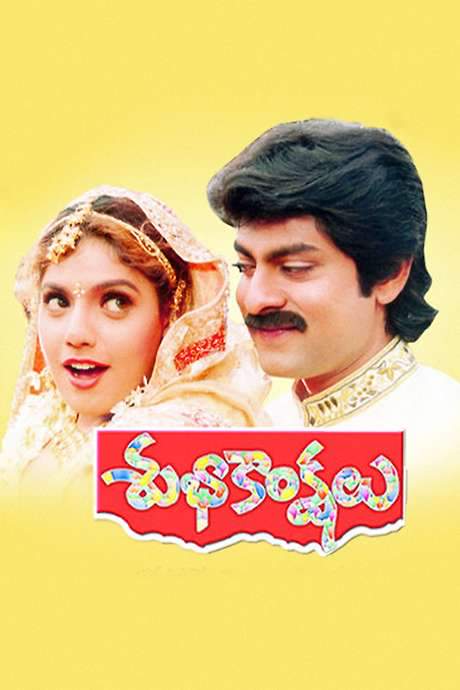
Featuring standout performances by Venkatesh, Ramya Krishnan, and Brahmanandam, this film weaves a rich tapestry of love, loyalty, and memory against the backdrop of a vibrant village. Ramu, a carefree young man, lives with his widowed mother and cherishes his romance with Usha, the daughter of Dharmayya, the respected village president. Their budding relationship sparks tension with Subbayya, the wealthy landlord and moneylender who happens to be Dharmayya’s brother-in-law. Subbayya eyes greater influence in the village and schemes to marry Usha off to his own chosen son, Bujjulu, hoping to cement his grip on local power. Ramu, propelled by a mix of courage and stubborn honesty, repeatedly thwarts these plans, which only inflames Subbayya’s ire. When Subbayya orchestrates a false theft accusation, Ramu fights to prove his innocence, exposing the real troublemaker and sending Subbayya to jail. The victory is bittersweet, as the ordeal cements the family’s trust in Ramu and sets the stage for a long-awaited union between Ramu and Usha.
But fate is never simple in this village world. As the wedding preparations set off toward town, Subbayya’s henchmen ambush Ramu, leaving him for dead in a river. The village believes him lost, yet a group of boatmen finds him and nurses him back to health. He awakens with no memory of who he is or of the life he left behind, and under a new name, Raju, he begins a second life far from the arranged marriage and the source of his deepest loyalties. A patient tutor’s life unfolds as he takes a job teaching the mischievous grandchildren of Major Narayana Murthy. In time, Raju earns the children’s trust and affection, and a gentle, almost inevitable bond forms with their eldest sister, Sandhya. The Major, impressed by the quiet strength and kindness in Raju, gives his blessing to the young couple’s future, and the two families quietly dream of a shared future.
Yet the past does not stay buried. Subbayya’s goons renew their pursuit, and a cruel attempt on Raju’s life jolts him back toward memories of the village, Usha, and the people he left behind. But memory, like a stubborn tide, resists fully returning; Raju remembers his life in pieces, enough to realize he must choose between a second chance with Sandhya and the promise of returning to the love he once knew. He returns home to Usha, hoping to reconcile, but Sandhya—whose heart longs for him—seeks him out with the help of her loyal servant, Gundu. When she finally locates him, the gulf between memory and recognition proves wide enough to complicate their connection, and Sandhya’s pain becomes a quiet, persistent undertone to the unfolding drama.
The drama deepens as Major Narayana Murthy arrives and reveals a crucial secret from Sandhya’s past: she was once married, but her husband died on their wedding day, a trauma that left her memory blurred and parts of her life carefully shelved away. This revelation reframes Sandhya’s longing and explains how she could still feel such a powerful pull toward a man who did not fully remember her. Meanwhile, Subbayya is released from prison and mounts one final, desperate bid to break Usha’s heart and seize control of the village. He and his goons kidnap Uusha in a bid to weaponize the wedding against Ramu and the town.
The confrontation that follows is charged with all the threads the film has been weaving: courage, memory, duty, and the pain of misunderstood loves. Ramu faces Subbayya in a climactic showdown, relying on grit and the alliances he has built in his long estrangement from the village. He defeats Subbayya and rescues Usha, freeing the town from fear and reasserting the bonds of family and affection that first drew him to Usha. In the quiet aftermath, Sandhya confronts her own choices and accepts the realities of her life, stepping away from the limelight of the village’s center and toward her own path.
In the final moment, the village breathes a sigh of relief, and the pairings settle into their rightful places: Ramu and Usha begin a life together, their love tempered by the trials they endured. Sandhya’s departure signals a new chapter for everyone, a reminder that memory and truth, like the river that carries them all, can be reshaped by time but never fully erased. The film closes on a note of hopeful continuity, celebrating resilience, forgiveness, and the enduring power of rightful love in a world where every choice echoes through generations.