Year: 2024
Runtime: 122 mins
Language: Telugu
Director: Rom Bhimana
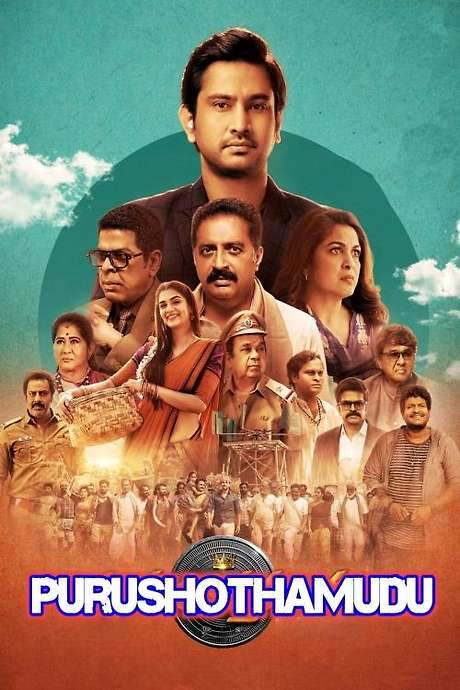
Rachit Ram, the heir to a vast corporate empire, embarks on a unique and demanding challenge: to live as an ordinary person for 100 days, completely devoid of money and accustomed privileges. He ventures into a remote location to fulfill this daunting task, unaware that his aunt and cousin brother are plotting to ensure his failure. The experience tests his resilience and forces him to confront a world far removed from his privileged upbringing.
Warning: spoilers below!
Haven’t seen Purushothamudu yet? This summary contains major spoilers. Bookmark the page, watch the movie, and come back for the full breakdown. If you're ready, scroll on and relive the story!
Read the complete plot breakdown of Purushothamudu (2024), including all key story events, major twists, and the ending explained in detail. Discover what really happened, and what it all means.
Rachit Ram, Raj Tarun the heir to the Hyderabad-based Parasuramaiah Group of Companies, returns to India after finishing his studies abroad. His grandfather, the company’s founder, laid down a bold bylaw: the prospective heir must live as an ordinary person for 100 days, without using wealth, influence, or identity. While his father Aditya Ram, Murali Sharma, worries that this rule might have helped trigger the disappearance of his elder brother Raghu Ram, Rachit accepts the challenge and sets out to prove that leadership can come from serving people, not from titles alone.
His aunt Vasundhara Ram, Ramya Krishnan who already controls half the business and dreams of her son Abhay Ram taking over as CEO, tries to derail him from the start. With a determined smile and a ready plan, she channels her influence to shadow his every move. To escape the city’s glare, Rachit leaves Hyderabad and travels to Rayapulanka, a rural town near Rajahmundry, where he works as an agricultural laborer and begins to see life through the lens of the people who actually farm the land. There, he befriends Ammulu, Hassini Sudhir a local woman who shares the community’s struggles and offers him a grounded perspective on the countryside.
Using his knowledge and a practical mindset, Rachit introduces affordable irrigation methods and techniques that help local farmers stretch scarce water and improve yields. What begins as small, clever fixes gradually earns him the trust of the villagers, who start counting on him as someone who understands their daily grind and is willing to roll up his sleeves to help. Though initially hesitant to get involved in their ongoing problems, he soon becomes a steady, dependable presence—someone the community can rely on when resources are tight and a hostile environment threatens their livelihoods.
This growing influence puts him on a collision course with Balaraju, the violent son of the local MLA, who resents a outsider challenging his control. When Rachit rescues Ammulu from Balaraju’s henchmen, the scale of the farmers’ troubles becomes clear: Balaraju’s family has gobbled up much of the surrounding land and has tight grip on crucial resources. Rather than taking sides, Rachit urges the villagers to unite and petition the government, turning their local grievances into a voice that can demand attention from higher authorities. Their campaign makes waves, eventually reaching officials in Delhi, and Rachit’s actions draw public notice as he moves through the years of the challenge with grit and a quiet resolve.
As the deadline for the 100-day test approaches, the strain on Rachit’s relationship with Ammulu grows when she learns he has been concealing his true identity and the reasons behind his presence in the village. Meanwhile, violence escalates: Balaraju’s supporters strike back, destroying trees and hard-fought gains, while Abhay’s henchmen intensify their pursuit to capture Rachit before the challenge ends. Rachit sustains serious injuries in a fierce clash, yet he manages to reach a government committee meeting and articulate the farmers’ grievances in a way that resonates with the officials. His words—and the visible commitment behind them—help tilt the outcome in favor of reform.
The committee responds by abolishing the restrictive flower-marketing system that had tied farmers’ produce to unfavorable terms, allowing them to sell their crops more freely. Back at the company board, there’s a moment of doubt: it is announced that Rachit completed only 99 days because he was attacked on the final day. Yet the board ultimately recognizes the spirit and essence of his undertaking, affirming that he has fulfilled the mission in spirit if not in the literal count.
In a turning revelation, Raghu Ram returns after two decades, shedding light on the earlier disappearance and explaining that wealth and influence pale in comparison to helping people in need. He shares that during his time away he faced poverty and hunger, learning firsthand the value of compassion and service. He reveals that he found the wounded Rachit and helped him survive, leading to a heartfelt reconciliation with Aditya and Vasundhara. With Raghu Ram’s perspective and approval, Rachit’s path to leadership gains stronger footing, and Vasundhara publicly approves his appointment as CEO, with the board casting a unanimous vote in his favor. Abhay accepts defeat and offers a remorseful apology to his parents.
The story closes with the unanticipated reality that Rachit did survive his injuries. He returns to the village with a renewed sense of purpose and uses his wealth to protect a farmer from losing his land by clearing a debt and stabilizing the farmer’s prospects. The final chapters show Rachit reconnecting with Ammulu and continuing to champion the welfare of the village, illustrating a leadership that puts people first and demonstrates that true stewardship can emerge from humility, perseverance, and shared roots.
Last updated: September 03, 2026 at 09:21
Explore frequently asked questions about Purushothamudu (2024) with spoiler-rich answers covering the full plot summary, major story beats, character motivations, hidden details, and ending meaning. This movie summary FAQ helps explain confusing scenes, plot twists, and narrative decisions in clear, searchable detail.
The 100-day rule is a bylaw created by Rachit's grandfather, the founder of the Parasuramaiah Group of Companies. He believed that a true heir must prove they can lead from experience rather than privilege, so anyone aspiring to head the company must survive 100 days without wealth, influence, or family identity. Aditya suspects this very rule may have contributed to his elder brother Raghu Ram's disappearance two decades earlier.
The grandfather's bylaw is introduced as a tradition, but the later revelation about Raghu Ram retroactively hints that the challenge has a deeper, more painful history in the family.
Raghu Ram was Aditya's elder brother and a former heir who also took on the 100-day challenge. During that time he was exposed to real hardship, poverty, and hunger, which reshaped his understanding of wealth and leadership. Rather than return to the corporate empire, he chose to live among the people he had served, and his absence became the family's unresolved wound until he finally resurfaced.
Aditya's early worry that the bylaw 'might have helped trigger' Raghu Ram's disappearance plants the seed for the later revelation about his voluntary exile.
Rachit concealed his identity because the 100-day condition strictly forbids him from using his name, wealth, or family influence. Revealing that he was the Parasuramaiah heir would have invalidated the challenge and handed his aunt Vasundhara the excuse she needed to block his succession. He chose to keep Ammulu close without breaking the rule, but the secrecy eventually strained their bond.
Rachit's deliberate low-profile behavior in Rayapulanka and his reluctance to talk about his past hint that he is carrying a concealed identity long before Ammulu confronts him.
After Balaraju's men and Abhay's henchmen launched a coordinated assault on the final day, Rachit sustained severe injuries but refused to abandon the farmers' cause. He pushed through the attack, traveled to Delhi, and made it to the committee hearing just in time to testify about the villagers' grievances. He collapsed only after delivering his statement, which was forceful enough to move the officials to act.
Earlier scenes of Rachit quietly enduring physical strain during farm labor foreshadow his ability to push through serious injury when the stakes are highest.
The board announced that Rachit had technically completed only 99 days because he was attacked on the final day. However, they recognized that the spirit of the founder's rule was to test character, resilience, and service to people rather than to enforce a strict calendar count. Given the impact of his reforms and his willingness to risk his life for the farmers, the board voted unanimously to confirm him as CEO.
The grandfather's intent is framed early as a test of leadership, not a literal countdown, which sets up the board's flexibility at the end.
The flower-marketing system was a restrictive trade practice that forced local farmers in and around Rayapulanka to sell their produce through a controlled channel tied to politically connected middlemen. This kept prices low for growers while allowing powerful families like Balaraju's to profit. After hearing Rachit's testimony, the government committee abolished the system so that farmers could sell their crops freely at fair market rates.
Balaraju's grip on land and resources is shown early as the root of the villagers' suffering, hinting that policy change rather than local muscle will ultimately decide the conflict.
After living among ordinary people for two decades, Raghu Ram was still moving through the same rural networks that Rachit had been serving. When the final assault left Rachit badly hurt, Raghu Ram reached him in time, tended to his injuries, and helped him survive long enough to make it to the committee hearing. Their reunion also gave Raghu Ram the chance to share what his own 100-day challenge had taught him about poverty and compassion.
Raghu Ram's long absence and Aditya's quiet anxiety suggest he has been close to the family's orbit all along, even though no one has seen him.
Vasundhara had spent the entire story trying to install her son Abhay as CEO by sabotaging Rachit's challenge. Her change of heart came after Raghu Ram returned, reconciled with the family, and publicly endorsed Rachit based on his sacrifice and service. With Raghu Ram's moral authority behind him, Vasundhara recognized that blocking Rachit would mean rejecting the very values her brother-in-law had come to embody, and she publicly declared him the rightful CEO.
Vasundhara's obsession with the company is established early as a power play rather than a personal grudge, hinting that she can be persuaded by legitimacy, not by sentiment.
Balaraju is the son of the local MLA and uses political muscle to control surrounding farmland and resources. When Rachit began helping farmers improve irrigation and organize against exploitation, he directly threatened Balaraju's grip on the village economy. The abduction of Ammulu and the final-day destruction of crops were attempts to intimidate the villagers and stop Rachit before his campaign reached the national level.
The villagers' reluctance to push back against Balaraju early in the story foreshadows how dangerous he becomes once someone challenges the status quo.
Even after winning the CEO position, Rachit did not see his time in Rayapulanka as a trial to be left behind. He returned to personally clear a farmer's debt and protect him from losing his land, then reconciled with Ammulu. For Rachit, leadership meant staying connected to the people whose struggles had shaped him, not just managing the company from a distance.
Rachit's quiet remark early on that leadership comes from serving people, not titles, directly predicts his choice to reinvest his wealth in the village.
During his long absence, Raghu Ram lived through poverty, hunger, and the daily struggles of ordinary people. He came to believe that wealth and influence are meaningless unless they are used to help those in need, and that real leadership is built through compassion and service. This philosophy is what he uses to validate Rachit's journey and to push the family toward a more humane vision of the company.
Aditya's fear that the 100-day rule caused harm hints that the experience carries a deeper cost and a deeper lesson than the family originally understood.
Rachit relied on his education abroad and a practical, problem-solving mindset rather than money or status. He introduced affordable irrigation techniques, helped farmers stretch scarce water, and encouraged them to organize a petition that reached officials in Delhi. His value to the village came from knowledge, effort, and credibility earned through labor, not from the Parasuramaiah name.
Rachit's willingness to physically work in the fields from day one foreshadows that his real contribution will be skills and trust, not capital.
Abhay's campaign against Rachit was driven by his mother Vasundhara's ambition to make him CEO. Once Rachit's reforms succeeded and the board unanimously backed him, Abhay's path to leadership collapsed. His apology to Aditya and Vasundhara reflects recognition that the scheme had cost the family unity and that Rachit had earned the position through genuine sacrifice rather than manipulation.
Abhay's reliance on hired muscle rather than personal effort foreshadows that his claim to leadership cannot survive comparison with Rachit's hands-on service.
Discover curated groups of movies connected by mood, themes, and story style. Browse collections built around emotion, atmosphere, and narrative focus to easily find films that match what you feel like watching right now.
A sheltered soul trades luxury for struggle and discovers what truly matters.If you loved Purushothamudu's journey of a privileged corporate heir learning humility in a rural village, explore these character-driven dramas where wealthy protagonists leave their comfort zones, conceal their true identities, and discover purpose through hardship, romance, and the wisdom of ordinary people. Perfect for fans of uplifting transformation tales.
A privileged protagonist, often an heir to wealth or corporate power, voluntarily abandons their comfort to take on a challenge that strips them of status. Thrust into a simpler world, usually a rural village or working-class community, they initially struggle but gradually form bonds, fall in love under a concealed identity, and become catalysts for change. The journey culminates in a triumphant return where their newfound wisdom defeats both external villains and scheming family members, restoring justice and earning love.
These films share a similar arc of transformation through deprivation, blending romance, family drama, and community empowerment. They feature heartfelt pacing, hopeful tones, and emotional payoffs where the protagonist's growth is tested by corrupt antagonists and vindictive relatives before resolution arrives in uplifting fashion, often with the protagonist's true identity dramatically revealed.
Ordinary villagers unite to outwit crooked politicians and reclaim their dignity.Fans of Purushothamudu's battle against corrupt local politics in a rural village will love these movies where farmers and villagers unite against exploitation. Featuring themes of social justice, community resilience, property disputes, and uplifting victories, these films deliver satisfying payoffs where ordinary people outsmart powerful adversaries through unity, courage, and moral conviction.
Set against the backdrop of rural landscapes and farming communities, these stories introduce a catalyst figure, often an outsider or returning native, who inspires villagers to resist corrupt local politicians or land grabbers. Through dramatic confrontations, acts of sabotage from antagonists, public stands, and moments of solidarity, the community gradually reclaims its dignity and rights. Romance and family subplots weave through the central conflict, leading to triumphant resolutions where collective action defeats systemic exploitation.
These movies combine rural settings with themes of political corruption, community empowerment, and social justice, often with romantic subplots and family drama woven in. They share a hopeful tone, steady pacing that builds toward dramatic confrontations, and happy endings where collective action and moral courage overcome entrenched exploitation, creating a deeply satisfying emotional payoff.
Don't stop at just watching - explore Purushothamudu in full detail. From the complete plot summary and scene-by-scene timeline to character breakdowns, thematic analysis, and a deep dive into the ending - every page helps you truly understand what Purushothamudu is all about. Plus, discover what's next after the movie.
Track the full timeline of Purushothamudu with every major event arranged chronologically. Perfect for decoding non-linear storytelling, flashbacks, or parallel narratives with a clear scene-by-scene breakdown.
Discover the characters, locations, and core themes that shape Purushothamudu. Get insights into symbolic elements, setting significance, and deeper narrative meaning - ideal for thematic analysis and movie breakdowns.