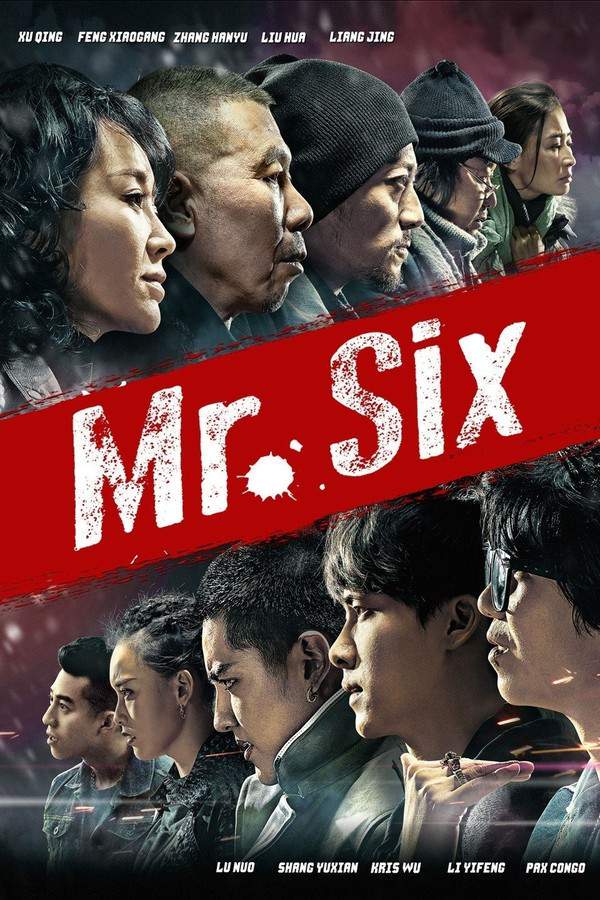
Mr. Six is a weathered, fifty-something street figure who has long ruled Beijing’s alleys and markets as the neighborhood kingpin. He commands a quiet, almost mythic authority built on loyalty, shared histories, and a set of old-school rules that his network still respects. Life on the city’s edges has hardened him, but it also binds him to a sense of responsibility toward those who follow him.
When his son, Xiaobo ("Little Bo"), becomes entangled in a violent dispute with Xiaofei, a young leader connected to a powerful street-racing crew, the elder man steps in with a protective instinct that blends pride with duty. The conflict is not just about territory or prestige; it tests a family bond and the code that Mr. Six has lived by for decades. He tries to settle the debts and restore balance by leaning on his old factions, deploying his long-time friends, and appealing to the traditional rules that have steered him through countless skirmishes.
Yet the plan does not unfold as neatly as he hopes. What begins as a calculated defense spirals into unforeseen trouble, pulling Mr. Six and Xiaobo deeper into danger and uncertainty. The weight of the streets presses hard, and amid the growing chaos, Mr. Six confronts a personal crisis: a diagnosis of coronary artery disease that adds a ticking clock to every decision he makes. This medical condition sharpens the stakes, forcing him to weigh the cost of loyalty against the fragility of his own life.
Driven by principle, Mr. Six wages a broader war against the opposing faction, determined to protect his family’s name and stand by his beliefs. Their battle brings in former members of his old gang, who converge from varied places to lend their support, highlighting the depth of his influence and the pull of their shared history. The fighting exacts a brutal toll, and, in the midst of it, Mr. Six succumbs to his illness. His death marks a devastating endpoint to his era, but the story moves forward through the consequences he leaves behind.
In the aftermath, Xiaobo fulfills a promise by running an open-bar, a small sign of continuity and a new kind of life passing from father to son. Some of the gang members receive relief as they are bailed out by the collective strength and leverage of their community, while the leadership of the opposing gang faces repercussions when revelations about a corrupted family come to light, culminating in the leader’s arrest. The ending ties together themes of loyalty, legacy, and the enduring grip of the streets, offering a somber reflection on how pride and survival can shape a family across generations.
The narrative remains grounded in a neutral, clear lens: it tracks the rise and fall of a Beijing street kingpin, the personal cost of his loyalties, and the fragile thread that links a son to a father’s past—all set against a backdrop where old rules clash with new pressures and the city’s underworld never fully lets go.