























Plot Explained Spoilers guaranteed!
Plot Explained

Browse by genre

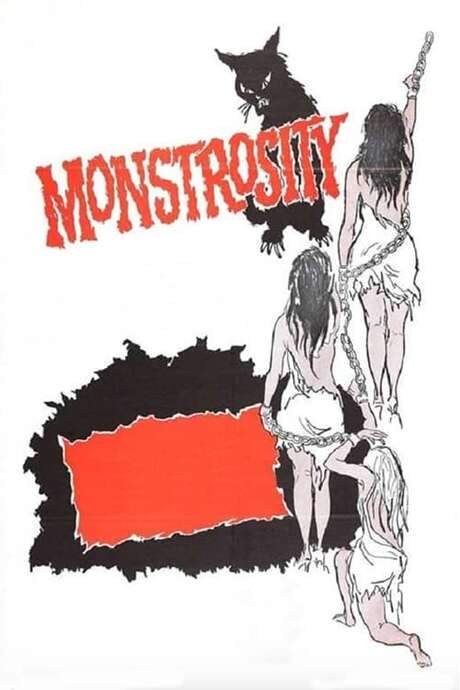
Monstrosity (1963) movie poster

Characters & Themes

Monstrosity (1963) Characters, Setting & Themes Explained

Release, runtime and language
1963 · 65 mins · English
JustWatch #10,465 1
Directed by
Joseph V. Mascelli
Starring
Bradford Dillman, Marjorie Eaton, Frank Gerstle, Judy Bamber, Erika Peters, Frank Fowler

An ad promises millions for youth and beauty, seeking only attractive women for discreet night appointments. A wealthy, morally corrupt older woman teams up with a scientist to surgically transplant her brain into the body of a beautiful young woman, hoping to achieve eternal allure.

On this page (8)
  1. 1 Where to watch
  2. 2 Characters explained (9)
  3. 3 Where & when it takes place
  4. 4 Themes & meaning (3)
  5. 5 Character & meaning questions
  6. 6 Movie threads
  7. 7 Movies like Monstrosity
  8. 8 Every angle

Where to watch

Where to Watch Monstrosity (1963)

Where can you watch Monstrosity? Stream, rent or buy it in the US, including on Amazon Prime Video, fuboTV and IndieFlix: current JustWatch availability with up-to-date prices.

Streaming availability powered by JustWatch

9 main characters · contains spoilers

Monstrosity Characters Explained: Who Is Who

The main characters of Monstrosity (1963), heroes and villains: what drives them, how they change over the course of the story and what each of them reveals about the film's bigger ideas.

  • Narrator (Bradford Dillman)

    The unseen narrator guides the audience through the macabre experiments, offering context and distance from the gruesome events. The narration frames the story as a cautionary tale about science, desire, and the consequences of unchecked ambition.

    • 🎤 Narration
    • 🔎 Framing
  • Hetty March

    played by Marjorie Eaton

    An elderly, ultra-wealthy woman who is controlling and self-serving, driven to preserve beauty and youth at any price. She orchestrates the brain-transplant scheme from behind the mansion’s luxury facade.

    • 👑 Wealth
    • 🗝️ Control
  • Dr. Otto Frank

    played by Frank Gerstle

    A passionate but morally compromised scientist pushing radical experiments, including brain transplantation. He seeks recognition and power, often ignoring ethical boundaries in pursuit of his breakthroughs.

    • 🧪 Scientist
    • 🧠 Hubris
  • Beatrice 'Bea' Mullins

    played by Judy Bamber

    A curvaceous young woman from England chosen as the body donor for Mrs. March. She becomes central to the scheme and meets a tragic fate when the plan unravels.

    • 🌟 Beauty
    • 🎯 Target
  • Nina Rhodes

    played by Erika Peters

    An Austrian domestic worker recruited by Mrs. March who becomes entangled in the experiments. She is part of the pool of potential bodies and ultimately escapes as the plot twists.

    • 🧭 Domestic Worker
    • 🪄 Involvement
  • Victor

    played by Frank Fowler

    A male participant in the lab whose exact role isn’t detailed in the summary, but he is part of the laboratory environment and its activities.

    • 🧰 Lab Associate
    • 👁️ Supporting Role
  • Anita Gonzalez

    played by Lisa Lang

    One of the three candidates from Mexico who is subjected to experiments; Dr. Frank transplants the brain of Xerxes the cat into her head, giving her cat-like behaviors before her death.

    • 🌐 Candidate
    • 🐾 Cat-Brain
  • The Walking Corpse

    played by Margie Fisco

    A brain-dead young woman who roams the lab with a glassy-eyed stare, symbolizing the dehumanizing impact of medical experimentation.

    • 🧟 Unliving
    • 🏚️ Labular Horror
  • Hans

    played by Kemp Niver

    A snarling man-beast created by transplanting a dog’s brain into a human body, embodying the monstrous consequences of crossing species lines.

    • 🐕 Beast
    • 🧬 Hybrid

Last updated: October 04, 2025 at 14:51

Was this helpful?

Setting

Where and When Does Monstrosity Take Place?

The setting of Monstrosity (1963): the year and time period, the places and locations, and how they shape the characters, the mood and the tension of the story.

Time period

Mid-20th century, Atomic Era

Set during the atomic age, the plot centers on a laboratory built beneath a mansion, reflecting society's fascination and fear of new technologies. The era’s sense of scientific possibility and hubris heightens the characters’ moral compromises. The environment implies life and identity can be engineered, with catastrophic consequences looming over every experiment.

Location

Mrs. Hettie March's mansion, underground atomic-powered laboratory

The action unfolds in the opulent yet isolating mansion of the extremely wealthy Mrs. Hettie March, where a hidden, atomic-powered laboratory conducts gruesome experiments. The setting blends decadent interiors with a sterile, dangerous lab, underscoring wealth versus dangerous science. It serves as a trap where desires for youth, beauty, and control collide with horrific medical ethics.

  • 🏰 Gothic mansion
  • 🧪 Science
  • 🕵️ Mystery

Last updated: October 04, 2025 at 14:51

Was this helpful?

3 major themes

Monstrosity Meaning: Themes & Message Explained

What is Monstrosity (1963) really about? The emotional, social and philosophical themes the film keeps returning to, its symbolism and the message beneath the surface.

  • Identity

    The story probes what makes a person when a brain is transplanted into a different body. Identity becomes a mutable concept as animal brains inhabit human hosts and a brain is moved into a younger, wealthier body. The Walking Corpse and the cat-brain experiments illustrate the fragility of selfhood and the horror of commodifying the body.

  • Hubris

    Dr. Otto Frank’s experiments are driven by ambition and a hunger for mastery over life and death. The atomic-powered lab embodies dangerous scientific exploration without clear ethical safeguards. The eventual collapse of the lab and mansion serves as a warning about pursuing knowledge at any cost.

  • Greed and Power

    Mrs. March’s plan to graft her brain into a younger, beautiful body reveals wealth as a corrupting force behind gruesome science. The pursuit of youth, beauty, and status motivates the brutal transformations and calculations. The outcome shows how greed can erode humanity and cause irreversible harm.

Last updated: October 04, 2025 at 14:51

Was this helpful?

Character & theme questions

Monstrosity Characters & Meaning: Your Questions Answered

The questions people ask about Monstrosity (1963): who the characters really are, their relationships, what the symbols mean, where it takes place and what the movie is really about. Each answer contains spoilers.

Q1

How is the setting used to contrast wealth and science?

The story takes place in Mrs. Hettie March's opulent Gothic mansion, which hides a secret underground atomic-powered laboratory. This contrast between decadent interiors and a sterile, dangerous lab underscores the theme of wealth colliding with unethical science, the mansion serves as a trap where characters pursue youth and beauty through horrific medical experiments.

  • mansion
  • laboratory
  • setting
  • contrast
  • wealth
  • science
Q2

What time period is the movie set in?

Monstrosity is set during the mid-20th century Atomic Era, a time when society grappled with both fascination and fear of new technologies. The underground laboratory built beneath the mansion reflects this cultural moment, where scientific possibility and hubris heightened characters' moral compromises.

  • atomic era
  • 1960s
  • time period
  • setting
  • technology
Q3

What does the Identity theme explore?

The Identity theme examines what makes a person when a brain is transplanted into a different body. Through experiments like the Walking Corpse and the cat-brain transplant, the film illustrates the fragility of selfhood and the horror of commodifying human bodies, questioning whether identity resides in the brain or the body.

  • identity
  • brain transplant
  • selfhood
  • body
  • theme
Q4

What does the Hubris theme represent?

The Hubris theme centers on Dr. Otto Frank's dangerous scientific ambition. His experiments, conducted in an atomic-powered laboratory without ethical safeguards, represent unchecked pursuit of knowledge. The eventual destruction of both lab and mansion serves as a cautionary warning about the consequences of mastering life and death.

  • hubris
  • science
  • ambition
  • Dr. Otto Frank
  • ethics
  • warning
Q5

How does Greed and Power drive the story?

Greed and Power drives the narrative through Mrs. March's plan to transplant her brain into a younger, beautiful body. Her wealth enables the gruesome experiments, showing how money corrupts and motivates brutal transformations. The outcome demonstrates how the pursuit of youth and status can erode humanity entirely.

  • greed
  • power
  • Mrs. March
  • wealth
  • youth
  • corruption
Q6

Who is Mrs. March and what is her role?

Mrs. Hetty March is an elderly, ultra-wealthy woman who orchestrates the brain-transplant scheme from behind the mansion's luxurious facade. She is controlling and self-serving, driven entirely by preserving her beauty and youth at any price, making her the mastermind behind the unethical experiments.

  • Mrs. March
  • character
  • wealth
  • beauty
  • orchestrator
Q7

Who is Dr. Otto Frank?

Dr. Otto Frank is the morally compromised scientist conducting the radical experiments, including brain transplantation. Driven by ambition and a hunger for recognition, he pushes ethical boundaries in pursuit of scientific breakthroughs, ignoring the horror of his work to achieve mastery over life and death.

  • Dr. Otto Frank
  • scientist
  • experiments
  • ambition
  • brain transplant
Q8

Who is Bea Mullins?

Beatrice 'Bea' Mullins is a young English woman selected as the body donor for Mrs. March's brain transplant scheme. She represents one of the victims trapped in the mansion's pool of candidates, ultimately meeting a tragic fate when the plan unravels.

  • Bea Mullins
  • body donor
  • victim
  • character
Q9

What is the significance of the cat-brain transplant?

The cat-brain transplant, performed on Anita Gonzalez, represents one of the film's most disturbing experiments where a cat's brain is placed into a human body. This grotesque procedure symbolizes the dehumanizing impact of the experiments and the crossing of species boundaries, adding to the film's exploration of identity and scientific hubris.

  • cat brain
  • Anita Gonzalez
  • experiment
  • identity
  • horror
Q10

What does the Walking Corpse represent?

The Walking Corpse is a brain-dead young woman who roams the laboratory with a glassy-eyed stare. She symbolizes the dehumanizing impact of medical experimentation and the ultimate horror of treating human bodies as mere vessels, representing the dehumanization central to the film's themes.

  • Walking Corpse
  • symbol
  • dehumanization
  • experiment
  • horror
Q11

Who is Hans in the film?

Hans is a man-beast created by transplanting a dog's brain into a human body. He embodies the monstrous consequences of crossing species lines and represents one of the film's grotesque experiments that blur the boundaries between human and animal, adding to the story's exploration of identity and scientific overreach.

  • Hans
  • dog brain
  • experiment
  • monster
  • character
Q12

Who is Nina Rhodes?

Nina Rhodes is an Austrian domestic worker recruited by Mrs. March to work in the mansion. She becomes entangled in the experiments as part of the pool of potential body donors, ultimately surviving as one of the few characters who escapes when the plot twists unfold.

  • Nina Rhodes
  • domestic worker
  • survivor
  • character

Movie threads

More Movies Like Monstrosity, by Mood & Story

Curated lists built around what makes Monstrosity tick: the same mood, the same kind of story or the same emotional payoff. Each list explains why these movies belong together.

Mad Science Horror Movies like Monstrosity

Stories where ambition-fueled experiments lead to grotesque and monstrous outcomes. If you liked the grotesque experiments and ethical collapse in Monstrosity, explore more movies about mad scientists and their horrific creations. These similar horror stories feature chilling human experimentation, body horror, and the bleak consequences of playing god.

  • macabre
  • unsettling
  • grotesque
  • suspenseful
  • grim
  • claustrophobic
  • Tone: dark, grotesque, bleak
  • Pacing: steady, methodical
Why these movies?

The story pattern: The narrative typically follows a driven individual or team who believes their scientific goal justifies any means. They manipulate life itself, often through non-consensual procedures, leading to a series of escalating horrors that ultimately consume the creators, highlighting the futility and monstrosity of their ambition.

Why they belong together: Movies are grouped here for their shared focus on the dark side of scientific ambition, the visceral impact of body horror, and a consistently grim tone that questions the limits of humanity. They deliver a specific brand of dread rooted in violation and transformation.

Claustrophobic Horror with a Bleak Ending like Monstrosity

A steady, oppressive build of dread leading to a visually and psychologically horrific finale. Fans of Monstrosity's grim atmosphere and hopeless conclusion will find more chilling tales here. Discover movies with a similar steady pacing, claustrophobic tension, and grotesque themes that lead to devastatingly bleak finales, perfect for viewers who appreciate uncompromising horror.

  • claustrophobic
  • unsettling
  • grim
  • macabre
  • suspenseful
  • dread
  • Tone: dark, unsettling, grim
  • Pacing: steady, slow burn
Why these movies?

The story pattern: These stories often trap characters in a limited space, either physical or psychological, where a terrible truth is slowly revealed. The pacing is deliberate, allowing dread to accumulate like a poison. The climax is not a escape but a realization of the horror, culminating in a visually and emotionally bleak conclusion.

Why they belong together: This thread connects films through a shared atmosphere of oppressive dread, a focus on the grotesque and macabre, and a narrative structure that prioritizes a slow, steady burn towards a hopeless ending. The experience is defined by sustained tension and a lack of catharsis.

If you liked this

Movies Like Monstrosity

Similar movies to Monstrosity: the same genre, themes or kind of story. Each one comes with its own plot summary, timeline and ending explained.

Browse all movie summaries

Every angle

Monstrosity (1963) Explained: Plot, Timeline & Characters

Everything about Monstrosity in one place: what happens in the plot summary, the timeline in chronological order, the characters and meaning and a spoiler-free summary. What's After the Movie adds the cast, box office and post-credit scenes.

Coming soon on iOS and Android

The Plot Explained Movie Summary App

Plot summaries, endings explained and timelines on your phone. Catch up on any movie in minutes, save your favorites and never miss a twist again.

Be the first to know when we launch. Your email stays private, always.

Learn more about the app