Plot Explained Spoilers guaranteed!
Plot Explained

Browse by genre

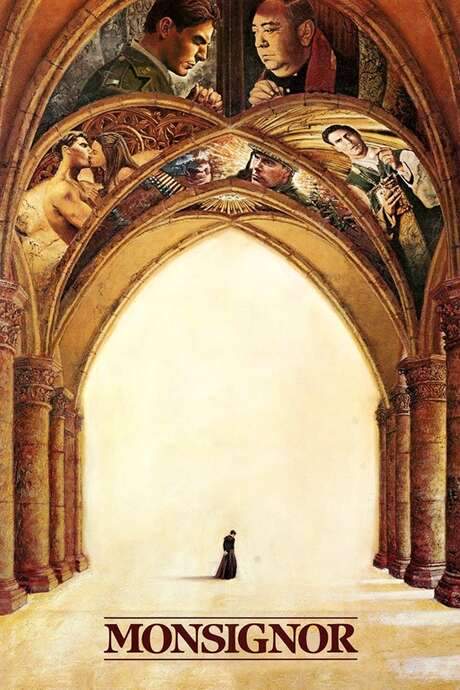
Monsignor (1982) movie poster

Timeline

Monsignor (1982) Timeline Explained – Every Event in Order

Release, runtime and language
1982 · 121 mins · English
Loading streaming availability…
Directed by
Frank Perry
Starring
Joe Pantoliano, Fernando Rey, Adolfo Celi, Joe Spinell, Geneviève Bujold, Christopher Reeve

Father John Flaherty, a young American priest, wrestles with conscience as World War II erupts. To fund the Vatican he turns to the black market, stealing and even killing for his country. His vows are further tested when he falls in love with a French nun, confronting the clash of loving a woman, stealing for the Church, and his many sins.

On this page (6)
  1. 1 Where to watch
  2. 2 Events in order (12)
  3. 3 Timeline questions answered
  4. 4 Movie threads
  5. 5 Movies like Monsignor
  6. 6 Every angle
Loading streaming availability…

12 events in order · contains spoilers

Monsignor Timeline: Events in Chronological Order

Every key event of Monsignor (1982) in order, scene by scene, with when and where it takes place. Use it to untangle flashbacks, time jumps and parallel storylines, to refresh your memory before the sequel or to find the exact scene you are thinking of.

  1. Vatican recruitment during WWII

    With World War II straining the Vatican's finances, Father John Flaherty, an American priest with exceptional accounting skills, is sent to assist. He has already broken the rules by serving as a military chaplain, but his talent for numbers makes him a valuable asset to the Church's finances. The assignment places him at the crossroads of war and piety as he arrives in Vatican City.

    When
    World War II era
    Where
    Vatican City
  2. First assignment as military chaplain

    Flaherty's first assignment after ordination is serving as a military chaplain on the front. He tends to dying Private Musso, providing spiritual comfort as well as practical care. This frontline duty shows his unusual blend of faith and battlefield realism.

    When
    Early WWII
    Where
    Battlefield
  3. Takes Musso's position as machine gunner

    After Musso dies, Flaherty takes his dead comrade's place as a machine gunner. He helps repel a German advance and destroys a squad, displaying a ruthless efficiency in combat. The act marks his break from a conventional clerical role and foreshadows the moral compromises to come.

    When
    During the same battle
    Where
    Battlefield
  4. Relieved to return to the Vatican

    Relieved from frontline duty, Flaherty is sent back to the Vatican with his financial acumen in tow. He becomes a key figure in wartime fundraising and financial planning. This shift highlights how his talents are valued even as his methods stay morally ambiguous.

    When
    Post-frontline
    Where
    Vatican City
  5. Black market scheme for church funds

    To raise funds for the church, Flaherty enters a shadowy scheme by partnering with the Mafia to smuggle and sell cigarettes for a percentage. He rationalizes the risk as a necessary evil to support the Vatican, blurring ethical lines. The venture cements his reputation as a maverick financier within the Church.

    When
    Wartime fundraising period
    Where
    Vatican / Rome
  6. Romantic affair with Clara

    Flaherty develops a romantic relationship with Clara, a young nun, while keeping his true identity concealed. Their affair complicates his double life, pulling him between faith, desire, and ambition. The relationship tests his conscience as the war rages around them.

    When
    During fundraising period
    Where
    Vatican City
  7. Clara discovers his robes

    During a papal ceremony, Clara catches sight of Flaherty in clerical robes, shattering her trust and faith in him. The revelation exposes the fragility of his cover and the personal cost of his deception. The event strains their bond and the integrity of his role in the Church.

    When
    Papacy ceremony scene
    Where
    Vatican City
  8. Rise to monsignor and cardinal

    Despite moral compromises, Flaherty's fundraising success propels him up the hierarchy, eventually reaching monsignor and then cardinal. His rise demonstrates how financial influence can outpace ethical concerns within the Vatican. The leadership begins to depend on his financial acumen.

    When
    Following successful fundraising
    Where
    Vatican City
  9. Ill-advised stock investment costs millions

    An ill-advised stock investment costs the Vatican millions, revealing the risks of mixing high finance with religious authority. The loss triggers scrutiny of his methods and prompts questions about accountability. Flaherty must confront the consequences of his gambles.

    When
    During tenure
    Where
    Vatican City
  10. Paying the price for his deeds

    Facing the fallout, Flaherty pays the price for his deeds as superiors demand accountability and consequences for his actions. The church cannot shield him from responsibility, and his schemes come under examination. His fall from grace marks a turning point in his career and in Vatican finances.

    When
    After stock loss
    Where
    Vatican City
  11. Aftermath and reputation

    The aftermath reshapes the Vatican's finances and Flaherty's reputation; he remains a controversial figure whose complex motives linger. The narrative suggests that survival during wartime sometimes requires questionable choices. The price paid serves as a cautionary note about power and pragmatism.

    When
    Aftermath
    Where
    Vatican City
  12. Moral tension of wartime pragmatism

    Throughout the tale, the tension between moral codes and pragmatic needs during war is evident. Flaherty's numbers-driven approach helps the Church endure, even as it exacts an ethical toll. The story leaves the audience with a nuanced view of ambition, faith, and consequence.

    When
    Throughout
    Where
    Various

Last updated: February 18, 2026 at 23:45

Was this helpful?

Timeline questions answered

Monsignor Timeline Explained: Your Questions Answered

When does it happen, and why in that order? The questions people ask about the chronology of Monsignor (1982): time jumps, flashbacks, cause and effect between scenes and the correct order of events, each answered with spoilers.

Q1

Why does Father Flaherty turn to the black market to fund the Vatican?

Flaherty believes the ends justify the means. With WWII draining the Vatican's finances, he sees black market operations as a necessary evil to keep the Church running during wartime. His rationalization is that any method is acceptable if it serves the greater good of preserving the Church's operations.

Foreshadowing: His willingness to take Musso's place as a machine gunner and kill Germans already showed his pragmatic approach to moral boundaries.

  • vatican financing
  • black market
  • WWII
  • church funds
  • Flaherty methods
Q2

How does Flaherty go from military chaplain to Vatican financial director?

After serving as a chaplain on the front lines, Flaherty is relieved from combat duty. His exceptional talent for numbers and accounting catches the attention of Vatican hierarchy who need someone to manage wartime finances. His practical mindset and willingness to bend rules make him valuable for the Church's financial survival.

Foreshadowing: His first assignment showing talent for numbers was evident when he was recruited specifically for his accounting abilities.

  • career
  • Vatican
  • finance
  • chaplain
  • promotion
Q3

Why does Flaherty have a romantic affair with Clara the nun?

Despite being a priest, Flaherty develops genuine feelings for Clara while working in the Vatican. He keeps his true identity as a priest hidden from her, leading to a relationship built on deception. The affair represents his growing distance from his vows and the conflict between his desires and his role.

Foreshadowing: His earlier willingness to bend rules and his pragmatic approach to faith suggest he would also compromise his celibacy.

  • Clara
  • romance
  • affair
  • nun
  • betrayal
Q4

Why does Clara's discovery of Flaherty's clerical robes destroy their relationship?

During a papal ceremony, Clara sees Flaherty in his priestly robes and realizes he has been lying about his identity the entire time. This revelation shatters her trust completely - not only did she fall in love with someone she believed was a layman, but she also discovers he is the very religious figure whose financial dealings she may have questioned.

Foreshadowing: The affair was already complicated by his double life; the robes represent the ultimate betrayal of his deception.

  • Clara
  • discovery
  • robes
  • trust
  • betrayal
  • ceremony
Q5

What causes Flaherty's downfall in the Vatican?

Flaherty's downfall comes from two interconnected factors. First, he makes an ill-advised stock investment that loses the Vatican millions. Second, this financial disaster exposes the recklessness of his methods and forces the hierarchy to hold him accountable. His schemes, which had been tolerated during wartime necessity, become untenable when they result in major financial loss.

Foreshadowing: The stock loss is directly linked to his earlier pattern of taking risky financial shortcuts for quick gains.

  • downfall
  • stock loss
  • accountability
  • consequence
  • Vatican
Q6

Why does the Vatican tolerate Flaherty's morally questionable methods?

During WWII, the Vatican faces severe financial strain and desperate times call for desperate measures. Church superiors view Flaherty's aggressive fundraising - including the black market scheme - as a necessary engine for survival. His success in raising money earns him favor despite the moral cost. The hierarchy prioritizes financial survival over ethical concerns during wartime crisis.

Foreshadowing: The Vatican specifically recruited him for his unusual willingness to bend rules, indicating they accepted his methods from the start.

  • Vatican hierarchy
  • tolerance
  • wartime
  • church leadership
  • morals
Q7

What does Flaherty taking Private Musso's place as a machine gunner signify?

When Musso dies, Flaherty takes his position as a machine gunner and personally kills German soldiers to repel the attack. This act marks his departure from the traditional priestly role - he moves from healing and spiritual comfort to direct violence and combat. It foreshadows his later moral compromises and shows he is willing to cross ethical lines when circumstances demand action.

Foreshadowing: This pivotal battlefield moment establishes his character as someone who will sacrifice moral principles for practical outcomes.

  • Musso
  • machine gunner
  • violence
  • combat
  • moral compromise
Q8

How does Flaherty rise from priest to cardinal despite his crimes?

Flaherty's financial success propels him rapidly through the Vatican hierarchy to monsignor and eventually cardinal. The Church rewards his ability to generate money during wartime, even though his methods are ethically dubious. His rise demonstrates how financial acumen can outpace moral concerns within institutional power structures during crisis periods.

Foreshadowing: His earlier black market success established the pattern of rewarding results regardless of method.

  • cardinal
  • monsignor
  • promotion
  • hierarchy
  • power
  • rise
Q9

What was the stock investment that cost the Vatican millions?

The summary mentions an ill-advised stock investment that devastated Vatican finances but does not specify the exact nature of the investment. The key point is that Flaherty, known for his risky financial maneuvers, made a speculative bet that backfired catastrophically, exposing the fragility of his methods and triggering accountability demands from church superiors.

Foreshadowing: His earlier willingness to partner with organized crime for quick profits indicates a pattern of high-risk financial decisions.

  • stock
  • investment
  • loss
  • millions
  • financial disaster
Q10

What is the moral trajectory of Father Flaherty's character throughout the film?

Flaherty's arc shows progressive moral decay. He begins as a seemingly idealistic priest but gradually compromises his vows through violence, financial corruption, and romantic betrayal. Each compromise rationalized as necessary for a greater cause. His eventual downfall is not redemption but punishment - he gains power but loses his faith, his love, and ultimately his position.

Foreshadowing: His first compromise - taking the machine gunner position - sets the pattern for escalating ethical violations.

  • moral decay
  • character arc
  • corruption
  • ambition
  • consequences

Movie threads

More Movies Like Monsignor, by Mood & Story

Curated lists built around what makes Monsignor tick: the same mood, the same kind of story or the same emotional payoff. Each list explains why these movies belong together.

Movies about corrupting faith and moral compromise like Monsignor

Stories where ideals are sacrificed for power, leaving a trail of guilt. If you were fascinated by the moral decay in Monsignor, this collection features movies where characters grapple with faith, power, and corruption. Discover similar stories about spiritual crises, ethical dilemmas, and the heavy price of ambition within powerful institutions.

  • moral conflict
  • guilty
  • corruption
  • betrayal
  • tragic
  • oppressive
  • Tone: dark, cynical, somber
  • Pacing: steady, methodical
Why these movies?

The story pattern: These stories typically follow a protagonist's rise within a rigid institution, achieved through increasingly cynical and unethical means. The central conflict is internal, pitting original ideals against pragmatic, often dark, choices, leading to a hollow victory or a bitter reckoning.

Why they belong together: Movies in this thread share a dark tone, heavy emotional weight, and a focus on the psychological toll of moral compromise. They are united by themes of betrayal, guilt, and the corrosion of faith, creating a consistently tense and somber viewing experience.

Movies about forbidden wartime romance like Monsignor

Passionate affairs that defy strict rules, set against a backdrop of turmoil. Fans of the tragic love story in Monsignor will find more poignant tales here. Explore movies featuring forbidden romances tested by war, duty, and societal rules, where passion and sacrifice collide with devastating consequences.

  • forbidden romance
  • tragic
  • tense
  • somber
  • passionate
  • sacrifice
  • Tone: tense, tragic, bittersweet
  • Pacing: steady, character-driven
Why these movies?

The story pattern: The narrative follows two characters who find love in a place or time where it is strictly forbidden. Their relationship provides temporary solace but is constantly under threat, serving as the emotional core amidst larger conflicts, often leading to a heartbreaking conclusion.

Why they belong together: These films are grouped by their high-stakes romantic plots set against intense backdrops. They share a bittersweet tone, heavy emotional weight from the inevitable tragedy, and a steady pacing that allows the doomed relationship to develop fully.

If you liked this

Movies Like Monsignor

Similar movies to Monsignor: the same genre, themes or kind of story. Each one comes with its own plot summary, timeline and ending explained.

Browse all movie summaries

Every angle

Monsignor (1982) Explained: Plot, Timeline & Characters

Everything about Monsignor in one place: what happens in the plot summary, the timeline in chronological order, the characters and meaning and a spoiler-free summary. What's After the Movie adds the cast, box office and post-credit scenes.

Coming soon on iOS and Android

The Plot Explained Movie Summary App

Plot summaries, endings explained and timelines on your phone. Catch up on any movie in minutes, save your favorites and never miss a twist again.

Be the first to know when we launch. Your email stays private, always.

Learn more about the app